Destroying Angel vs Death Cap: Deadly White Amanitas
Destroying angel vs death cap: how the two deadly Amanitas compare, why white ones fool people, the poisoning timeline and what to do after eating one.
 By Flori editorial team · Updated
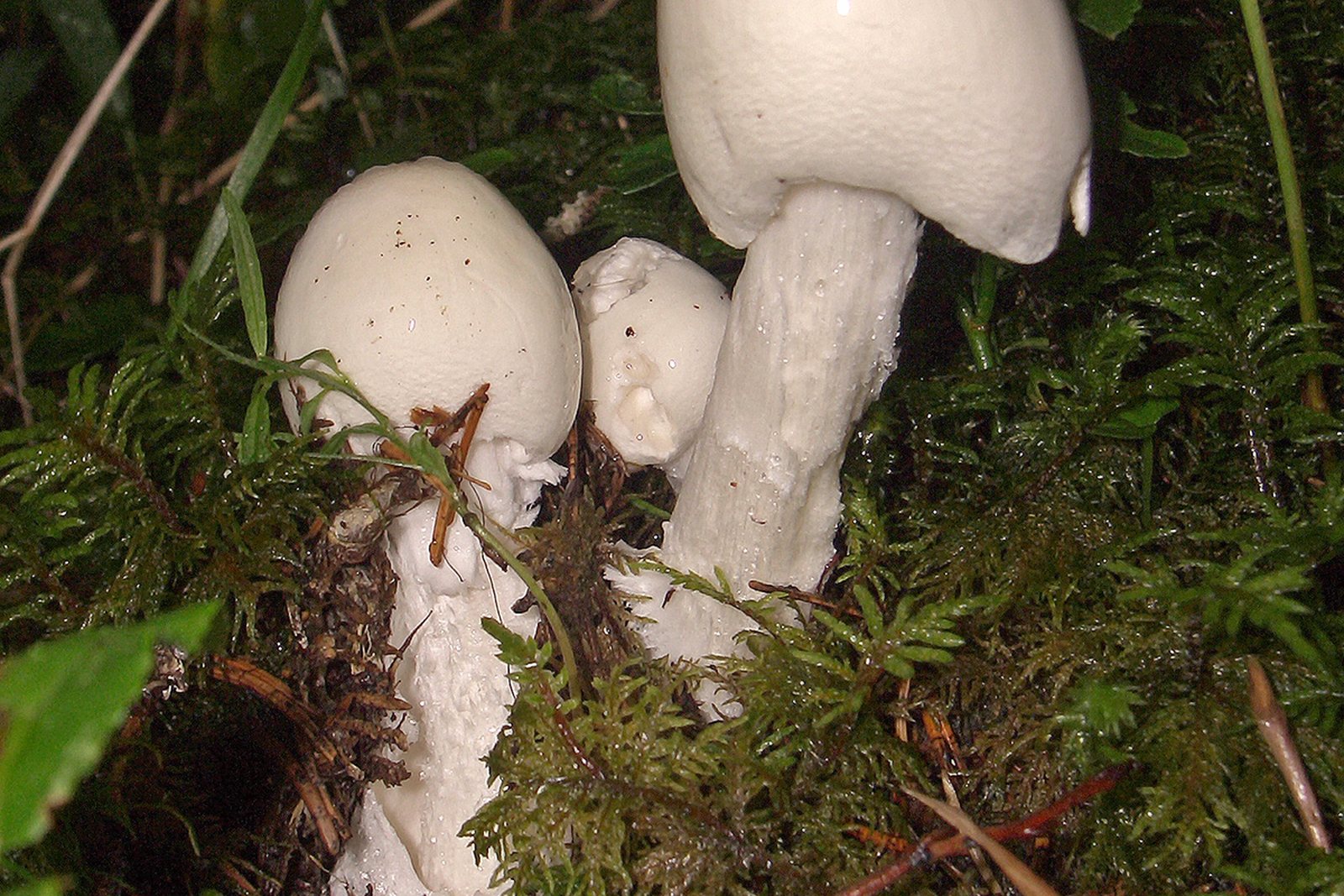
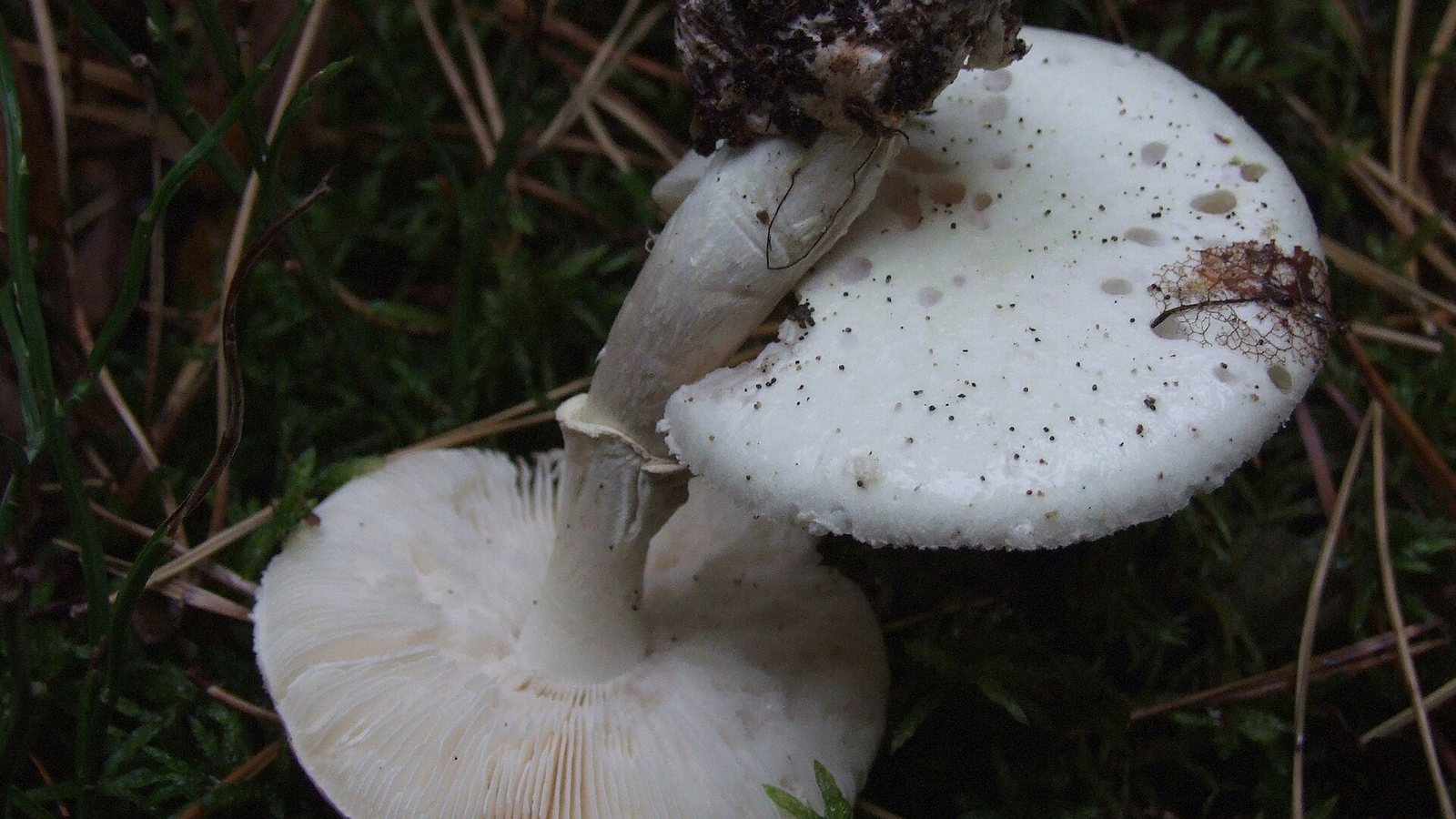 Photo: Jerzy Opioła · CC BY-SA 4.0
Destroying angels and the death cap are close relatives that carry the same amatoxins, and both can kill. The death cap usually has a greenish cap, destroying angels a white one, but colour is unreliable. Cooking does not help. If anyone ate an unknown mushroom, call the poison line now.
Key takeaways
- Destroying angels and the death cap share amatoxins that damage the liver and kidneys.
- Cap colour is the main visible difference and the least reliable clue, so treat pale ringed mushrooms as dangerous.
- Cooking, drying, smell, taste and peeling never make a wild mushroom safe, and an app cannot confirm edibility.
- Symptoms can start many hours after eating and ease before organ failure, so feeling fine is not reassurance.
- After eating an unknown mushroom, call the poison line at once and keep a sample.
On this page8
- Destroying angel vs death cap: what is the difference?
- Which mushrooms are the "deadly white Amanitas"?
- Destroying angel vs death cap: side-by-side table
- Why are white Amanitas mistaken for edible mushrooms?
- Where and when do they grow?
- Myths that do not protect you
- What does amatoxin poisoning look like over time?
- What should you do if someone ate an unknown mushroom?
Destroying angel vs death cap: what is the difference?
Destroying angels and the death cap are close relatives in the genus Amanita, and they cause the same kind of poisoning. The practical answer to "destroying angel vs death cap" is that you do not need to decide which one it is: both carry amatoxins, and both can kill. This guide compares the two side by side, explains why white Amanitas are mistaken for harmless mushrooms, and shows what the first day after a mistake looks like. The features below help you avoid these mushrooms. They never prove that another mushroom is safe to eat.
Which mushrooms are the "deadly white Amanitas"?
The North American Mycological Association (NAMA) names the amatoxin species behind most fatal poisonings: the death cap (Amanita phalloides) and the destroying angels, which in North America are Amanita ocreata (western destroying angel) and the Amanita bisporigera group (eastern). In Europe the species usually called the destroying angel is Amanita virosa, which Poison Control describes as so dangerous that it earned the name "the death angel". NAMA adds that close relatives of these species carry amatoxins too.
In Turkish there is no single everyday name for these white species. Amanita phalloides is called ölüm meleği (and is covered in our death cap guide); for the white ones, "beyaz amanita" plus the Latin name is the safest wording.
Destroying angel vs death cap: side-by-side table
| Feature | Death cap (A. phalloides) | Destroying angels (A. virosa, A. bisporigera, A. ocreata) |
|---|---|---|
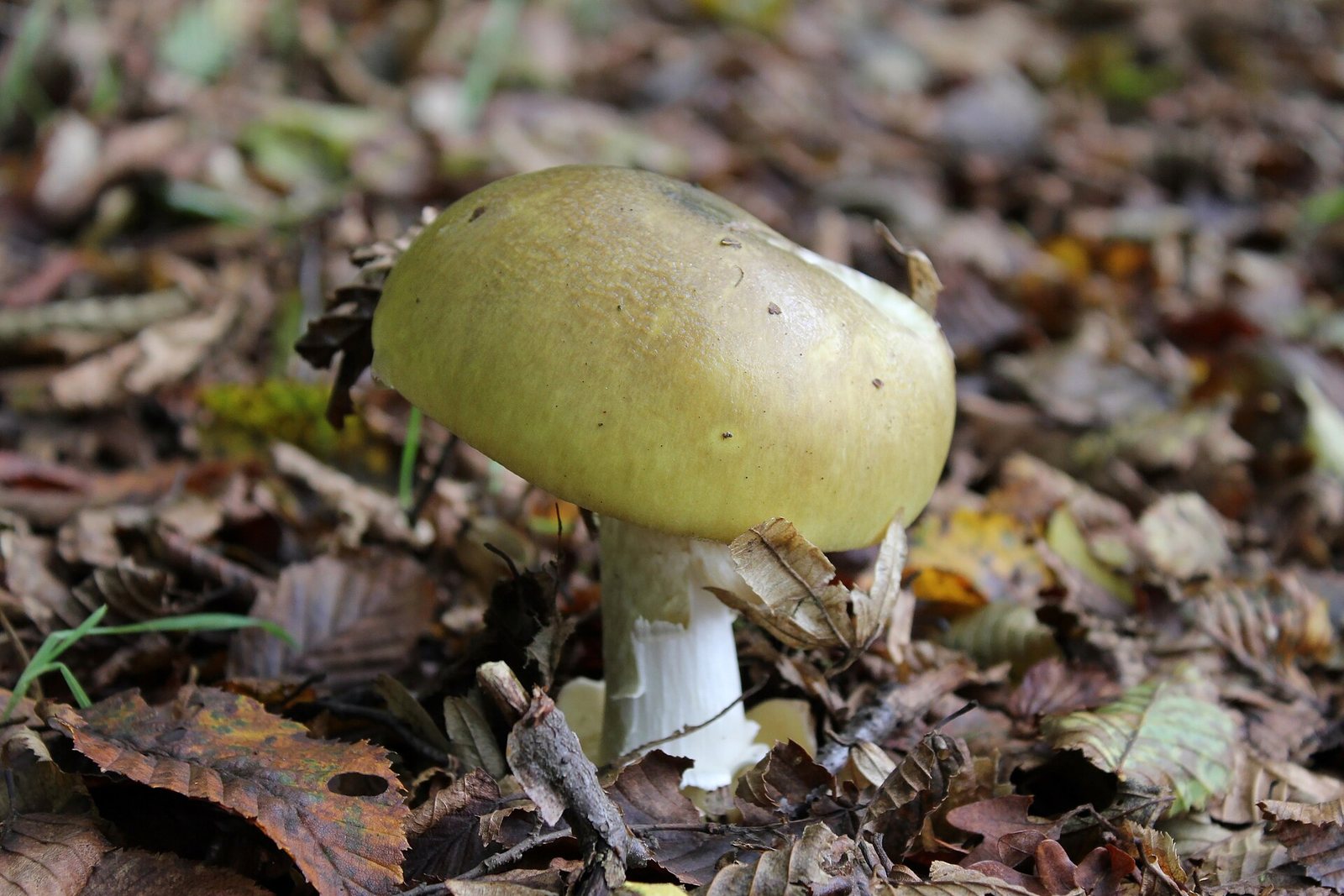
| Cap | Smooth, yellowish-green to olive-brown, usually 10–15 cm (4–6 in) (Australian National Botanic Gardens) | White to whitish; this is the main visible difference |
| Gills and spore print | White gills, white spores | White gills, white spores |
| Ring and cup | Loose skirt-like ring; sac-like cup around the base, often buried | Ring and base cup, again often below the soil surface |
| Toxins | Amatoxins, not destroyed by soaking, cooking or drying | Amatoxins, same effect on liver and kidneys |
| Danger | One cap can kill a healthy adult | Treat as equally deadly |
The cap colour is the only thing that separates them at a glance, and colour is the weakest clue in mushroom identification: it fades, washes out in rain and varies within a species. That is why the right habit is to treat every white or pale mushroom with a ring and a swollen base as dangerous until an expert says otherwise.
Why are white Amanitas mistaken for edible mushrooms?
Poison Control points out that unless you are very experienced, you cannot reliably tell edible from poisonous mushrooms, and that skills learned in one region may not carry to another. NAMA reports that poisonings are especially common among people newly arrived in North America from places where harmless look-alikes are regularly eaten, and it cites a published case titled "Ingestion and death from mistaken identity" about Amanita bisporigera. White Amanitas are typically confused with:
- Field and button mushrooms (Agaricus): a white cap and a ring, but Agaricus has no cup at the base and its gills turn from pink to brown (Australian National Botanic Gardens). A mushroom picked without its base removes the clue.
- Young puffballs: the Botanic Gardens notes that a young Amanita shows a stem and gills when cut, while a puffball is solid white inside. Cutting is an expert check, not a safety test.
- Straw mushrooms (Volvariella): they also have a cup at the base, but no ring and pinkish-brown gills.
- Egg-stage Amanitas, including the one sold in Türkiye as yumurta mantarı (Amanita caesarea): in the closed egg stage the cap, ring and gills are hidden, so eggs of different species look alike. Leave unopened eggs to experts.
For a wider comparison, see edible wild mushrooms and their dangerous look-alikes.
Where and when do they grow?
Both groups grow in partnership with tree roots and fruit mostly in late summer and autumn: roughly August to November in the Northern Hemisphere and March to May in the Southern Hemisphere. The death cap is native to Europe but has been introduced elsewhere; the Australian National Botanic Gardens reports it under oaks in Canberra suburbs almost every autumn. White Amanitas turn up in woods, parks and gardens, so dogs and small children can meet them in ordinary places.
Myths that do not protect you
- "Cooking removes the poison." False. Poison Control says cooking does not make a poisonous mushroom safe, and the Botanic Gardens says the toxins cannot be removed by soaking, cooking or drying.
- "It smells or tastes pleasant, so it is fine." Smell and taste say nothing about amatoxins.
- "Peeling the cap, a silver spoon or animals eating it prove safety." None of these detect amatoxins.
- "A photo or an app can confirm it." A photo usually misses the buried cup and ring. Flori can identify wild mushrooms from a photo, which is useful for learning names and for showing an expert what you found, but no app can say a wild mushroom is safe to eat.
What does amatoxin poisoning look like over time?
NAMA describes four stages. First comes a quiet period of about 6 to 24 hours when the person feels no discomfort while the liver and kidneys are already being damaged. Then comes a day of violent vomiting, bloody diarrhoea and severe cramps. Next, symptoms ease for about a day, and hospitalised patients are sometimes sent home. Finally kidney and liver failure often follow. NAMA gives a fatality rate of about 50% without prompt, knowledgeable medical treatment, and about 10% in the United States and Canada. The Botanic Gardens gives 10 to 16 hours as the usual delay before symptoms. This is why feeling fine is not reassurance.
What should you do if someone ate an unknown mushroom?
- Call the poison line now, before any symptoms. Türkiye: UZEM 114 (Ulusal Zehir Danışma Merkezi). United States: 1-800-222-1222. United Kingdom: NHS 111. For a pet, call a vet or the ASPCA Animal Poison Control straight away.
- Keep a sample. NAMA advises placing any remaining mushroom in a paper bag or waxed paper, not plastic, refrigerating it, and noting where it was collected.
- Do not wait for vomiting or for the person to feel better, and do not try home remedies; follow what the poison line or emergency services tell you.
Related reading: mushroom poisoning symptoms and timelines and how to tell if a mushroom is poisonous.
Frequently asked questions
Is the destroying angel more poisonous than the death cap?
Both contain amatoxins and both are deadly. Treat any poisoning from either as an emergency rather than trying to rank them.
Can you tell a destroying angel from a death cap by colour?
Cap colour is the main visible difference: greenish on the death cap, white on destroying angels. But colour varies and fades, so it is not a safe way to judge any mushroom.
Does cooking destroy the toxin in white Amanitas?
No. Poison Control says cooking does not make a poisonous mushroom safe, and the Australian National Botanic Gardens says the toxins cannot be removed by soaking, cooking or drying.
What should I do if my dog or child ate a white mushroom?
Call the poison line now (Türkiye UZEM 114, US 1-800-222-1222, UK NHS 111) or, for a pet, a vet or ASPCA Animal Poison Control. Keep a sample and do not wait for symptoms.
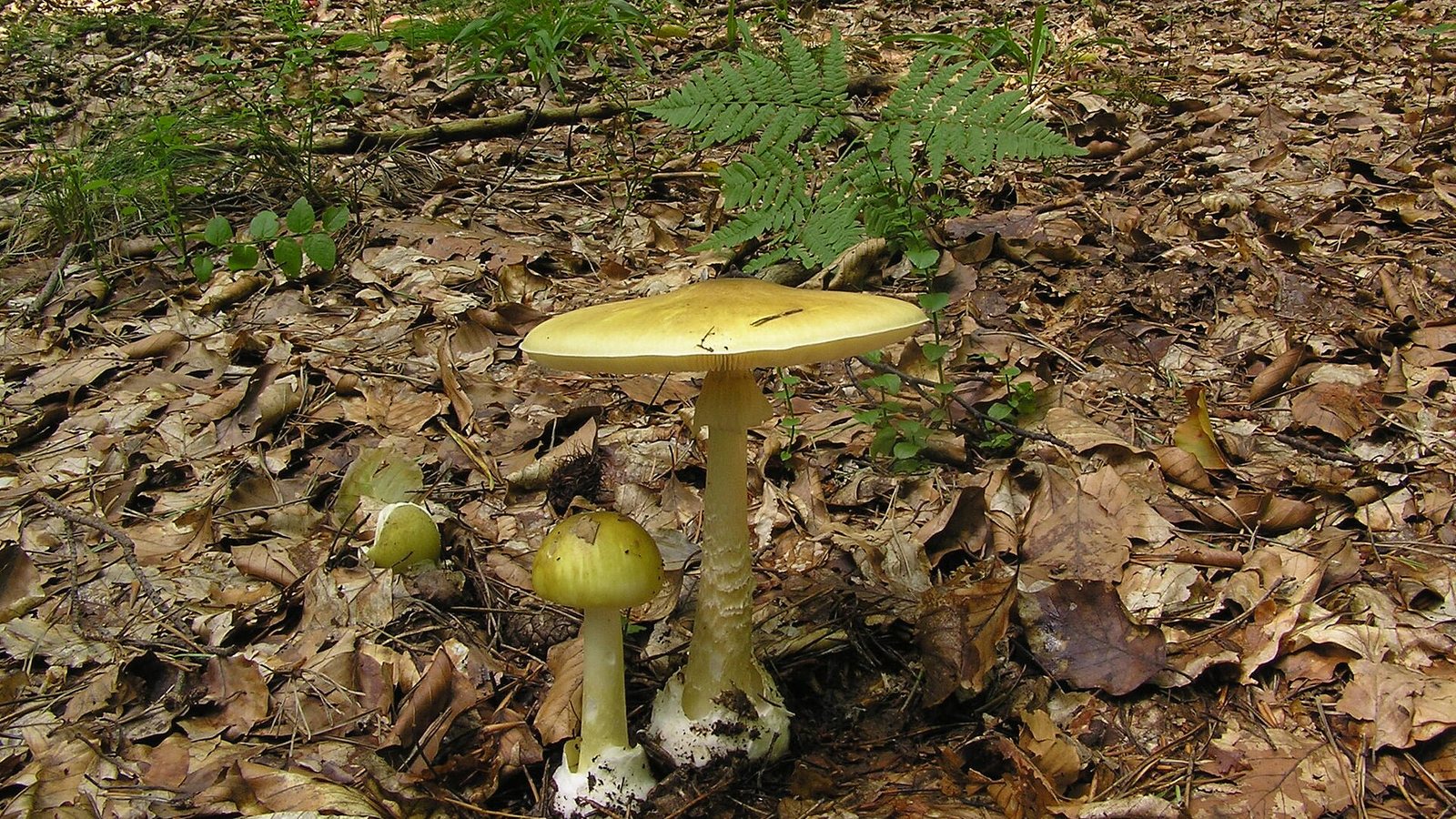
Death cap mushroom ID: greenish cap, white gills, a skirt-like ring and a buried cup. Look-alikes, myths that kill and what to do if someone eats one.
Sources
Written and fact-checked by the Flori team. Every guide cites horticultural sources such as the RHS, university extension services and the ASPCA, and is updated when the advice changes. How we write our guides
General plant care information. Plants vary; when a plant is valuable or a problem spreads quickly, consult a local nursery or plant specialist.