Galerina marginata · Hymenogastraceae
Funeral Bell (Galerina marginata): Deadly Facts
The funeral bell is a deadly little brown mushroom. What experts look at, what it is confused with, symptoms from the sources, and who to call.
- Deadly poisonous
Also called: deadly galerina, Galerina autumnalis; Galerina autumnalis
 By Flori editorial team · Updated
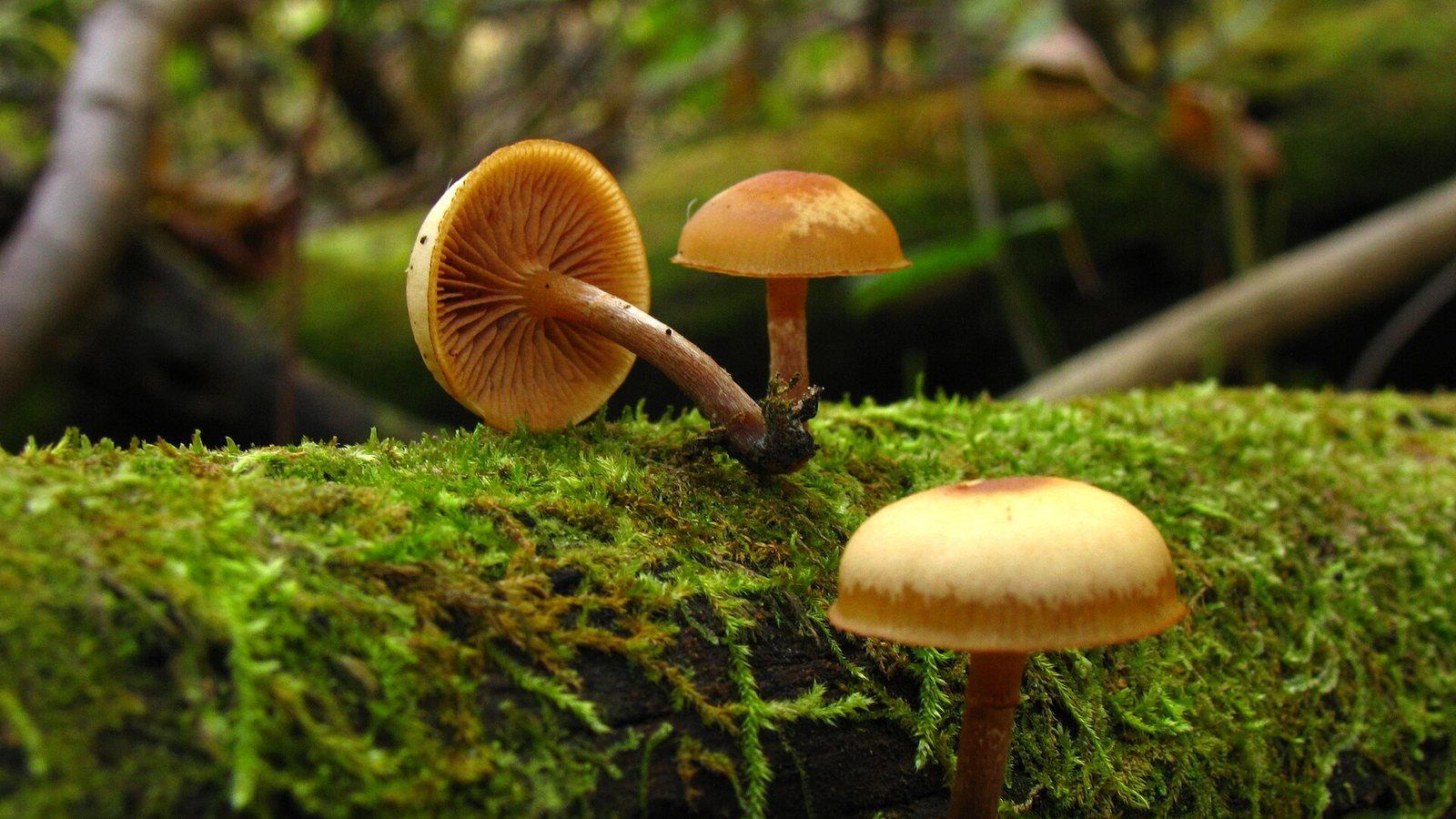 Photo: Dan Molter (shroomydan) · CC BY-SA 3.0
Never eat a wild mushroom identified from a photo, an app or this page. If someone may have eaten one, call your poison centre now.
The funeral bell (Galerina marginata) is a small brown wood-growing mushroom that contains the same deadly toxins as the death cap. It is confused with honey mushrooms and with psychoactive little brown mushrooms. Symptoms can be delayed by many hours. Never eat a wild mushroom identified from a photo or app. If one was eaten, call a poison line now.
At a glance
- Edibility
- Deadly; never eat a wild mushroom identified from a photo or app
- Season
- Year-round in Missouri, most in Sep-Nov; no southern hemisphere range in our sources
- Habitat
- Stumps, logs and buried wood of conifers and hardwoods, often in clusters
- Cap
- Dome-shaped, brown to yellow-brown, sticky; about 2.5-6 cm (1-2.5 in) across
- Gills or pores
- Gills brown to rusty; the stem sometimes has a ring or ring-zone
- Spore print
- Brown to rusty brown
- Look-alikes
- Honey mushrooms, velvet foot, psilocybe mushrooms; always ask an expert
On this page5
What does the funeral bell look like?
The funeral bell (Galerina marginata), also called the deadly galerina, is a small brown woodland mushroom that contains the same deadly toxins as the death cap. This page describes what experts look at. It is not a way to decide that a mushroom is safe, and nothing here can do that.
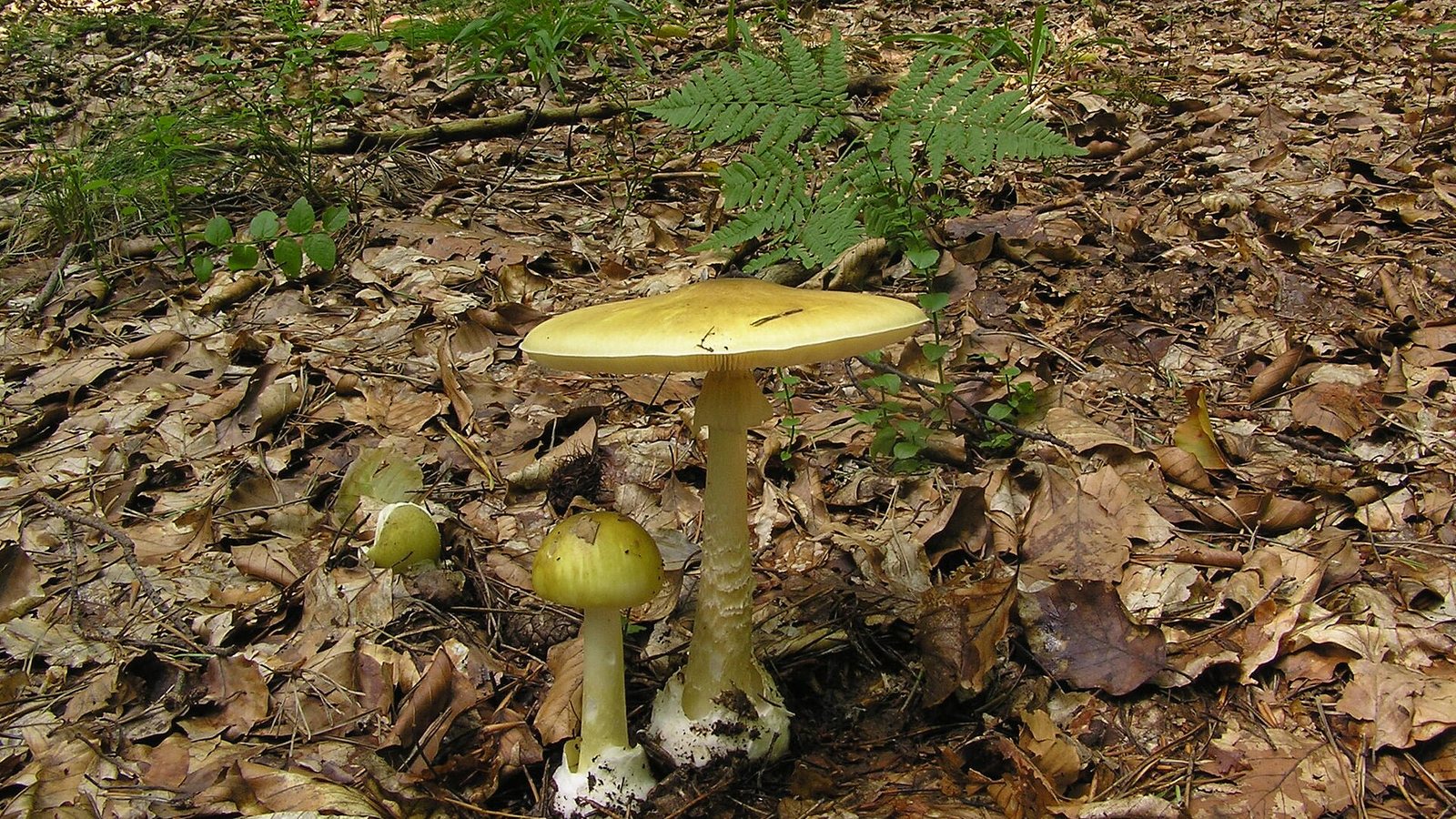
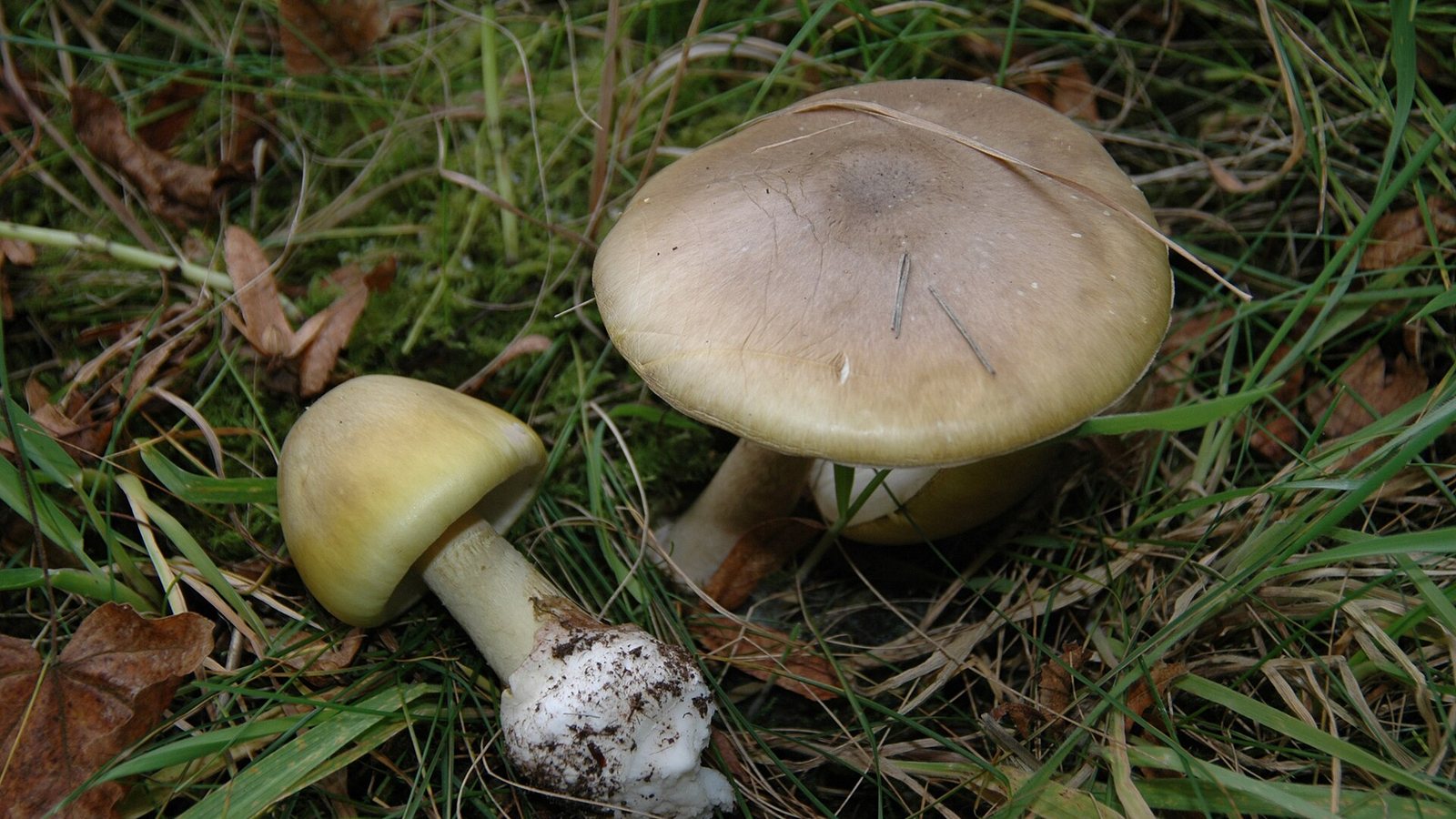
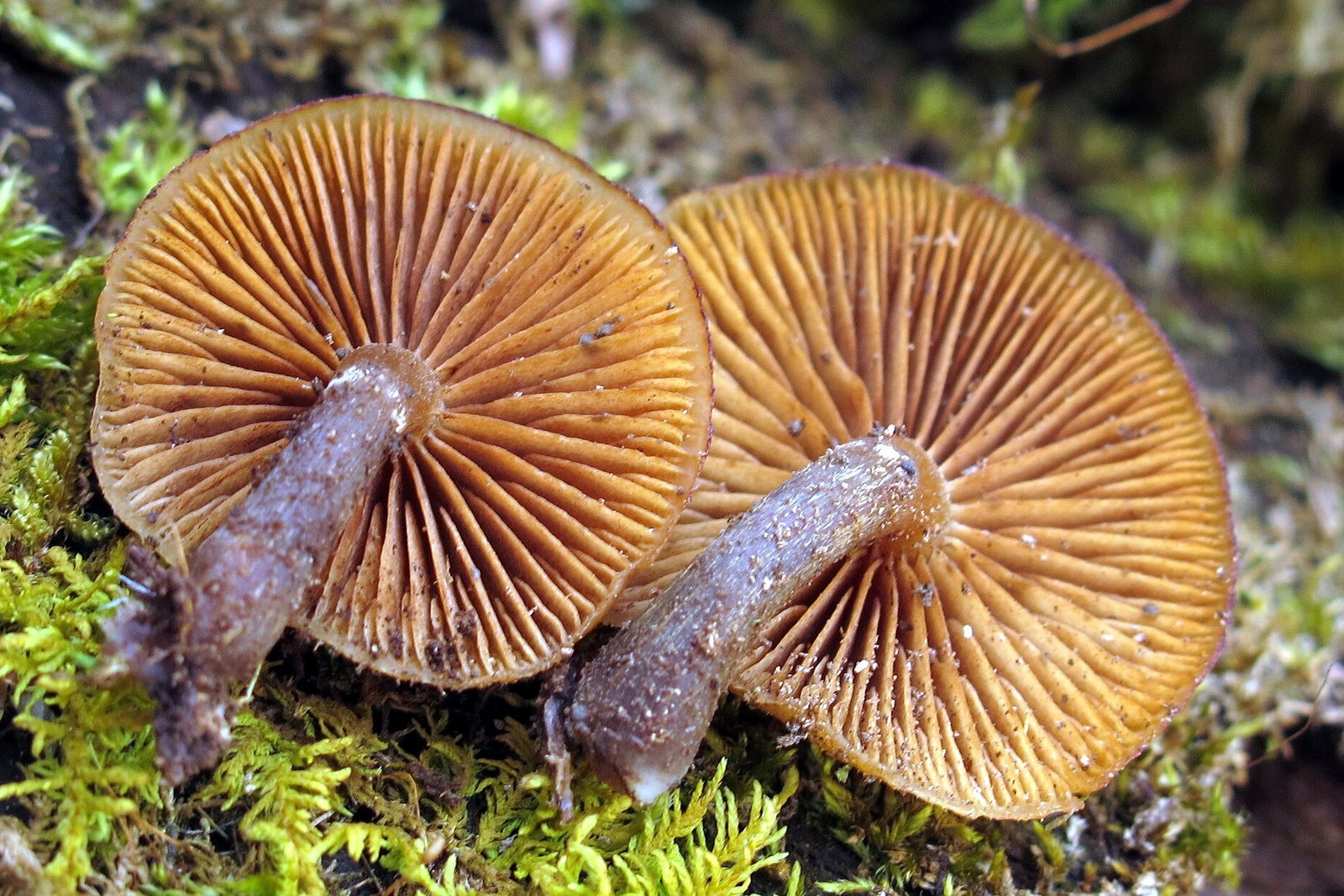
The University of Washington Burke Herbarium describes a medium-sized mushroom with a dome-shaped, smooth, brown to yellow-brown cap that is slightly sticky to moist, lined along the edge when fresh, and fades to tan or buff as it dries. It lists brown gills, a brown stem and a brown spore print, and says the veil sometimes leaves a fibrous ring-zone on the stem. The Missouri Department of Conservation gives a cap of about 1 to 2.5 in (2.5 to 6 cm) across, a stalk of 1 to 4 in (2.5 to 10 cm), yellowish gills that turn rusty, a white ring on the upper stem and a rusty spore print. The two descriptions differ in details, and that is exactly why a photo or a written description is not enough: it grows in clusters on wood, and old or dried specimens look different from fresh ones. Experts compare the whole mushroom, the wood it grows on and the spore print.
Sources also tell us that several galerinas once treated as separate species, such as G. autumnalis, are now considered one. Burke lists G. autumnalis, G. venenata and G. unicolor as names used in North America. Whatever the name on the label, Burke puts it plainly: "By any name it is just as deadly."
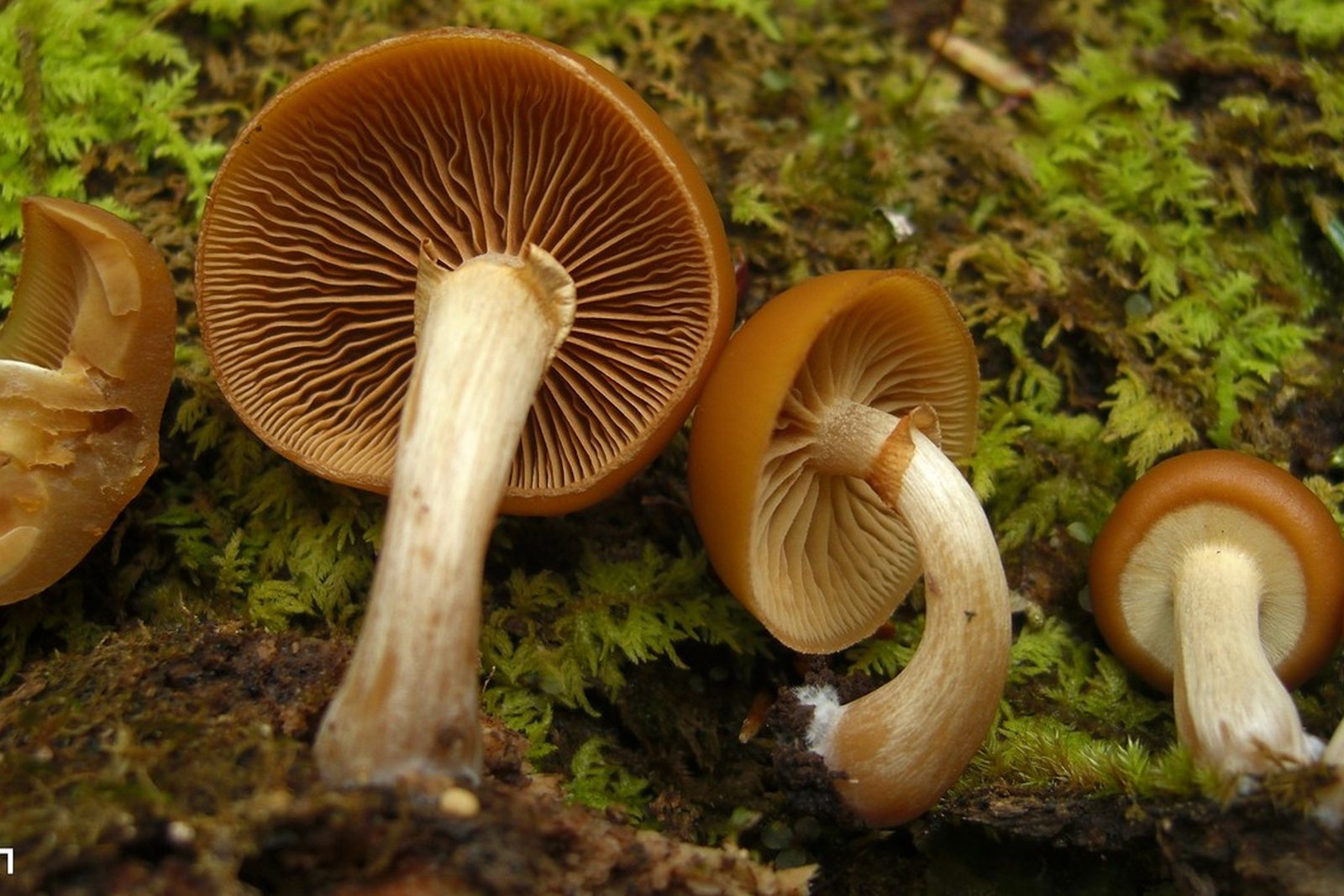
Which mushrooms is it confused with?
This is a "little brown mushroom", a group the Missouri Department of Conservation warns against eating at all ("Don't eat LBMs!"). It is confused in both directions, which is what makes it dangerous.
- Honey mushrooms (Armillaria). Burke says honey mushrooms are usually much larger and have white spores, in contrast to the brown spores of the funeral bell. Missouri also lists the honey mushroom (Armillaria mellea) and the ringless honey mushroom with white spores. Both grow on wood, often in clusters, and the spore colour is a feature an expert checks, not a test for a beginner.
- Velvet foot (Flammulina velutipes). Missouri says velvet foot has no ring and white spores.
- Psilocybe mushrooms. Burke names Psilocybe stuntzii, a psychoactive mushroom, and says at least one death and several close calls in its region came from this mix-up. The North American Mycological Association (NAMA) says G. marginata and other amatoxin-bearing little brown mushrooms may be mistaken for hallucinogenic species.
- Other deadly mushrooms. NAMA lists the death cap and several others in the same toxin group. Read the death cap guide, and see edible wild mushrooms and their look-alikes for pairs that fool people.
Never use colour, smell, taste, peeling the cap, silver, or the fact that animals or insects eat it as a test. The Ohio State University fact sheet labels the silver spoon, peeling and animal myths as false, and NAMA says colour, insect damage, smell and folklore are not reliable tests of edibility. See how to tell if a mushroom is poisonous for a longer explanation.
Flori can suggest a name from a photo of a mushroom, but a photo is never a reason to eat it. Read what an app can and cannot do.
When and where does it grow?
Burke says it grows on stumps and logs of conifers and hardwoods, or from buried wood, wood chips and other woody debris, usually in clusters or groups but sometimes alone. Missouri says it grows scattered or in clusters on deciduous and coniferous logs, and that when it grows from buried wood it can look as if it comes up from the soil.
The Missouri Department of Conservation says it can be found all year, with most activity from September to November, and that it is most common in spring and fall and sometimes appears through snow. Burke's page covers Washington State and gives no season, and our sources give no range for the southern hemisphere, so we cannot tell you its season there. Either way, the season is not a safety guide. A species name that is used in one region does not prove that a mushroom in your own garden is the same thing.
How poisonous is it, and what are the symptoms?
Burke describes the mushroom as deadly and says it contains the same toxins as the death cap (Amanita phalloides). NAMA names them as amanitins, complex cyclic polypeptides that block RNA synthesis in cells, and lists G. marginata in the amatoxin group. Edibility in our badge is therefore "deadly".
The key problem is the delay. NAMA describes four stages. In the first, 6 to 24 hours with no discomfort, the toxins are already damaging the kidneys and liver. In the second, about 24 hours, comes violent vomiting, bloody diarrhoea and severe abdominal cramps (NAMA notes severe diarrhoea can start as soon as 6 hours). In the third, about 24 hours, the person appears to recover, and NAMA warns that hospitalised patients are sometimes released in this phase. In the fourth, kidney and liver failure often lead to death. Missouri says symptoms can begin 10 or more hours after eating and may ease for a while before organ damage follows.
NAMA gives a fatality rate of about 50 percent without prompt, knowledgeable medical treatment and about 10 percent in the United States and Canada, where good care is readily available. Those numbers describe the amatoxin group in general, not this species alone. Feeling fine, or feeling better, after eating an unknown mushroom is not a sign that all is well. Our guide to mushroom poisoning symptoms goes through the stages.
What should you do if someone has eaten a funeral bell or an unknown mushroom?
- Call the poison line now, before any symptoms. Türkiye: UZEM 114 (Ulusal Zehir Danışma Merkezi). United States: Poison Control 1-800-222-1222. United Kingdom: NHS 111. Elsewhere, call your local emergency number. Do not wait to see what happens. NAMA says not to wait for symptoms to become severe.
- Keep a sample. Save leftovers, uncooked pieces, or more of the same mushroom from where it grew, with the wood or base it came from. NAMA advises keeping photographs or specimens that can help identification, and Ohio State says to save a sample. A paper bag kept cool is better than plastic.
- Write down the facts: who ate it, how much, when, and whether it was raw or cooked.
- Pets too. If a dog or cat may have eaten a wild mushroom, call your vet immediately; in the US the ASPCA Animal Poison Control Center can also help. See is it safe to pick wild mushrooms for staying safe before the basket.
This page gives no treatment advice: treatment decisions belong to a hospital and a poison centre. Do not try home remedies.
Frequently asked questions
Is the funeral bell poisonous?
Yes. The Burke Herbarium (University of Washington) describes it as deadly and says it contains the same toxins as the death cap. If someone may have eaten it, call a poison line at once: Türkiye 114, US 1-800-222-1222, UK 111.
What is the funeral bell confused with?
Burke names honey mushrooms (Armillaria) and the psychoactive Psilocybe stuntzii, and says at least one death and several close calls came from that mix-up. Missouri also lists velvet foot. Never rely on a description to tell them apart.
How soon do symptoms start after eating a funeral bell?
NAMA describes a first stage of 6 to 24 hours with no discomfort while the liver and kidneys are damaged, then vomiting and diarrhoea, an apparent recovery and later organ failure. Call a poison line before any symptoms.
Can you eat a funeral bell if you cook it?
No. It is described as deadly and our sources give no safe way to prepare it. Never eat a wild mushroom identified from a photo or an app.
Is it the same as Galerina autumnalis?
Missouri and Burke treat the two names as the same species, and Missouri says DNA work showed several galerinas once classified separately are one. Burke lists G. autumnalis among the names used in North America.
Sources
- University of Washington Burke Herbarium Image Collection: Galerina marginata
- Missouri Department of Conservation: Deadly Galerina
- North American Mycological Association: Mushroom Poisoning Syndromes
- North American Mycological Association: Wild Mushroom Safety
- Ohio State University CFAES: Wild Mushrooms
- Türkiye Yaban Hayatı: Galerina marginata
Written and fact-checked by the Flori team. Every guide cites horticultural sources such as the RHS, university extension services and the ASPCA, and is updated when the advice changes. How we write our guides
General plant care information. Plants vary; when a plant is valuable or a problem spreads quickly, consult a local nursery or plant specialist.