Puffball or Young Death Cap? Why Experts Cut Every One
A young death cap can look like a puffball. Why experts cut every one, what the cut shows, why it never proves safety, and what to do after a mistake.
 By Flori editorial team · Updated
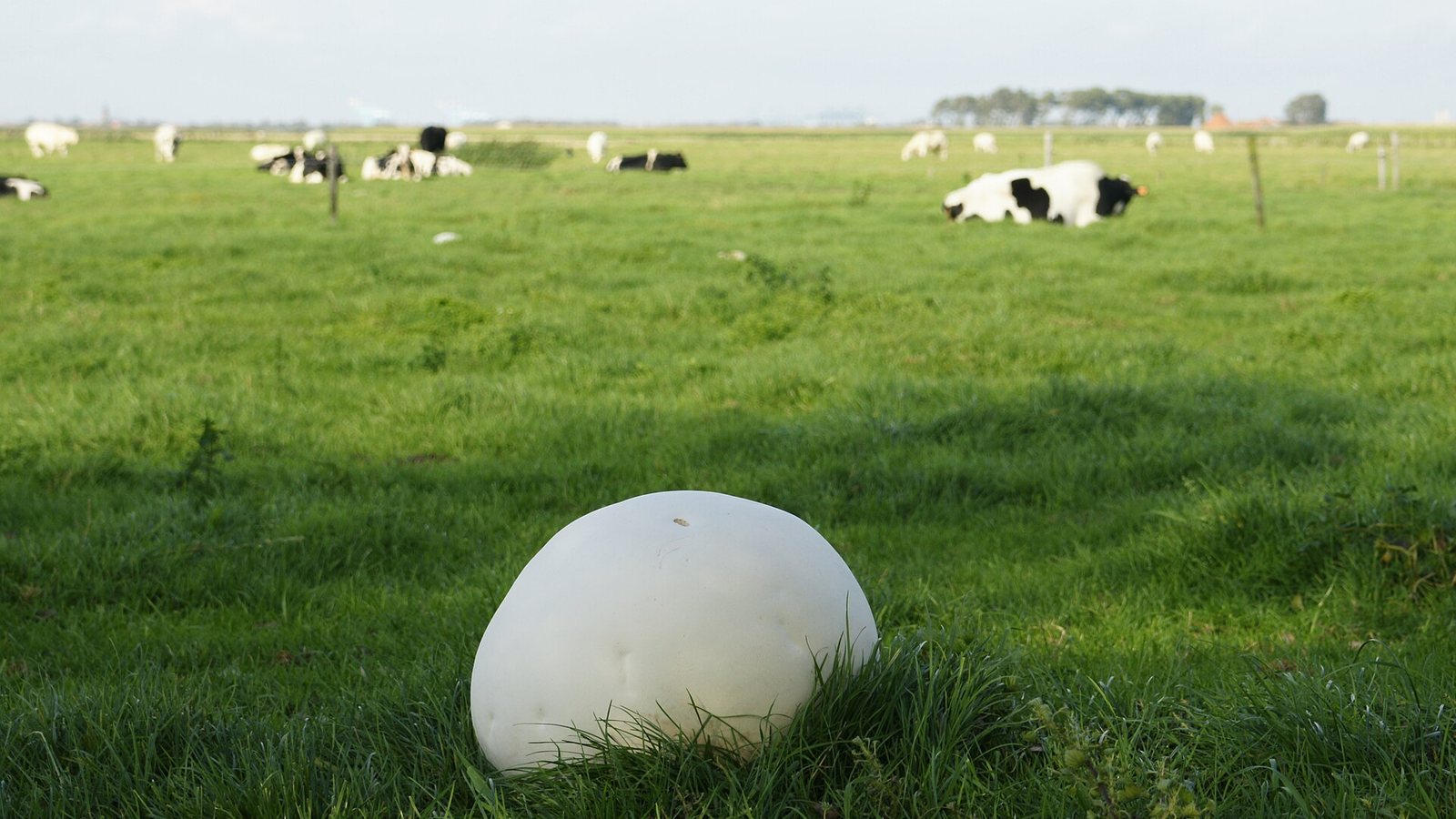 Photo: Hans Hillewaert · CC BY-SA 4.0
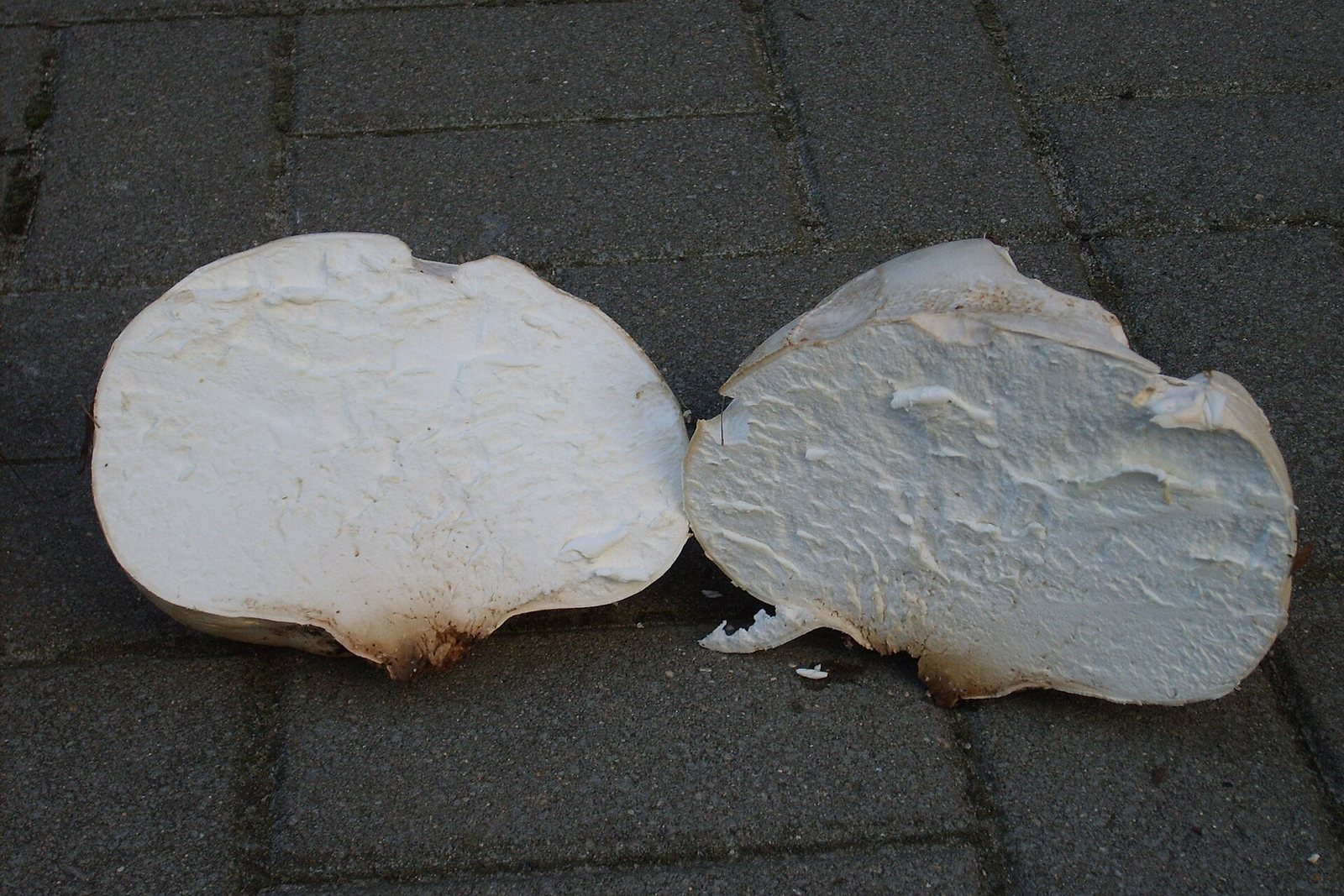
A young death cap can look like an immature puffball. Experts cut every one in half: a puffball is solid white inside, while a young death cap shows the stem and gills. The cut can only rule a mushroom out. It never proves a wild mushroom is safe, so do not eat on that basis.
Key takeaways
- Young death caps and puffballs both start as smooth, whitish, rounded lumps, so they can be mistaken for each other.
- Cut every one in half, top to bottom: a puffball is solid white inside, a young death cap shows a stem and gills.
- The cut can rule a mushroom out; it never proves a wild mushroom is safe, and a photo or app cannot cut.
- Earthballs have thick skin and a dark inside; they are poisonous look-alikes according to the University of Wisconsin.
- If anyone eats an unknown mushroom, call the poison line now and keep a sample; feeling well proves nothing.
On this page6
Why can a young death cap look like a puffball?
Because both start as a smooth, whitish, rounded lump. The Australian National Botanic Gardens says of the death cap (Amanita phalloides) that you could initially mistake this stage for an immature puffball, since many puffballs are white when young. That is why experts treat every round white fungus with respect, and why this guide exists: to explain the one check mycologists never skip, cutting it open, and to be clear about what that check can and cannot tell you. This guide is not an edibility guide, and nothing here tells you to eat a wild mushroom.
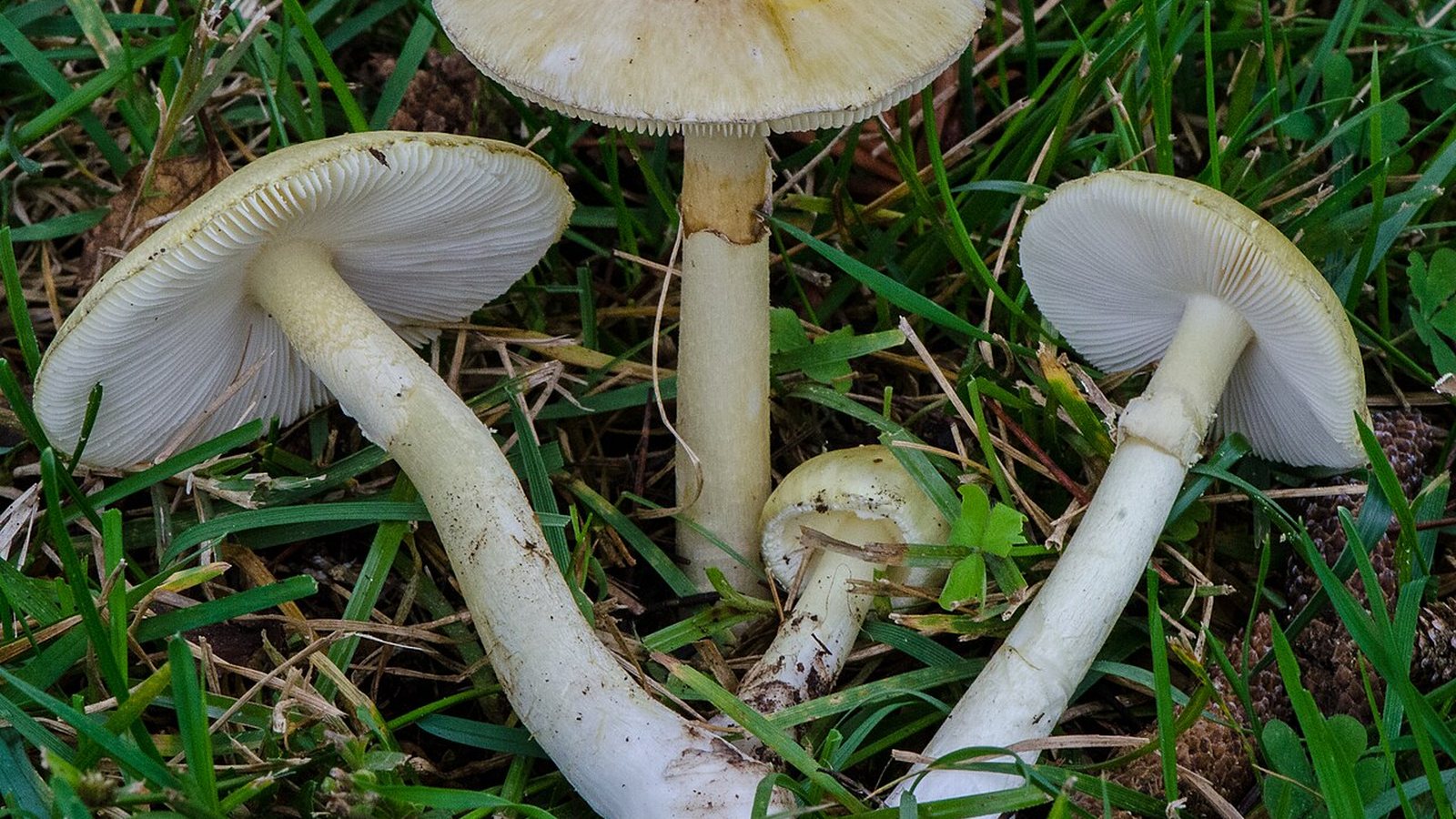
For the full picture of the deadly species, see our guides to the death cap and to destroying angel vs death cap. The death cap fruits mainly in autumn, roughly September to November in the Northern Hemisphere and March to May in the Southern, often under oaks and other trees in parks and gardens.
What does a cut show inside?
Cut the mushroom in half from top to bottom. The Botanic Gardens says that while an immature puffball has solid white flesh inside, a young death cap will show the stem and gills. Iowa State Extension gives the same warning in its note on puffballs: young deadly Amanita mushrooms look similar to puffballs from the outside, so cut the puffball in half to make sure it does not have a stalk inside.
| What is cut | What you see inside | What it means |
|---|---|---|
| Young puffball (e.g. Calvatia, Lycoperdon) | Solid, uniform white flesh from top to bottom (Botanic Gardens) | It has passed one check, not a safety test |
| Young death cap or destroying angel button | The outline of a stem and gills, or a small unopened mushroom (Botanic Gardens, Wisconsin) | Deadly Amanita. Do not eat; wash your hands |
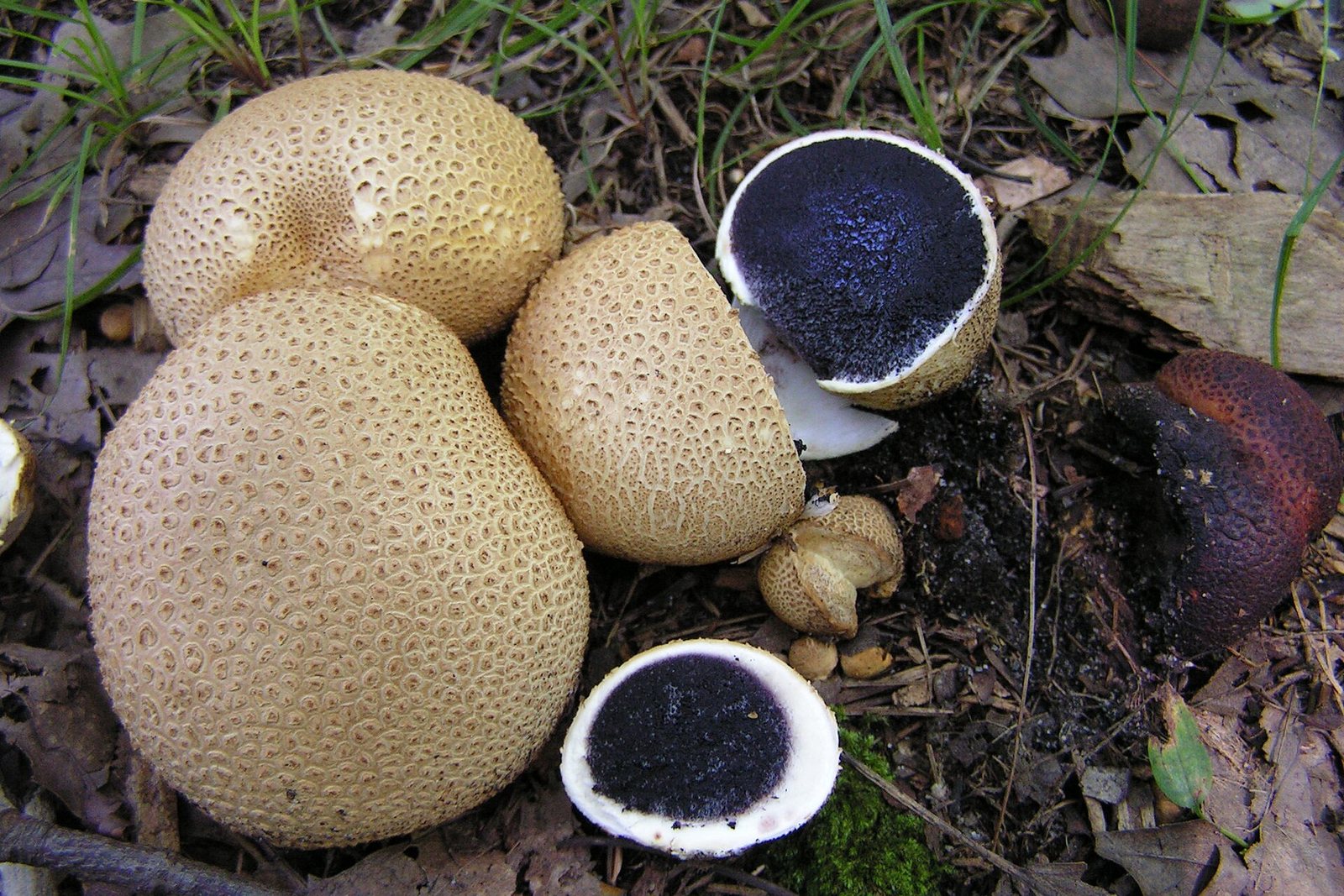
| Earthball (Scleroderma) | Thick, tough skin and dark inside, even when young (Wisconsin) | A false puffball, and a poisonous look-alike according to Wisconsin |
Why do experts cut every one?
Because the mistake is invisible from outside, and one wrong specimen can be fatal. The University of Wisconsin's Tom Volk advises slicing down the centre of every puffball, to check for a hidden mushroom primordium, and notes that what you find may be a button of the death angels (Amanita bisporigera, A. virosa and A. verna). That word "every" matters: a basket can hold a puffball and a button side by side, and each one needs its own cut. A half-cut or a single sample from the group proves nothing about the others.
The cut also has to go through the whole mushroom, from top to base. The Botanic Gardens notes that the death cap's base sits in a sac-like cup (volva) that is often buried, so a mushroom snapped off at the surface loses the clue; a cut through the middle shows the internal outline even when the base is missing.
Is a clean white cut proof that a mushroom is safe?
No. A cut is a filter that can rule a mushroom out; it cannot make a mushroom safe. Treat the cut as one minimum step among many that experts take, not as a test you pass on a kitchen counter. Several points keep it from being a safety test:
- It needs a trained eye. NAMA says no single visual feature reveals whether a mushroom is edible, and that colour, insect damage, smell and folklore are not reliable tests.
- Other look-alikes exist. Earthballs have a thick skin and a dark interior from the start, and Wisconsin calls them poisonous look-alikes. Our guide on edible wild mushrooms and their dangerous look-alikes compares more pairs.
- Myths do not replace it. Smell, colour, peeling the cap, a silver spoon, or animals and insects eating the mushroom prove nothing about safety. Cooking does not help either: the Botanic Gardens says you cannot remove the death cap's poisons by soaking, cooking or drying.
- A photo cannot cut. Flori can identify a wild mushroom from a photo, which is useful for learning names and for showing a local expert what you found, but a photo cannot see inside, and no app, Flori included, can say that a wild mushroom is safe to eat. Our guide on whether an app can identify mushrooms explains the limits.
Some extension pages describe young giant puffballs as edible when pure white inside. This guide does not rate any wild mushroom as edible, and it does not tell you to eat one: the cut is the minimum step, and it only works if the person doing it already knows what a puffball looks like inside.
What should a beginner do instead?
- Leave round white mushrooms alone. If you are not sure, do not pick it, taste it or serve it.
- Learn the deadly ones first. Learn what a death cap, a destroying angel and an earthball look like cut open, in person, with a local mycological society or an expert who checks specimens in hand.
- Photograph before picking. Take clear photos of the cap, gills, stem and ground; if you pick one to show an expert, handle it carefully and wash your hands.
- Keep children and pets away. NAMA recommends keeping unidentified mushrooms away from small children and pets, since dogs often eat mushrooms they find in yards. See our guide on poisonous mushrooms and dogs.
What to do if someone eats an unknown mushroom
If a person or a pet has eaten any mushroom you cannot identify, call the poison line now and do not wait for symptoms. In Türkiye call UZEM 114 (Ulusal Zehir Danışma Merkezi); in the United States call Poison Control on 1-800-222-1222; in the United Kingdom call NHS 111; in Australia, the Botanic Gardens lists the 24-hour poisons line as 13 11 26. For a pet, call your vet or the ASPCA Animal Poison Control Center. Keep a sample of the mushroom, and take photographs; the Botanic Gardens says to take a sample if possible.
Do not wait because you feel well. NAMA describes Amanita amatoxin poisoning in stages: for the first 6 to 24 hours there may be no discomfort while the liver and kidneys are already being damaged; then comes a day of violent vomiting, bloody diarrhoea and severe cramps; then a spell of apparent recovery, when hospitalised patients are sometimes released, before kidney and liver failure can follow. NAMA gives a fatality rate of about 50% without prompt, knowledgeable medical treatment. This guide gives no treatment advice and no home remedies; follow what the poison line or emergency services tell you. More on the timeline is in our guide to mushroom poisoning symptoms.
Frequently asked questions
How do you tell a puffball from a young death cap?
Experts cut it in half from top to bottom. The Australian National Botanic Gardens says an immature puffball is solid white inside while a young death cap shows the stem and gills. The cut can only rule a mushroom out; it never proves a wild mushroom is safe.
Is it safe to eat a puffball if it is white inside?
This guide does not rate any wild mushroom as edible. A white interior passes only one check, and only for someone who already knows what a puffball looks like inside. Never eat a wild mushroom based on a photo or an app.
Why must every puffball be cut?
Because a deadly Amanita button can sit beside a puffball and look identical outside. University of Wisconsin mycology advice is to slice down the centre of every puffball.
What is an earthball?
A false puffball (Scleroderma) with a thick, tough skin and a dark inside even when young. The University of Wisconsin calls earthballs poisonous look-alikes.
What should I do if my child or dog ate a mushroom?
Call the poison line now: UZEM 114 in Türkiye, 1-800-222-1222 in the US, NHS 111 in the UK; for pets, your vet or the ASPCA Animal Poison Control Center. Keep a sample and do not wait for symptoms.
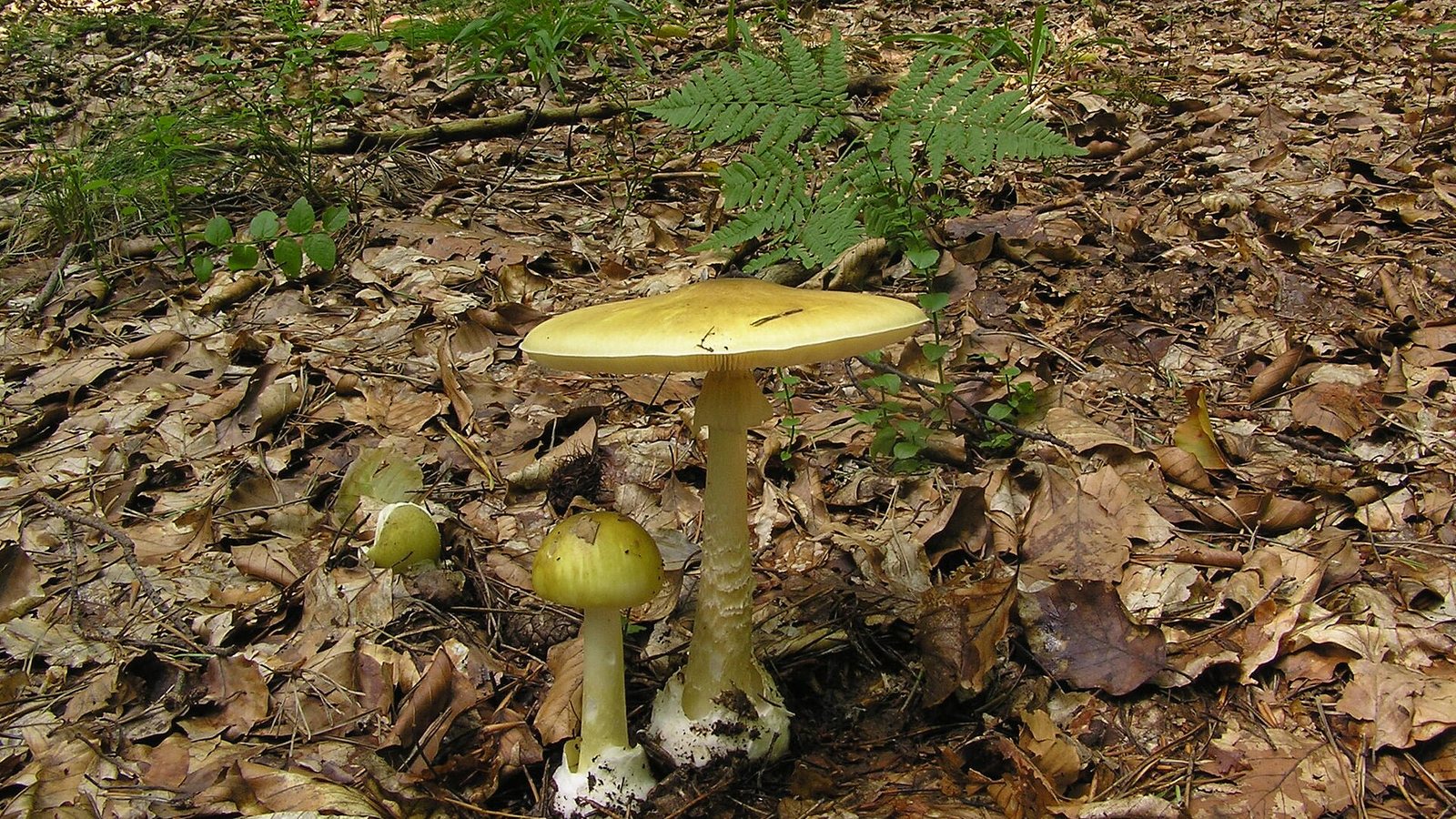
Death cap mushroom ID: greenish cap, white gills, a skirt-like ring and a buried cup. Look-alikes, myths that kill and what to do if someone eats one.
Sources
- Australian National Botanic Gardens: Deathcap (Amanita phalloides)
- North American Mycological Association: Mushroom poisoning syndromes
- Iowa State Extension: Puffballs
- University of Wisconsin (Tom Volk): Lycoperdon pyriforme, the wolf-fart puffball
- North American Mycological Association: Wild mushroom safety
Written and fact-checked by the Flori team. Every guide cites horticultural sources such as the RHS, university extension services and the ASPCA, and is updated when the advice changes. How we write our guides
General plant care information. Plants vary; when a plant is valuable or a problem spreads quickly, consult a local nursery or plant specialist.