Yellow Stainer vs Field Mushroom: Do Not Mix Them Up
The poisonous yellow stainer (Agaricus xanthodermus) looks like the field mushroom. See how they differ, why the yellow stain is not proof, and what to do.
 By Flori editorial team · Updated
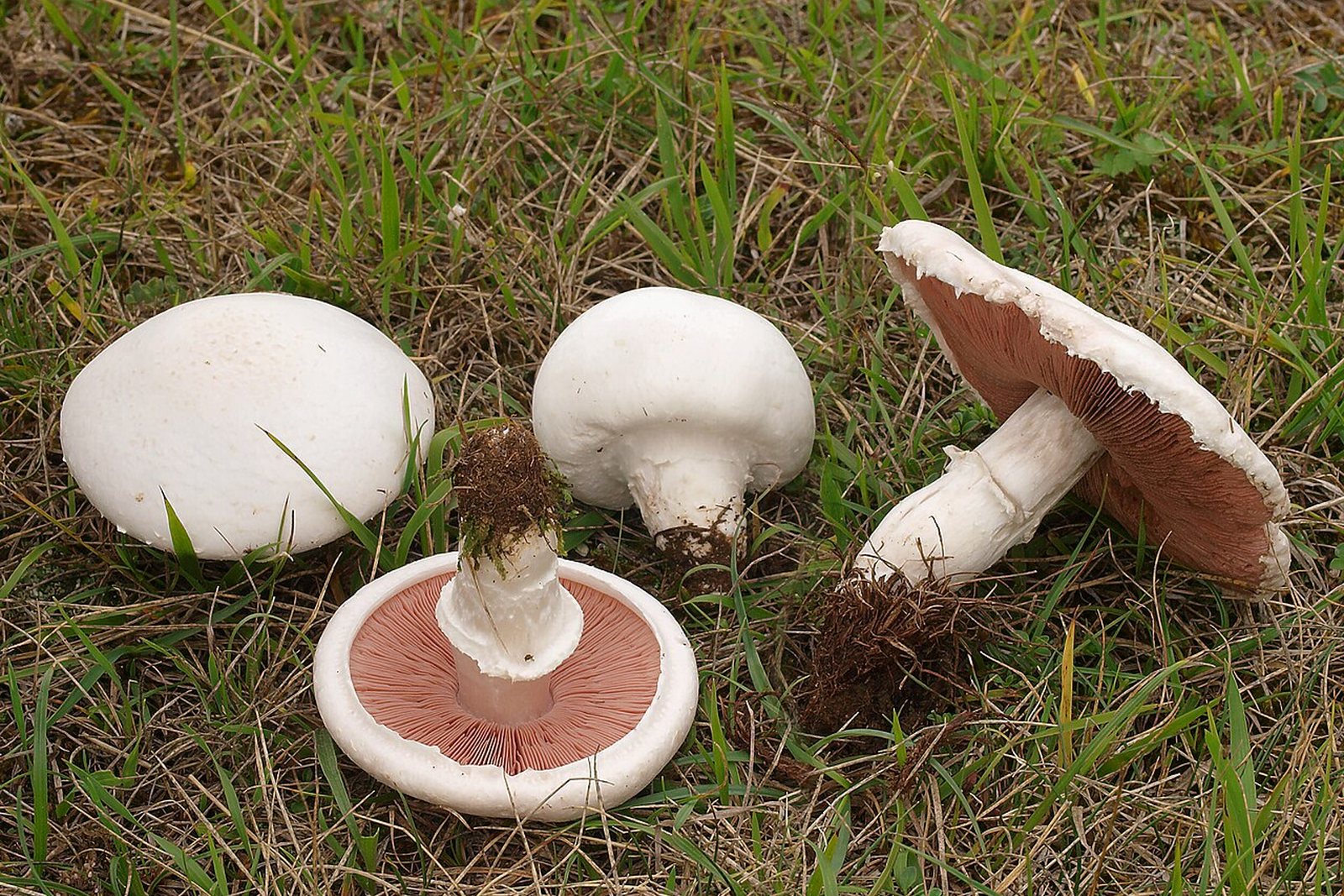
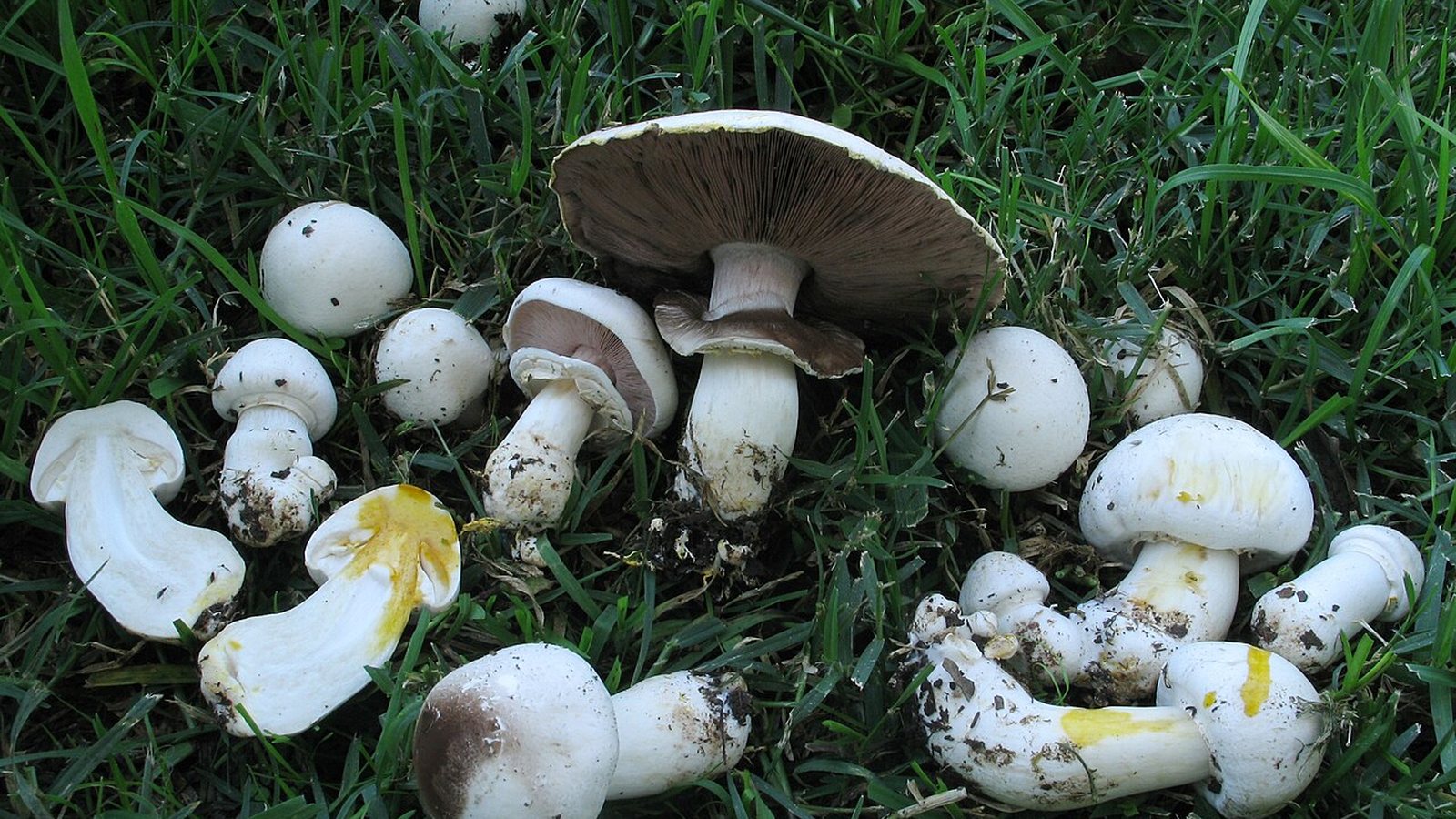 Photo: Copyright ©2011 Byrain · CC BY-SA 3.0
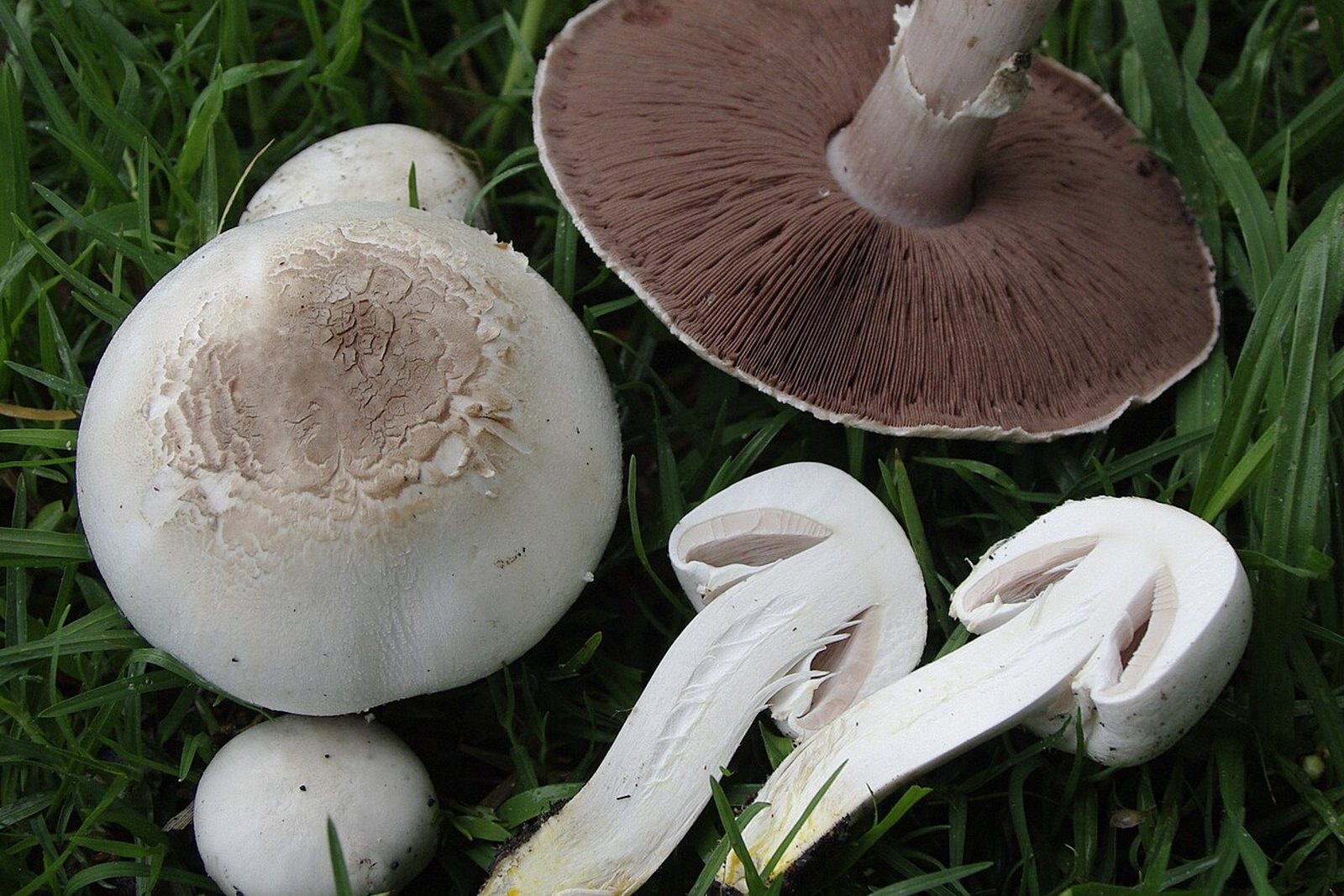
The yellow stainer (Agaricus xanthodermus) is poisonous and resembles field and horse mushrooms. Its cap and stem base turn bright chrome yellow when scratched and it smells of ink or iodine, but those clues are for experts: a missing stain never proves safety. Do not eat wild mushrooms from a photo or an app.
Key takeaways
- The yellow stainer is a poisonous lawn mushroom that looks like field and horse mushrooms.
- Experts look for bright yellow staining on the cap and stem base, a double ring, pink-to-brown gills and a phenolic smell.
- A missing yellow stain never proves a mushroom is safe, and smell and cooking are not tests.
- Symptoms can start 40 minutes to four hours after eating, but some people react only on a later meal.
- If anyone ate an unknown mushroom, call the poison line now and keep a sample.
On this page7
- How is the yellow stainer different from a field mushroom?
- Why is it so easy to mix them up?
- Does the yellow stain prove a mushroom is safe if it is missing?
- What happens if someone eats a yellow stainer?
- Is the yellow stainer the only lookalike to worry about?
- Myths that do not protect you
- What to do if someone ate an unknown mushroom
How is the yellow stainer different from a field mushroom?
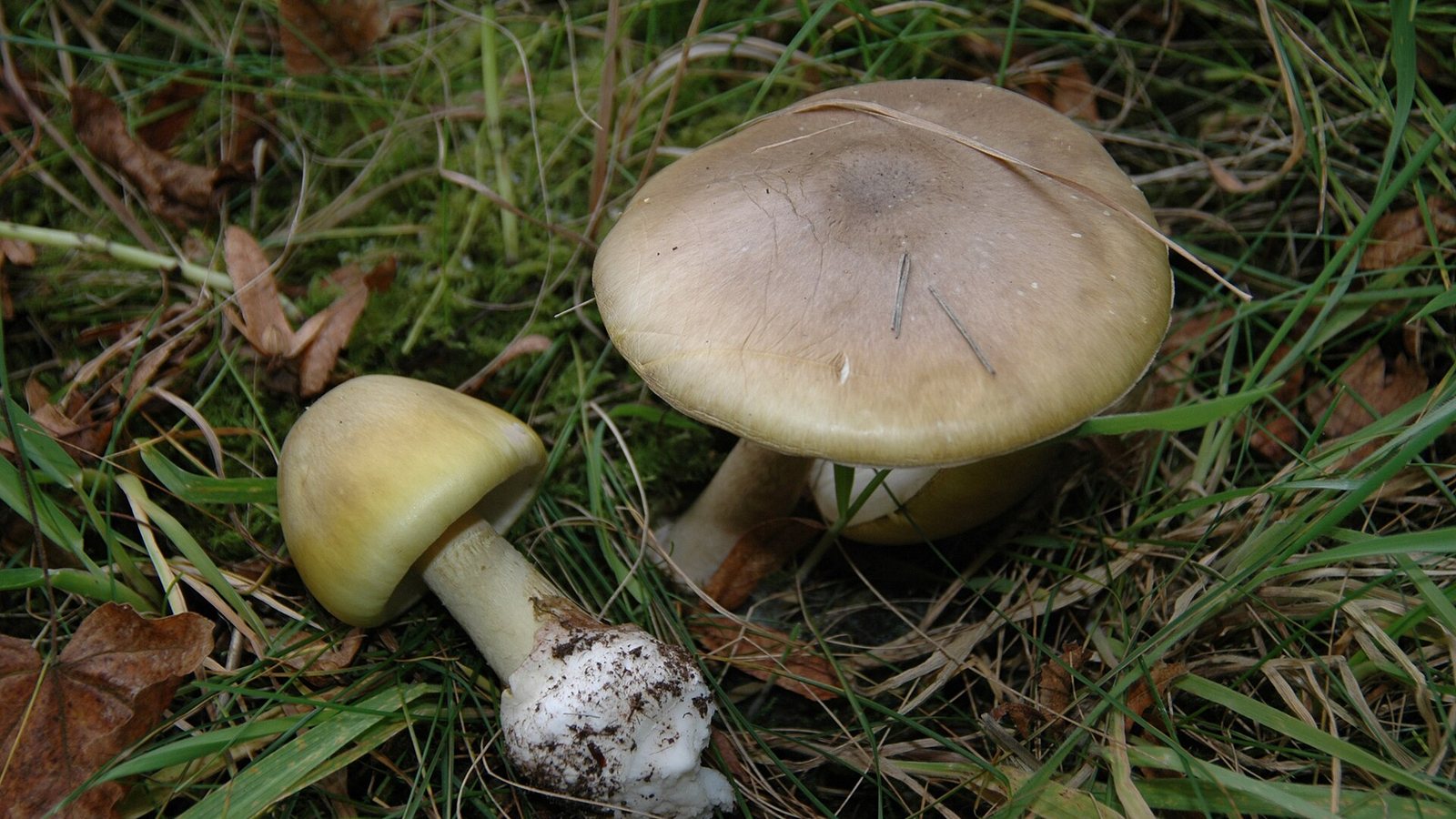
The yellow stainer (Agaricus xanthodermus) is a poisonous mushroom that looks like the field mushroom (Agaricus campestris) and the horse mushroom (Agaricus arvensis). The textbook difference is that its cap and stem base turn bright chrome yellow when scratched, but that is one clue for experts, not a way to decide that a mushroom is safe. This guide shows the differences side by side, explains why they are not enough for a beginner, and ends with what to do if someone has eaten an unknown mushroom.
The State Herbarium of South Australia calls the yellow stainer a large white mushroom whose cap resembles the horse or field mushrooms, and says it is one of the most common mushrooms involved in poisonings in Australia. NAMA, the North American Mycological Association, also lists yellow stainer poisonings among its reports from the United States. It grows on lawns and pastures, exactly where people hunt for field mushrooms.
| Feature | Yellow stainer | Field and horse mushrooms |
|---|---|---|
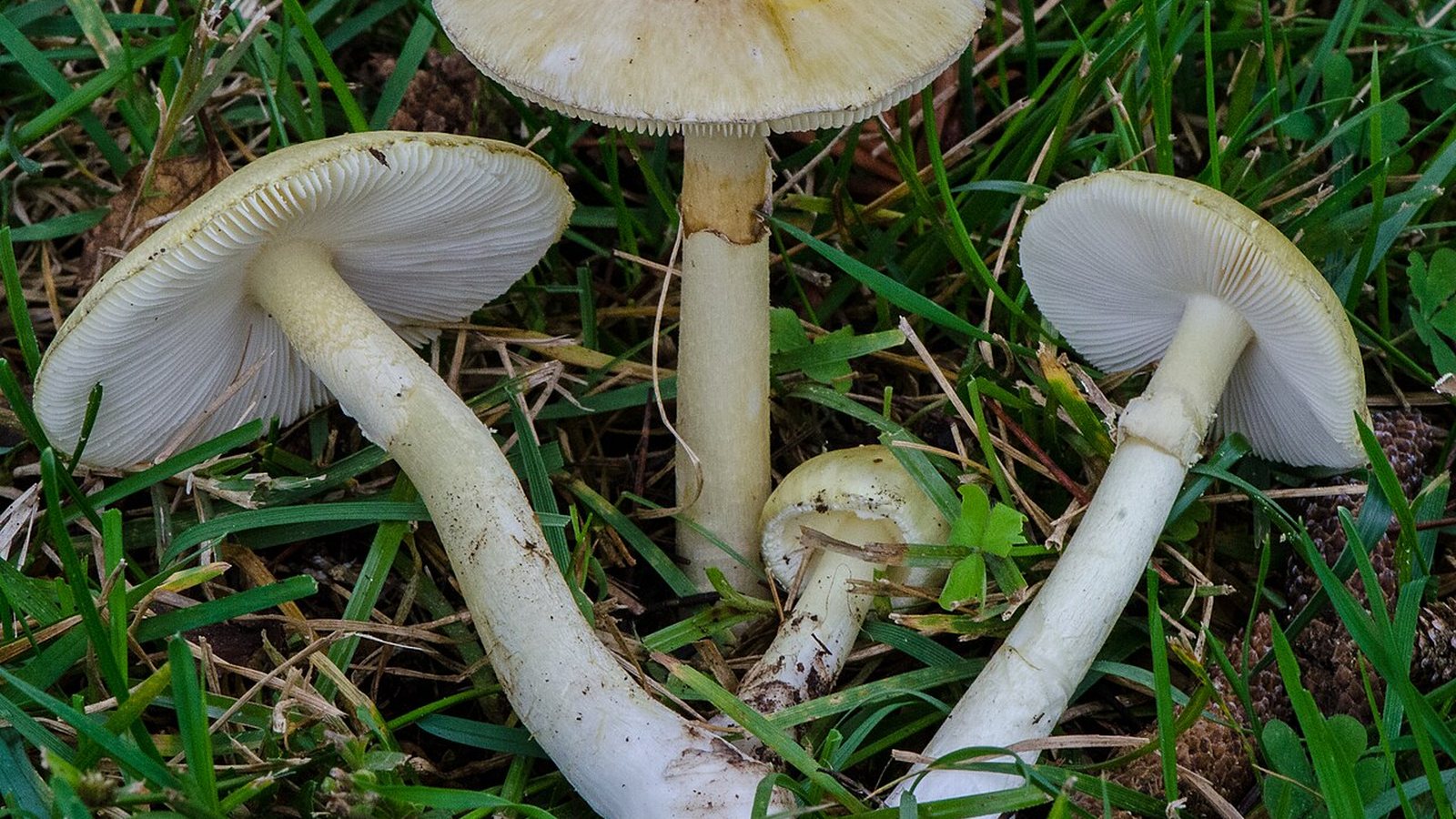
| Scratched cap or stem base | Turns bright chrome yellow | Do not stain yellow |
| Young cap shape | Often squarish, flat-topped, almost vertical sides when older | Not described this way in the herbarium factsheet |
| Gills | White at first, then pink (deeper pink than field mushrooms), then dark purple-brown | Field mushroom gills are a lighter pink |
| Ring on the stalk | Usually double: a narrow lower ring hugging the stem and a hanging upper one | Not described the same way |
| Smell | Unpleasant: phenolic, like ink or iodine, stronger when cooked | Not described as chemical |
| Habitat | Groups in lawns and pastures, sometimes in rings | Not compared in the factsheet |
The factsheet states that the horse and field mushrooms do not stain yellow, and that other yellow-staining Agaricus species lack the same combination of squarish cap, double ring, pale young gills and phenolic smell.
Why is it so easy to mix them up?
Because the two look alike on the surface: a white to greyish cap, a ring, pink gills in the middle stage and a grassland habitat. The difference sits in details that change with age, weather and how fresh the mushroom is, such as the colour of the gills (white first, then pink, then brown), a squarish cap that rounds out, or a faint yellow that fades to brown. The herbarium notes that the yellow colour on the cap fades to brown. A mushroom you pick two days after rain can look different from one picked on a dry day.
Photos make it worse. A single picture rarely shows the base of the stem, the inside flesh, the ring and the gills together. NAMA's safety page says plainly that a single photograph is never enough to identify a mushroom, and that sometimes microscopy or DNA sequencing is needed. Our guide to mushrooms in a lawn or garden lists the other common lawn mushrooms.
Does the yellow stain prove a mushroom is safe if it is missing?
No, and this is the most dangerous part of the question. The yellow test can raise a warning. It can never clear a mushroom. A mushroom that does not stain yellow can still be another poisonous species, and the herbarium says plainly that some other Agaricus species stain yellow without having the stainer's other features. Smell is no safer: you cannot sniff your way to safety, and cooking makes the stainer's smell stronger, which is a warning that arrives too late if the pan is already hot.
The stain test is also done on a piece of mushroom you have already picked and cut, often by someone who has not seen the habitat or the full life cycle of the fungus. Experts combine many features and still check with a spore print, a purple-brown print in the case of the stainer according to the herbarium, and sometimes a microscope. If you are curious, learn with a local mycological society, not from a recipe. Our guide to learning mushroom identification safely explains how.
What happens if someone eats a yellow stainer?
According to the State Herbarium of South Australia, the yellow stainer may cause severe gastro-intestinal pains, diarrhoea, vomiting and sometimes coma, symptoms may start 40 minutes to four hours after eating, and complete recovery within a few days is expected. NAMA's poisoning reports for 2006 to 2017 list Agaricus xanthodermus cases with gastro-intestinal distress, vomiting, nausea and diarrhoea, in adults and in a child.
The herbarium adds a point that surprises many people: not everyone who eats it gets sick. Some seem immune, some have no ill effects the first few times and suffer later, and some are severely ill the first time. This is why "my family has eaten these for years" is no evidence at all. Nobody can predict who will react, or when.
Do not treat that mild-sounding timeline as comfort. Early symptoms such as vomiting and diarrhoea are also how other, much more dangerous poisonings begin. For the full picture of symptoms and timing see mushroom poisoning symptoms.
Is the yellow stainer the only lookalike to worry about?
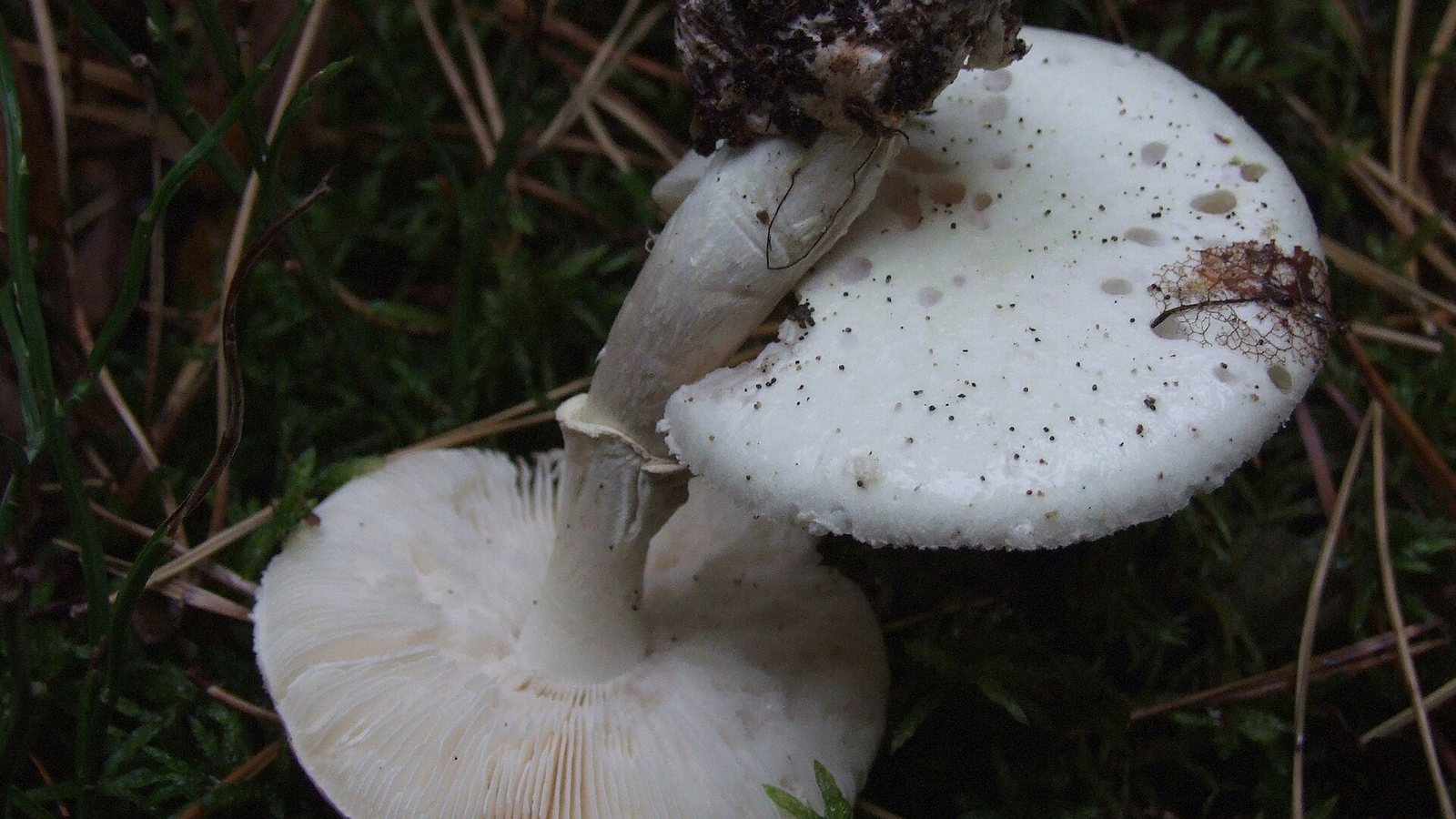
No. A young yellow stainer has white gills, and the herbarium describes the gills as white at first, so a button mushroom can resemble other white mushrooms, including the deadly white Amanitas. NAMA warns that if gastro-intestinal symptoms begin 6 to 24 hours after eating, amatoxin poisoning is possible and can be very serious. That is a different timeline from the stainer's 40 minutes to four hours, but you cannot know which mushroom you ate. Read how young death caps look in our guides on puffballs and young death caps and destroying angels and death caps.
If you want an overview of edible mushrooms and their dangerous look-alikes, start with edible wild mushrooms and their look-alikes. An identification app, including Flori, can suggest a possible name from a photo, which is useful for starting a conversation with a local expert, but it cannot tell you a wild mushroom is safe to eat. Why apps fall short is explained in can an app identify mushrooms.
Myths that do not protect you
- "It smells fine, so it is fine." Smell is not a safety test, and the stainer's smell grows stronger on cooking.
- "Peeling the cap removes the poison." It does not; peeling is not a safety test (the herbarium notes the stainer's skin peels easily anyway).
- "Animals and insects eat it, so it is safe." What a slug or a deer tolerates tells you nothing about people.
- "A silver spoon or onion turns dark." Neither is a test.
- "We have always picked these." The herbarium says reactions vary from person to person and from one meal to the next.
- "Cooking makes it safe." Cooking does not remove the stainer's effect on people who react to it.
NAMA says there is no single visual rule that separates edible mushrooms from poisonous ones, and that colour, insect damage, smell and folklore are not reliable tests.
What to do if someone ate an unknown mushroom
Call a poison line now, before any symptoms. Do not wait: some serious poisonings, including those from Amanita mushrooms, can seem to improve before liver damage shows.
- Türkiye: UZEM 114 (Ulusal Zehir Danışma Merkezi)
- United States: Poison Control 1-800-222-1222
- United Kingdom: NHS 111
Keep a sample of the mushroom, raw or cooked leftovers, and take a photo of where it grew. NAMA advises keeping photographs or specimens that may help with identification, and keeping unknown mushrooms away from small children and pets. Do not use home remedies; follow the poison line and the doctors.
Frequently asked questions
Is the yellow stainer deadly?
The State Herbarium of South Australia says it may cause severe gastro-intestinal pains, diarrhoea, vomiting and sometimes coma, with complete recovery within a few days expected. You cannot be sure what you ate, so call a poison line.
Does a yellow stain prove a mushroom is the yellow stainer?
No. Other Agaricus species can stain yellow too, and the herbarium says they lack the stainer's other features. Experts combine the stain with ring, gills, smell and spore print, and a stain test never makes a mushroom safe.
Can you cook the yellow stainer to make it safe?
No. The herbarium says the smell grows stronger on cooking, and cooking does not protect people who react to it. NAMA says colour, smell and folklore are not reliable tests of edibility.
Can an app tell me whether a lawn mushroom is a field mushroom?
An app can suggest a possible name from a photo, but NAMA says a single photograph is never enough. Do not eat any wild mushroom based on an app; ask a local expert or mycological society.
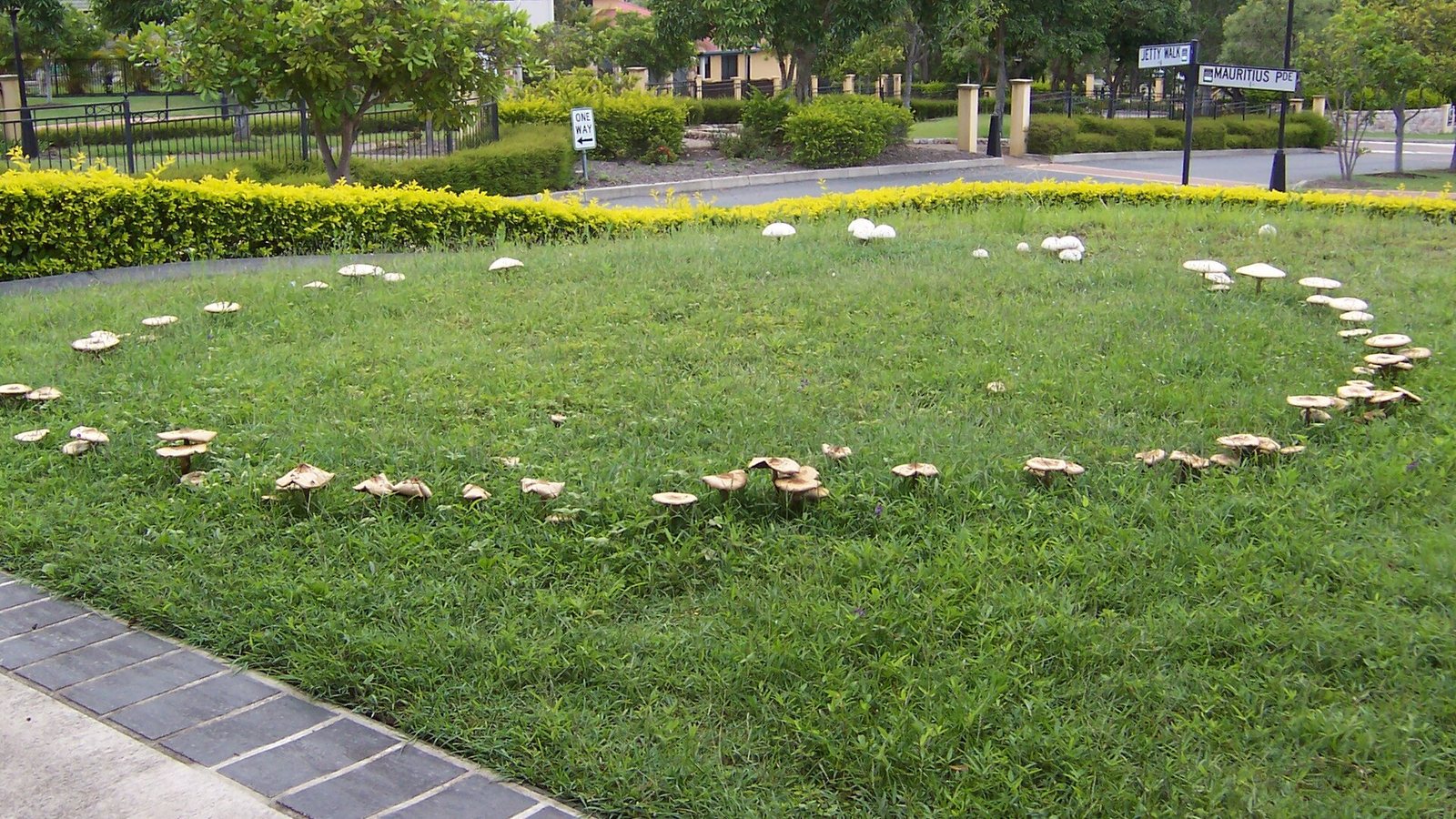
Mushrooms in the lawn rarely harm grass, but some are deadly if eaten by children or pets. Why they appear, which matter and how to remove them safely.
Sources
Written and fact-checked by the Flori team. Every guide cites horticultural sources such as the RHS, university extension services and the ASPCA, and is updated when the advice changes. How we write our guides
General plant care information. Plants vary; when a plant is valuable or a problem spreads quickly, consult a local nursery or plant specialist.