Poinsettia Dropping Leaves: Why and What to Do
Poinsettia dropping leaves? Match the pattern to the cause: cold, heat, wet soil or poor light, with a symptom table and a step-by-step fix.
 By Flori editorial team · Updated
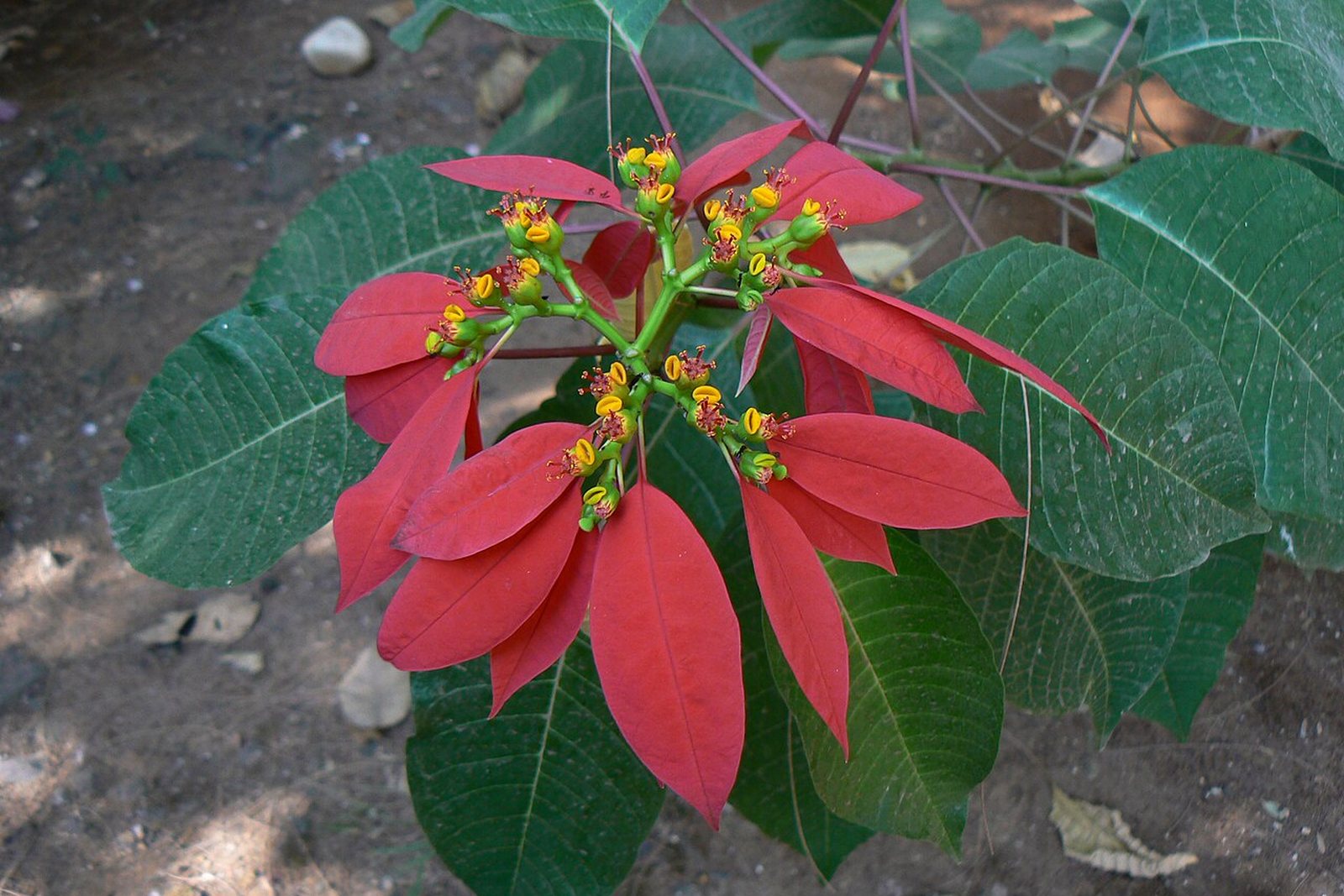
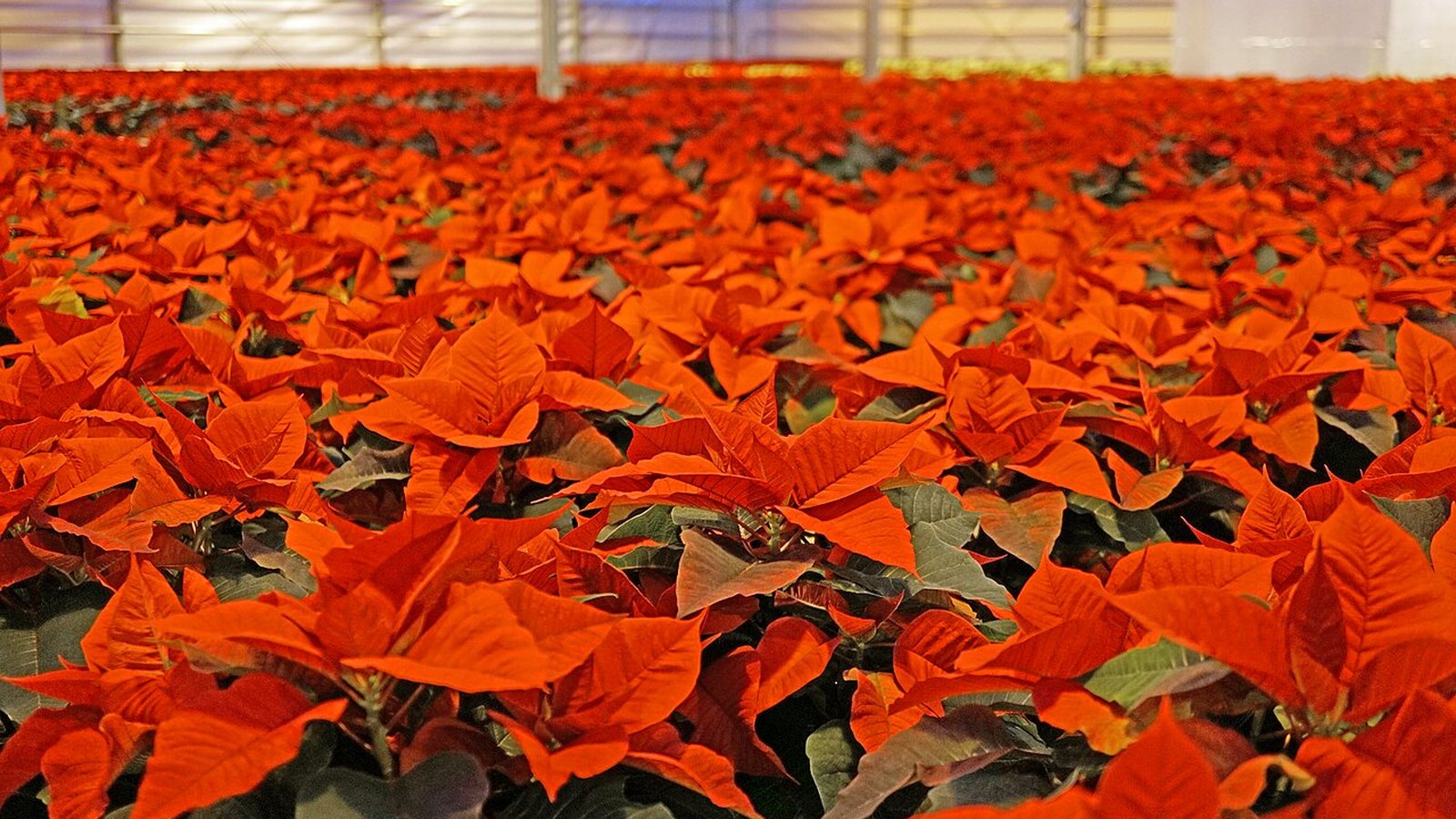 Photo: Tiia Monto · CC BY-SA 4.0
A poinsettia usually drops leaves because it was chilled below 10 °C (50 °F), sits too hot or dry beside a radiator, or has wet soil from a foil sleeve. Move it once to a bright, steady spot, water only when the surface is dry, and keep it away from draughts.
Key takeaways
- Leaves that fall a few at a time soon after buying usually mean the plant was chilled before or during the trip home.
- Chilling below 10 °C (50 °F) and excess heat above 21 °C (70 °F) both cause leaf drop.
- Water only when the surface is dry, and always take off the foil sleeve and empty the saucer.
- Move the plant once to a bright, draught-free spot and then leave it alone for a week.
- Poinsettia sap is an irritant to dogs and cats; call your vet if a pet eats some.
On this page9
- Why is my poinsettia dropping leaves?
- Match what you see: symptom, cause, first fix
- Is some leaf drop normal?
- Was it chilled? The cold check
- Is it too hot or too dry instead?
- Is it a watering problem?
- Light, feeding and pests
- What should you do today, step by step?
- Is the fallen leaf safe around pets and children?
Why is my poinsettia dropping leaves?
Almost always because of temperature or water, not disease, and the pattern tells you which. Leaves that fall within days of buying usually point to a cold shop display or a cold trip home. Yellow leaves that fall in a warm, dry room point to heat. Leaves that fall from a plant sitting in wet soil point to roots. This guide is only about the leaf-drop question: a quick table to match what you see, then what to do first. If you want the whole season, our poinsettia care guide covers it.
Match what you see: symptom, cause, first fix
| What you see | Likely cause | First fix |
|---|---|---|
| Leaves and bracts fall a few at a time within days of buying | Chilled before purchase or on the way home (RHS) | Move to a steady, warm, bright spot; no more moves |
| Leaves drop after a night near a cold window, door or draughty hall | Chilling below 10 °C (50 °F) (Clemson) | Keep it above 13–16 °C (55–60 °F), away from glass and doors |
| Leaves yellow, then fall; bracts fade early; plant sits near a radiator or vent | Too much heat or dry air (Clemson) | Move away from the heat source; keep days at or below 21 °C (70 °F) |
| Soil stays soggy, plant wilts, lower leaves fall | Too much water, possible root rot (Illinois, Clemson) | Remove the foil sleeve, let the surface dry, empty the saucer |
| Pot light, soil dry right through, plant limp | Allowed to dry out completely (Clemson) | Water until it drains, then keep it moderately moist |
| Lower leaves fall and growth is pale in a dim corner | Poor light (Clemson) | Move to bright, indirect light, at least 6 hours a day |
| Tiny white insects fly up, or leaf undersides look sticky or speckled | Whitefly or other pests (Clemson, Illinois) | Inspect the undersides and treat gently, following the label |
Is some leaf drop normal?
A little is, but a steady stream is not. NC State Extension says that as the plant ages the small flower clusters in the centre, called cyathia, drop, and that is ordinary ageing, not a leaf problem. Newer cultivars hold their bracts and foliage much better indoors than older ones did; UF/IFAS notes that until about ten years ago bracts dropped if the plant stayed indoors for more than a few days. So a modern plant shedding fast has a problem in its surroundings.
Was it chilled? The cold check
Cold is the main culprit. The RHS says poinsettias need a minimum of 13–16 °C (55–60 °F), that cooler conditions cause physiological shock, and that leaves falling a few at a time soon after purchase usually mean the plant was chilled before you bought it. Clemson names chilling injury below 10 °C (50 °F) as a cause of early leaf drop. Illinois Extension adds that a plant should be sleeved or covered when outdoor temperatures are below 10 °C (50 °F), and that plants kept in sleeves deteriorate quickly. If yours came home on a cold day, unwrap it at once, and if it was clearly damaged in the shop, take it back with the receipt. Our guide to how cold is too cold for houseplants explains the thresholds, and the poinsettia shop checklist shows how to avoid a chilled plant in the first place.
For readers in Türkiye: a sheltered Mediterranean or Aegean balcony may stay mild in early winter, but a night on an unheated inland Anatolian balcony is exactly this cold. In a temperate northern climate, the dash from the car to the door is the risky part.
Is it too hot or too dry instead?
Yes, this is the opposite mistake and it is common in heated flats. Clemson says excess heat makes leaves yellow and fall and bracts fade early, and recommends keeping daytime temperatures at or below 21 °C (70 °F). It also advises keeping the plant away from drafts, fireplaces and vents, which bring heat or dry air. A window sill above a radiator, or a spot beside a stove, gives both heat and cold glass behind the pot. UF/IFAS says slightly humid air prolongs colour and a damp gravel tray or occasional misting helps.
Is it a watering problem?
Often, and both extremes look alike at first. The RHS says to water sparingly, only when the compost surface has begun to feel dry, because overwatering can damage the plant and lead to grey mould. UF/IFAS agrees: water when the soil surface is dry to the touch, empty any water from the saucer, and too much water can kill a poinsettia. Clemson adds that root rotting fungi occur in overwatered or poorly drained soil, and that you should never let the mix dry out completely or stand in water. Illinois Extension warns that wet soil together with a wilted plant may mean root rot.
The fix is a routine. Lift the plant out of its foil or decorative pot first, because foil holds water at the bottom. Water until it runs from the drainage hole, let it drain fully, then return it. The RHS suggests standing the pot in tepid water for 10–20 minutes and letting it drain. Do not water again until the surface feels dry. If the soil smells sour or the stem base is soft, follow our root rot rescue plan.
Light, feeding and pests
Poor light, poor feeding and pests can all shorten a poinsettia's life. Clemson lists poor light and poor nutrition among the causes of premature leaf drop and recommends at least 6 hours of bright, indirect light a day; direct sun can fade the bracts, so filter strong sun with a sheer curtain. UF/IFAS advises not fertilising an indoor poinsettia, since high fertiliser levels reduce plant quality, and Clemson says not to feed while it is in bloom. For pests, Clemson calls whitefly the most common insect, and Illinois says to check the undersides of leaves for aphids and whiteflies. Choose the gentlest treatment first and always follow the label.
What should you do today, step by step?
- Move it once, to the right place. Bright, indirect light, away from doors, radiators, vents and cold glass.
- Check the temperature. Aim to stay between 13 °C and 21 °C (55–70 °F), as the RHS and Clemson advise.
- Feel the soil. Push a finger into the surface and lift the pot; water only if the surface is dry.
- Remove the sleeve. Take off the foil or plastic and empty the saucer.
- Look under the leaves for whitefly or aphids.
- Then leave it alone for a week. Repeated moving and watering make leaf drop worse, and plants often settle once conditions are steady.
Is the fallen leaf safe around pets and children?
Keep fallen leaves out of reach. The ASPCA lists poinsettia (Euphorbia pulcherrima) as toxic to dogs and cats, with an irritant sap that can irritate the mouth and stomach and sometimes cause vomiting, but also says its toxicity is generally over-rated. If a pet has eaten some, call your vet or ASPCA Animal Poison Control; for a person, follow your local poison line. See our Christmas plants toxic to pets guide for the others. If you cannot work out the cause, Dr. Flori in the Flori app can ask follow-up questions from a photo and tell you what is likely and how urgent it is. See also why plant leaves fall off.
Frequently asked questions
Is it normal for a poinsettia to drop leaves?
A few leaves and the small centre flower clusters drop as the plant ages, but a steady loss on a modern cultivar means something in its surroundings is wrong, usually cold, heat or watering.
Why did my poinsettia drop leaves right after I bought it?
The RHS says leaves falling a few at a time within days of purchase usually mean the plant was chilled before you bought it, for example in a cold shop display or on the way home.
Will a poinsettia recover after dropping its leaves?
It often steadies once cold, heat and watering are corrected, but leaves that have fallen do not return. If the stem base is soft and the soil is wet, root rot is likely and recovery is less certain.
Are poinsettia leaves poisonous to cats and dogs?
The ASPCA lists poinsettia as toxic to dogs and cats, with an irritant sap that can upset the mouth and stomach, but calls its toxicity generally over-rated. Call your vet if a pet eats some.
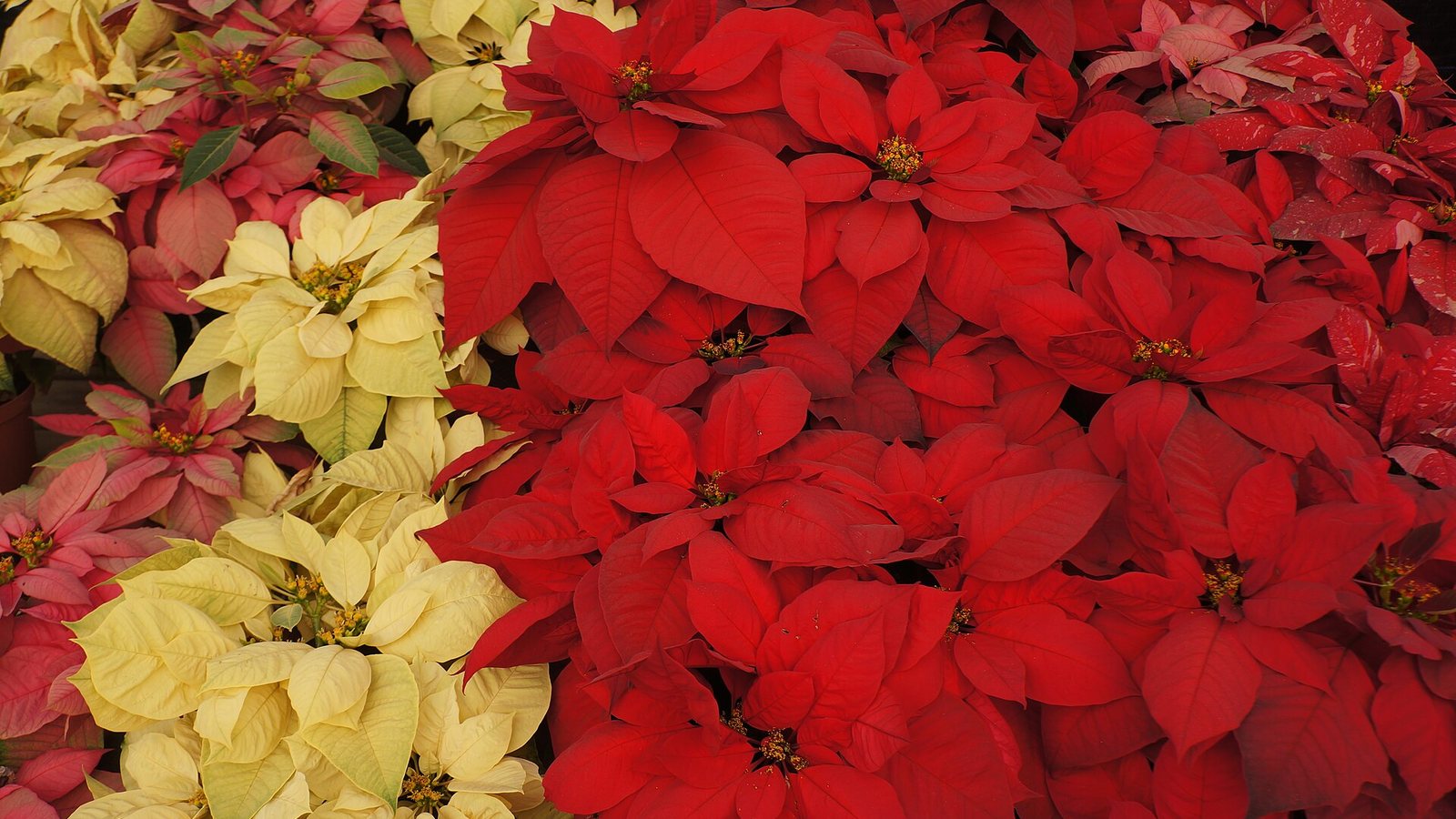
Poinsettia care for the whole season: how to buy one, keep its colour through the holidays without leaf drop, and grow and rebloom it afterwards.
Sources
Written and fact-checked by the Flori team. Every guide cites horticultural sources such as the RHS, university extension services and the ASPCA, and is updated when the advice changes. How we write our guides
General plant care information. Plants vary; when a plant is valuable or a problem spreads quickly, consult a local nursery or plant specialist.