When and How to Prune a Walnut Tree
Walnuts bleed sap, so timing matters: midsummer to early autumn (RHS) or dormant season (UC IPM). Window table, young-tree steps and cuts to avoid.
 By Flori editorial team · Updated
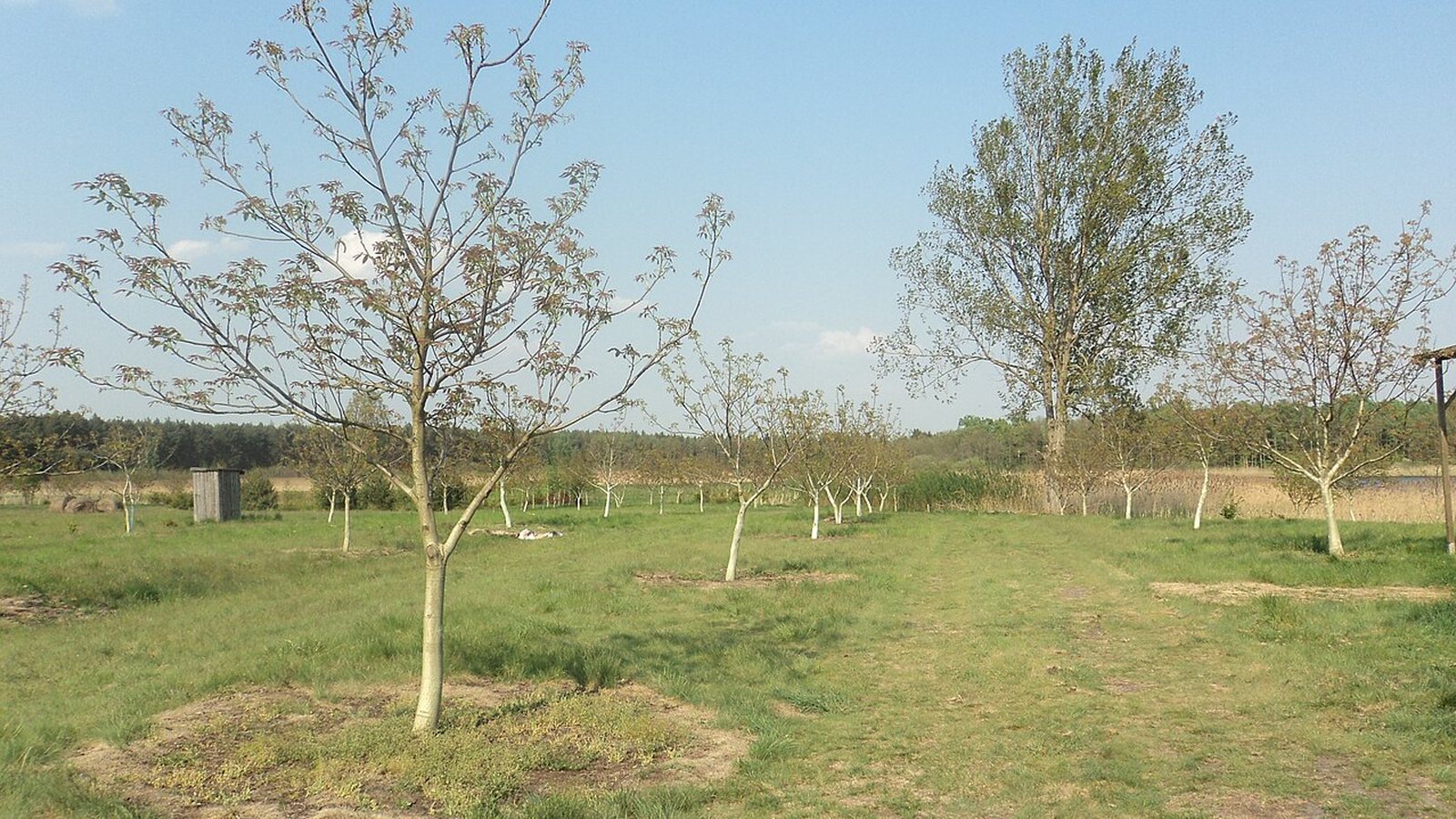 Photo: Paulinatarkowska · CC BY-SA 3.0
Prune a walnut as little as possible. The RHS says midsummer to early autumn, because walnuts bleed sap when cut at other times; UC IPM prunes mature trees in the dormant season. Remove dead, crossing and low limbs, thin lightly, and never cut branches thicker than 10 cm (4 in).
Key takeaways
- Walnuts bleed sap: the RHS prunes them from midsummer to early autumn, UC IPM in the dormant season.
- Regular pruning is unnecessary, and hard pruning is not tolerated (RHS).
- Train a young tree in its first two to three years; on mature trees remove dead, crossing and low limbs and thin lightly.
- Do not cut branches over 10 cm (4 in) thick and leave no stubs.
- Do not wrap or paint pruning cuts; the RHS no longer recommends it.
On this page7
When is the best time to prune a walnut tree?
The short answer: leave a walnut alone as much as you can, and when you must cut, choose between two windows. The RHS says to prune walnuts between midsummer and early autumn, because walnuts bleed sap when cut at other times. University of California IPM, working in a drier, warmer climate, says mature walnuts are best pruned in the dormant season. This guide explains why the advice differs, which window suits your garden, how to prune a young tree and a mature one, and the cuts to avoid.
The myth to drop first: "all fruit and nut trees are pruned in winter". Walnuts are one of the trees that bleed, and the RHS lists walnut by name in its guidance on bleeding from pruning cuts.
Which pruning window should you choose?
| Window | Who says so | Good for | Watch out for |
|---|---|---|---|
| Midsummer to early autumn | RHS (walnuts page); the RHS bleeding page says "mid-summer, before mid-winter" | Cool, damp climates; avoiding heavy sap flow; trimming a vigorous tree | UC IPM notes summer cuts slow shoot growth, so do not use this window to "invigorate" a weak tree |
| Dormant season | UC IPM (mature trees) | Removing diseased wood, crossing limbs and narrow crotches; invigorating the tree | Cuts can bleed; harmless but messy (RHS) |
| Early spring, just as buds start to swell | UC IPM (training young trees only) | Shaping a newly planted tree in its first years | Use it for training, not for large cuts on old limbs |
The RHS also says regular pruning is unnecessary and hard pruning is not tolerated. So the safest plan in any climate is a light yearly check, not a big cut every winter.
Why does a walnut bleed, and is it harmful?
Sap rises in a walnut as the weather warms, and a fresh cut can drip for days. The RHS says bleeding is usually not harmful and heals naturally over time, but prolonged bleeding can in rare cases lead to loss of vigour and even death of the tree. It can also signal disease, insect or woodpecker damage, or drought stress.
What to do about it: nothing clever. The RHS no longer recommends binding, wrapping or painting pruning cuts, because wraps and paints can trap moisture and encourage fungal infection. The best prevention is cutting at the right time. If a walnut keeps bleeding from a cut made at the wrong time, leave it, keep the tree watered in dry spells, and do not cut again.
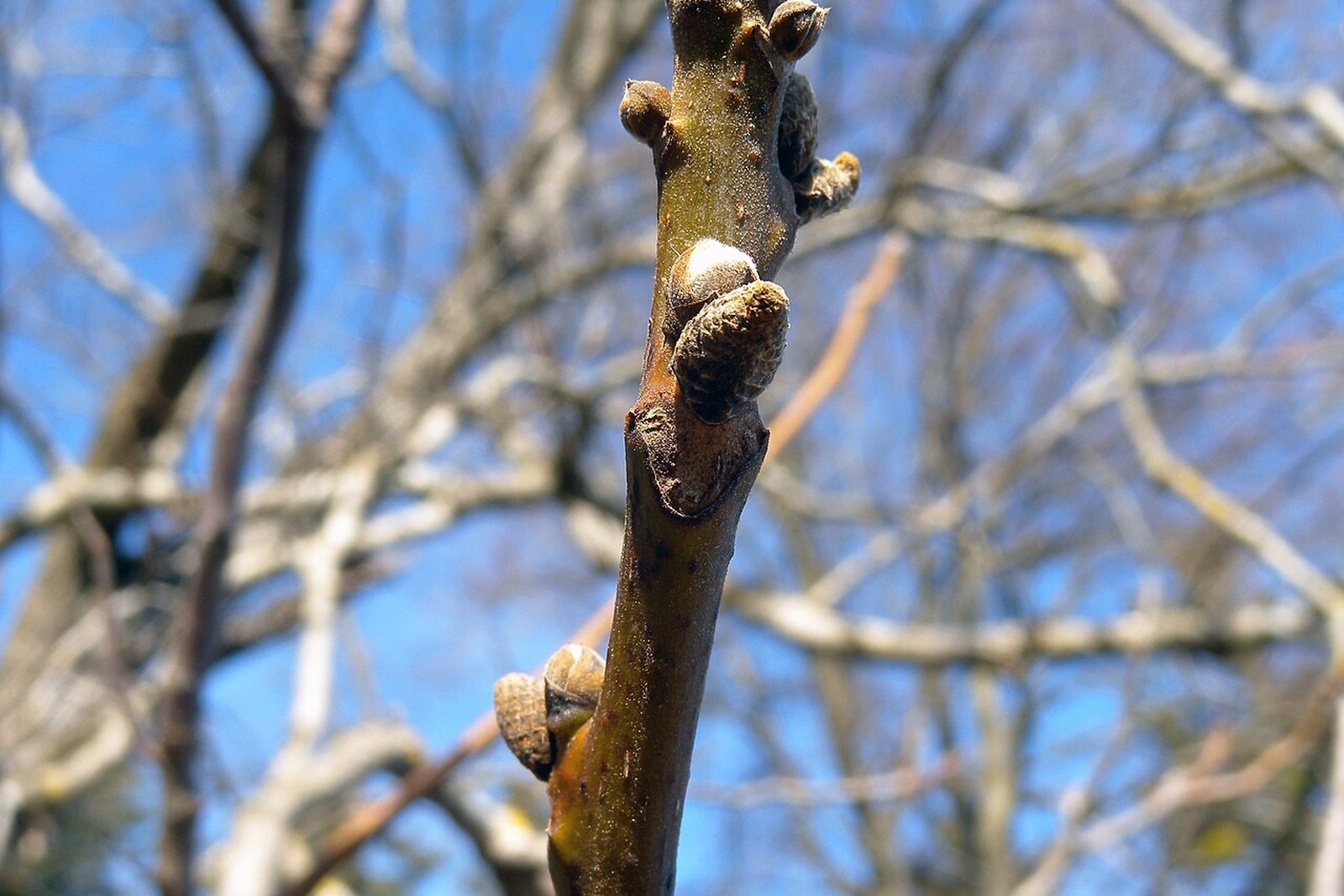
How do you prune a young walnut tree?
UC IPM trains young walnuts over the first two to three years after planting, finishing before the tree starts to fruit, and does it in early spring just after the buds start to swell. Its method uses a modified central leader. Metric figures below are our conversions of UC's inch and foot figures.
- At planting: head the new tree back to 4 or 5 buds above the bud union, roughly 15 to 24 in (38 to 61 cm) above the ground.
- Stake and head the top shoot: tie the strongest top shoot to a stake and head it at 4 to 5 ft (about 1.2 to 1.5 m) so side branches form. These become the main scaffold limbs.
- Let the leader grow: allow it to reach 5 to 6 ft (about 1.5 to 1.8 m), then head it back to an outward-growing limb.
- Remove necked buds: buds on very short shoots tend to make weak limbs that break; removing them favours wider, stronger branch angles.
- Protect from sun: exposed limbs on young trees can sunburn; UC suggests a 50:50 mix of white interior latex paint and water, or whitewash, on them.
The RHS gives a different, smaller-garden option: grow the tree on a central leader, or remove the leader to encourage side shoots, which also limits eventual size. Pinch side shoots at the fifth or sixth leaf for a bushier tree.
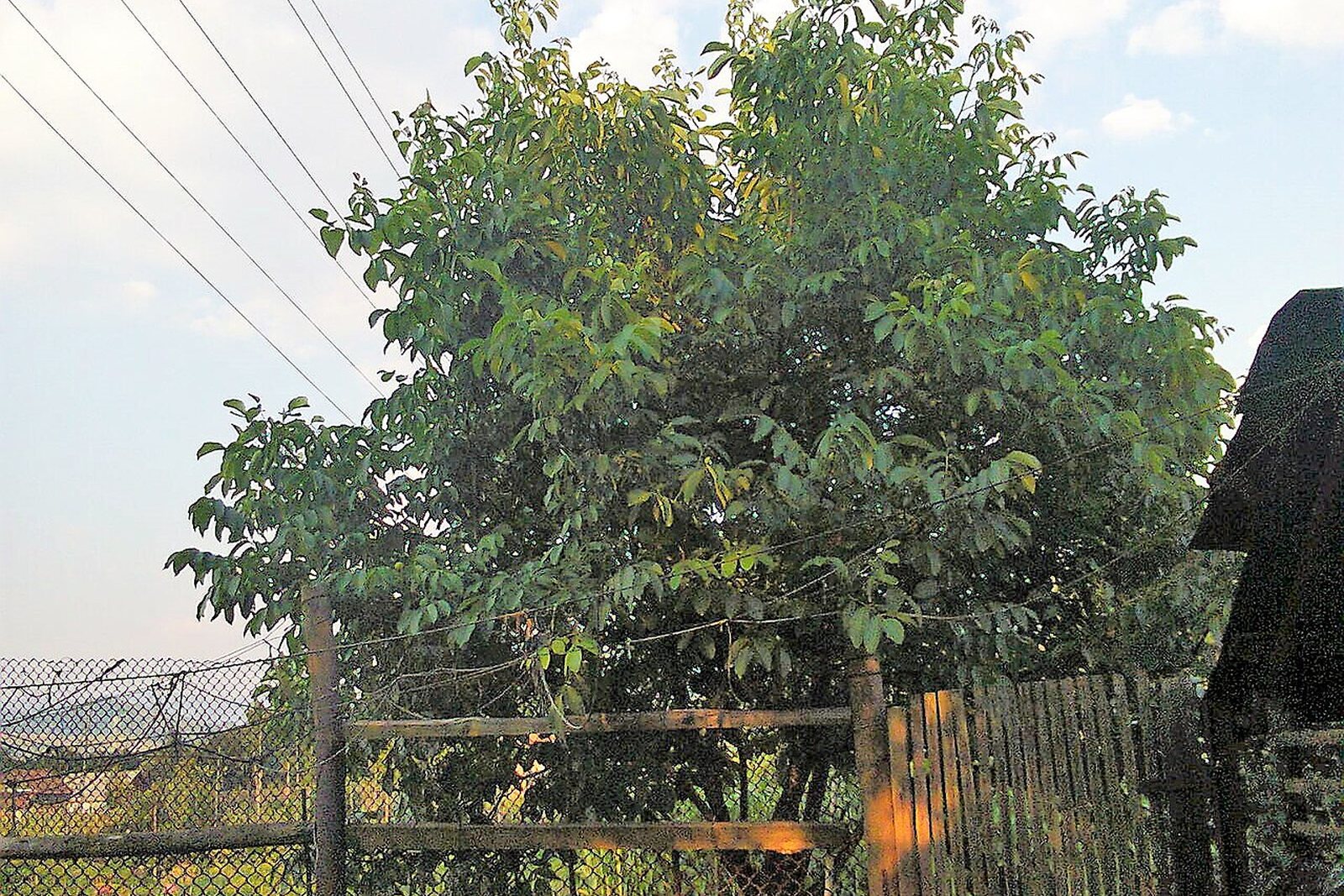
How do you prune a mature walnut tree?
A mature walnut needs only a few jobs, in this order (UC IPM and RHS):
- Remove dead wood. The RHS says that if you prune at all, take out dead or crossed branches.
- Take out diseased wood and crossing or crowded branches while the tree is dormant.
- Remove limbs that are lower than you want, for example those that hang over a path.
- Thin the small fruiting wood moderately throughout the tree, with small cuts in limbs about 1 in (2.5 cm) across.
- Cut cleanly: make thinning cuts close to and parallel with the parent limb, or next to a side limb, and leave no stubs.
UC IPM adds a hard limit: do not cut branches larger than 4 in (10 cm) in diameter, because large wounds close slowly and can let in fungi. If a very large limb must come off, get a qualified arborist rather than doing it yourself from a ladder.
Which walnut pruning mistakes should you avoid?
| Mistake | What happens | Do this instead |
|---|---|---|
| Topping or hard pruning | The RHS says hard pruning is not tolerated | Thin lightly, spread over several seasons |
| Cutting in late winter to spring by habit | Heavy bleeding (RHS) | Prune from midsummer, or accept the sap in the dormant season |
| Wrapping or painting cuts | Traps moisture, can encourage fungus (RHS) | Leave cuts open |
| Leaving stubs | Slow, poor healing | Cut next to the parent limb (UC IPM) |
| Cutting limbs over 4 in (10 cm) | Large wounds close slowly (UC IPM) | Avoid, or call an arborist |
What if you garden in Turkey, the UK or Australia?
None of our sources gives a calendar for Türkiye, so treat these as a way to read the advice, not as official dates. Where winters are mild and dry, such as the Aegean and Mediterranean coasts, the dormant-season advice of UC IPM, written for a similar climate, is the natural fit. In cool, damp places such as the UK, the RHS midsummer-to-early-autumn window avoids the sap. Inland Anatolia has cold winters: choose the summer window if you want to avoid sap, and shape only young trees in spring. In the Southern Hemisphere shift the seasons by six months: midsummer falls around December to January and early autumn around March to April.
For other trees with different rules, see our guide to pruning fruit trees in winter, the fig tree pruning guide and the grapevine pruning guide, which also deals with bleeding. For where walnut sits among the year's jobs, use the pruning calendar by month, and set a pruning reminder in Flori so the right weeks do not slip by.
Frequently asked questions
Can I prune a walnut tree in winter?
UC IPM prunes mature walnuts in the dormant season, but cuts may bleed sap. The RHS prefers midsummer to early autumn to avoid it. Bleeding is usually harmless.
Why is my walnut tree dripping sap after pruning?
Walnut is one of the trees that bleed. The RHS says it usually heals naturally; do not wrap or paint the cut, and water in dry spells.
How much can I cut off a walnut?
Little. The RHS says hard pruning is not tolerated, and UC IPM advises thinning small fruiting wood and not cutting branches thicker than 10 cm (4 in).
Does a walnut need pruning every year?
No. The RHS says regular pruning is unnecessary; if needed, remove dead or crossed branches. Young trees are trained in the first two to three years.
Prune apple and pear trees while dormant, removing 10–20% of the canopy; prune olives lightly in late winter to early spring. Timing for both hemispheres.
Sources
Written and fact-checked by the Flori team. Every guide cites horticultural sources such as the RHS, university extension services and the ASPCA, and is updated when the advice changes. How we write our guides
General plant care information. Plants vary; when a plant is valuable or a problem spreads quickly, consult a local nursery or plant specialist.