Growing Mushrooms at Home: Beginner Methods
Compare the beginner ways to grow mushrooms at home: oyster kits, DIY bags, shiitake blocks and logs, with timelines, light, misting and safety rules.
 By Flori editorial team · Updated
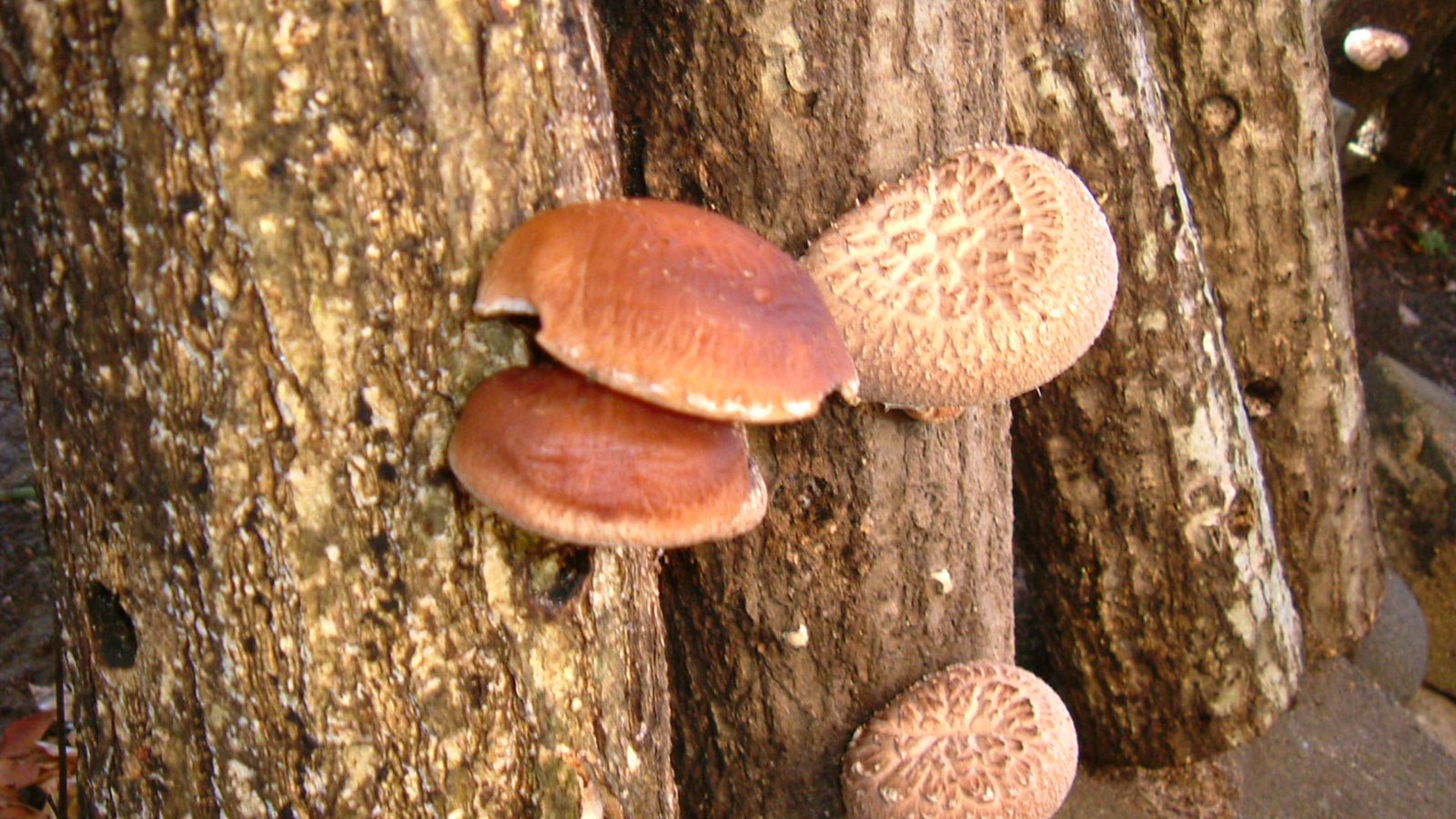 Photo: Sakurai Midori · CC BY-SA 3.0
The easiest way to grow mushrooms at home is an oyster mushroom kit, which can fruit within about a week to 10 days once ready. Shiitake on a hardwood log is slower, often 6 to 18 months. Eat only what grew from your own kit or log, never something that appeared beside it.
Key takeaways
- Oyster mushroom kits are the easiest start; UF/IFAS says mushrooms are ready about 1 week to 10 days after the kit is ready to fruit.
- Shiitake on logs needs patience: first mushrooms in roughly 6 to 18 months, then for 3 to 5 years.
- Oysters want a bright room at 13-24 °C (55-75 °F), misting and no soaking; logs want shade and freshly cut hardwood.
- Eat only mushrooms that grew from your own kit or log; growing them teaches nothing about wild ones.
- If anyone eats an unknown mushroom, call the poison line now (TR 114, US 1-800-222-1222, UK 111) and keep a sample.
On this page9
- What is the easiest way to grow mushrooms at home?
- How does an oyster mushroom kit work?
- Can you make your own oyster bag?
- How do you grow shiitake on a log?
- Which method suits which home?
- What goes wrong and how do you fix it?
- Is a mushroom you grew yourself safe to eat?
- Does growing mushrooms teach you to pick wild ones?
- What to do if someone eats an unknown mushroom
What is the easiest way to grow mushrooms at home?
The easiest way to grow mushrooms at home is a ready-made oyster mushroom kit. UF/IFAS Extension names oyster and shiitake as the two best mushrooms for first-time growers and calls a kit the easiest way to start. The surprising part is how different the methods are in patience: an oyster kit can give mushrooms within days of setting up, while shiitake on a log can take a year or more. This guide compares the beginner methods side by side, so you can pick one before you buy anything. For the step-by-step on kits, we have a separate oyster mushroom grow kit guide.
| Method | What you do | How long until mushrooms | Best for |
|---|---|---|---|
| Oyster kit | Open a bag of colonised straw, mist it | About 1 week to 10 days after the kit is ready to fruit (UF/IFAS) | Your first try, an apartment, children watching |
| Do-it-yourself oyster bag | Mix a substrate with oyster spawn in a bag, then incubate | 2-3 weeks of incubation in the dark, then pins (UGA Extension) | People who like to tinker |
| Shiitake block | Fruit a ready-made hardwood block | Sold as a kit or pre-inoculated (UF/IFAS) | Shiitake without the log work |
| Shiitake log | Drill a hardwood log, insert plug spawn, seal with wax | 6 to 18 months to the first flush (UF/IFAS); 8 to 12 months (University of Illinois) | A garden or shaded yard, patient growers |
How does an oyster mushroom kit work?
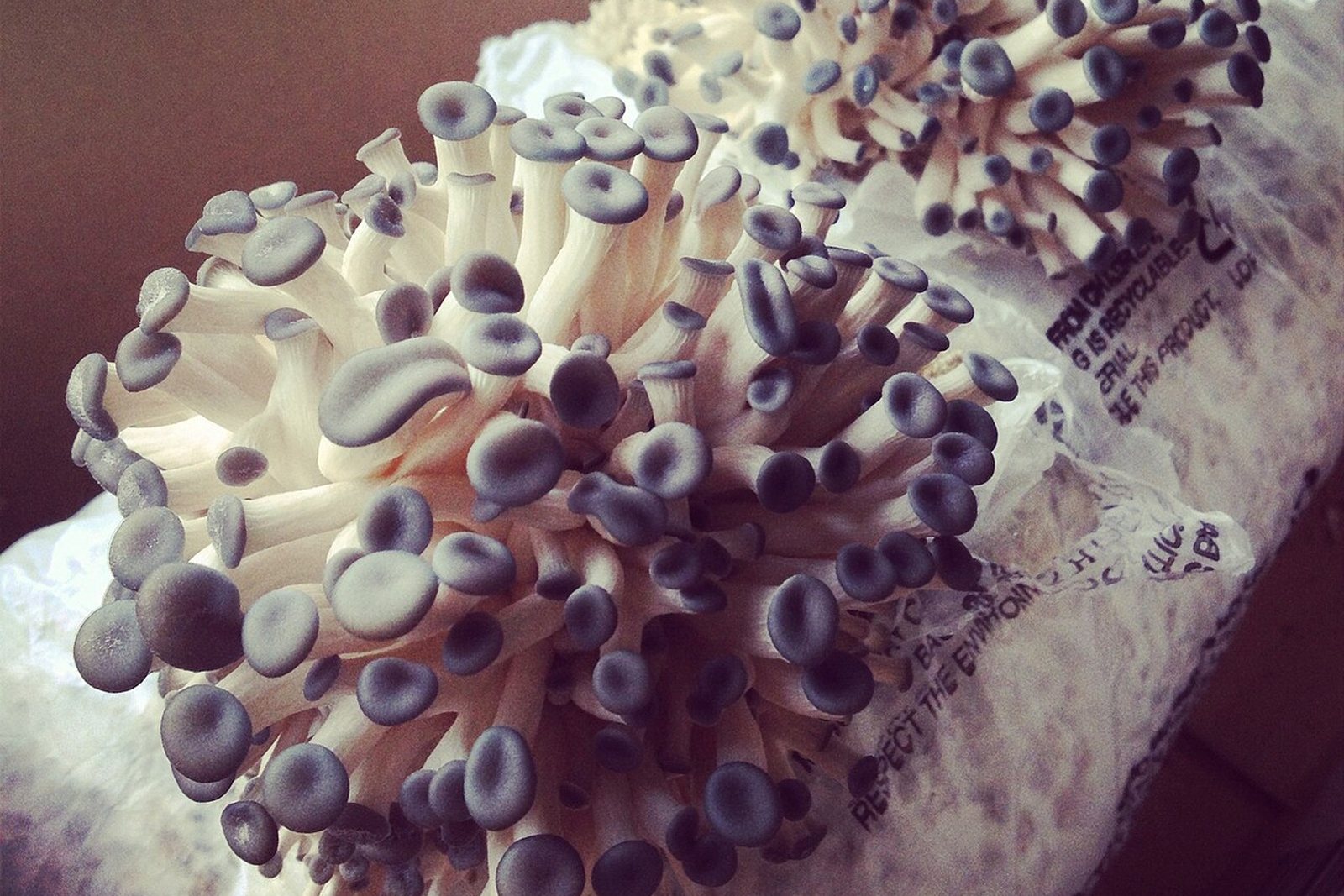
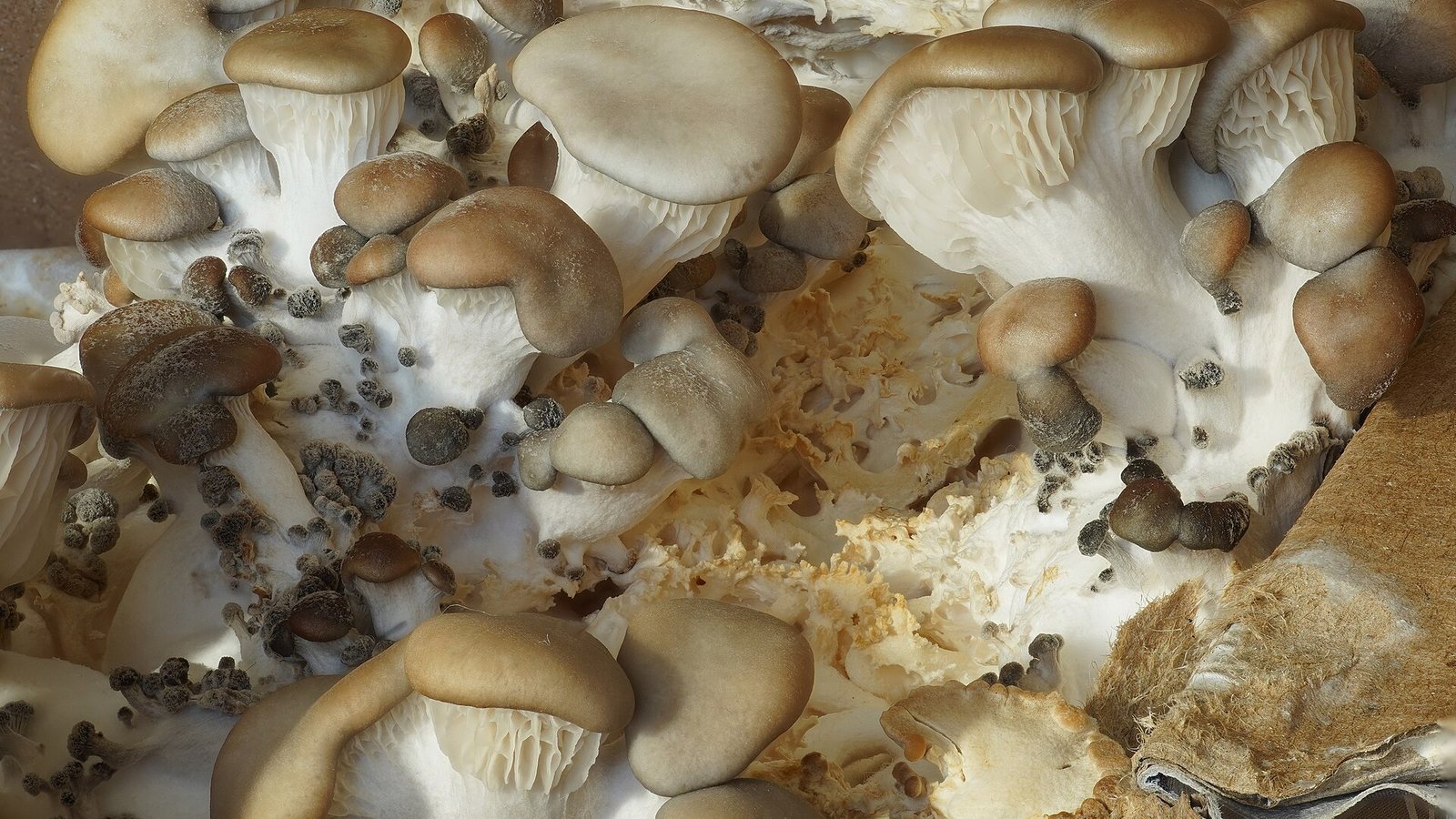
Oyster mushrooms fruit on straw, and a kit is a bag of straw that mushroom mycelium (the fungus's root-like network) has already colonised. UF/IFAS says mushrooms form on the outside of the bag, and UGA Extension gives the key numbers: keep the kit in a well-lit room out of direct sun at 13-24 °C (55-75 °F), mist it several times a day without soaking it, and pick the mushrooms at about 5 cm (2 in) across. Once they appear they roughly double in size each day. If no baby mushrooms appear in 4 to 5 weeks, UGA suggests putting the kit in the fridge (not the freezer) for a day or two, then misting and starting again. After the first harvest, rest the kit in a dark room for 2-3 weeks; the second flush gives fewer mushrooms.
One caution from UF/IFAS: some oyster species are invasive, such as the golden oyster (Pleurotus citrinopileatus), so avoid putting spent blocks of such species outdoors in a climate where they could escape.
Can you make your own oyster bag?
Yes, and UGA Extension publishes a recipe: soak newspaper-based cat litter in de-chlorinated water, mix in alfalfa pellets and oyster spawn, put the mixture in a plastic bag, tie it, and press out the air. Then the bag incubates in a dim, cool place at 16-21 °C (60-70 °F) for 2-3 weeks until white mycelium covers it, and you cut 4-5 slits and move it to a bright room. The recipe gives amounts (about 3 cups litter, 2 1/2 cups water, 1/3 cup alfalfa pellets and 3/4 cup spawn), but a first-time grower will have an easier time with a kit, because buying spawn and preparing your own substrate adds steps where things can go wrong. Use spawn from a supplier, never from a mushroom you picked.
How do you grow shiitake on a log?
Logs are the slow, outdoor method. The extension sources agree on the outline but differ on details, so here are the ranges.
- Wood: oak is the usual choice. Ohio State prefers white oak, and also lists sugar maple, American beech and sweetgum as excellent; it does not recommend fruit trees, elm or softwoods. The University of Illinois recommends sugar maple and white oak for beginners.
- Logs: freshly cut from healthy trees. Illinois says within three months of cutting; UF/IFAS advises cutting while the tree is dormant. Sizes: about 90-120 cm (3-4 ft) long and 10-20 cm (4-8 in) across, within the ranges of 5-18 cm (2-7 in) given by UF/IFAS and 4-8 in by Illinois.
- Inoculation: drill holes about 8-15 cm (3-6 in) apart in rows, tap in plug spawn until flush with the bark, and seal each hole with melted wax so competing fungi stay out.
- Incubation: stack the logs in a moist, shaded, well-drained spot, off the ground and covered with straw or leaves. Colonisation takes 6 months to 2 years, according to Ohio State.
- Fruiting: mainly in spring and autumn, then mushrooms mature in 2-7 days after pins form. After a natural first flush, Ohio State says you can force fruiting by soaking logs overnight in cold water, and 36-48 hours in cooler months.
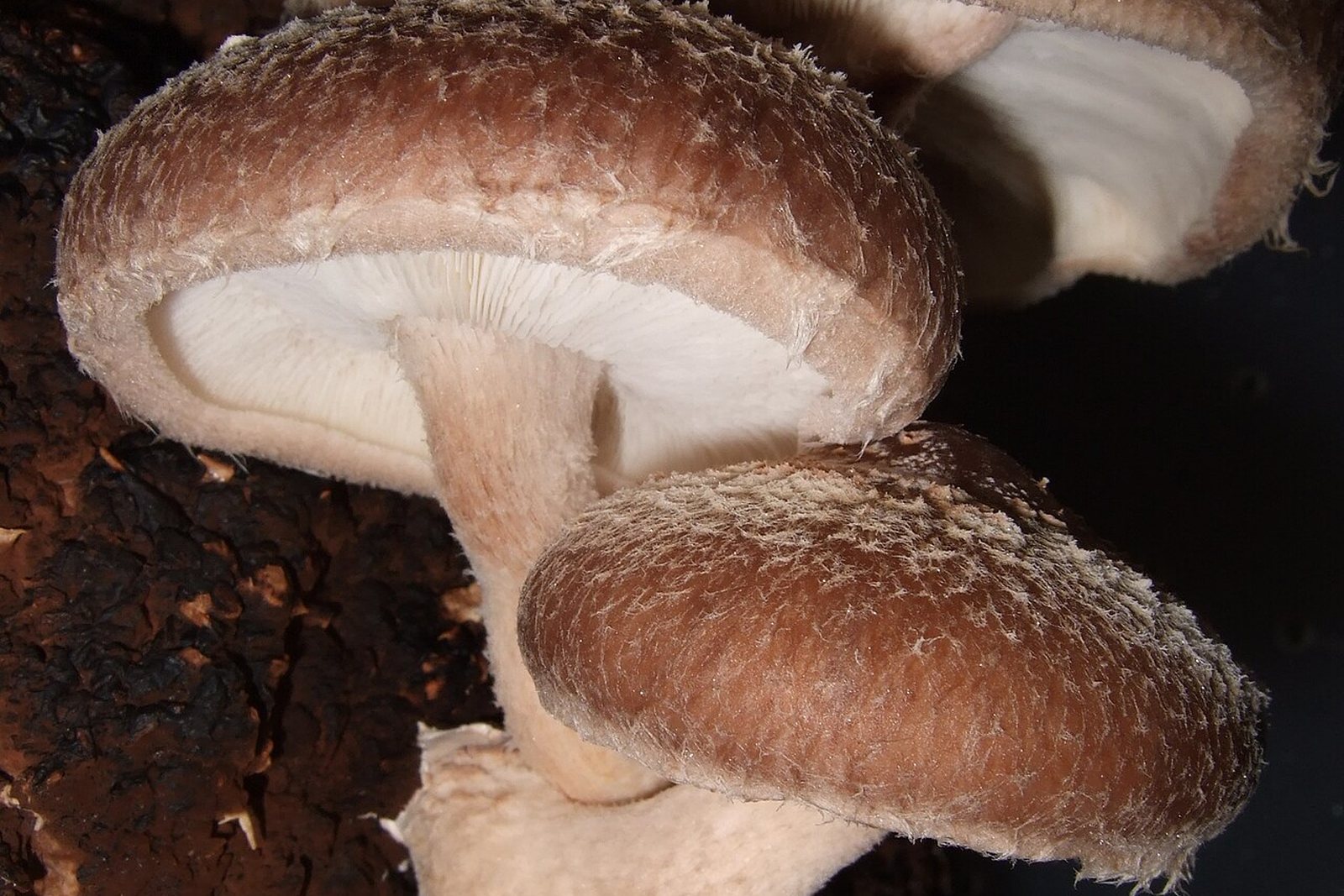
- Lifespan: UF/IFAS says shiitake flushes last about a week, followed by a rest of generally 2 to 4 months, and a log stays productive for 3 to 5 years.
Which method suits which home?
A flat without a balcony: an oyster kit on a bright kitchen shelf. A house with a shaded garden and a few free weekends: a shiitake log. UF/IFAS adds that indoor growing generally gives more continuous and predictable fruiting, while outdoor logs need shade (and heat-tolerant strains in warm places).
In Türkiye, kits are easiest to find as oyster mushroom kits (istiridye mantarı), and the climate decides the rest. In dry inland Anatolia, indoor misting does the work of rain, so keep the kit where you can mist it often; on the humid Black Sea coast, watch for the kit staying too wet. Along the hot Mediterranean and Aegean coasts, keep logs in deep shade and out of summer sun. Our guide to mushrooms in houseplant pots explains why uninvited mushrooms in a pot are a different matter altogether.
What goes wrong and how do you fix it?
| Problem | Likely cause | Fix |
|---|---|---|
| Long stems, small caps | Not enough light (UGA) | Move to a brighter room, no direct sun |
| No pins in 4-5 weeks | Kit not triggered | Fridge for a day or two (no freezing), then mist (UGA) |
| Logs drying out | Dry weather | Water them if they dry out; UF/IFAS warns that over-wet logs rot |
| Old log with unexpected mushrooms | Natural fungi already in the wood | Use freshly cut logs (UF/IFAS, Illinois) |
| Bad smell or a kit that looks wrong | Possible contamination | Do not eat from it; contact the seller |
Is a mushroom you grew yourself safe to eat?
A mushroom from a reputable kit or from spawn you bought is a cultivated crop, and a mushroom that grew from your own log from known spawn is the one you know. Even so, the North American Mycological Association (NAMA) lists the oyster mushroom group among species that can upset the stomach of susceptible people, so start with a small portion. Eat only what grew from the kit or log you inoculated, never something that appeared next to it, and follow the instructions that came with your kit. Harvest young: Illinois says older shiitake are tough and bitter.
Does growing mushrooms teach you to pick wild ones?
No. A kit shows you one species from a known culture. It does not train you to separate an edible mushroom from a deadly look-alike in a forest. Smell, taste, peeling the cap, silver spoons and animals eating it prove nothing; those are myths. No app, including Flori, can tell you a wild mushroom is safe to eat. If you want to learn, read how to learn mushroom identification safely, and know what mushroom apps can and cannot do.
What to do if someone eats an unknown mushroom
If anyone, including a child or a pet, eats a mushroom you cannot vouch for, call a poison line now and do not wait for symptoms:
- Türkiye: UZEM 114 (Ulusal Zehir Danışma Merkezi)
- United States: Poison Control 1-800-222-1222
- United Kingdom: NHS 111
- Pets: your vet, or the ASPCA Animal Poison Control Center in the US
Keep a sample of the mushroom and take a photo. Feeling fine is not reassurance: NAMA says amatoxin symptoms can be delayed 6 to 24 hours, with an apparent recovery that is misleading while the liver is being damaged. Do not try home remedies. Our mushroom poisoning symptoms guide has the timeline.
Frequently asked questions
What is the easiest mushroom to grow at home?
Oyster mushrooms from a ready-made kit. UF/IFAS names oyster and shiitake as the easiest for first-time growers, and says a kit is the easiest way to start.
How long does it take to grow mushrooms at home?
An oyster kit can give mushrooms about 1 week to 10 days after it is ready to fruit, per UF/IFAS. Shiitake logs take much longer: 6 to 18 months to the first flush, according to UF/IFAS.
Can I grow mushrooms indoors?
Yes. UF/IFAS says indoor growing generally gives more continuous and predictable fruiting. Kits suit a bright room out of direct sun at 13-24 °C (55-75 °F).
Does growing mushrooms teach me to pick wild ones?
No. A kit shows one species from a known culture and does not teach you to tell edible mushrooms from deadly look-alikes. No app or photo can tell you a wild mushroom is safe to eat.
Grow oyster mushrooms from a kit: bright spot out of direct sun, 13–24 °C (55–75 °F), mist daily, harvest at 5 cm (2 in). Plus fixes and wild look-alikes.
Sources
- UF/IFAS Gardening Solutions: Growing Mushrooms at Home
- UGA Extension Newton County: Growing Oyster Mushrooms at Home
- Ohio State CFAES: Shiitake Mushroom Production
- University of Illinois Extension: Grow your favorite fungus at home, shiitake
- North American Mycological Association: Mushroom Poisoning Syndromes
Written and fact-checked by the Flori team. Every guide cites horticultural sources such as the RHS, university extension services and the ASPCA, and is updated when the advice changes. How we write our guides
General plant care information. Plants vary; when a plant is valuable or a problem spreads quickly, consult a local nursery or plant specialist.