How to Water Orchids: Soaking, Ice Cubes and Myths
Water a moth orchid when the bark is nearly dry, about weekly. Compare soaking, tap and ice cubes, and read the roots to know when it is thirsty.
 By Flori editorial team · Updated
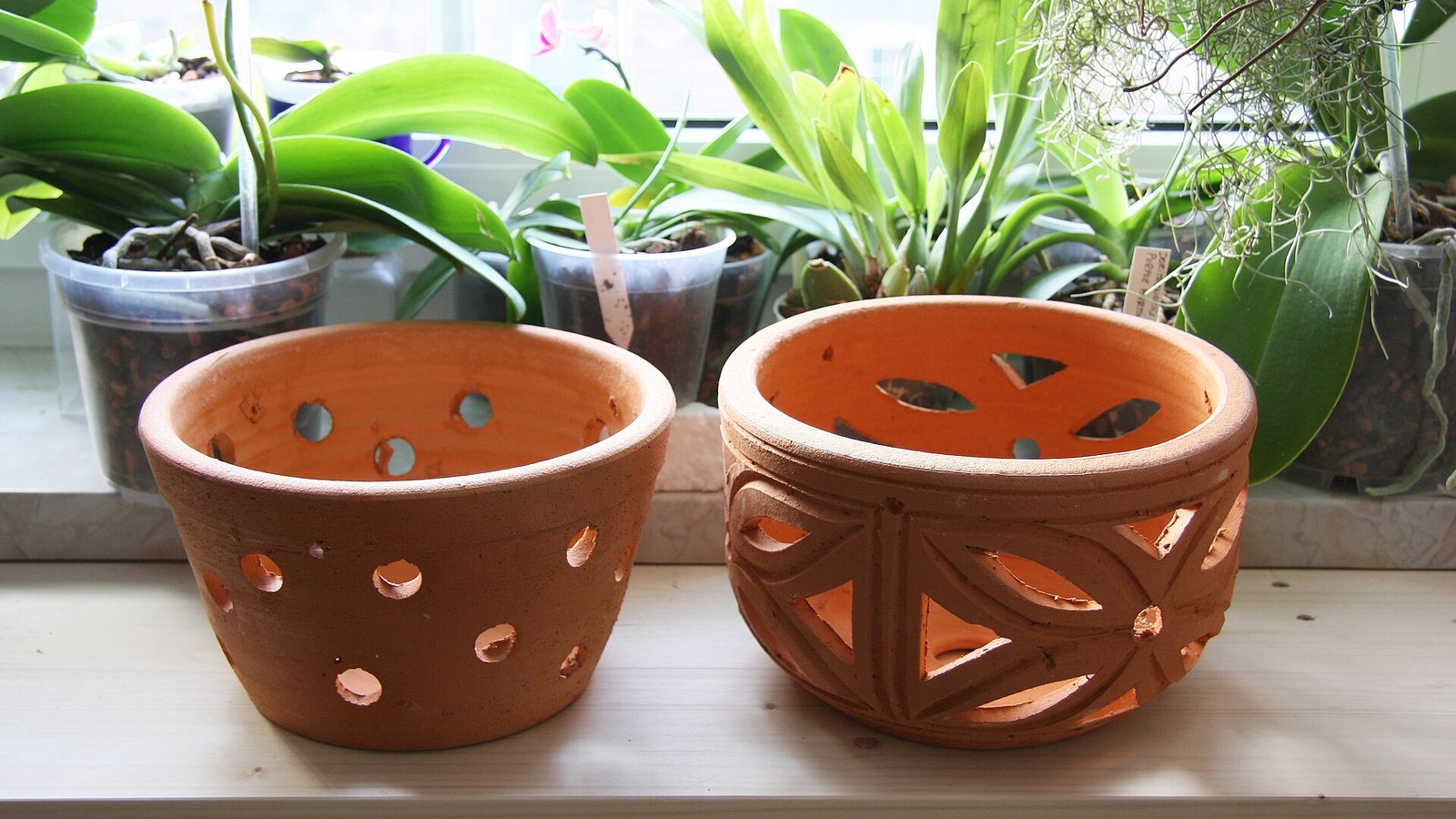 Photo: Maja Dumat from Deutschland (Germany) · CC BY 2.0
Water a moth orchid about once a week in the growing season, and a little less in winter, when the bark is nearly dry. Soak the pot or run tepid water through it, let it drain fully and keep water out of the crown. Ice cubes worked in one bark study but are optional.
Key takeaways
- Water when the bark is nearly dry, usually weekly in the growing season and less in winter.
- Soaking, tap watering and ice cubes can all work if the bark gets wet and the pot drains.
- Green roots mean well watered, silvery roots mean dry, brown or mushy roots mean trouble.
- Never leave an orchid standing in water and never let its roots dry out completely.
- The ice cube study covered bark-grown moth orchids only, with cubes kept off the leaves.
On this page6
How often should you water an orchid?
For the common supermarket moth orchid (Phalaenopsis), the honest answer is "when the bark is nearly dry", which is usually about once a week. Most advice online is either too vague or stuck on one trick, so this guide compares the three ways people really water orchids (from above, soaking and ice cubes), checks the ice cube myth against a university study, and shows you how to read the roots so you stop guessing. It draws on the Royal Horticultural Society (RHS), Clemson Cooperative Extension and a study from Ohio State University and the University of Georgia.
The RHS advises watering weekly in the growing season, roughly spring to autumn, and a little less in winter. Clemson says to water once a week and let the plant dry slightly before the next watering. It adds that orchids in clay or small pots, or in very open bark, can need water twice a week. So weekly is a starting point, not a rule: warm rooms, small pots and chunky bark dry faster.
Which watering method is best?
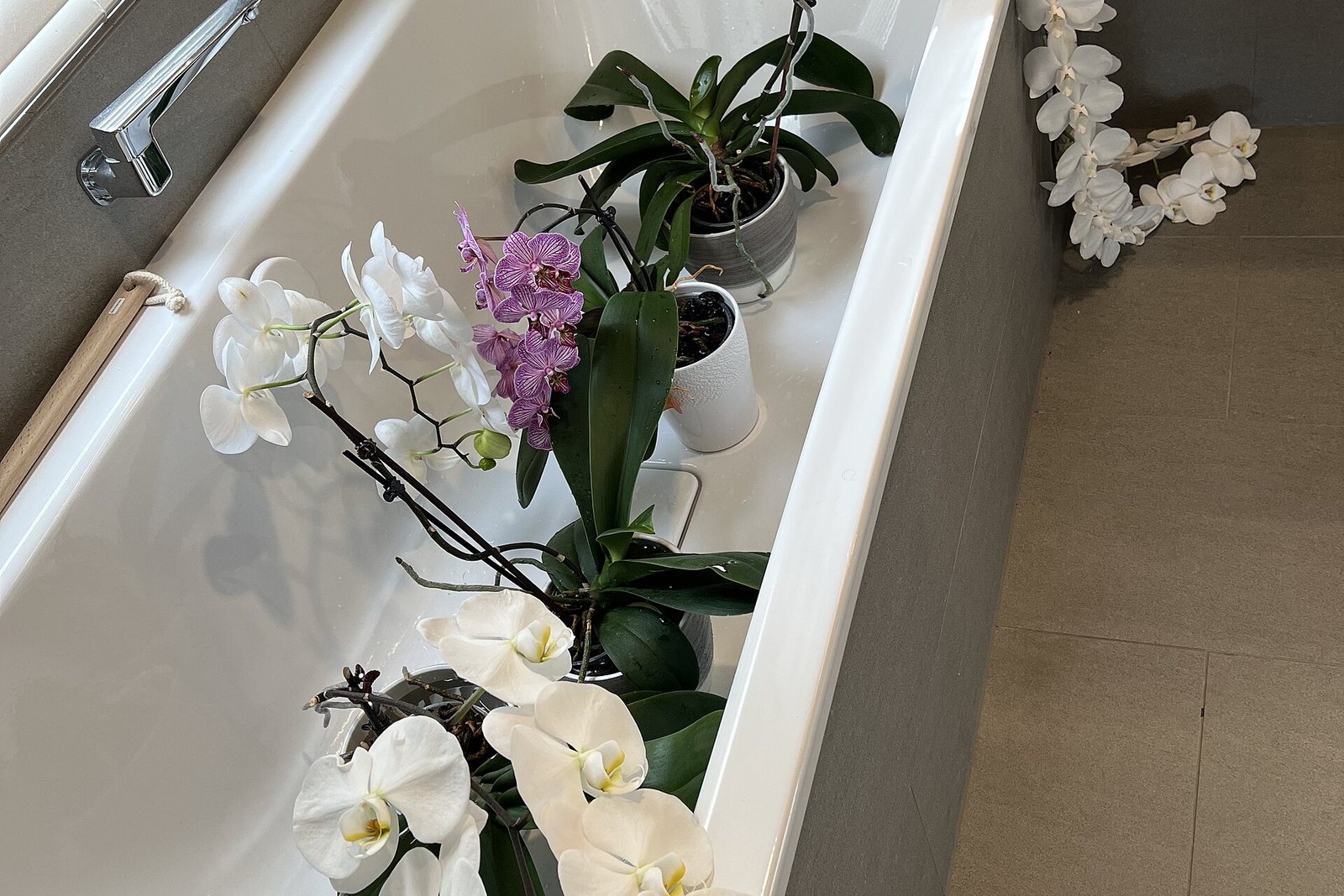
All three methods below can work. What they share matters more than which one you pick: the bark must get wet right through, and the plant must never end up standing in water.
| Method | How | Good for | Watch out for |
|---|---|---|---|
| Under the tap | Hold the pot under gently running tepid water, keep the leaves dry, let it drain fully | Quick weekly routine | Water collecting in the crown (the centre of the leaves) |
| Soaking | Stand the pot in a bowl of tepid water until the bark is wet through, then lift out and drain thoroughly | Dry bark that repels water | Putting it back in a decorative pot before it has stopped dripping |
| Ice cubes | Three cubes on top of the bark once a week, away from the leaves | People who forget or overwater | Only tested in bark; leaves and crown must stay out of contact |
The RHS describes the first two directly: water from above and tip out any water that collects in the saucer, hold the pot under a gently running tap with the leaves dry, or stand the pot in a bowl of water and let it drain thoroughly. It recommends tepid water, preferably rainwater, and says to avoid splashing the leaves or getting water into the crown. Our guide to the best water for houseplants explains why rainwater helps, and bottom watering covers the same idea for other plants.
Does watering orchids with ice cubes work?
This is the most argued-about orchid tip, so it is worth reading what was actually tested. Researchers at Ohio State University and the University of Georgia grew 48 moth orchids for four to six months. Half were watered with ice cubes and half with the same amount of room-temperature water. The ice group matched the others on flower life, chlorophyll content, photosynthesis and shoot weight. The bark only cooled to 11–13 °C (51–56 °F) and was back at about 21 °C (70 °F) roughly five hours later, so the roots were not frozen.
That is real evidence, but with limits. The plants grew in bark, and the findings are described for bark only. The ice schedule (three cubes once a week) came from a commercial grower, and the study followed the plants through one round of flowers, not several years. The cubes were placed on top of the bark and kept away from the leaves. So the myth "ice kills orchids" is not supported for bark-grown moth orchids, but ice is a convenience, not a necessity. Many orchid growers still prefer room-temperature water, and the RHS does not mention ice at all. If you use it, keep ice off the leaves and crown, and remember that three cubes may be too little in a hot, dry room or too much in a cool one.
How can you tell if an orchid needs water?
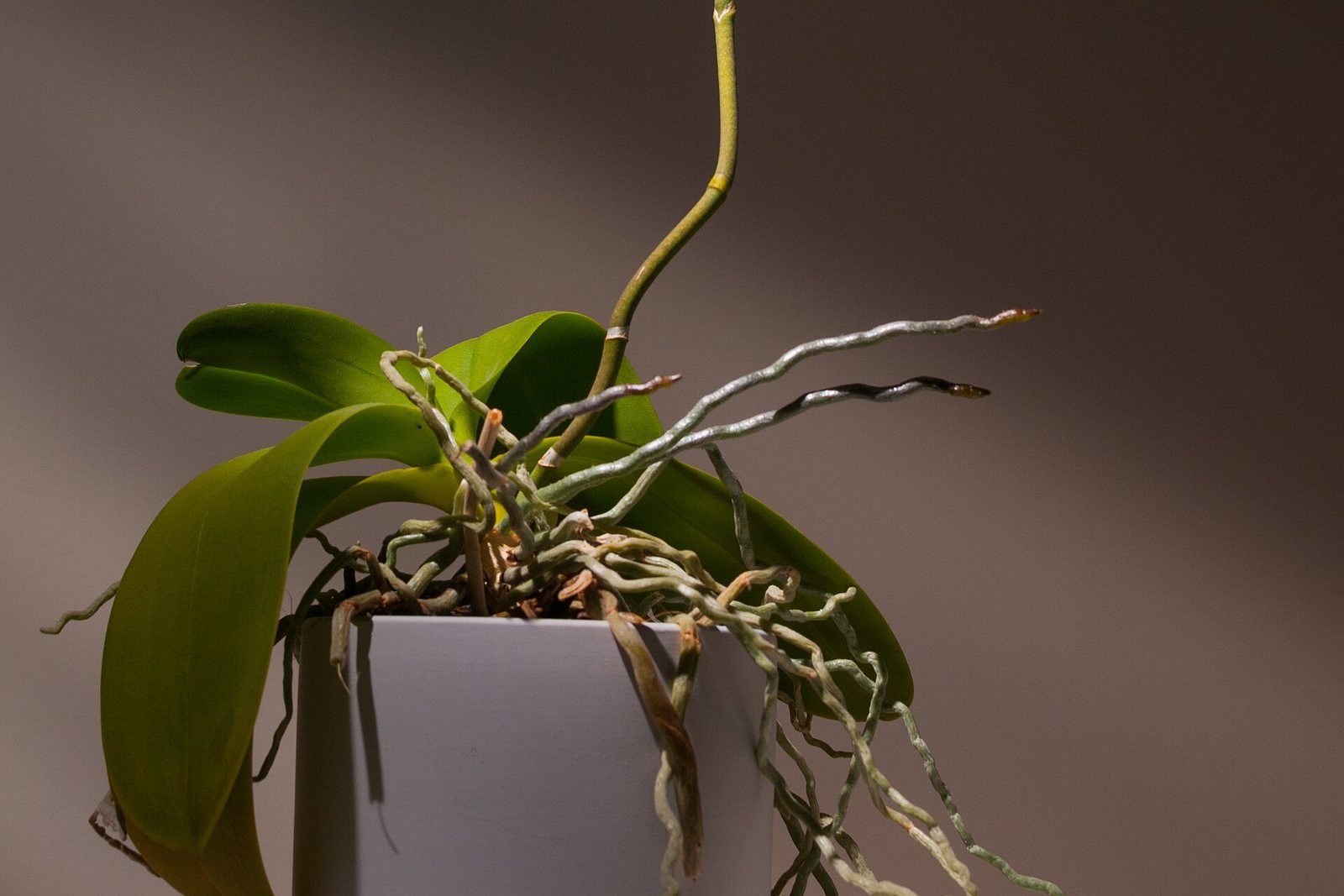
Look at the roots, the pot and the leaves rather than the calendar. The Ohio State page gives a simple root code for moth orchids: green roots mean the plant is well watered, silvery roots mean it is drier, and brown or tan roots mean unhealthy or dying roots. The RHS describes healthy roots as plump, firm and silvery-white, and unhealthy ones as brown, shrivelled, mushy or hollow. In practice, silvery roots in a clear pot are your cue to water.
- Weight: lift the pot after watering and again when it feels light; learn the difference.
- Bark: push a finger into the drainage hole; Clemson says to wait until the pot is nearly dry throughout before watering again.
- Leaves: wrinkled, floppy leaves point to thirst, according to Ohio State; check the roots before adding water, because rotten roots cause the same wilting.
A clear pot makes all of this easier. In Flori you can add a watering reminder to each orchid and adjust it when you see the roots change colour; see how to water houseplants for the general method.
What are the biggest orchid watering mistakes?
- Letting it stand in water. The RHS says never to leave the plant sitting in water, and overly wet compost can cause root rot. Tip out the decorative pot after each watering.
- Letting it dry out completely. The RHS also warns that roots must never dry out completely; overly dry compost makes roots shrivel and die.
- Water in the crown. Pooled water in the centre of the leaves can rot the plant. Blot it with a paper towel.
- Watering by the calendar. A weekly habit is fine until winter, when the plant needs less. Clemson notes that orchids rest after flowering, so water less then.
- Heavy feeding. The RHS suggests feeding lightly with an orchid fertiliser in the growing season and watering without feed every fourth time to flush out salts; follow the label.
If the roots are already soft and brown, our root rot rescue plan shows what to cut and how to repot. If the orchid is healthy but will not flower, the cause is rarely water; read why your orchid is not blooming, and see how to propagate orchids when a baby plant appears.
Does winter change how you water?
Yes. The RHS says to reduce watering slightly in winter and to keep the plant above 16 °C (60 °F), away from radiators and draughts. Cold, wet bark is the combination that rots roots, so water in the morning, let the pot drain, and wait until the bark is nearly dry before the next round. In summer, the RHS says you can mist lightly to raise humidity, though misting does not replace watering the roots.
Frequently asked questions
How often should I water my orchid?
About once a week in the growing season and a little less in winter, but let the bark become nearly dry first. Small pots, clay pots and open bark may need water twice a week.
Is it OK to water orchids with ice cubes?
A study at Ohio State and the University of Georgia found three ice cubes a week did no harm to bark-grown moth orchids over four to six months. Keep ice off the leaves; room-temperature water is also fine.
Should I water orchids from the top or bottom?
Either works. The RHS suggests watering from above with the leaves dry, or standing the pot in a bowl of water, then draining it thoroughly and tipping out the saucer.
What colour should orchid roots be?
Healthy roots are plump and firm: green after watering and silvery when drier. Brown, tan, shrivelled, mushy or hollow roots are unhealthy.
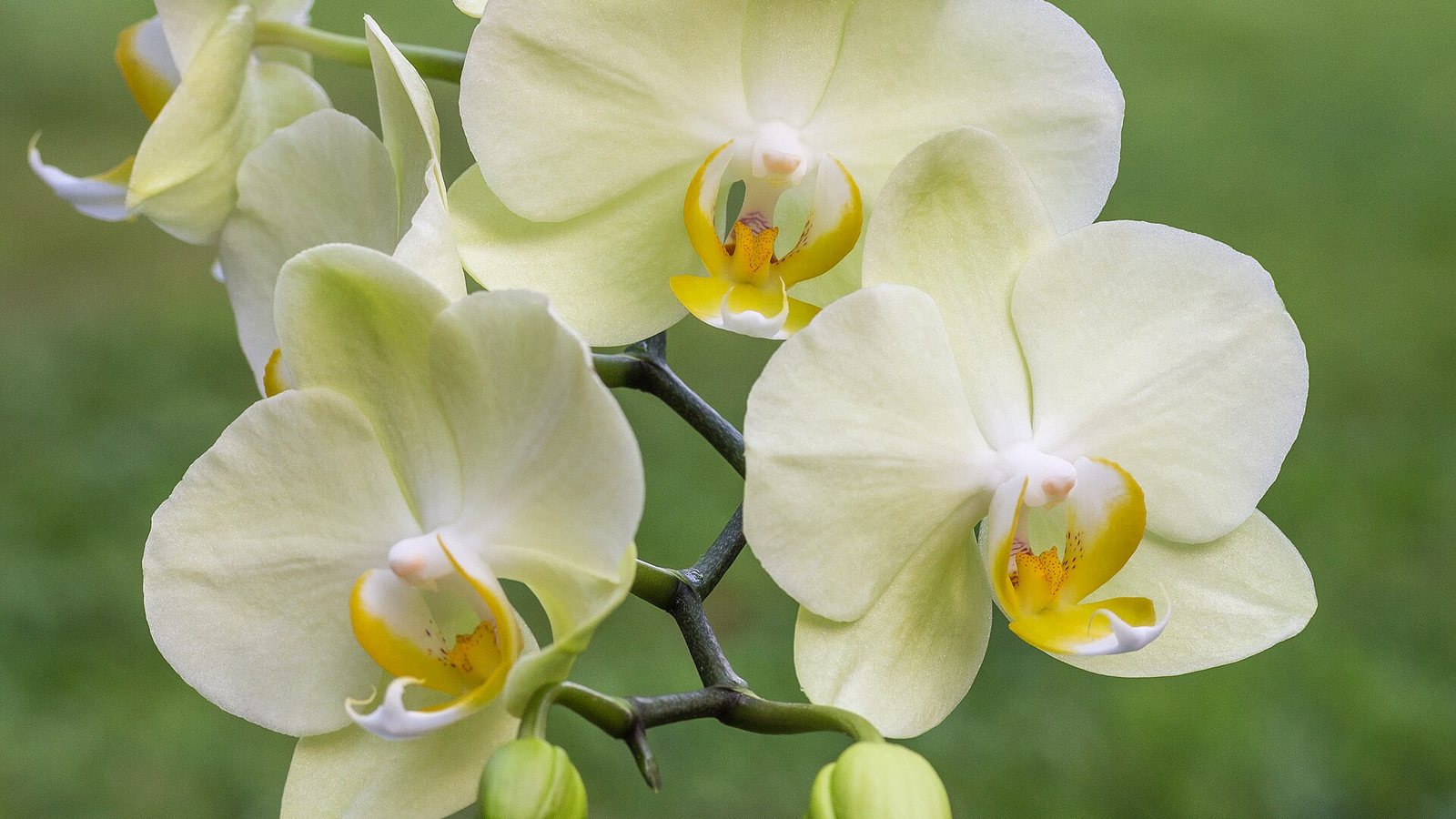
An orchid that won't bloom usually lacks light, cooler autumn nights or healthy roots. Read the leaves, fix the cause and trigger a new flower spike.
Sources
Written and fact-checked by the Flori team. Every guide cites horticultural sources such as the RHS, university extension services and the ASPCA, and is updated when the advice changes. How we write our guides
General plant care information. Plants vary; when a plant is valuable or a problem spreads quickly, consult a local nursery or plant specialist.