White Bugs on Plants: Mealybugs, Whitefly or Other?
Tiny white bugs on your plant? Tell mealybugs, whiteflies, scale, springtails and mites apart by where they sit and how they move, then pick the right fix.
 By Flori editorial team · Updated
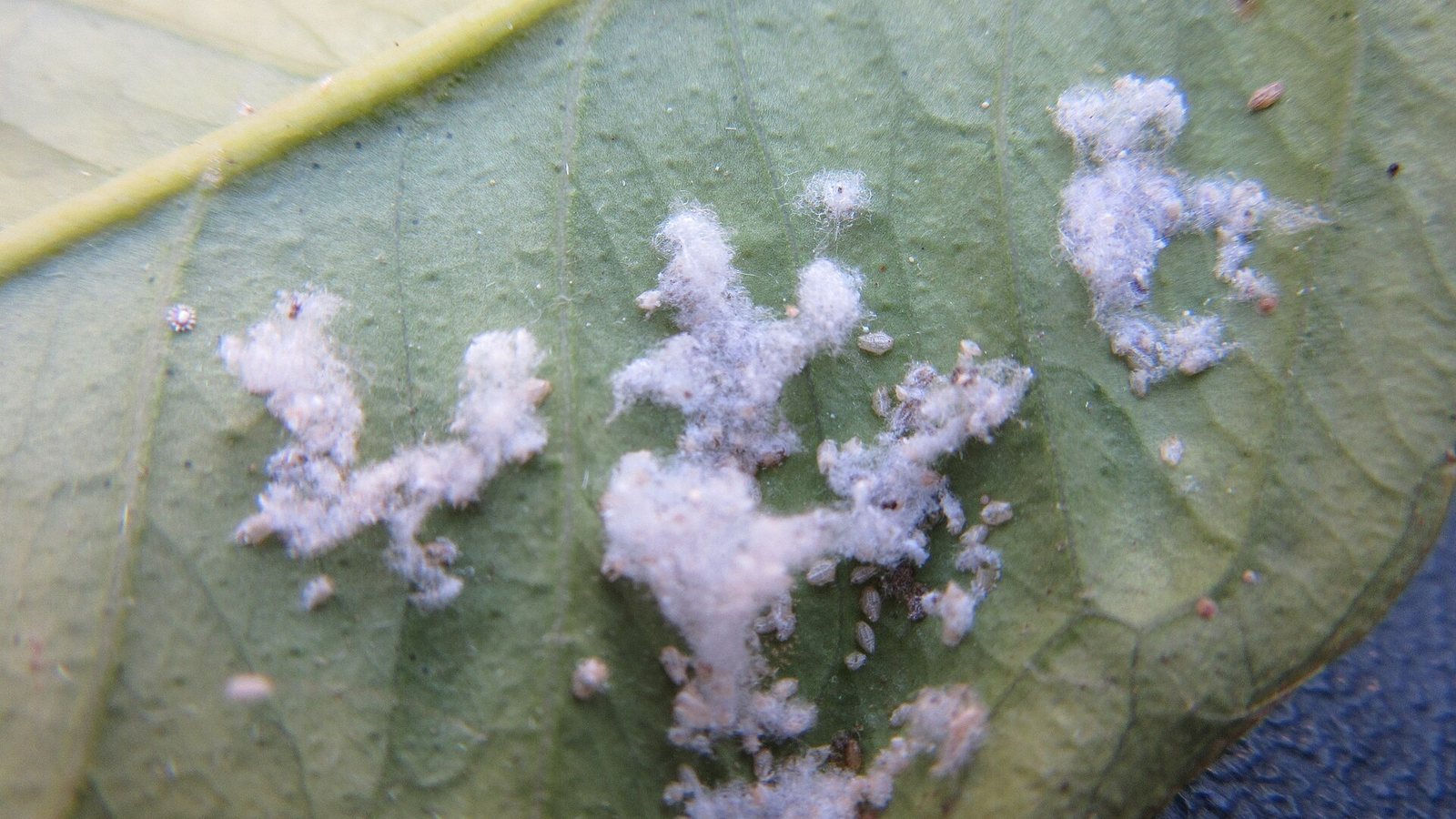 Photo: VictorCegarra · CC BY-SA 4.0
Tell white bugs on plants apart by what they do when you touch the plant. White insects that flutter up are whiteflies. Cottony, slow-moving clumps in leaf joints are mealybugs. Tiny white specks that jump from the soil are springtails. Fine webbing with speckled leaves means spider mites. Identify first, because each needs a different fix.
Key takeaways
- Touch the plant first: white insects that flutter up are whiteflies, cottony clumps that barely move are mealybugs.
- Tiny white or grey specks that jump on the soil surface after watering are springtails, which do little harm.
- Look at where they sit: leaf undersides, leaf joints, stems or soil each point to a different pest.
- Not every white thing is a bug: mineral crust, perlite and powdery mildew can look similar.
- Isolate the plant and check new plants for three weeks, since most pests arrive on a new purchase.
On this page8
- What are the white bugs on my plant?
- Which white bug is it? A quick identification table
- How do you recognize mealybugs and whiteflies?
- Are the white specks in the soil harmful?
- Could it be scale or spider mites?
- How do you inspect a plant properly?
- What if there are no bugs at all?
- What should you do first?
What are the white bugs on my plant?
Most white bugs on houseplants are one of five things: mealybugs, whiteflies, soft scale, springtails or spider mites. They look alike at a glance and need different treatment, so the first job is identification, not spraying. Two quick questions sort most cases: where on the plant is it, and what does it do when you touch it? The table below uses facts from UC IPM, Clemson and Colorado State extension guides.
Which white bug is it? A quick identification table
| What you see | Where | When you touch the plant | Likely pest |
|---|---|---|---|
| Soft, cottony white tufts, about 3-6 mm (1/8 to 1/4 in) | Leaf joints, undersides of leaves, stems | Barely move | Mealybugs |
| Tiny winged white insects, 1.5-2.5 mm (1/16 to 1/10 in), like specks of moth | Underside of leaves | Flutter up, then settle again | Whiteflies |
| Flat or domed bumps, some with waxy covering | Stems and leaf undersides | Do not move at all | Scale insects |
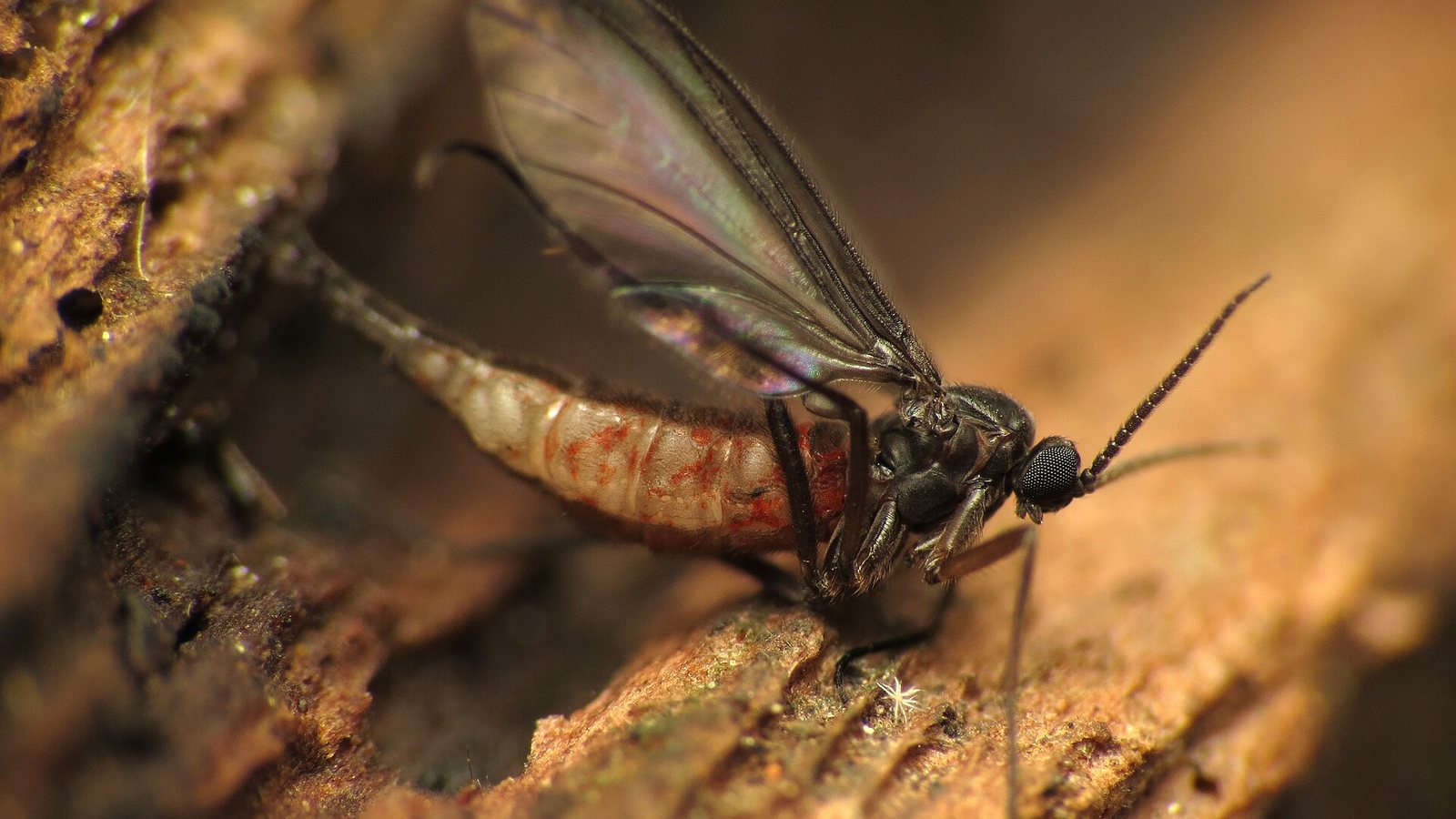
| Tiny white or grey wingless specks, about 5 mm (1/5 in) | Soil surface | Jump like fleas after watering | Springtails |
| Fine silky webbing, pale speckling on leaves | Leaf undersides, between leaves | Tiny moving dots at most | Spider mites |
How do you recognize mealybugs and whiteflies?
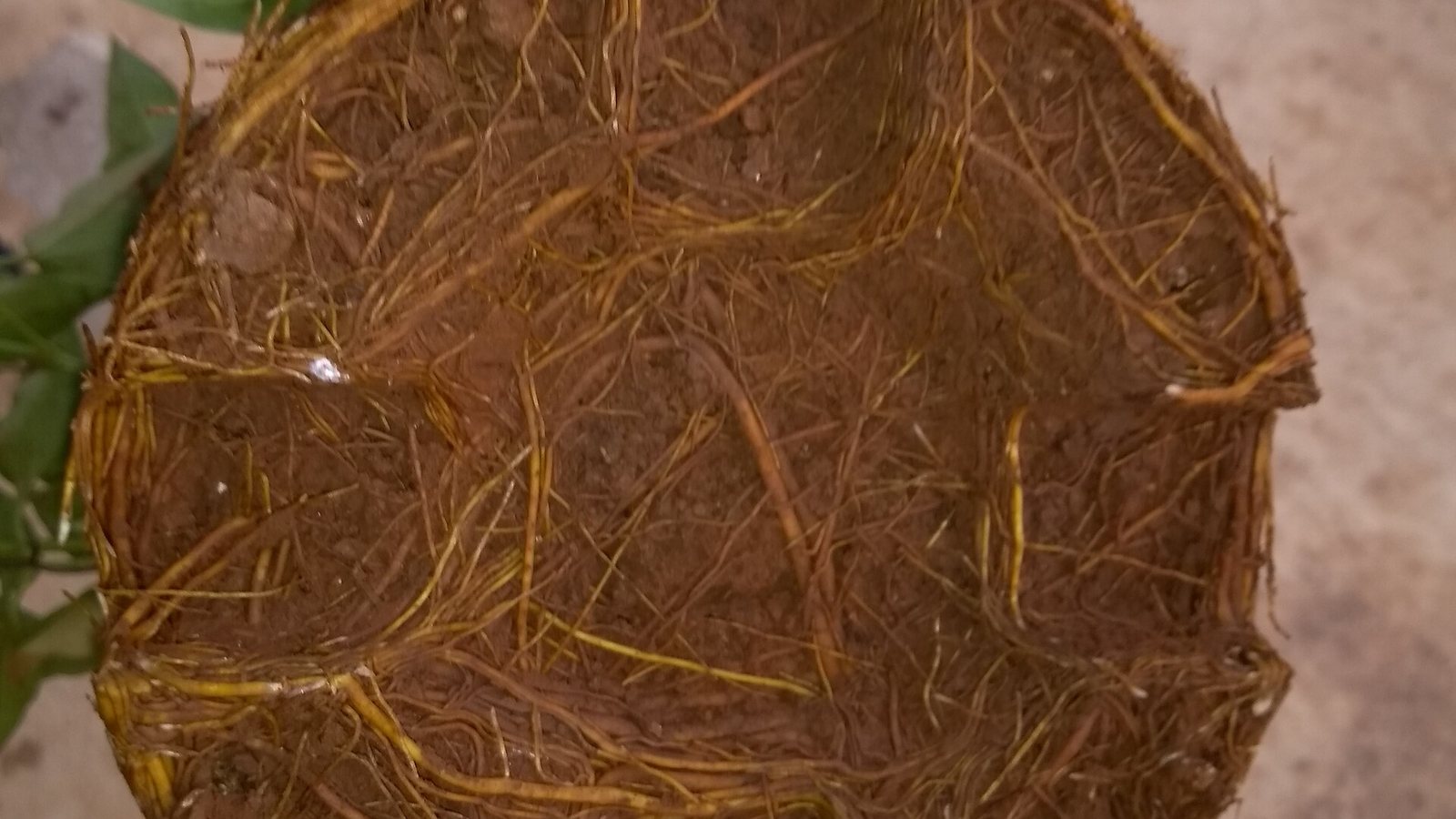
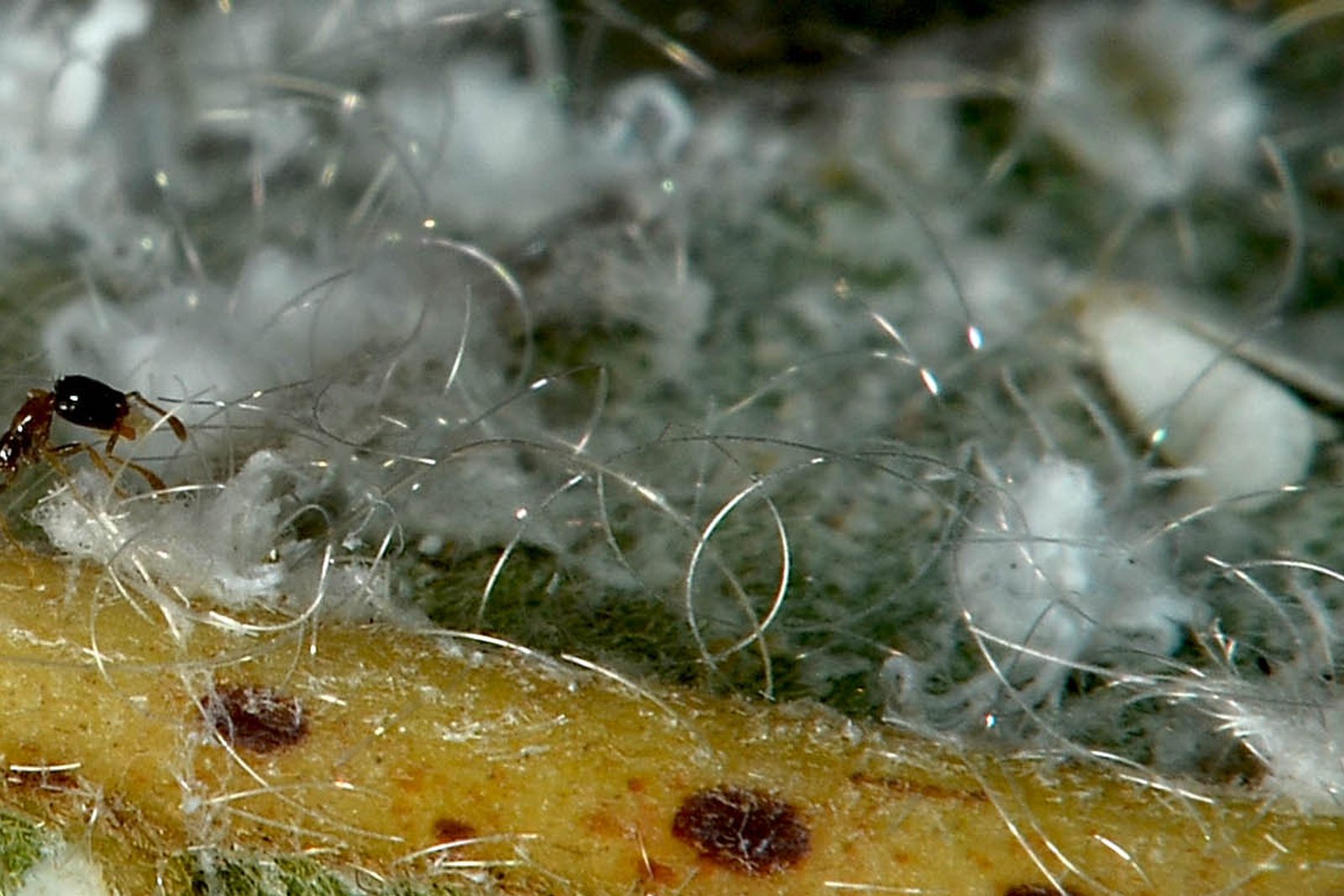
Mealybugs are small, soft, oval insects covered in white wax. UC IPM says they gather in sheltered spots such as where stems meet leaves, and some species feed on roots. They leave sticky honeydew, which ants love. Because the wax repels sprays, hand removal works best. Our full guide to mealybugs has the steps.
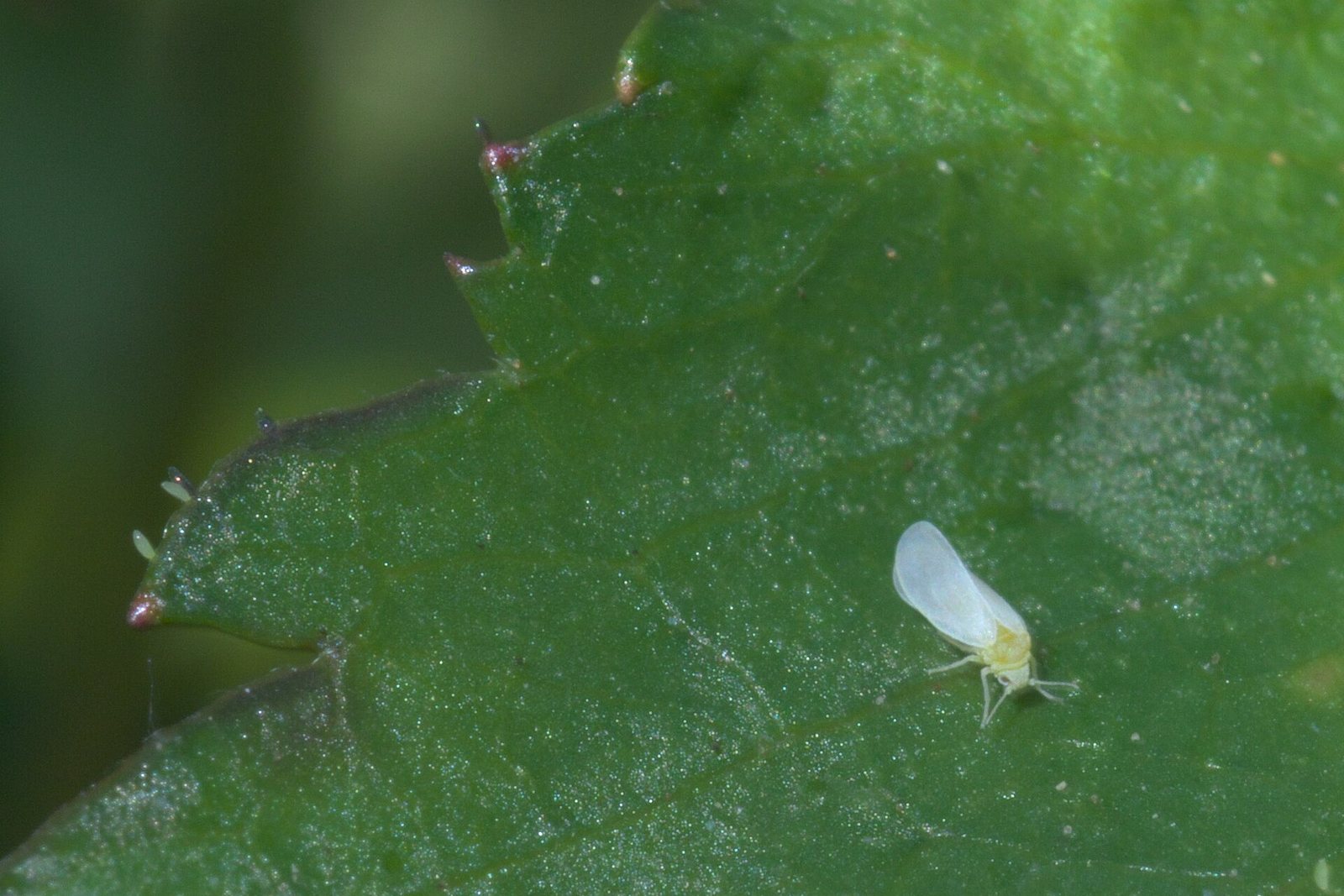
Whiteflies are not true flies. The adults look like powdery white moths and, as Clemson notes, flutter around for a while before settling again when disturbed. The immature stages are flat, scale-like and do not move, so they are easy to miss on leaf undersides. See our whiteflies on houseplants guide for control. Both pests produce honeydew; if your leaves are sticky, read about sticky leaves too.
Are the white specks in the soil harmful?
Often not. Clemson describes springtails as tiny, wingless, usually white or black insects that live in potting soil, can jump and feed mainly on decaying matter; their presence is usually a sign of overwatering. Colorado State says they cause little plant damage and recommends reducing watering so the soil dries between waterings. If the white specks you see are on the soil and hop, let the pot dry a little more, check that it drains and empty the saucer. Our watering guide shows how to check dryness. If instead you see small black flies, that is a different pest: fungus gnats.
Could it be scale or spider mites?
If the "bugs" never move, look closer: adult scale insects are immobile, with no visible legs, and some look like waxy masses on stems and leaf undersides, according to Clemson. Early infestations can be scraped off with a fingernail. Our scale insects guide explains the rest. Spider mites are too small to see easily. The first sign is usually pale speckling on the leaf top, and heavy infestations leave silky webbing; see spider mites on houseplants.
How do you inspect a plant properly?
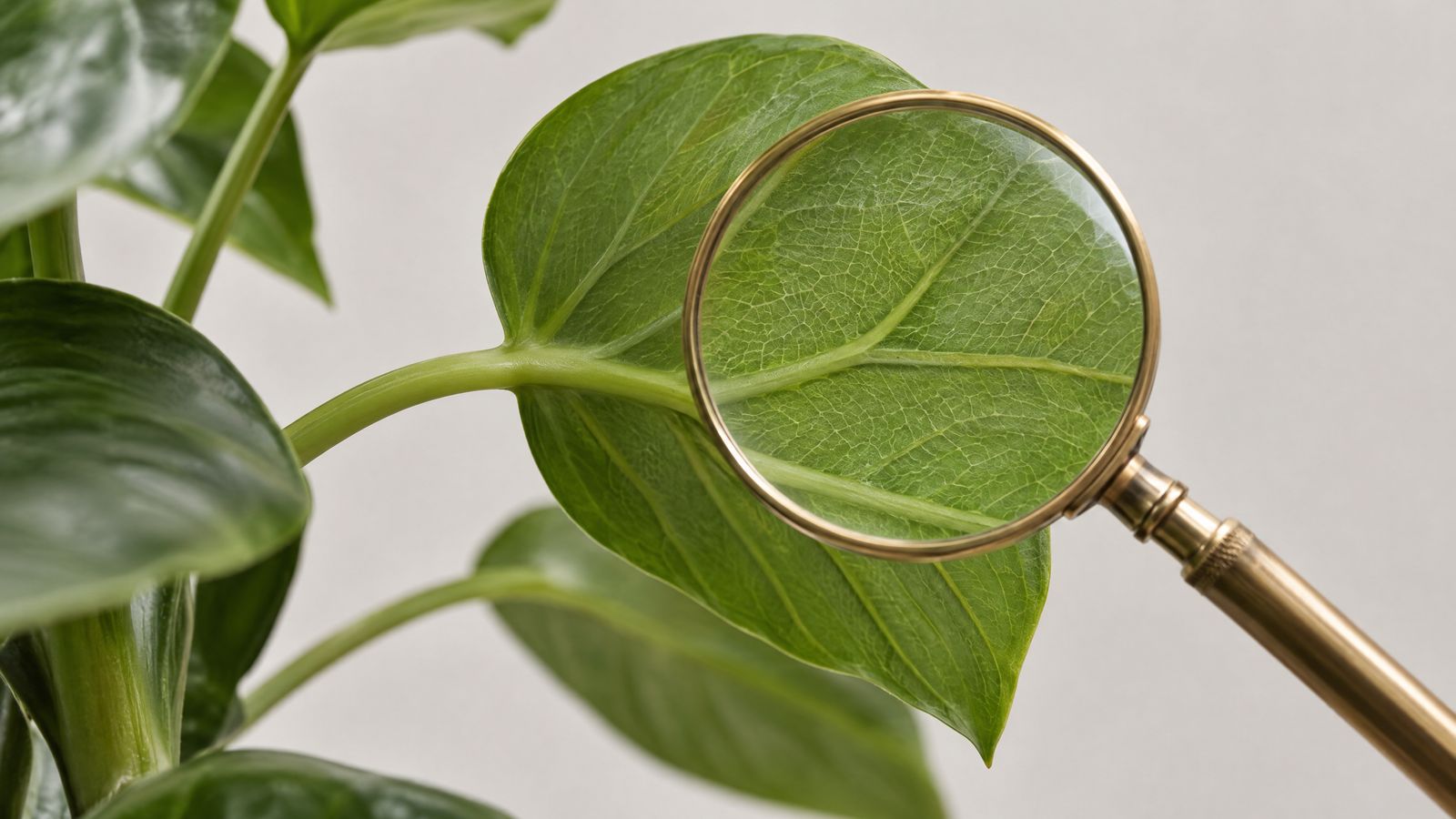
Spend two minutes with good light and, if you have one, a magnifying glass. Turn several leaves over and check the underside, the veins and the spot where each leaf joins the stem. Look at the soil surface and the rim of the pot. Gently shake a branch over a white sheet of paper: flying insects will rise, and specks that fall and move are mobile pests. Finally, look for ants walking up the stem. UC IPM notes that ants feed on honeydew and protect both mealybugs and whiteflies from their natural enemies, so a trail of ants is a clue even when you cannot see the bugs.
What if there are no bugs at all?
Some white things are not pests. Check for:
- Perlite: white round granules that float up in the soil are part of the mix. Our guide to soil additives shows what they look like.
- Mineral crust: white or grey crust on the soil surface or the rim of a clay pot is salt left by tap water and fertilizer.
- Powdery mildew: a white dusty coating that wipes off the leaf top is a fungus, not an insect. See powdery mildew.
- White mold on soil: fluffy growth on damp soil is covered in white mold on houseplant soil.
If you cannot tell from a close look, Flori can identify the pest from a photo, and Dr. Flori can ask follow-up questions and name the likely cause.
What should you do first?
- Isolate the plant. Colorado State recommends isolating new plants for at least three weeks, because most of these pests arrive on new plants.
- Take a clear photo of the underside of a leaf and the soil surface, and note whether the insect moves.
- Remove what you can without chemicals. Wash the plant and spray with a strong stream of water, dab mealybugs with a cotton swab dipped in 70% or weaker isopropyl alcohol, and prune badly affected leaves. Test alcohol on one leaf first, since it can burn.
- Use soap or oil only if needed, and follow the label. Insecticidal soap can injure ivy, maidenhair fern and begonia, so test a small area and wait 48 hours.
- Repeat weekly. Most treatments reach only some stages, so plan on several rounds.
For prevention, see our guide to natural pest prevention. If the plant is badly infested and keeps getting worse, throwing it out can be kinder to the rest of your collection.
Frequently asked questions
What are the tiny white bugs on my plant leaves?
If they fly up when touched they are probably whiteflies. If they are cottony and barely move they are mealybugs. Check the underside of leaves and leaf joints before you treat.
What are the white jumping bugs in my plant soil?
Those are most likely springtails. Clemson says they live in soil, feed on decaying matter and usually signal overwatering. Let the soil dry between waterings.
Are white bugs on plants dangerous to people or pets?
Mealybugs, whiteflies and springtails do not harm people or pets, but the honeydew they leave is sticky and can grow sooty mould. They weaken the plant, so deal with them early.
Can I use rubbing alcohol on white bugs?
Extension guides suggest dabbing mealybugs with a swab dipped in 70% or weaker isopropyl alcohol, after testing one leaf for burn. Do not spray whole plants with strong alcohol.
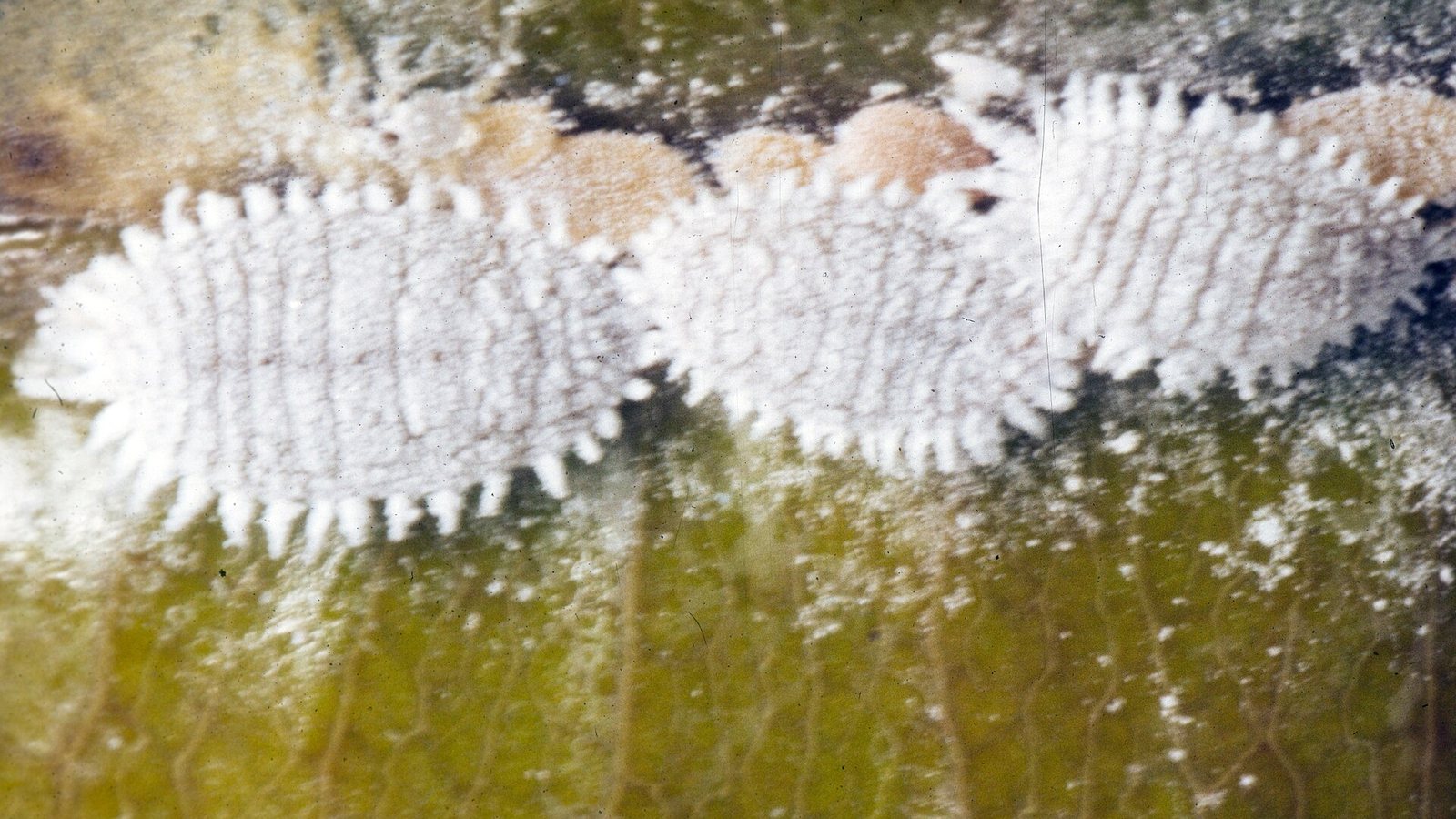
Mealybugs on houseplants: how to spot the white cottony clumps, check roots, and remove them step by step with alcohol swabs and soap. Least-toxic first.
Sources
Written and fact-checked by the Flori team. Every guide cites horticultural sources such as the RHS, university extension services and the ASPCA, and is updated when the advice changes. How we write our guides
General plant care information. Plants vary; when a plant is valuable or a problem spreads quickly, consult a local nursery or plant specialist.