Mushrooms Growing on Trees: What They Mean
Mushrooms or shelf fungi on a tree usually mean decay is advanced inside. Learn what it means, what to check and when to call an arborist.
 By Flori editorial team · Updated
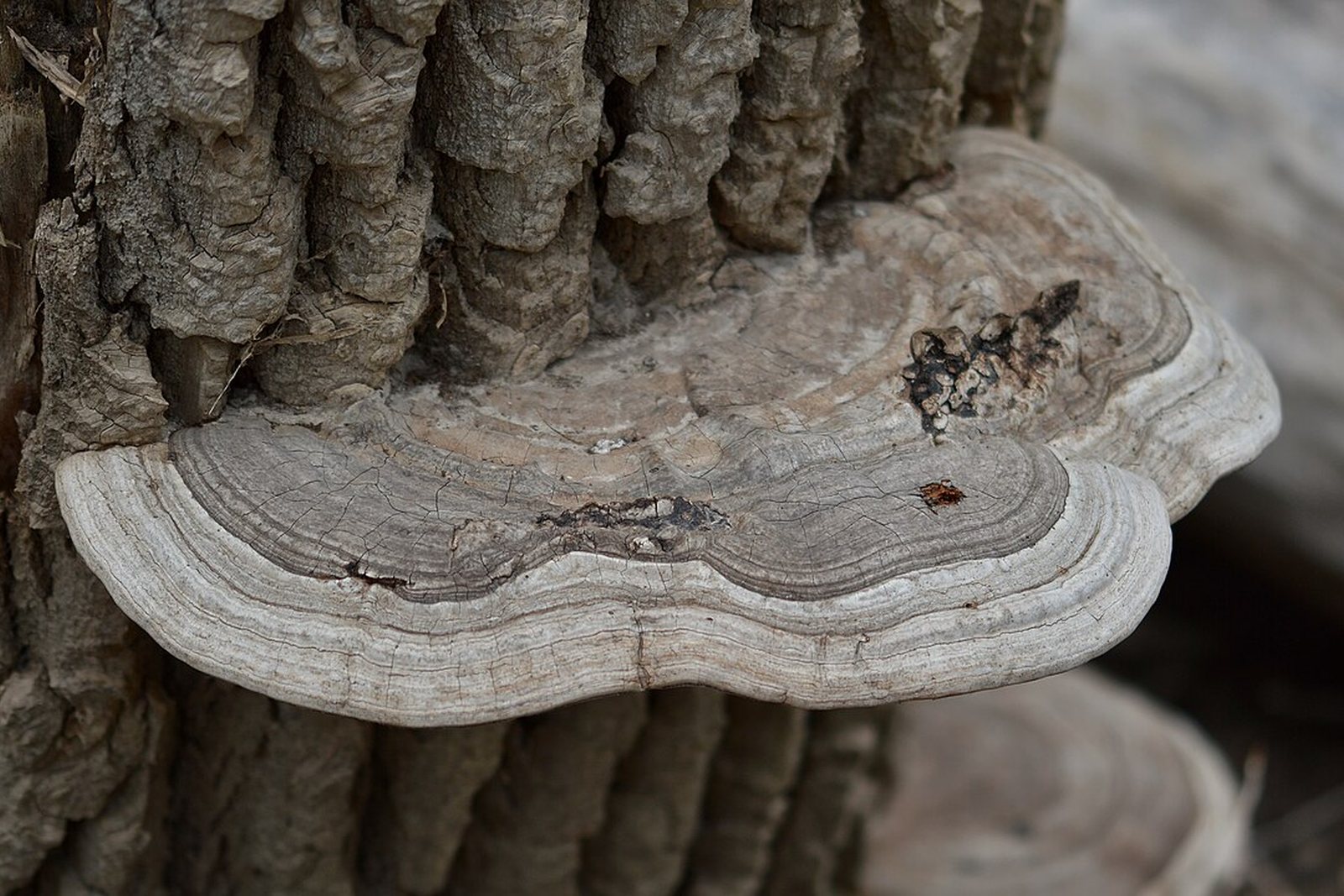
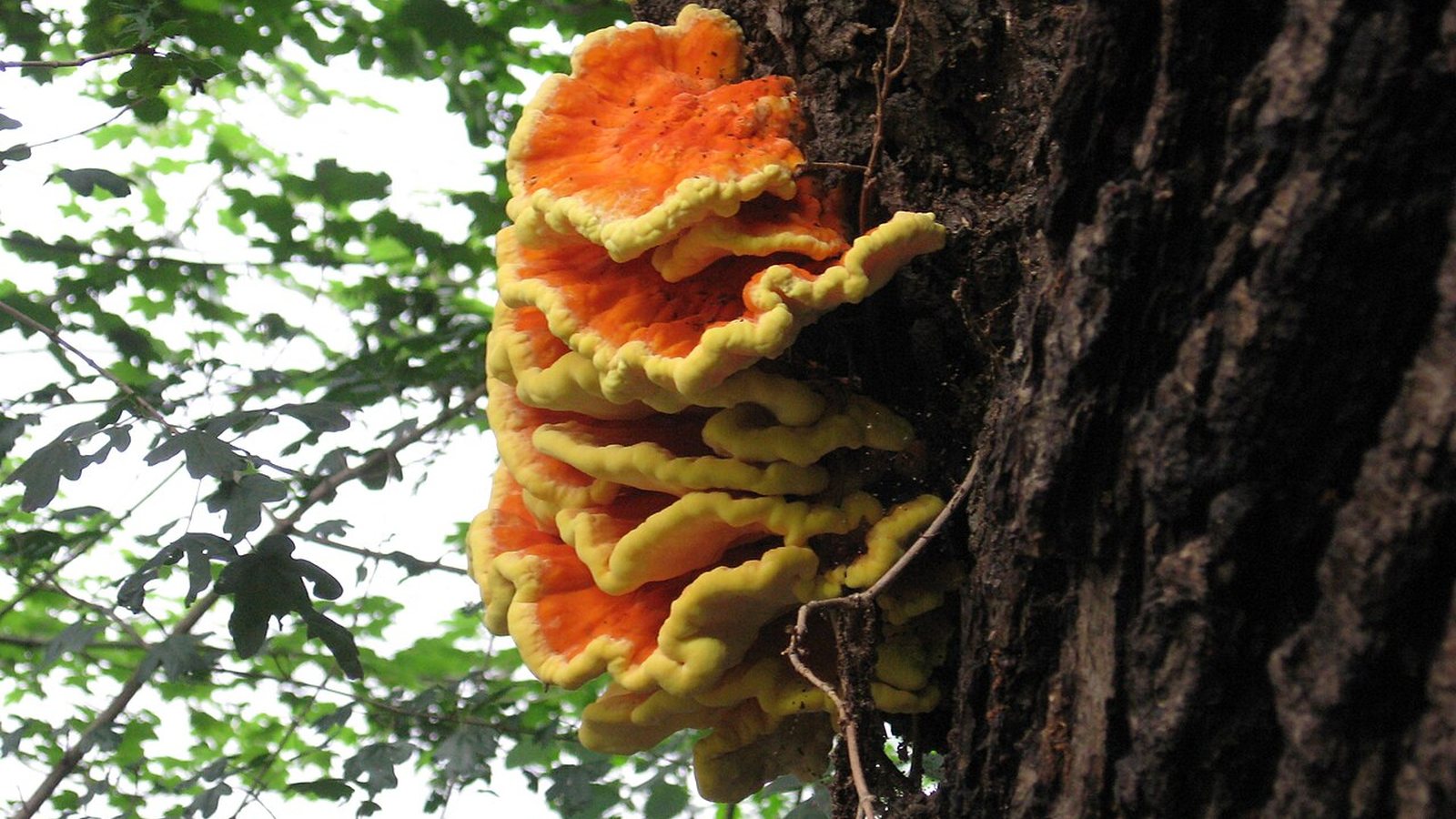 Photo: Bahnmoeller · CC BY-SA 3.0
Mushrooms or shelf-like conks on a tree usually mean wood-decay fungi are already well established inside, often for years. The tree may look healthy yet be weaker than it seems. Photograph it, keep people and pets away if it leans, and have a qualified arborist assess it. Never eat mushrooms from a tree on a guess.
Key takeaways
- Per UC IPM, a mushroom or conk on a tree is usually a sign of advanced decay, which can reach well above and below it.
- Fungi on dead wood and stumps are common and often harmless to the tree, but you cannot tell which kind you have from a photo alone.
- Honey fungus clusters at the base in late summer or autumn can signal a root disease; peeling a little bark at the base gives the best check, according to the RHS.
- There is no proven cure once decay has started, so the priority is a risk check by an arborist, especially near a house, path or play area.
- Never eat a mushroom growing on a tree based on a photo or an app; for a suspected poisoning call the poison line at once.
On this page8
- Do mushrooms on a tree mean the tree is dying?
- Which fungus is it, and how serious is it?
- Why do the mushrooms appear now?
- Could it be honey fungus?
- What should you do about a tree with mushrooms on it?
- Can you eat mushrooms that grow on trees?
- Are tree mushrooms a danger to children and pets?
- What if someone has eaten an unknown mushroom?
Do mushrooms on a tree mean the tree is dying?
Mushrooms growing on a tree do not always mean it is dying, but they do mean a fungus is living in or on the wood. UC IPM says that when a fruiting body is visible on a tree it is usually associated with advanced decay, and that the decay may extend well above or below the visible fungus. Some of these fungi mainly feed on dead wood and are harmless, while others slowly weaken a living trunk, so the tree can look healthy and still be hollow inside. That is why this guide is about safety, not mushroom identification. Our guide to mushrooms in your lawn or garden covers the soil-growing kind; this one is for mushrooms on trunks, branches, roots and stumps.
Which fungus is it, and how serious is it?
UC IPM's wood-decay note names several fungi that appear on trees. The table summarises what it says about each, not how to recognise them: you cannot confirm the species from a picture, and an arborist or local extension office can examine the whole tree.
| Fungus named by UC IPM | What it says |
|---|---|
| Laetiporus (sulfur fungus) | Brown heart rot in living trees; one of the most serious causes of decay in oaks and eucalyptus; conks appear only after extensive damage |
| Ganoderma applanatum (artist's conk) | White rot of roots and trunks; conks usually near ground level; decay can extend up to 4.5 m (15 ft) above and below |
| Ganoderma polychromum (varnish fungus) | Can kill a host in 3 to 5 years; shiny reddish conks at the base in summer |
| Armillaria mellea (oak root fungus) | White rot of the butt and roots; mushrooms at the base after autumn and winter rains |
| Pleurotus ostreatus (oyster mushroom) | White, flaky rot; clusters can mean decay about 3 m (10 ft) either way |
| Stereum, turkey tail (Trametes versicolor) | Usually on dead trees, branches and stumps or cut wood; rarely serious in living trees, but turkey tail can colonise stressed or wounded ones |
UC IPM also notes that conks do not appear until many years after decay begins. That is the key point for a worried homeowner: by the time you see the fruiting body, the fungus has usually been working for a long time.
Why do the mushrooms appear now?
The mushrooms are only the fruiting bodies. Iowa State Extension says decay fungi usually enter through cracks and fruit when moisture is plentiful. UC IPM says most decay enters through wounds from pruning, broken limbs, machinery, sunburn, fire, ice, lightning or insects. In the northern hemisphere most clusters appear in late summer to autumn; the RHS says honey fungus mushrooms show in late summer or autumn, and in the southern hemisphere that is roughly March to May. In Mediterranean-type climates such as California's, UC IPM links Armillaria mushrooms to the first autumn and winter rains. Wherever you live, expect the mushrooms to follow the first heavy rains of your wet season.
Could it be honey fungus?
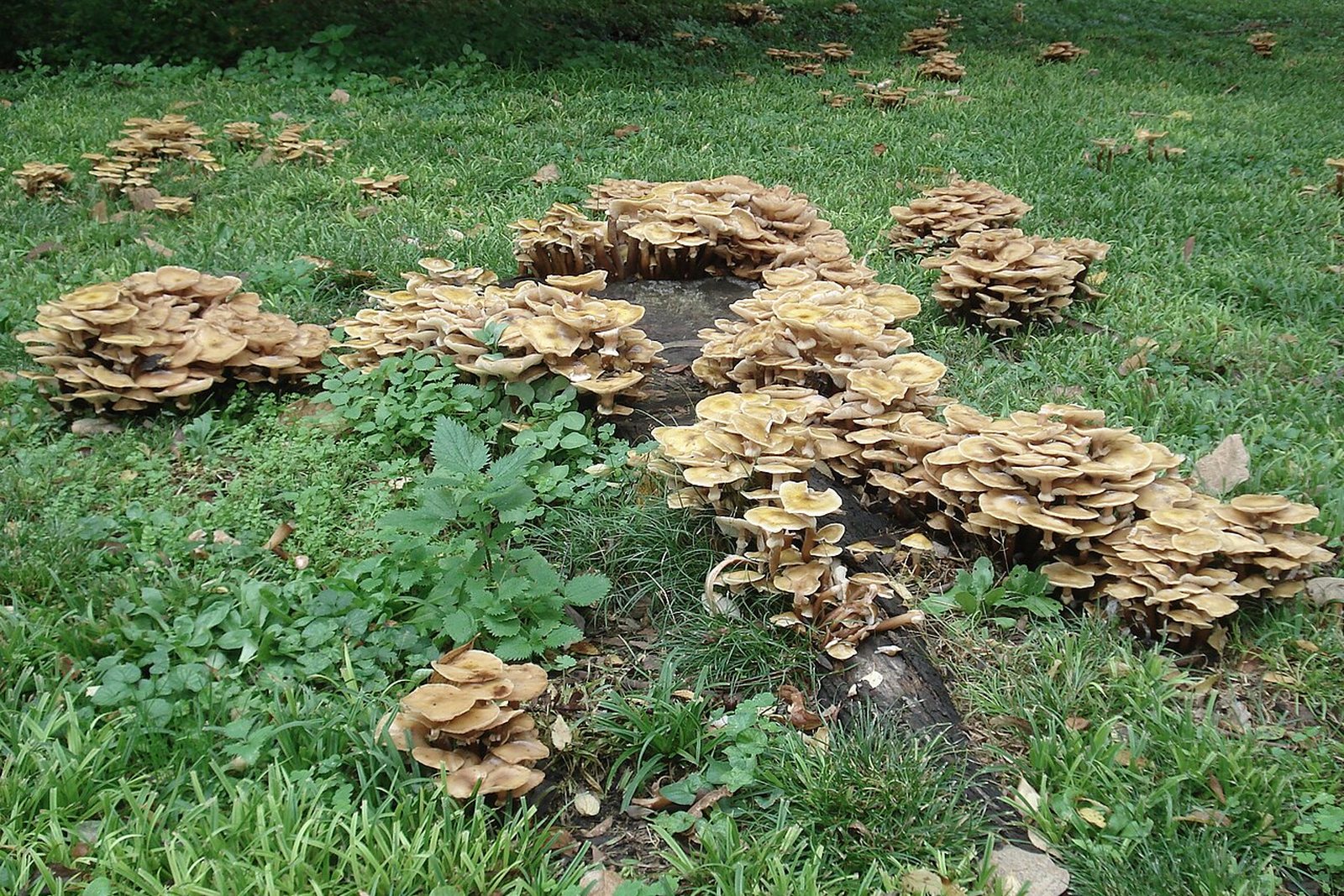
Honey fungus (Armillaria) is the one gardeners worry about, because it attacks roots of living trees and shrubs. The RHS describes the signs: upper branches dying, smaller and paler leaves, autumn colour that comes early, and sap bleeding from cracks in the bark at the base. Clusters of often honey-coloured mushrooms can appear in late summer or autumn around stump bases or over dead roots, but colour and size vary, and mushrooms are not always produced, so their absence proves nothing. The RHS says the most reliable check is to peel back a little bark at the base, where honey fungus leaves white or cream sheets of fungal tissue that smell strongly of mushrooms. Black or brown bootlace-like cords may be found 2.5 to 20 cm (1 to 8 in) down in the soil; if they are abundant and tough, the fungus is probably feeding on dead material.
The RHS says you cannot fully eradicate honey fungus from a garden, so the aim is to limit its impact: remove as much infected material as you can reach, such as the stump and root flare, without damaging healthy neighbours, bag it and do not compost it, avoid routine digging, and wait about a year before replanting. Stressed plants are vulnerable even when they are usually resistant, so good growing conditions matter.
What should you do about a tree with mushrooms on it?
- Photograph the whole tree and the fungus, with something for scale, and note the date and the weather.
- Check where it stands. Iowa State Extension says a tree with conks may be a hazard to property or people if it fails and falls. Look at what is beneath it: a house, a path, a play area, a parked car.
- Call a qualified arborist. Iowa State advises a trained arborist to evaluate whether the tree still has structural integrity. Penn State suggests hiring an ISA Certified Arborist with the Tree Risk Assessment Qualification (TRAQ) if safety is a concern.
- Do not treat the wound. UC IPM says wound dressings do not speed closure or prevent decay and may sometimes promote it. Iowa State says no cure or treatment is proven to eradicate decay once it starts.
- Prune properly. UC IPM advises cutting just outside the branch collar, with no stubs and no flush cuts, and removing dead or diseased limbs.
- Keep the tree vigorous. Protect it from injury and drought; Penn State notes that heading cuts, topping and flush cuts let decay move quickly.
Trees near structures should be inspected regularly by a qualified expert, according to UC IPM. If you are unsure about the fungus itself, local mycologists or extension offices are the right place to ask. Flori can suggest a name for a mushroom from a photo, but a name is a starting point, never a safety test. For why, read can an app identify mushrooms safely.
Can you eat mushrooms that grow on trees?
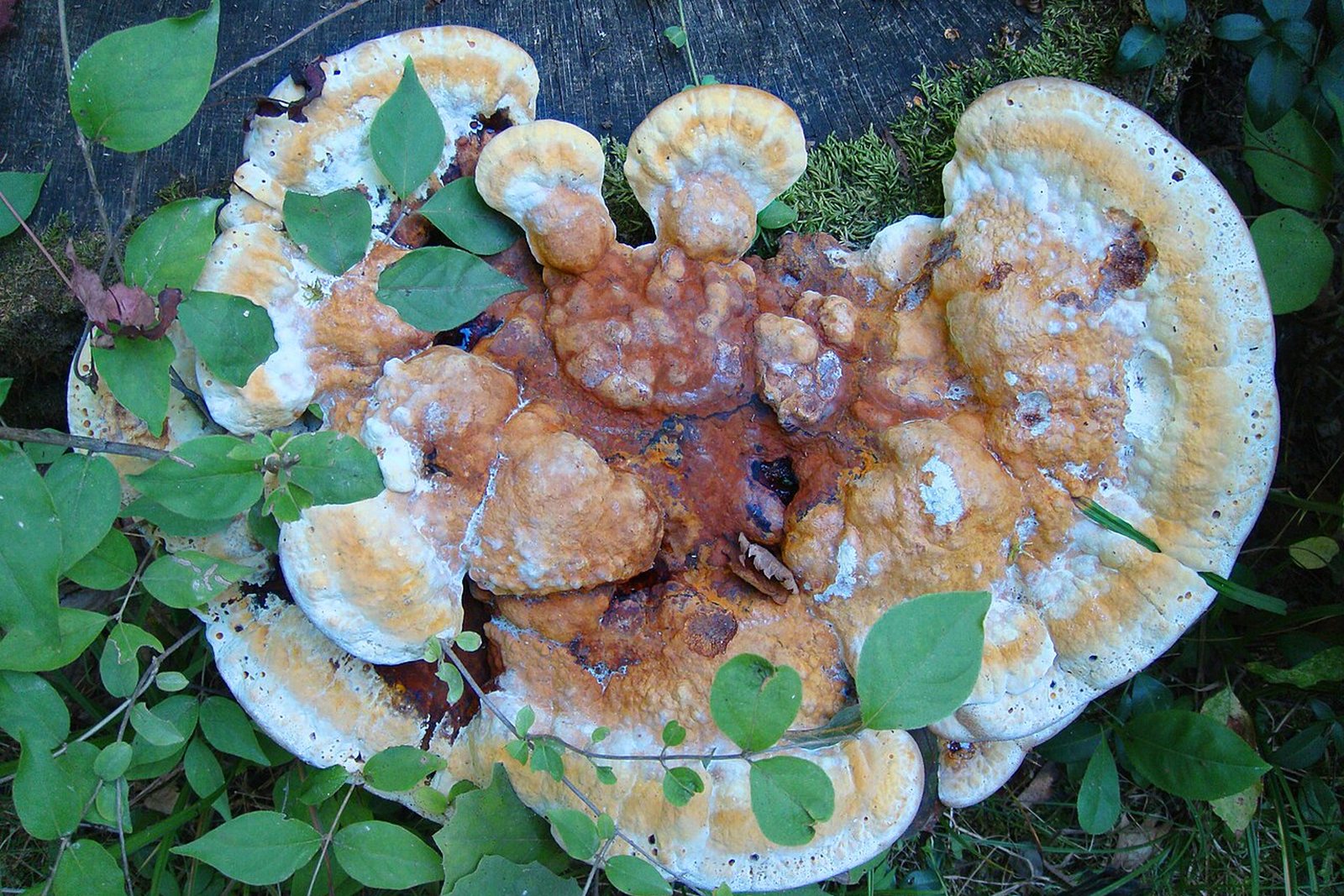
No, not on the strength of this guide, a photo or an app. NAMA says a single photograph is never enough for identification and that colour, insect damage and smell are not reliable tests. NAMA also says that when the question becomes whether you can eat it, certainty must be far higher, and a mushroom from a tree has not earned that certainty. The oyster mushroom in the table is a good example: it is a species people grow and eat, yet UC IPM lists it as a decay fungus on living trees, and a wild one on a tree is not a safe shortcut. Read is it safe to pick wild mushrooms and our myths that kill guide first.
Are tree mushrooms a danger to children and pets?
They can be, because anything growing on a tree trunk or stump may be picked up and tasted. NAMA advises keeping unknown mushrooms away from small children and pets, since dogs may eat mushrooms they find outdoors. Remove fallen ones and keep children and dogs away from the base. Our guide to poisonous mushrooms and dogs explains what to do if a dog eats one.
What if someone has eaten an unknown mushroom?
Call the poison line now, even if the person feels fine. In Türkiye call UZEM (Ulusal Zehir Danışma Merkezi) on 114. In the US call Poison Control on 1-800-222-1222. In the UK call NHS 111. Keep a sample or a photo of the mushroom and where it grew, and do not wait for symptoms: NAMA says not to wait for symptoms to worsen, and with the deadliest group, amatoxin poisoning, a person can seem to feel better before liver damage shows. Do not try home remedies.
Frequently asked questions
Is a mushroom growing on my tree dangerous for the tree?
Often it signals decay. UC IPM says a fruiting body usually means advanced decay, although some fungi only live on dead wood. Have an arborist inspect the tree, especially if it stands near a house or path.
Should I cut the mushrooms off the tree?
Removing them does not stop the fungus, which lives inside the wood. It can help keep children and pets from picking them up, but the priority is an arborist's assessment of the tree.
Is there a treatment for wood-decay fungi in trees?
Iowa State Extension says there is no proven cure once decay has started, and UC IPM says wound dressings do not stop decay. Management is about assessing risk and, where needed, tree removal.
Can I eat mushrooms growing on a tree?
Do not eat a wild mushroom on a guess. A photo or an app is never enough for NAMA. If someone ate an unknown mushroom, call the poison line now: 114 in Türkiye, 1-800-222-1222 in the US, 111 in the UK.
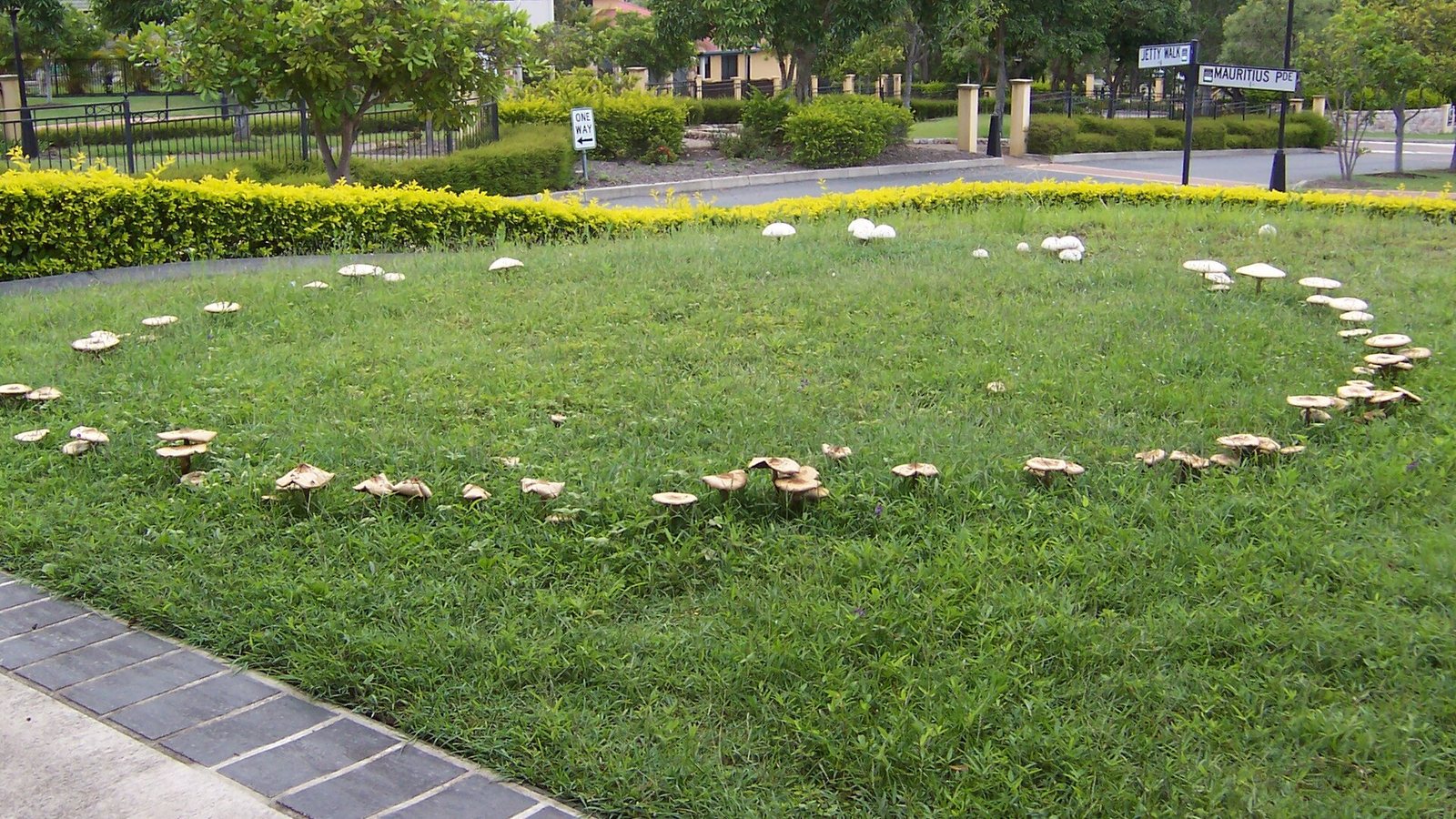
Mushrooms in the lawn rarely harm grass, but some are deadly if eaten by children or pets. Why they appear, which matter and how to remove them safely.
Sources
Written and fact-checked by the Flori team. Every guide cites horticultural sources such as the RHS, university extension services and the ASPCA, and is updated when the advice changes. How we write our guides
General plant care information. Plants vary; when a plant is valuable or a problem spreads quickly, consult a local nursery or plant specialist.