Orchid Aerial Roots: Cut Them or Leave Them?
Orchid aerial roots: leave healthy silver or green ones, cut only brown, mushy or hollow ones, never bury them. Includes a root chart and cutting steps.
 By Flori editorial team · Updated
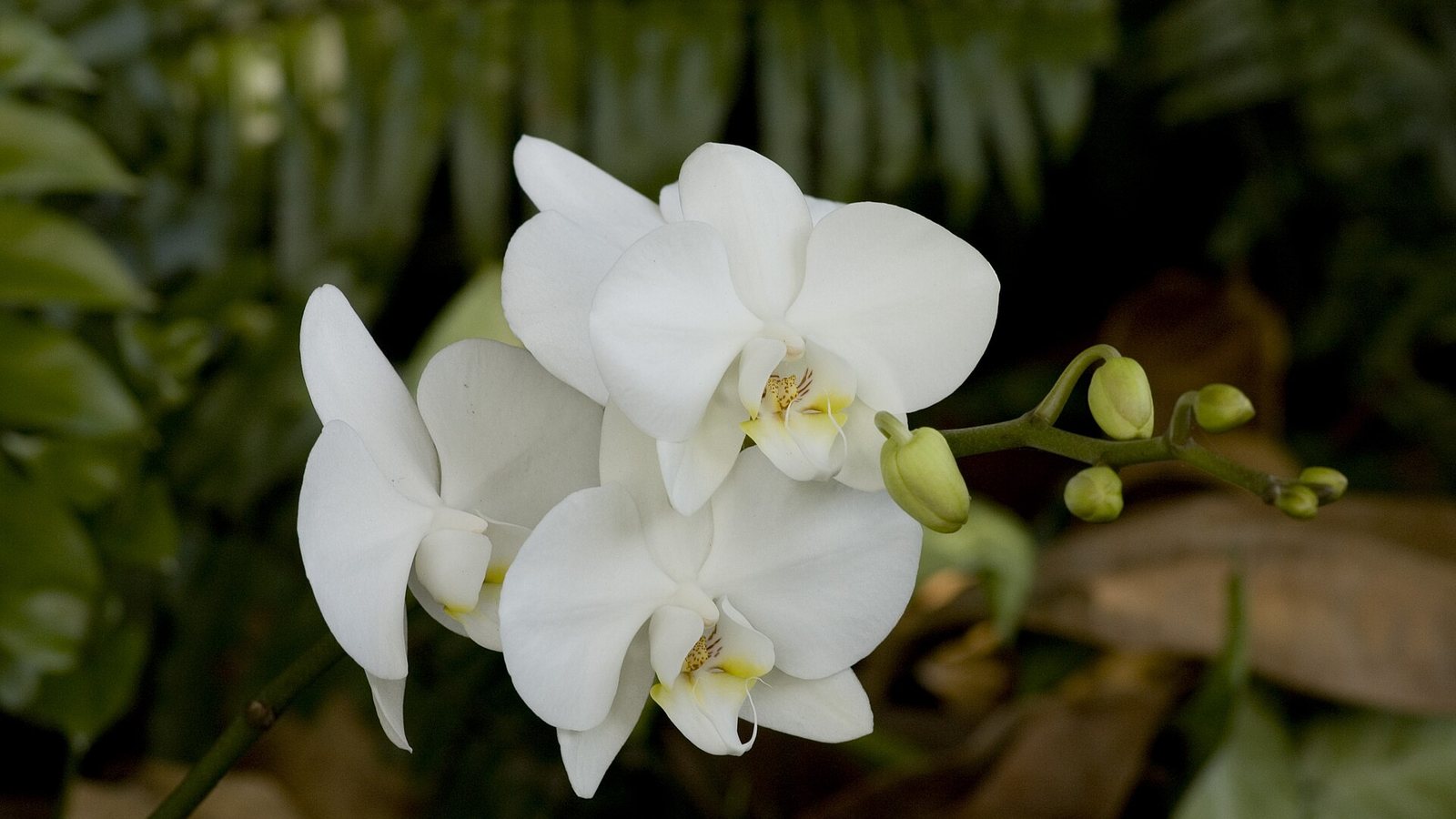
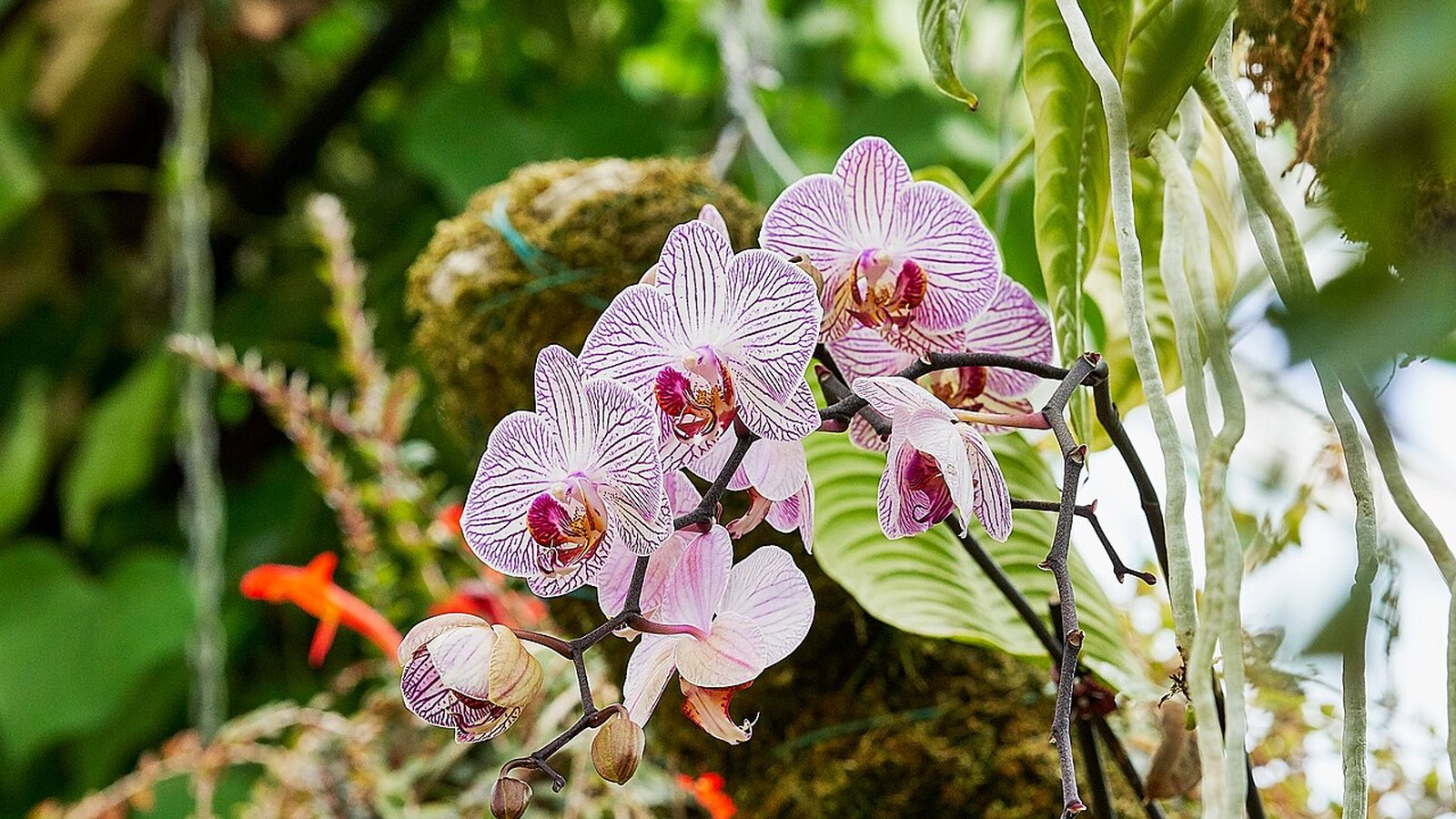 Photo: geoff mckay from Palmerston North, New Zealand · CC BY 2.0
Leave healthy orchid aerial roots alone. Silver, green, plump and firm roots are normal on a moth orchid, even when they grow out of the pot. Cut only roots that are brown, shrivelled, mushy or hollow, ideally when repotting, with clean, sharp scissors, and never bury healthy aerial roots in compost.
Key takeaways
- Healthy aerial roots are plump and firm, silvery-white or pale green; leave them.
- Cut only dead roots: brown, shrivelled, mushy or hollow, ideally at repotting.
- Aerial roots outside the pot are a sign of active growth, not a reason to repot.
- Silver roots are a cue to water; pale green means the plant has had enough.
- Cutting a flower spike follows different rules from cutting roots.
On this page7
Should you cut orchid aerial roots?
No, not while they are alive. Aerial roots are the thick silver or green roots that climb out of the pot and wander into the air, and they are normal on a moth orchid (Phalaenopsis). University of Maryland Extension says that most of the roots will sit above the pot and sprawl outside it, and "do not cut them off". The only roots to remove are dead ones. This guide answers that single question: which roots to leave, which to cut and how. For watering, repotting and the first weeks of a new plant, see our guides to watering orchids, orchid potting mix and repotting and the first month with a new orchid. It draws on the Royal Horticultural Society (RHS), University of Maryland Extension, University of Missouri and NC State Extension.
| What the aerial root looks like | What it means | Cut it? |
|---|---|---|
| Plump, firm, silvery-white | Healthy and a bit dry; a good cue to water (RHS) | No |
| Green or pale green | Enough water, according to University of Maryland Extension | No |
| Long, growing over the rim or along the shelf | Normal for an epiphyte; Missouri calls several aerial roots a sign of active growth | No |
| Brown, shrivelled, mushy or hollow | Dead or rotting (RHS) | Yes, the dead part only |
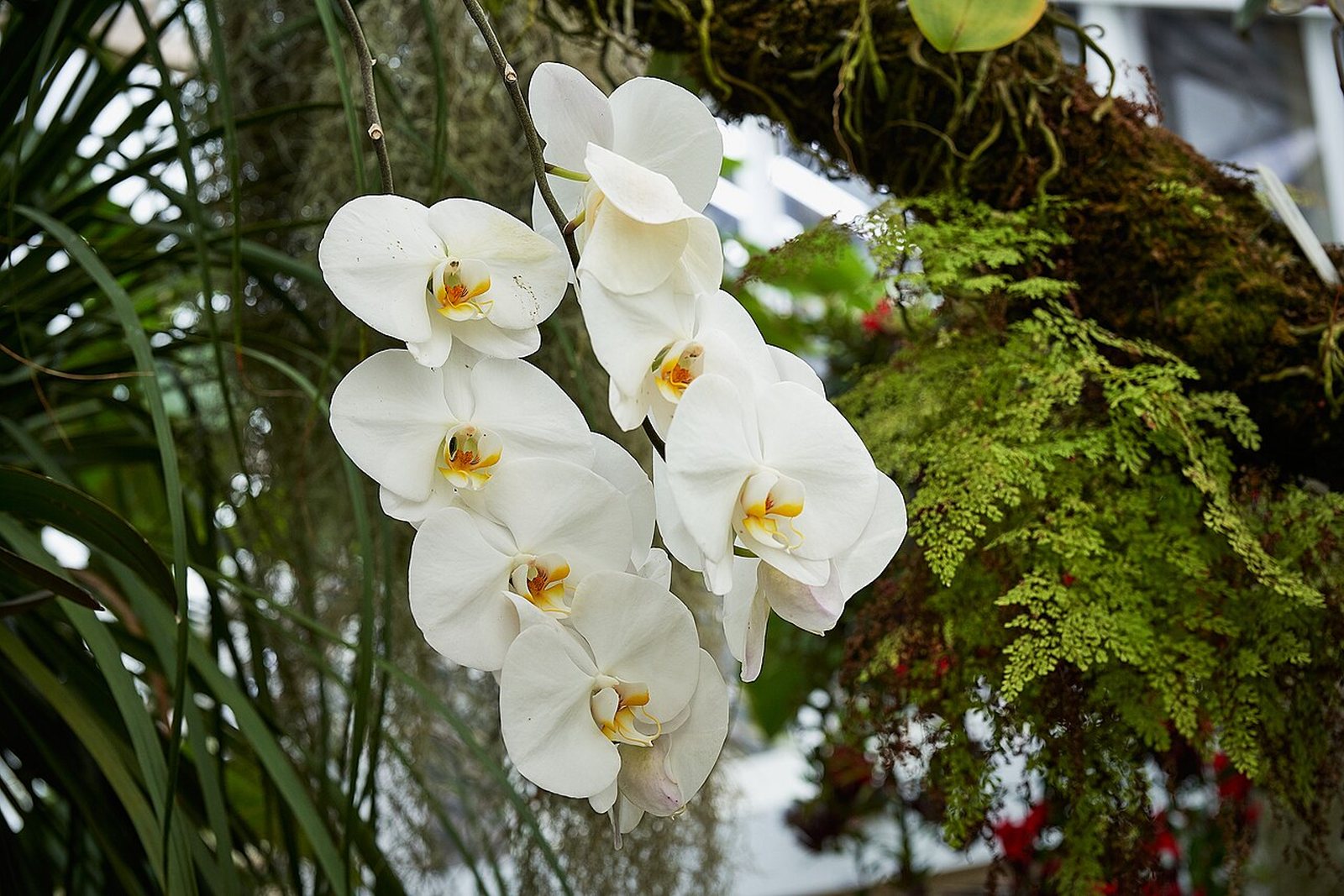
Why do orchids grow roots in the air?
Because in nature they live on trees. NC State lists the moth orchid as an epiphyte, and the RHS says these aerial roots help the plant cling to its perch and take in nutrients and moisture from the surroundings. A pot is only a stand-in for a branch. That also explains why the roots are happy in the open air and why they can suffer when buried: the RHS says not to bury roots that are growing out into the air, because they may rot if covered with compost.
The roots also work like leaves. The RHS says some roots can photosynthesise, and NC State notes that clear pots are often used because they let light reach the green roots. If you see green roots in a clear pot, that is the plant doing its job.
Myth: aerial roots mean the pot is too small. Not by themselves. University of Missouri's David Trinklein calls several aerial roots outside the pot a good sign that an orchid is actively growing. Repot for the real reasons: bark that has broken down into mush, a plant that is unstable, or rotting roots. The potting guide linked above lists them.
How can you tell a dead aerial root from a healthy one?
Colour alone can mislead, because healthy roots change colour as they dry and drink. Use this checklist:
- Firmness: healthy roots are plump and firm (RHS). A hollow or mushy root is dead or dying.
- Colour change after watering: University of Maryland Extension says aerial roots go from dull silver or white to pale green when the plant has had enough water. A root that never changes after a good soak and feels hollow is the suspect.
- Brown and shrivelled: the RHS lists this as unhealthy. It adds that roots kept too dry may shrivel and die, while roots kept too wet are likely to rot.
- Part dead, part alive: one root can be dead at the tip and fine near the plant. Cut only the dead section.
If you are unsure, wait. A firm root can safely stay on the plant, but you cannot glue a cut root back. Our guide to healthy roots versus rotten roots has a longer comparison.
How do you cut a dead aerial root?
- Pick your moment. University of Maryland Extension suggests removing dead, discoloured or damaged roots when you repot, and rinsing off the old degraded bark.
- Loosen roots stuck to the pot or bark. The same page says to soak the plant if roots are stuck, so you can pry them off gently instead of tearing them.
- Use clean, sharp scissors. Cut the dead part away and leave all firm tissue.
- Do not bury the survivors. Put fresh orchid mix around the roots that belong in the pot, and leave aerial ones in the air (RHS).
- Water sensibly afterwards. Keep the mix slightly damp, not soggy, and do not leave the pot standing in water.
Sources differ on trimming healthy roots. The RHS says that when repotting you can shorten very long roots to about 12 cm (5 in), while University of Missouri says not to trim air roots unless they are dead and that trimming roots can cause stunted growth. The safest course for a healthy plant is the more cautious one: leave living roots alone.
Is that an aerial root or a flower spike?
New growers sometimes cut the wrong thing. A flower spike is the stem that carries the buds, and it has bumps called nodes. University of Missouri says that after flowering you can cut a green spike back to one inch above the highest node, and that a brown, unhealthy spike should be cut all the way to the base of the plant. Aerial roots follow different rules: leave them. On the same plant, a baby plantlet (a keiki) can form on a node of the spike, which is a separate matter covered in our orchid propagation guide, and in why an orchid is not blooming if you are waiting for new flowers.
How should you water and mist plants with long aerial roots?
Water the roots as well as the bark. University of Maryland Extension says to run warm water over the plant, the bark and the roots in 3 or 4 drenches over about 10 minutes, and says watering should not be needed more than once a week at normal home temperatures. The RHS says to water about once a week in the growing season and slightly less in winter, never to let the plant sit in water and not to let the roots dry out completely.
On misting, sources disagree, so use judgement. University of Maryland Extension says misting does not usually add enough moisture indoors and that a pebble tray must not be flooded or the roots stay overly wet and may rot. The RHS says that in hot weather you can mist the foliage and aerial roots daily, or stand the pot on a wide saucer of damp gravel, while keeping water out of the crown. If you mist, do it in the morning so the plant dries by evening, and never let water pool in the centre of the leaves.
Climate matters. In Turkey, a heated flat in Ankara or Erzurum can be very dry in winter, so aerial roots near a radiator shrivel faster than on an Aegean or Mediterranean windowsill. Keep the plant away from the heater and watch the roots for silver, the cue to water. The same applies to a temperate northern home with central heating.
Quick checklist
- Leave every firm, silver or green root alone.
- Cut only brown, shrivelled, mushy or hollow roots, ideally when repotting.
- Never bury aerial roots in compost.
- Use roots as your watering cue: silver means water, pale green means enough.
- Cut spikes by their own rules, not the roots' rules.
Flori can set a watering reminder for each orchid and a progress-photo reminder, so you can compare how the roots look from one week to the next.
Frequently asked questions
Do orchid aerial roots need to be cut?
No. University of Maryland Extension says not to cut them off, and University of Missouri says not to trim air roots unless they are dead. Remove only brown, shrivelled, mushy or hollow roots.
Should I put orchid aerial roots back into the pot?
No need. The RHS says aerial roots are nothing to worry about and says not to bury them, as roots growing in the air may rot if covered with compost.
Why are my orchid roots growing out of the pot?
Moth orchids are epiphytes that grow on trees in nature, so their roots cling and take in moisture from the air. University of Missouri calls several aerial roots a good sign of active growth.
What colour should orchid aerial roots be?
Healthy roots are plump, firm and silvery-white, and they turn pale green after watering, according to the RHS and University of Maryland Extension. Brown, shrivelled, mushy or hollow roots are unhealthy.
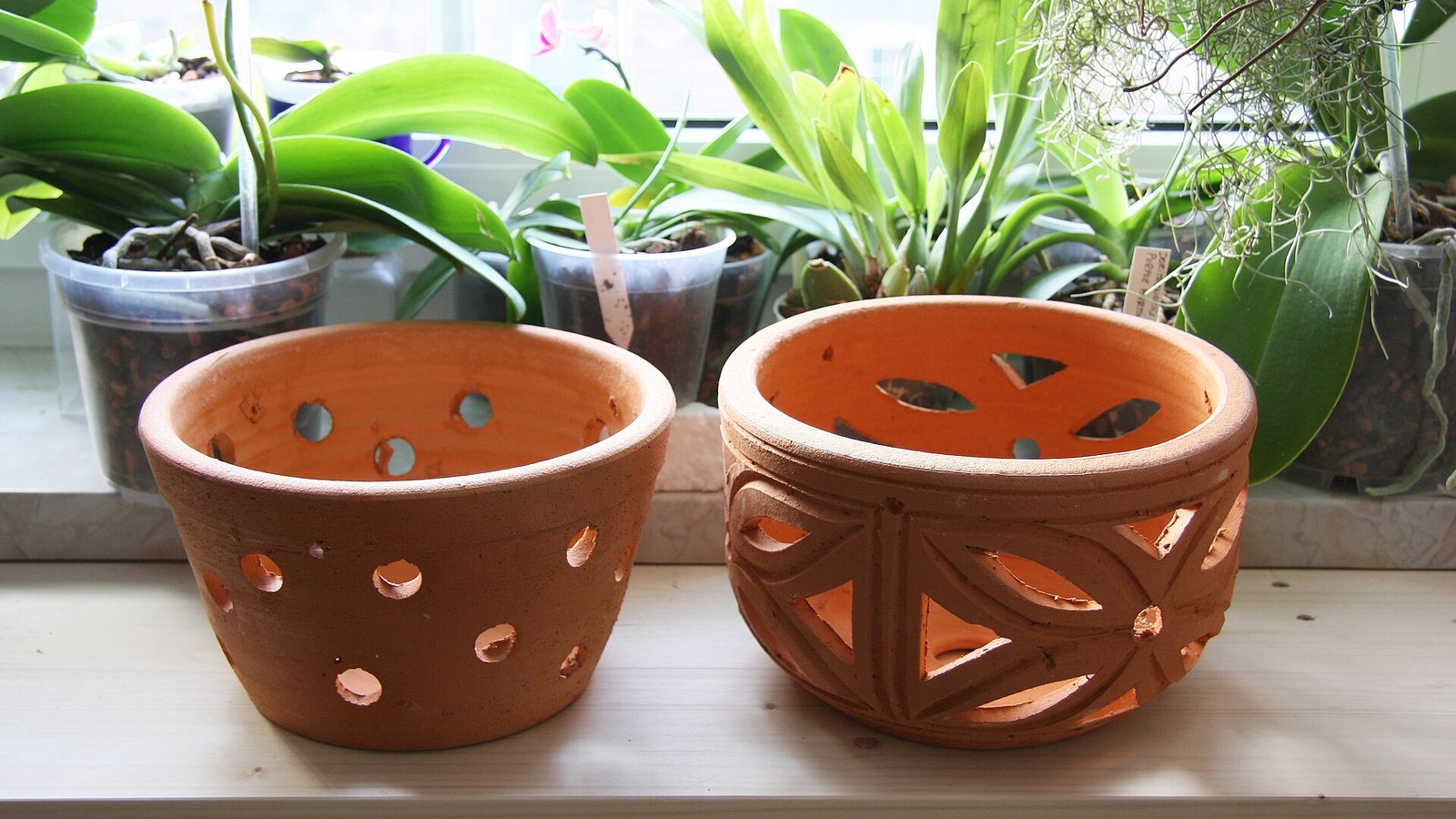
Water a moth orchid when the bark is nearly dry, about weekly. Compare soaking, tap and ice cubes, and read the roots to know when it is thirsty.
Sources
Written and fact-checked by the Flori team. Every guide cites horticultural sources such as the RHS, university extension services and the ASPCA, and is updated when the advice changes. How we write our guides
General plant care information. Plants vary; when a plant is valuable or a problem spreads quickly, consult a local nursery or plant specialist.