Winter Berry Plants That Feed Garden Birds
Winter berry plants that feed garden birds, each checked against the ASPCA: hawthorn and mahonia are pet-safe; holly, yew and ivy are not.
 By Flori editorial team · Updated
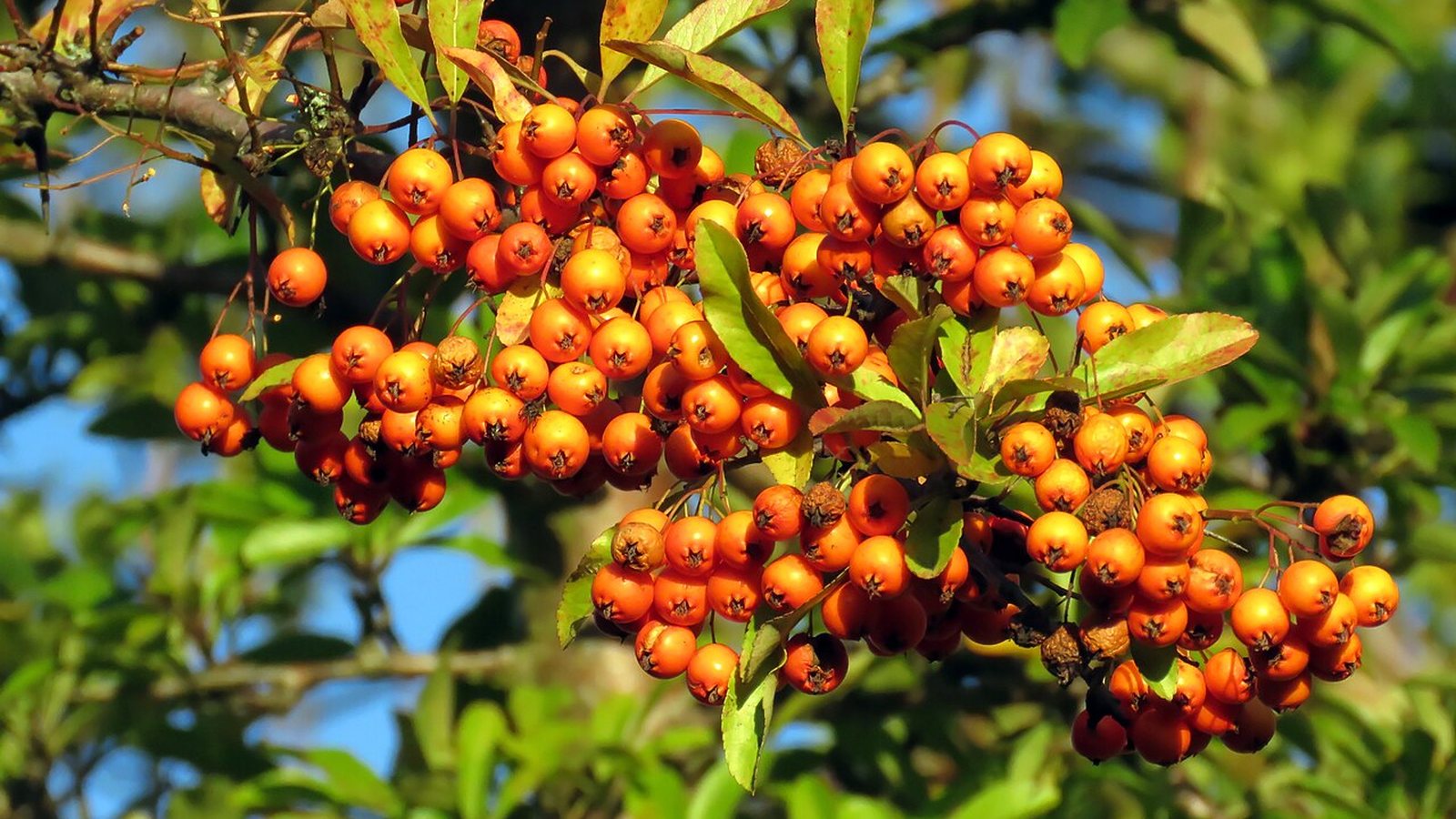 Photo: Acabashi · CC BY-SA 4.0
Holly, pyracantha, cotoneaster, crab apple, hawthorn, mahonia and laurustinus feed garden birds through winter. But a berry birds eat can still poison pets: the ASPCA lists holly, yew, ivy and crab apple as toxic to dogs and cats, while hawthorn and mahonia are non-toxic.
Key takeaways
- Hawthorn and mahonia feed birds and are non-toxic to dogs, cats and horses (ASPCA).
- Holly, yew, ivy and crab apple feed birds but are toxic to pets; the ASPCA has no entry for pyracantha or cotoneaster, and the RHS says cotoneaster berries are toxic in quantity.
- Birds eating a berry does not make it safe for pets or children.
- Leave fruit on the branch: crab apples soften after freeze-thaw and cotoneaster and pyracantha last deep into winter.
- Choose plants to match your climate, and check size, thorns and invasive species before buying.
On this page7
- Which winter berry plants feed garden birds, and which are risky for pets?
- Which berries do birds eat first, and which last?
- Is it true that if birds eat a berry it must be safe?
- What do you do if a pet or child eats berries?
- How do you choose berry plants for your garden or balcony?
- How else can you help birds in winter?
- Quick checklist
Which winter berry plants feed garden birds, and which are risky for pets?
The berries that feed birds best are not always the ones that are safe for your dog, cat or child. Birds digest holly and yew berries without trouble; a dog may not. So this list pairs every plant with what birds get from it and what the ASPCA says about pets, which most bird lists leave out. Where the ASPCA has no entry I say so instead of guessing. For the bigger picture of winter shrubs, see evergreen plants for winter gardens.
| Plant | What birds get (RHS, Penn State) | Pets (ASPCA) |
|---|---|---|
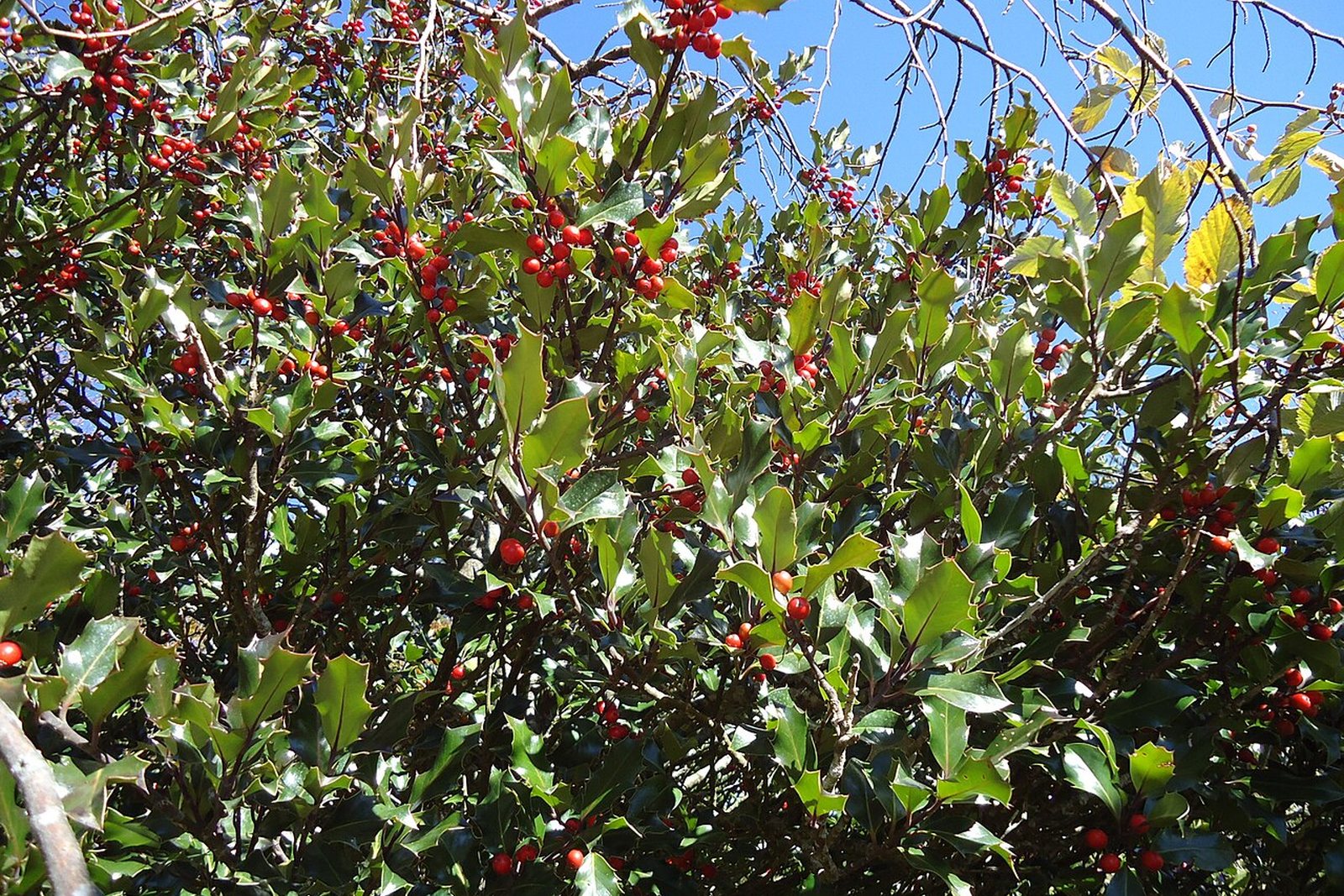
| Holly (Ilex aquifolium), female plants | Berries that last through the cold months for thrushes and robins | Toxic to dogs, cats and horses; vomiting, diarrhoea, depression |
| Pyracantha, firethorn | Long-lasting fruit eaten by blackbirds, thrushes and starlings; thorny, good nesting cover | No ASPCA entry found; treat the berries as not for pets |
| Cotoneaster | Red-orange berries that persist deep into winter | No ASPCA entry found; the RHS says berries are toxic to people and pets in quantity |
| Crab apple (Malus) | Small, persistent fruit; robins and waxwings among the eaters | Apple, including crab apple, is toxic to dogs, cats and horses (seeds, leaves, stems) |
| Hawthorn (Crataegus) | Red haws, listed by the RHS as a native berry plant | Non-toxic to dogs, cats and horses |
| Mahonia | Purple-black berries taken by blackbirds and thrushes | Non-toxic to dogs, cats and horses |
| Laurustinus (Viburnum tinus) | Blue-black berries into winter for bullfinches and mistle thrushes | No entry for this species (only black haw viburnum is listed, non-toxic) |
| Ivy (Hedera) | Seeds for birds, dense cover for shelter | English ivy is toxic to dogs, cats and horses |
| Yew (Taxus) | Listed by the RHS as a native berry plant | Toxic to dogs, cats and horses; can cause sudden death |
Only two rows are clearly easy: hawthorn and mahonia. If a dog shares your garden, plant those first and treat everything else as look, do not nibble. The ASPCA hawthorn, mahonia and rose entries each read non-toxic to dogs, cats and horses, so rose hips are also an option.
Which berries do birds eat first, and which last?
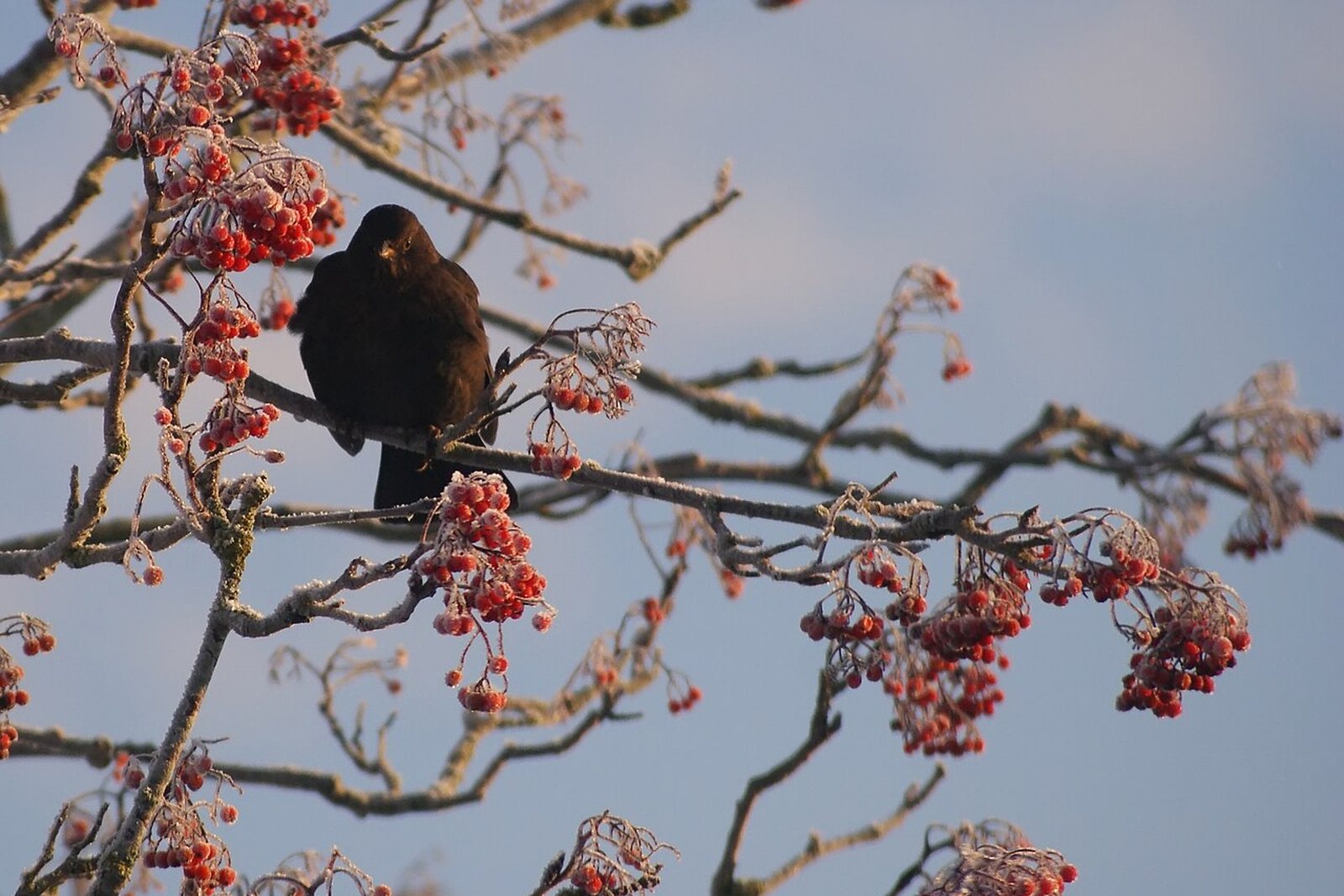
Not all fruit is eaten at once. Penn State says many crab apples hold their fruit through winter, that birds prefer the smaller-fruited varieties and save the sour ones for early spring, and that the very hard fruit becomes more palatable after a few freeze-and-thaw cycles. The RHS says cotoneaster 'Decorus' berries persist deep into winter and pyracantha fruit persists well into winter, which is why both are called a winter lifeline when other food runs short. A bare tree in January is therefore not a failure: the berries may simply be waiting for the first hard frost. Do not cut fruiting branches off in autumn.
Is it true that if birds eat a berry it must be safe?
No, and this is the myth worth sharing. Birds eat yew and holly berries; the ASPCA lists both as toxic to dogs, cats and horses. Yew contains taxine, and the ASPCA says it can cause sudden death from acute cardiac failure, with tremors, difficulty breathing and seizures as early signs in dogs. For holly it names saponins and says to expect vomiting, diarrhoea and depression. The reverse is also true: a berry that birds ignore is not necessarily poisonous. Safety depends on the species and on the animal, so look the plant up before you buy. The same rule applies to children: berries are not snacks, whatever the birds do. For the full pet lists, see plants toxic to dogs and Christmas plants toxic to pets.
What do you do if a pet or child eats berries?
Act first, do not wait for symptoms. For a pet, call your vet or the ASPCA Animal Poison Control Center (888-426-4435 in the US; a consultation fee may apply); in Türkiye call your own veterinarian. For a person, a child included, call your national poison line: Türkiye UZEM 114, US 1-800-222-1222, UK NHS 111. Keep a sample or a clear photo of the plant. Flori can identify a plant from a photo and show its toxicity in the care profile, which helps the call, but it does not replace a vet or a poison line. My dog ate a plant has a step-by-step list.
How do you choose berry plants for your garden or balcony?
- Match the climate. Cotoneaster, once established, copes with dry soil, so it suits sunny Aegean and Mediterranean sites in Türkiye. Inland and eastern Anatolia and cold northern gardens need a cultivar proven for your winter; check hardiness before buying.
- Check the size. Pyracantha 'Orange Glow' reaches about 2.5 m (8 ft), cotoneaster 'Decorus' about 1.5 m (5 ft) tall by 2.5 m (8 ft) wide, mahonia 'Winter Sun' about 4 m (13 ft) and a holly such as 'Argentea Marginata' over 12 m (40 ft). A pot suits only the smaller ones.
- Mind the thorns. Pyracantha has long, very sharp thorns; gloves, and not beside a path.
- Watch for invasive species. The RHS says some cotoneasters are potentially invasive and some are listed in England, Scotland and Wales, so choose alternatives near open countryside and check local rules where you live.
- Choose female hollies. Only female hollies carry berries; ask the nursery which sex you are buying and whether a male is needed nearby.
On a balcony, most berry shrubs are too large; see winter balcony plants for compact options, and how to winterize your garden for the rest of the season.
How else can you help birds in winter?
The RHS says to feed seeds and peanuts in feeders from 1 November to 30 April, little and often (one to two days of food), and to keep feeders clean. It also suggests scattering over-ripe apples on the ground for thrushes and blackbirds, leaving seedheads on perennials over winter, and putting out shallow water no more than 5 cm (2 in) deep, with ice removed. Raisins are mentioned as a bird food, but the RHS warns raisins can be toxic to dogs, so skip them if a dog shares the garden. These dates are for Britain; in the southern hemisphere the cold season is the other half of the year.
Quick checklist
- Pick hawthorn or mahonia first if you have a dog.
- Ask which holly is female and whether it needs a male.
- Leave fruit on the branch until the birds take it.
- Never assume a berry is safe because a bird eats it.
- Keep the vet number and the poison line handy.
Frequently asked questions
Which winter berries are safe for dogs and cats?
The ASPCA lists hawthorn, mahonia and rose as non-toxic to dogs, cats and horses. Holly, yew, English ivy and crab apple are listed as toxic, and several popular birds' favourites have no ASPCA entry.
Are cotoneaster and pyracantha berries poisonous?
The RHS says cotoneaster berries are toxic to people and pets if eaten in quantity. I found no ASPCA entry for either, so treat their berries as not for pets or children.
When do birds eat the berries?
It varies. Penn State says birds prefer small crab apples, save sour ones for early spring and find hard fruit softer after freeze-thaw cycles. Cotoneaster and pyracantha fruit lasts deep into winter, so do not cut fruiting branches.
Should I feed birds raisins in winter?
Skip them if a dog shares the garden. The RHS notes raisins can be toxic to dogs. It suggests over-ripe apples on the ground for thrushes and blackbirds instead.
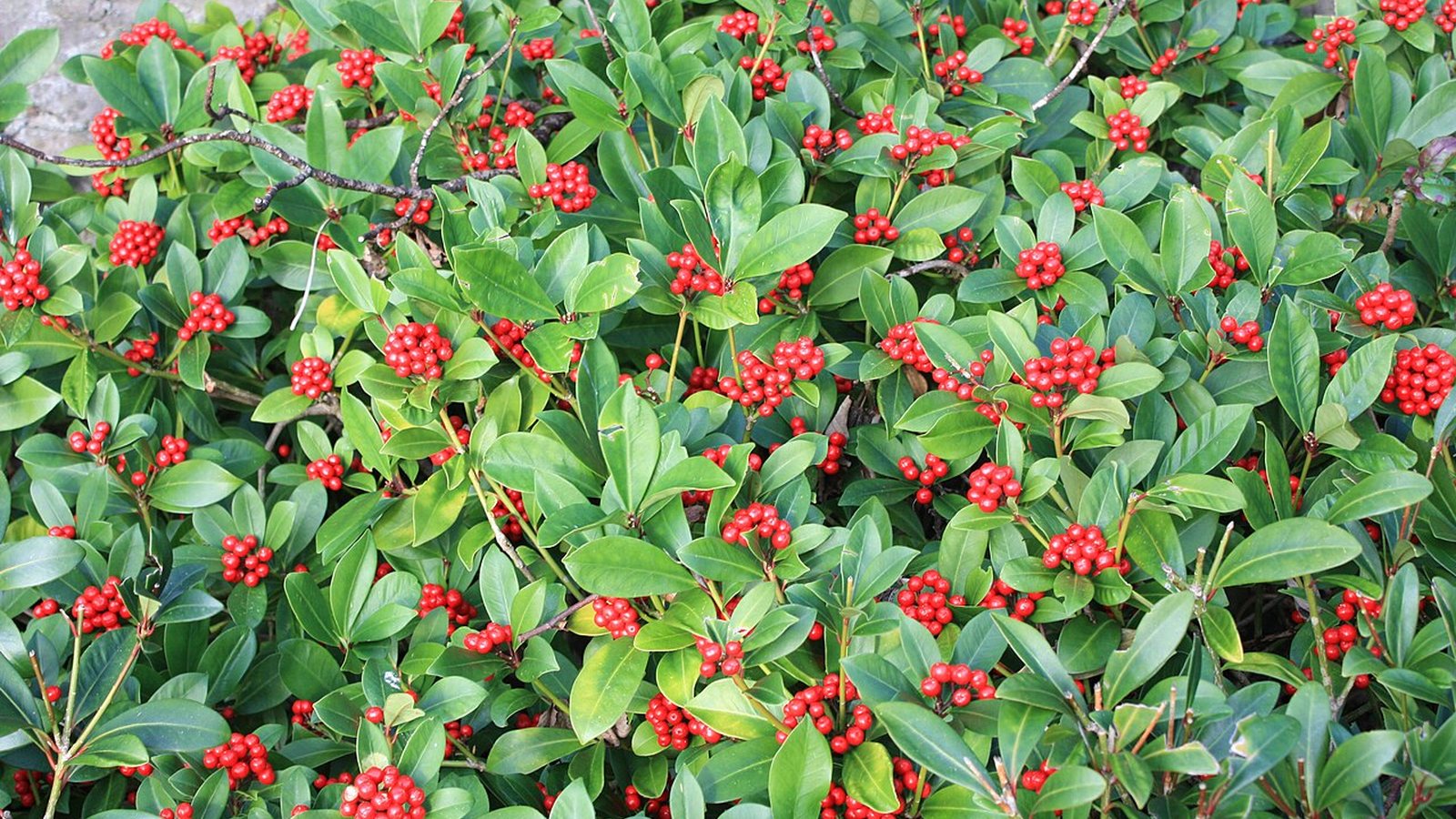
Which evergreen shrubs give scent, berries or solid green in winter? Sarcococca, mahonia, skimmia, pittosporum and holly compared, with pet safety.
Sources
Written and fact-checked by the Flori team. Every guide cites horticultural sources such as the RHS, university extension services and the ASPCA, and is updated when the advice changes. How we write our guides
General plant care information. Plants vary; when a plant is valuable or a problem spreads quickly, consult a local nursery or plant specialist.