Tiny Black Bugs on Plants: What Are They?
Tiny black bugs on your plant are usually aphids, fungus gnats, springtails or thrips. Tell them apart by where they sit and how they move, then fix them.
 By Flori editorial team · Updated
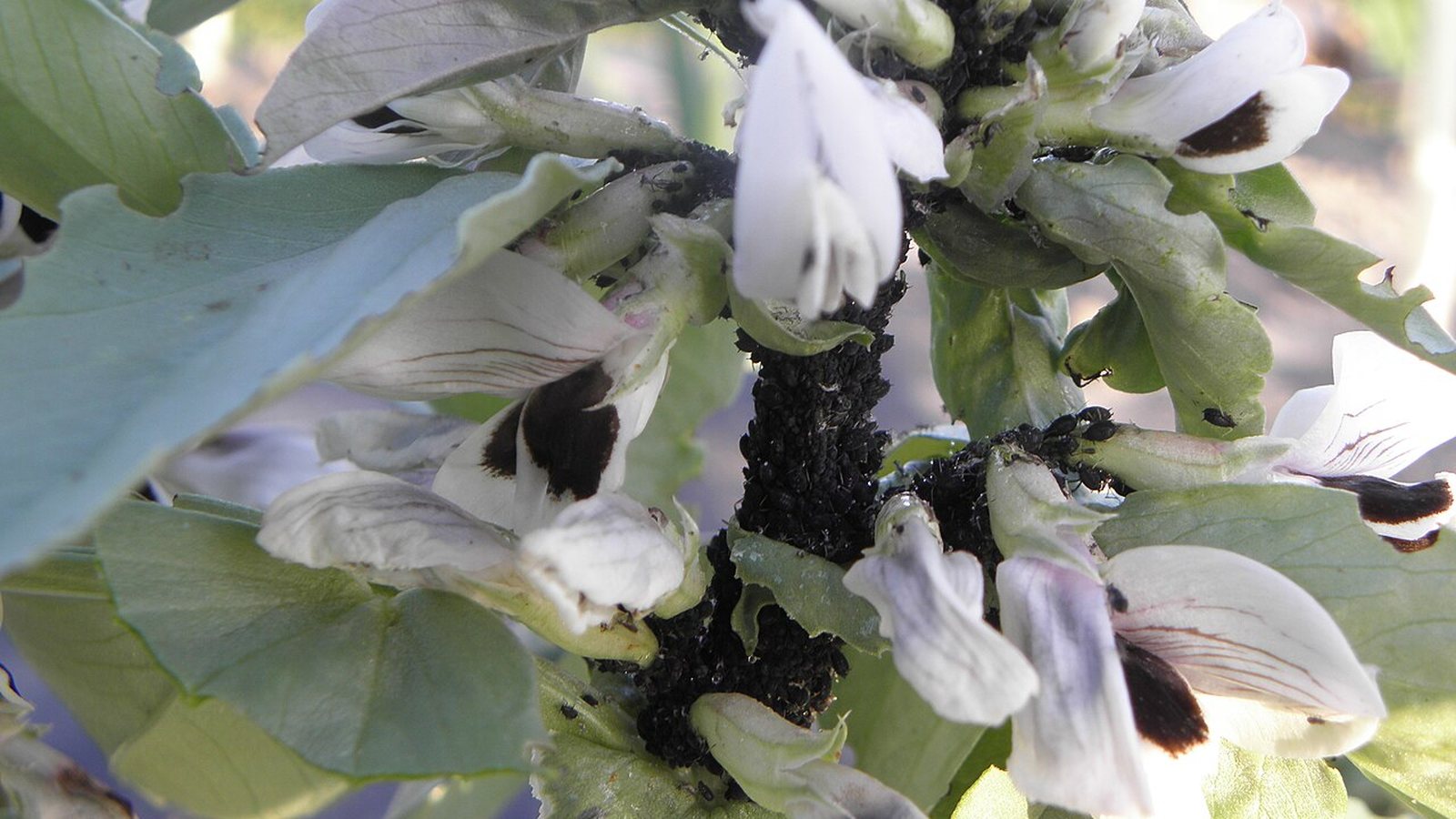 Photo: Rob Hille · Public domain
Tiny black bugs on plants are usually aphids (clusters on new growth), fungus gnats (dark flies running over the soil), springtails (wingless specks that jump after watering) or thrips (slender, in flowers). Check where they sit and how they move, then change your watering, wash the plant or trap the adults.
Key takeaways
- Where they sit sorts most cases: new growth means aphids, soil means gnats or springtails, flowers mean thrips.
- Dark flies running on damp soil are fungus gnats; wingless specks that jump are springtails.
- Black dots that do not move may be thrips excrement, fly specks, sooty mould or soil.
- Let the soil dry between waterings: it helps against both fungus gnats and springtails.
- Isolate new plants for three weeks, wash infested ones with water and follow the label on any soap.
On this page8
What are the tiny black bugs on my plant?
Tiny black bugs on a plant are usually one of four things: aphids, fungus gnats, springtails or thrips. A fifth, the shore fly, looks like a fungus gnat but breeds where algae grow. They need different fixes, so look before you spray. Two questions sort most cases: where on the plant are they (new growth, leaf undersides, flowers or the soil) and what do they do when you touch the pot (run, jump or fly). This guide uses facts from Clemson, UC IPM and Colorado State extension pages, and it is about black bugs specifically; white ones are covered in our guide to white bugs on plants.
Which black bug is it? A quick table
| What you see | Where | When disturbed | Likely bug |
|---|---|---|---|
| Soft, pear-shaped, 1.6-3.2 mm (1/16 to 1/8 in), often green but may be black, brown or pink | New growth and leaf undersides, in clusters | Stay put, sticky leaves below them | Aphids |
| Delicate, mosquito-like dark flies, about 1.6-3 mm (1/16 to 1/8 in) | Run across the soil or fly near it; gather at windows | Weak fliers, hop up and settle again | Fungus gnats |
| Slightly larger, more robust dark flies with short antennae | Near algae or wet spots; dark fly specks on plants | Fly short distances | Shore flies |
| Wingless, about 5 mm (1/5 in), white or black | Soil surface, especially after watering | Jump like fleas | Springtails |
| Slender, under 1.6 mm (1/16 in), yellowish to blackish, with fringed wings | Leaves and inside flowers | Move quickly | Thrips |
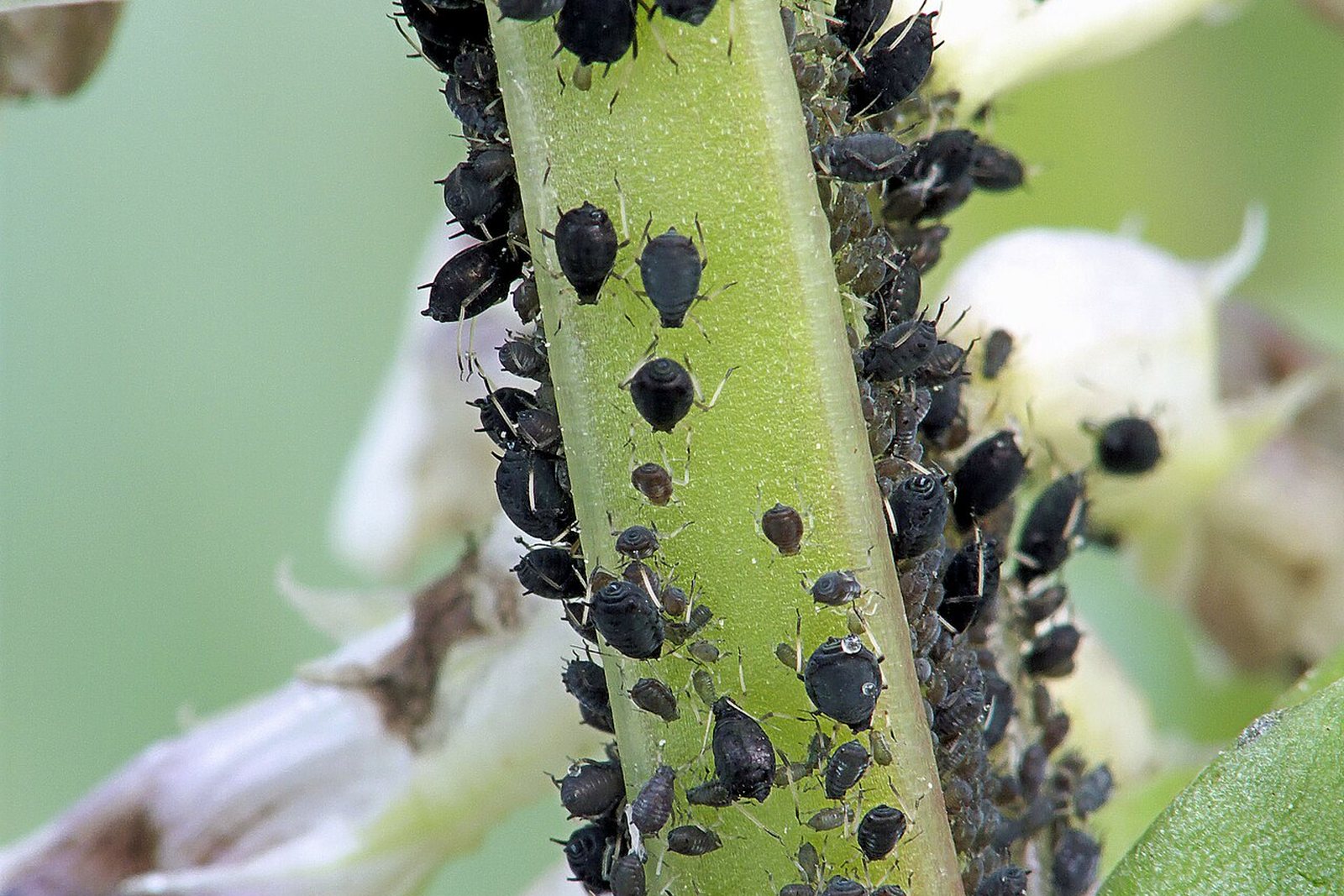
Are the black bugs aphids?
If they sit in clusters on new shoots or the underside of leaves, yes, probably. Clemson says aphids are usually green but can be pink, brown, black or yellow, and that they suck sap, which makes leaves yellow, misshapen and stunted. They leave sticky honeydew that can grow black sooty mould; if your leaves are tacky, see our guide to sticky leaves on houseplants. Colorado State notes that a generation takes just two to three weeks, so numbers climb fast. Our aphids guide has the full treatment.
Are they fungus gnats or shore flies?
If the black bugs are flying or running around the soil and gather at a window, they are most likely fungus gnats. UC IPM describes the adults as dark, delicate flies that resemble mosquitoes, weak fliers that run across the soil and are drawn to light. The adults do not bite and do not damage plants; the whitish larvae with shiny black heads, which live in the soil, are the part that can damage roots of seedlings and young plants. Clemson says problems are most common with peat-rich potting soil and overwatering. Shore flies are slightly larger, according to Colorado State, breed where algae develop and leave dark fly specks on plants; UC IPM tells them apart by antennae, long on gnats and short on shore flies. For control, read our fungus gnat guide, and for the bigger picture small flies around houseplants.
Are they springtails?
If tiny wingless specks jump when you water, they are springtails. Clemson says they are about 5 mm (1/5 in), usually white or black, live in the soil, normally eat decaying matter and cause minimal damage, though they may chew seedlings. Their presence often signals overwatering. Colorado State agrees they cause little damage and are a nuisance. The fix is simply to let the soil dry between waterings and empty the saucer.
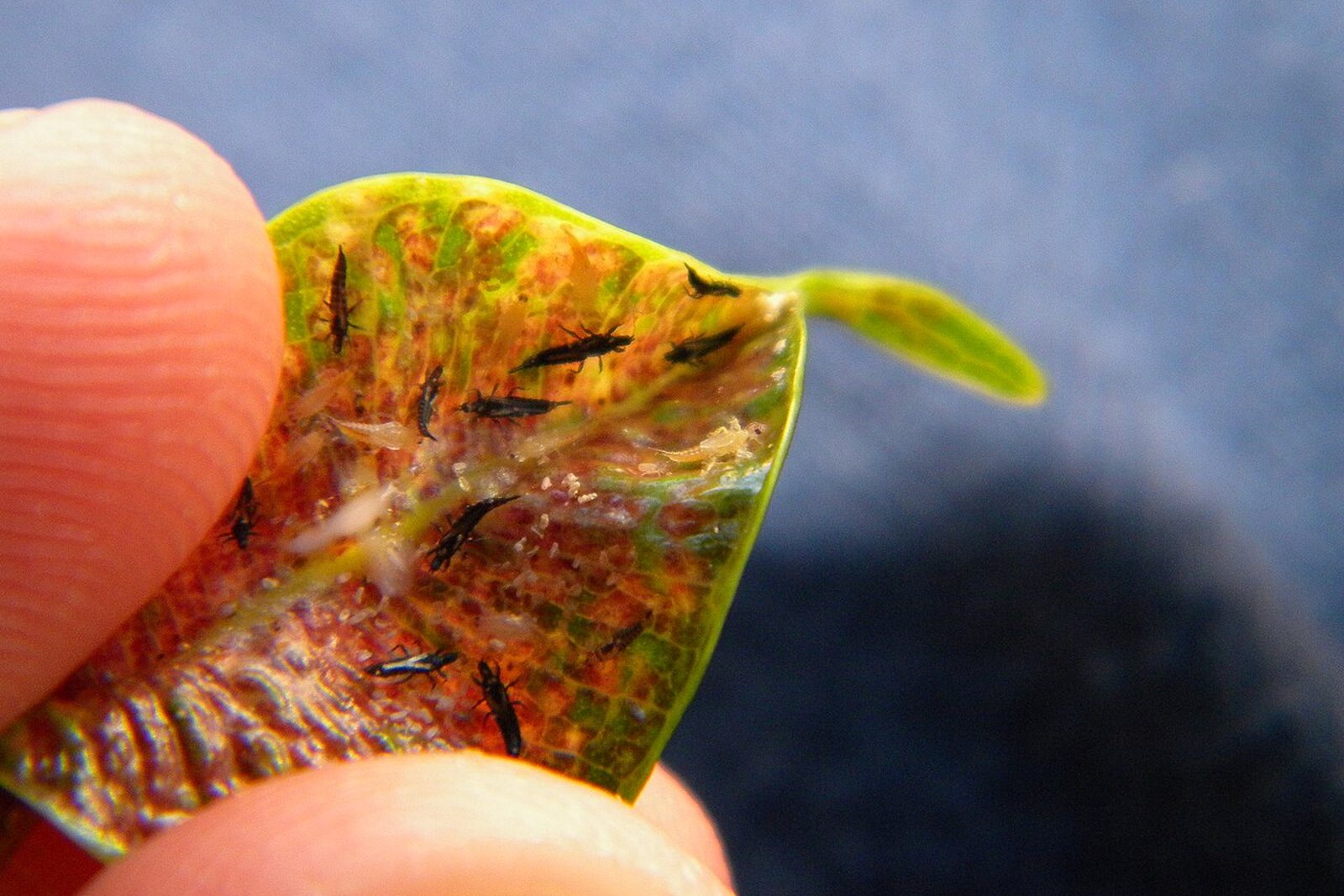
Are they thrips?
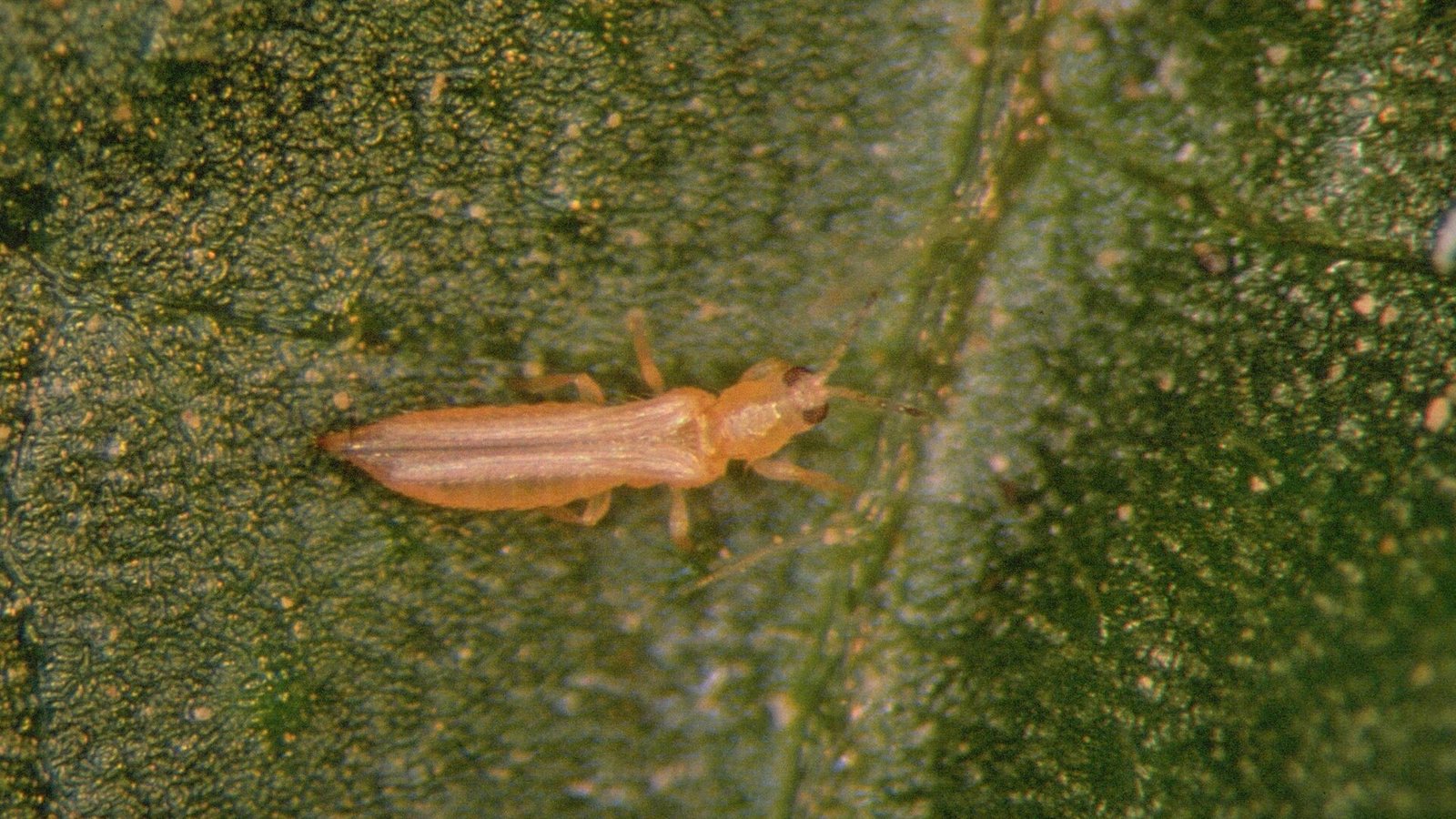
Thrips are the hard one. Clemson says they are under 1.6 mm (1/16 in) and hard to see without a magnifier, tiny, slender, yellowish to blackish with fringed wings, usually on leaves and between flower petals. Colorado State says they are usually brown but pale and dark forms occur, so colour alone does not settle it. Gently blow on a bloom or leaf, as Clemson suggests, to make them move. The damage tells you more than the insect: silvery or speckled patches on leaves, tiny dark specks of excrement, and distorted or streaked buds. Our thrips guide explains how to deal with them.
What if the black specks are not bugs?
Not every black dot is alive. Look closely before you act.
- Thrips excrement. Colorado State describes tiny dark specks on silvery leaf patches.
- Fly specks. Dark spots left by adult shore flies, as Colorado State notes.
- Sooty mould. A black film that can be wiped off is a mould growing on honeydew (Clemson), so it points back to aphids or another sap-sucker above it.
- Soil bits. Dark grains that do not move are usually potting mix, bark or grit.
If you cannot tell, a photo helps. Flori has Lab tools for pest analysis, and Dr. Flori can ask follow-up questions and suggest the likely cause, though a hand lens and a sheet of white paper, tapped under the leaf, also work well.
What should you do first?
- Isolate the plant. Colorado State recommends keeping new plants apart for at least three weeks, and an infested plant should be moved away from the rest.
- Sort by habitat. If the bugs are in the soil, change your watering: let the surface dry, empty saucers and do not let water stand (Clemson). If they are on leaves, wash them off with a vigorous jet of water, which Colorado State says is especially effective for aphids.
- Trap flying adults. Yellow sticky traps catch fungus gnats and winged aphids, and yellow or pale blue ones catch thrips adults (Colorado State).
- Use soap only if needed. A dilute insecticidal soap spray of 1-3% works on aphids but not on fungus gnats (Colorado State). Test a small area first, because soaps can injure some plants, and always follow the label.
- Repeat. UC IPM says a fungus gnat generation takes about 17 days at 24 °C (75 °F), so check weekly for a month and repeat treatments.
For prevention, see our guide to natural pest prevention. Most of these bugs are more of a nuisance than a threat to a mature plant, but they can stunt seedlings and young plants, so act sooner on cuttings and new growth.
Frequently asked questions
What are the tiny black bugs in my plant soil?
Most likely fungus gnats (dark flies that run or hop on the soil) or springtails (wingless specks that jump after watering). Both signal wet soil, so let it dry between waterings.
Are tiny black bugs on plants harmful?
Aphids and thrips damage leaves and buds. Fungus gnat adults are a nuisance, but their larvae can harm roots of seedlings and young plants. Springtails cause little damage.
How do I get rid of tiny black bugs on houseplants?
Identify them first. Dry the soil for gnats and springtails, wash leaves with a jet of water for aphids, add yellow sticky traps for adults, and use soap only if needed, following the label.
Why are there black specks on my plant leaves?
They could be thrips excrement, shore fly specks, or sooty mould growing on honeydew from aphids. Look under a magnifier and see whether the specks move or wipe off.
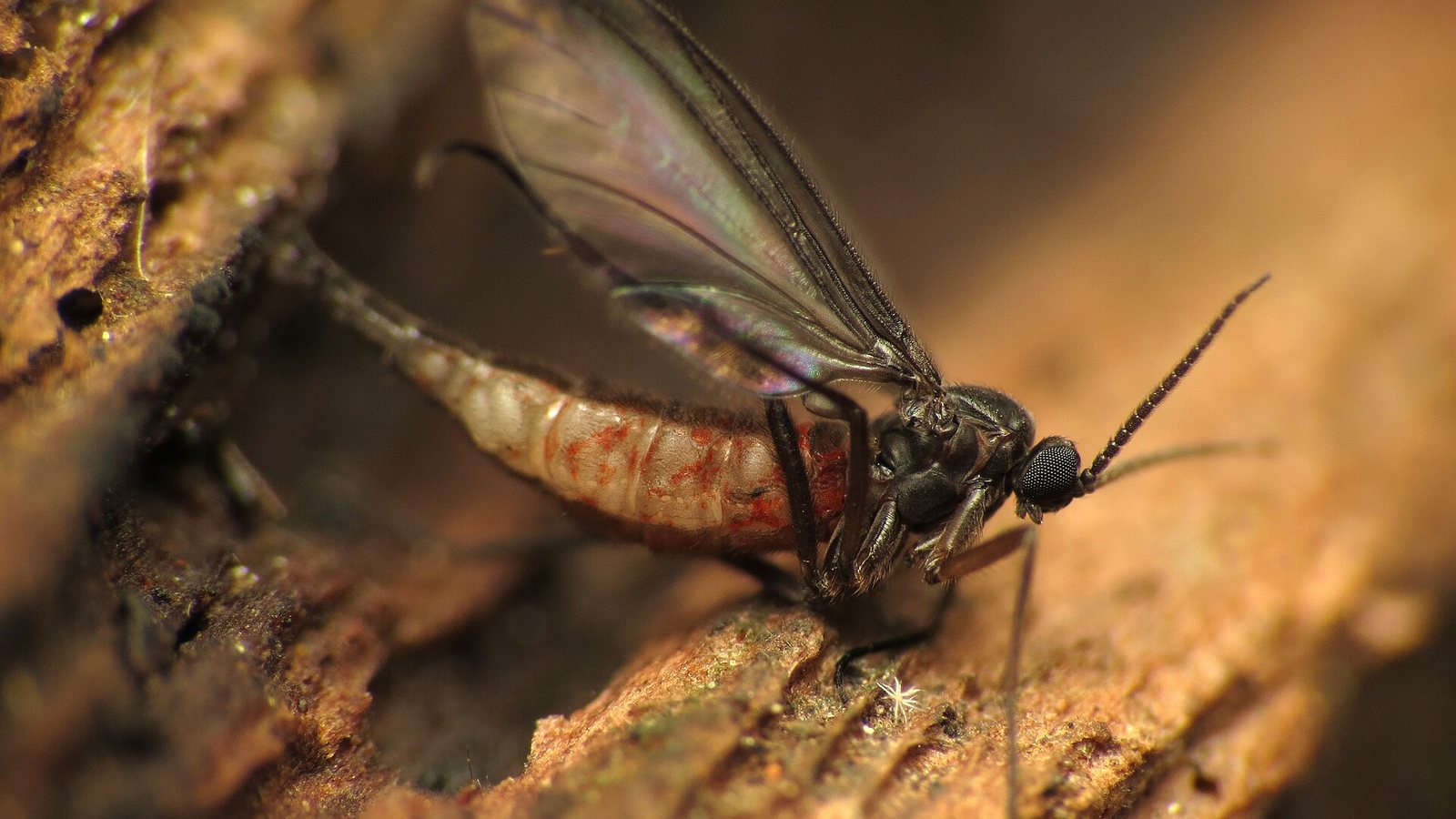
Get rid of fungus gnats by breaking their life cycle: dry the top 2.5–5 cm of soil, find larvae with potato slices, trap adults and treat with Bti.
Sources
Written and fact-checked by the Flori team. Every guide cites horticultural sources such as the RHS, university extension services and the ASPCA, and is updated when the advice changes. How we write our guides
General plant care information. Plants vary; when a plant is valuable or a problem spreads quickly, consult a local nursery or plant specialist.