Thrips on Houseplants: How to Identify and Treat Them
Thrips leave silvery patches, black specks and twisted new growth. How to confirm them, why one spray fails, and a step-by-step plan that works.
 By Flori editorial team · Updated
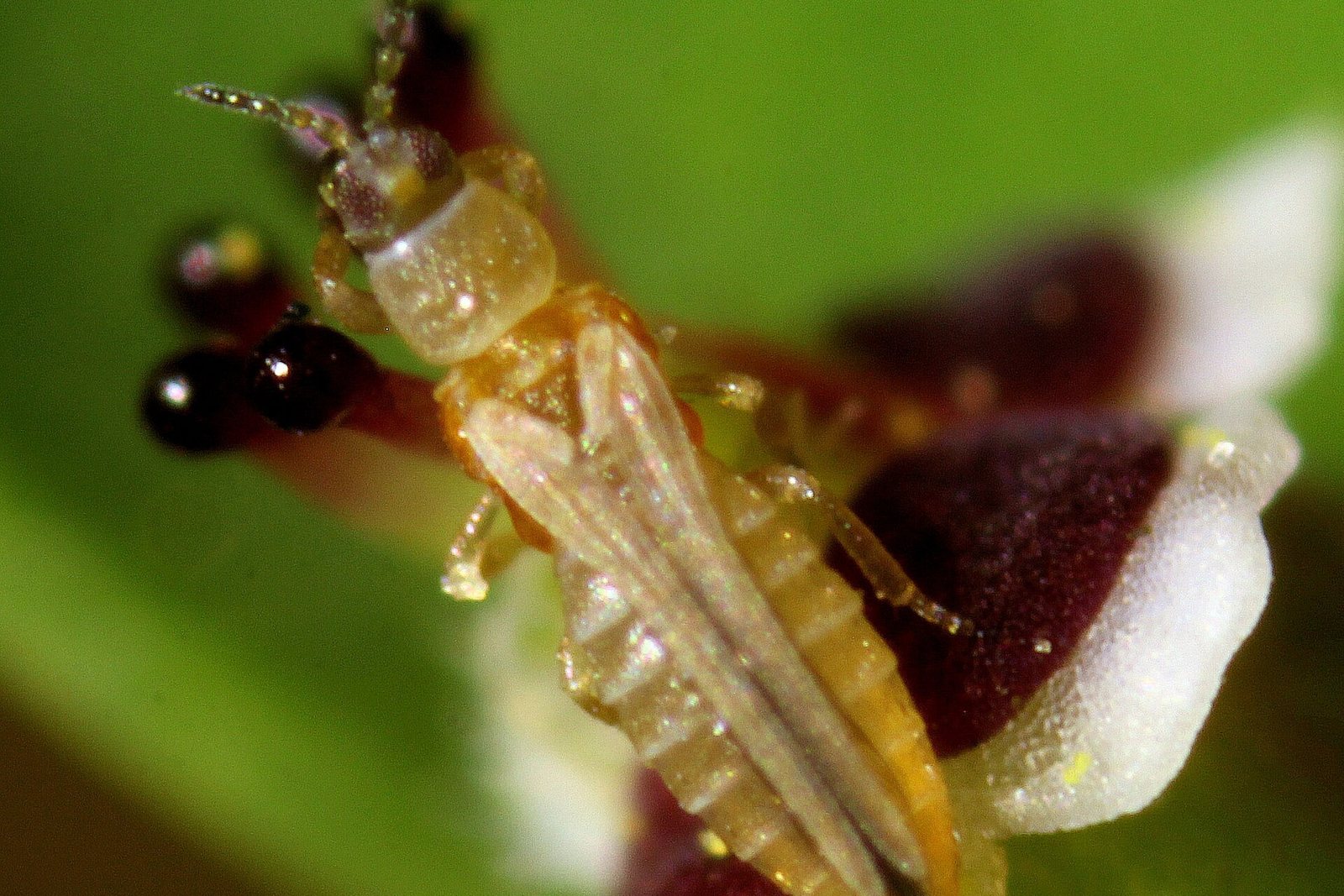
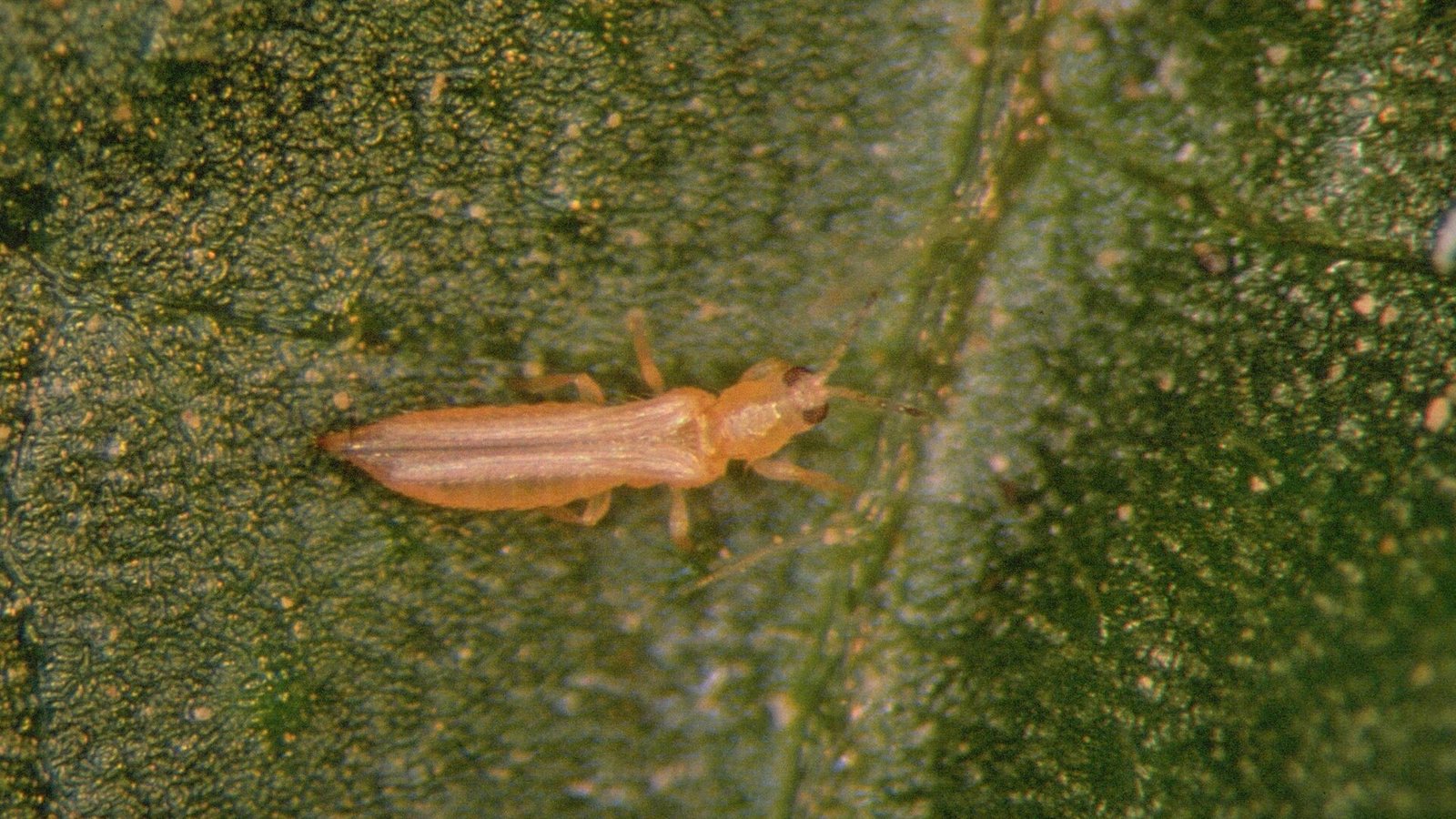 Photo: Frank Peairs, Colorado State University, Bugwood.org · CC BY 3.0
Thrips are slender insects under 1.3 mm long that leave silvery, stippled patches, tiny black specks and twisted new leaves or buds. Confirm them by shaking a shoot over white paper. Isolate the plant, cut off the worst growth, rinse it, spray soap or oil thoroughly and repeat for several weeks, because new adults keep emerging from the soil.
Key takeaways
- Silvery or bleached patches, tiny black specks and distorted new growth are the classic signs of thrips.
- Shake a shoot over white paper: slender crawling specks are thrips; round dots with webbing are spider mites.
- Eggs sit inside the leaf and pupae in the soil, so one spray never reaches every stage.
- Isolate, prune, rinse, then use soap or oil with full coverage and repeat as the label allows.
- Avoid broad-spectrum insecticides, which work poorly on thrips and can cause spider mite outbreaks.
On this page9
- How do you know if a houseplant has thrips?
- What do thrips look like?
- Thrips damage: what you see and what it means
- How to check for thrips in two minutes
- Why are thrips so hard to get rid of?
- How to get rid of thrips on houseplants
- What not to use on thrips
- Can thrips spread plant viruses?
- How to keep thrips from coming back
How do you know if a houseplant has thrips?
Thrips on houseplants usually announce themselves through the leaves, not through the insects. Look for silvery or bleached, stippled patches, tiny black specks that look like dots of varnish, and new leaves or flower buds that open twisted or scarred. The insects themselves are slender, about the length of a grain of rice cut in four, and they run or jump away when disturbed. This guide gives you a quick way to confirm thrips, a symptom → cause → first step table that separates them from spider mites and dust, and a treatment plan that works with the thrips life cycle, gentlest options first.
What do thrips look like?
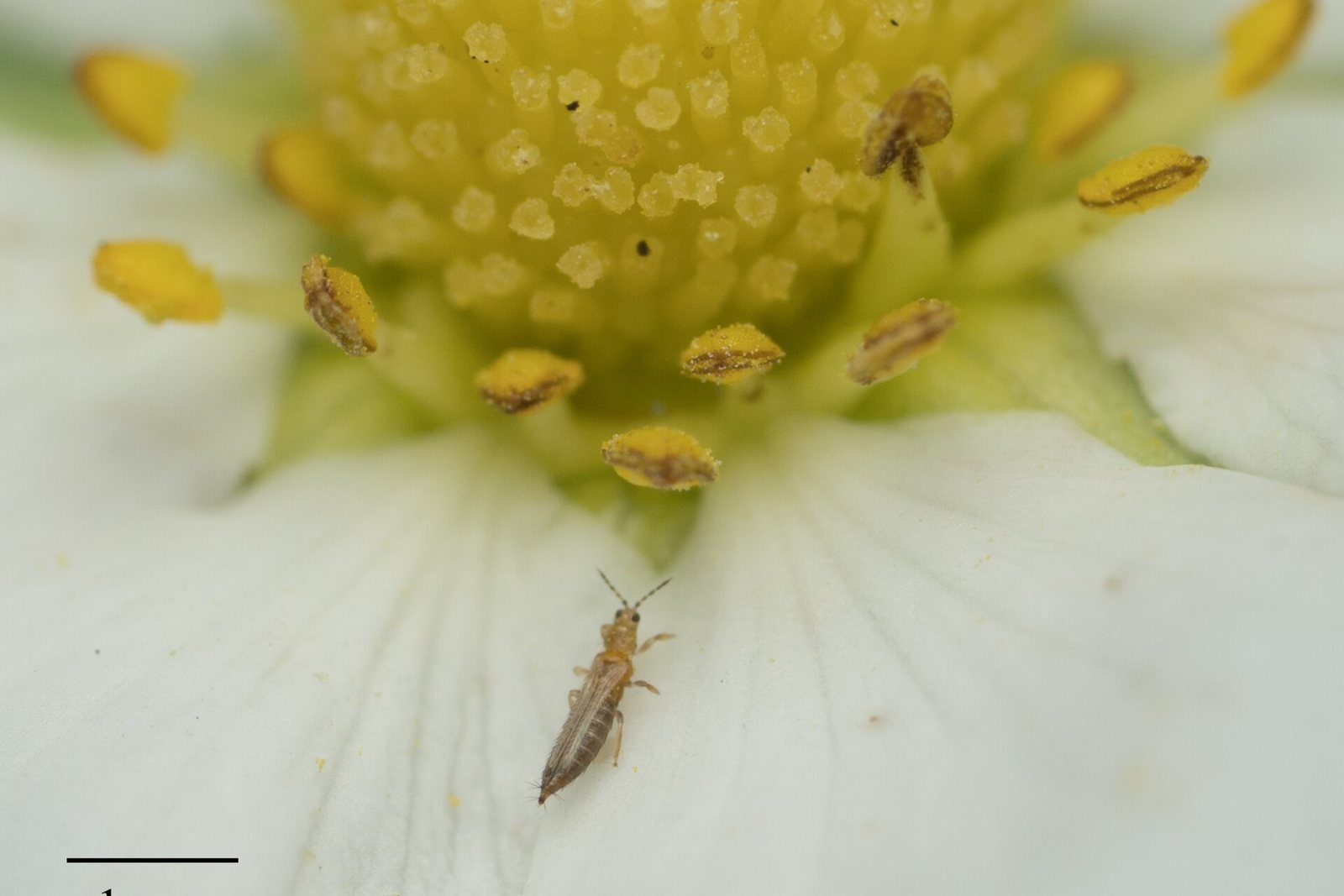
UC IPM describes adult thrips as less than 1.3 mm (1/20 in) long and slender, with two pairs of narrow wings fringed with long hairs. Colorado State Extension adds that most are brownish, but pale and dark forms are both common. The larvae are wingless and often white, yellow or orange. Colour alone will not tell you the species, and for treatment you do not need to know it.
The RHS notes that thrips are usually more numerous on the undersides of leaves, though they feed on both sides. They also hide in flower buds and in leaves that are still unfurling, which is why new growth is often the first to look wrong.
Thrips damage: what you see and what it means
| What you see | Likely cause | What to do first |
|---|---|---|
| Silvery, papery or bleached patches with fine stippling | Thrips scraping and sucking out leaf cells | Check the leaf underside for slender insects and black specks |
| Tiny black, shiny dots on the leaf surface | Thrips excrement, a key sign that separates them from mites | Do the white paper test below |
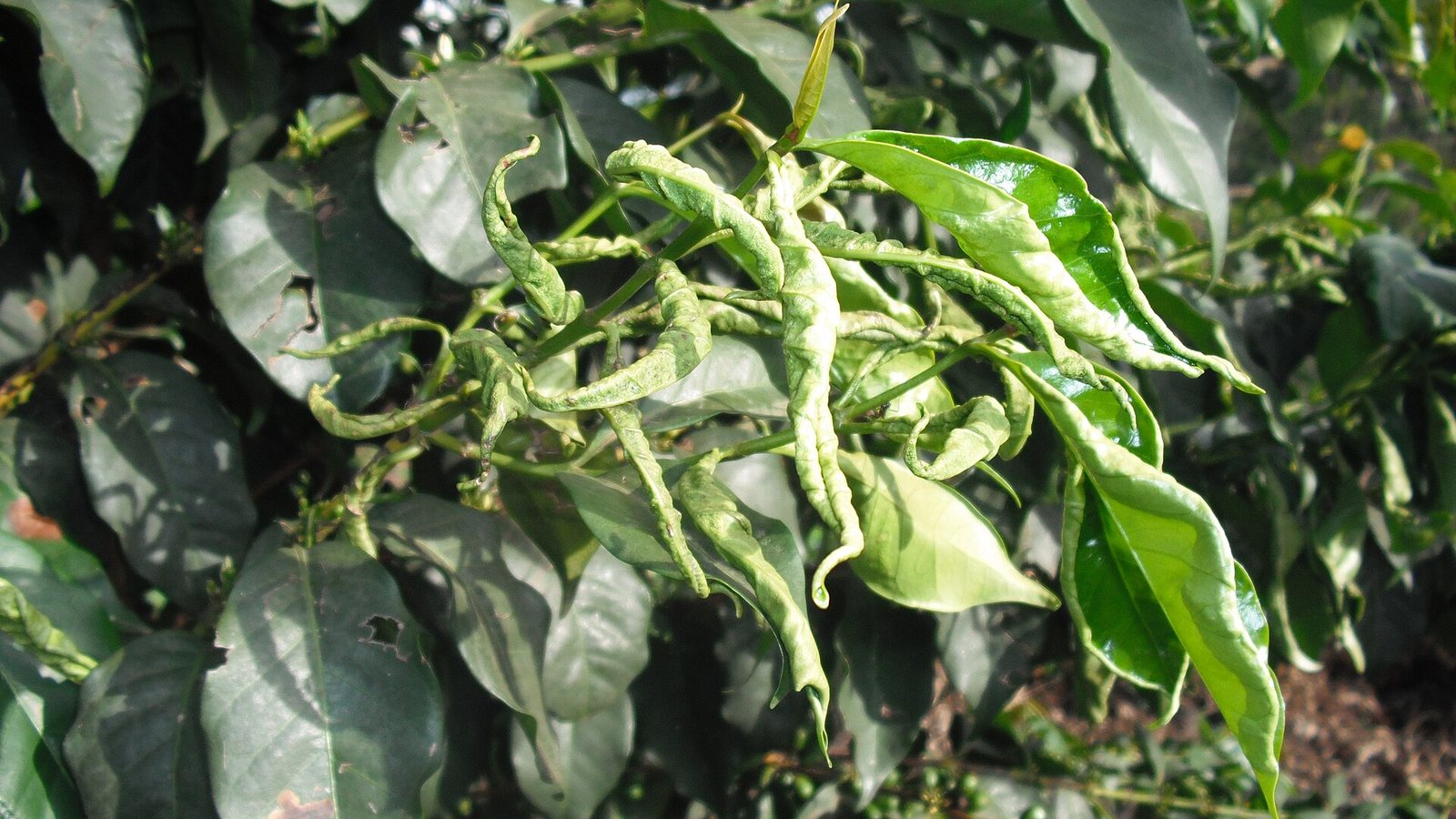
| New leaves or buds twisted, scarred or not opening | Feeding inside buds and young leaves | Cut off badly distorted tips and bag them |
| Pale specks plus fine webbing | Spider mites, not thrips | See the spider mite guide linked below |
| Sticky leaves with no specks | Honeydew from aphids, scale or mealybugs; thrips do not cause stickiness | Look for soft-bodied insects on stems |
One frustrating detail from UC IPM: damage often becomes visible only after the thrips have moved on, because the injured tissue shows as the leaf expands. And as the RHS points out, once a patch has lost its green colour it will not turn green again, even after the pest is gone. Judge progress by the new growth.
How to check for thrips in two minutes
- Tap over white paper. Hold a sheet of white paper under a shoot or flower and shake it. UC IPM recommends this: thrips show up as tiny, elongated specks that crawl. Spider mites look rounder and are often surrounded by webbing; for those, use our spider mites guide.
- Use a hand lens. A 10x lens shows the slim, cigar-shaped body and the fringed wings of adults.
- Hang a sticky trap. UC IPM suggests bright yellow traps; Colorado State says adults are drawn to yellow or pale blue ones, and the RHS mentions blue traps for monitoring. A trap catches flying adults and tells you whether numbers are falling.
Why are thrips so hard to get rid of?
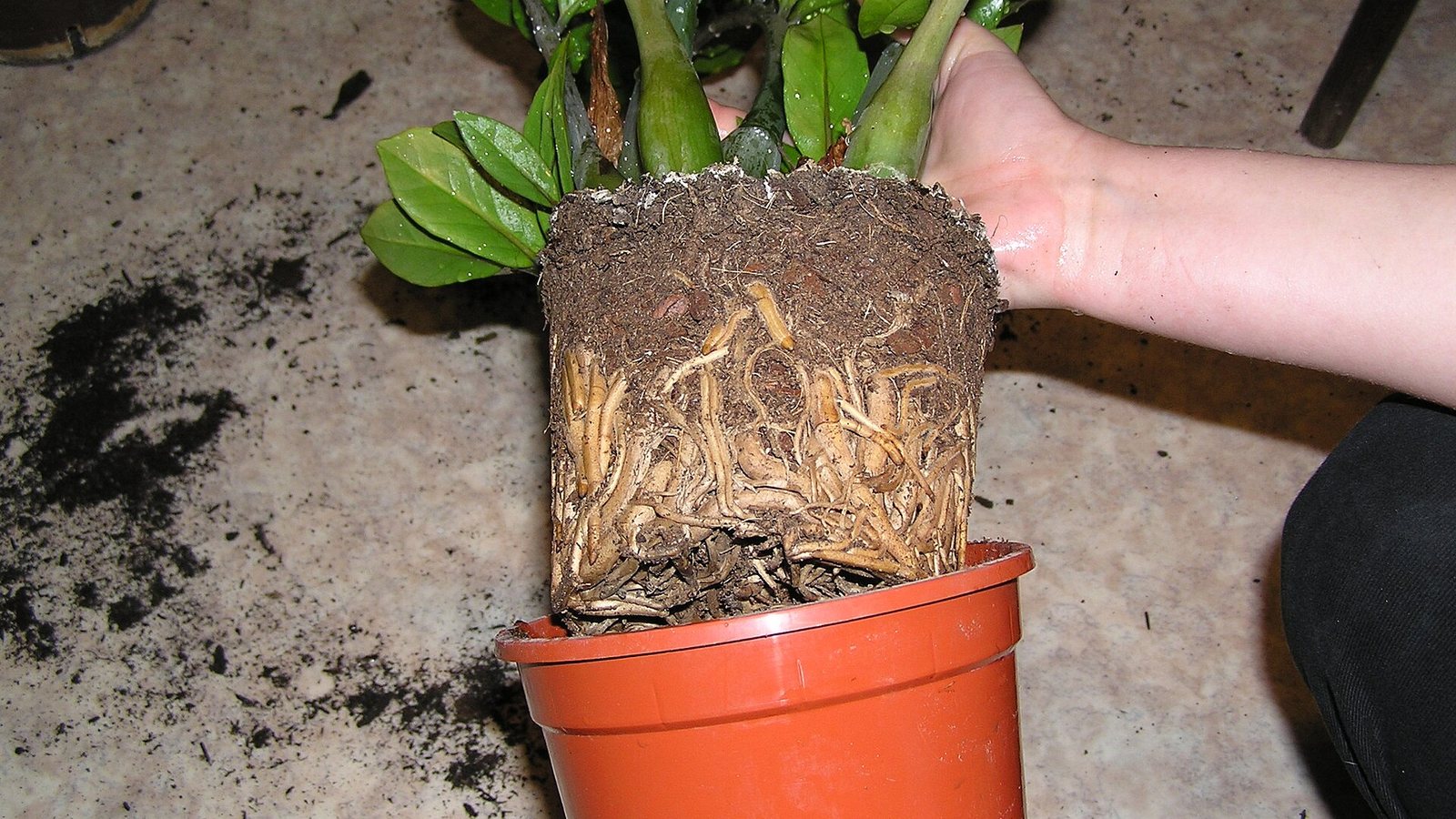
The thrips life cycle is the reason one spray rarely works. Colorado State explains that females insert their eggs into plant tissue, and the pupal stages develop in the soil, where sprays cannot reach them. UC IPM confirms that most species pupate in soil, leaf litter or plant crevices, and that in warm conditions a thrips can go from egg to adult in as little as two weeks. Indoors, where it is warm all year, generations overlap: while you kill the adults on the leaves, the next batch is already hidden in the leaves and the pot.
Many populations are also resistant to insecticides, according to Colorado State. That is why the plan below combines several steps and repeats them.
How to get rid of thrips on houseplants
Work through these steps in order and only go as far as you need.
- Isolate the plant. Adults fly, so the RHS advises separating affected plants from the rest of your collection straight away. Check the neighbours with the paper test.
- Remove the worst growth. Prune heavily infested shoot tips and spent flowers (UC IPM), bag them and put them out with the rubbish. Clear fallen leaves from the pot surface too, since the RHS notes that plant debris can harbour sap feeders.
- Rinse the plant. A shower of lukewarm water knocks many adults and larvae off. Cover the soil so they do not land in the pot.
- Spray the exposed stages. Colorado State says soaps and oils control the thrips you can reach. UC IPM lists insecticidal soap, horticultural or neem oil, azadirachtin and pyrethrins as contact sprays with low toxicity to people and pets, but they only kill thrips they touch, so soak buds, shoot tips and leaf undersides. The RHS warns that these sprays persist only briefly and that thrips hidden in distorted leaves can escape them.
- Repeat. Because new adults keep emerging from eggs and from the soil, treatments often need repeating (UC IPM). Follow the label for the interval and keep checking with paper and traps for several weeks after the last thrips you see.
- Consider biological control for big collections. The RHS lists predatory mites, the predatory bug Orius laevigatus and the soil beetle Atheta coriaria, plus Steinernema nematodes for the soil stages. These suit conservatories and glasshouses best, and most pesticides harm them.
UC IPM rates spinosad as generally more effective than the contact products, but it can harm bees for about a day after spraying, so it does not belong on plants that will go outdoors in flower. Whatever you use, check that houseplants and thrips are on the label, test it on a few leaves first, and follow the label for dilution, timing and safety. Keep pets and children away until the spray has dried.
What not to use on thrips
UC IPM advises against organophosphates, carbaryl and pyrethroids: they work poorly on most thrips, kill natural enemies and can trigger spider mite outbreaks. It also notes that imidacloprid often fails against thrips. If one plant is badly damaged and keeps reinfesting the others, throwing it away is often wiser than reaching for stronger chemicals.
Can thrips spread plant viruses?
Yes. Western flower thrips can carry impatiens necrotic spot virus and tomato spotted wilt virus, according to UC IPM and Colorado State. These viruses affect many herbaceous ornamentals and vegetables and cannot be cured, so a plant with ring-shaped or patterned spots that keep spreading after the thrips are gone is worth discarding.
How to keep thrips from coming back
- Quarantine new plants and cut flowers. The RHS advises inspecting and quarantining new plants so hidden eggs and larvae have time to show; Colorado State suggests at least three weeks apart for new houseplants.
- Check weekly. Look at new leaves, buds and leaf undersides, and keep a sticky trap near susceptible plants. Our natural pest prevention guide has a simple weekly routine.
- Do not overfeed. UC IPM suggests avoiding excess nitrogen, which encourages the soft new growth thrips prefer.
Not sure whether the marks are thrips, mites or a disease? Flori's Lab tools for pest analysis and the Dr. Flori chat can work from a close photo of the leaf, and Plant Hospital keeps the plant on a follow-up plan with reminders to repeat treatments. If the new growth is also twisting, see curling leaves for other causes, and sticky leaves if you find honeydew.
Frequently asked questions
Can thrips spread to my other houseplants?
Yes. Adult thrips fly and can pass through most screens, so isolate an affected plant, check its neighbours over white paper and quarantine new plants for at least three weeks.
Do thrips live in the soil?
Most species pass their pupal stages in the soil or leaf litter, where sprays cannot reach them. That is why treatments need repeating and why sticky traps help catch the adults that emerge.
Will leaves damaged by thrips turn green again?
No. Silvery patches stay, even after the thrips are gone. Judge recovery by the new leaves, and trim off badly damaged ones once the plant has enough healthy growth.
Is neem oil good for thrips?
Neem oil, horticultural oil and insecticidal soap kill thrips they touch and have low toxicity to people and pets. Coverage matters, treatments usually need repeating, and you should always follow the label.
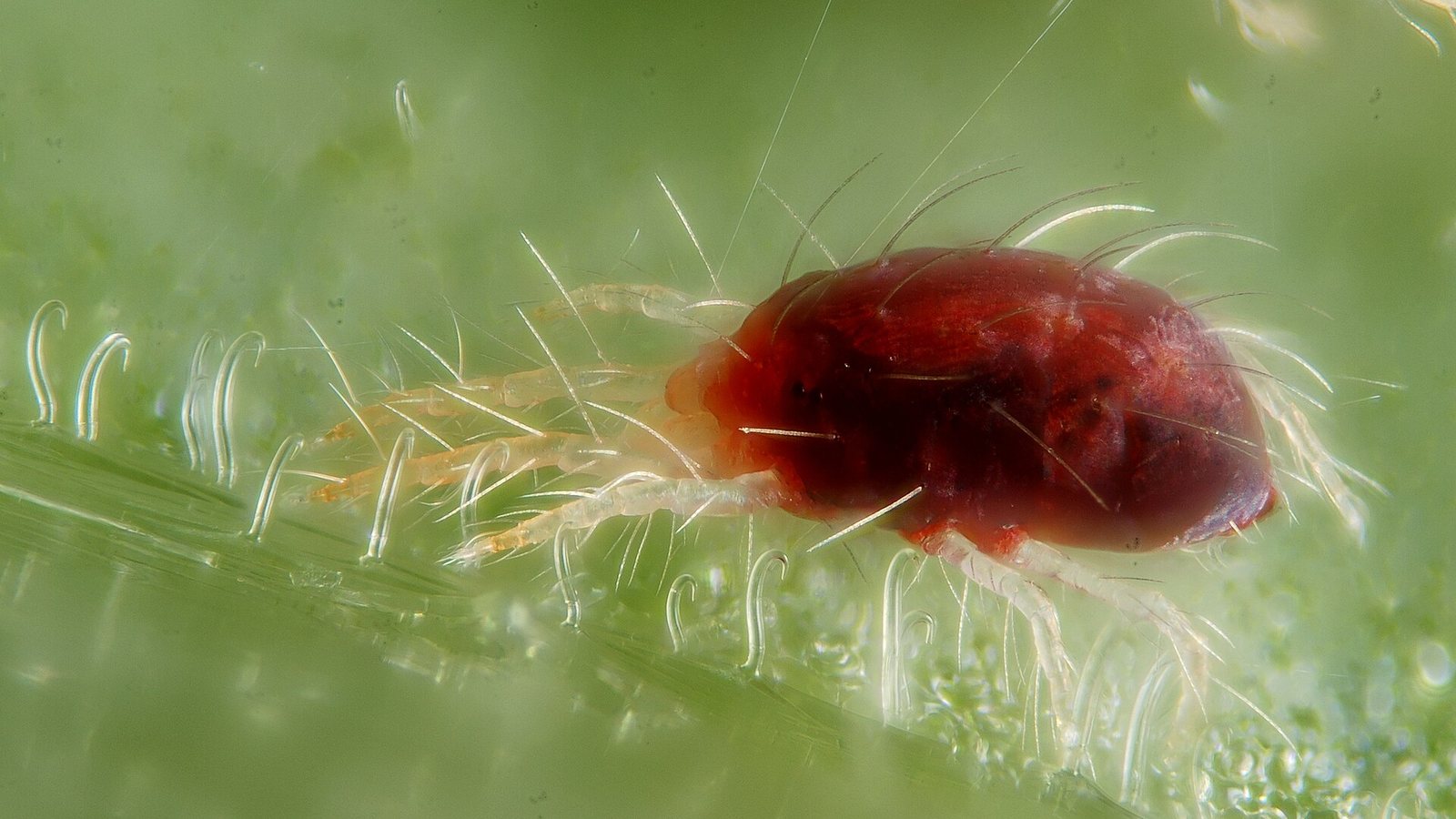
Spider mites leave pale specks, bronzed leaves and fine webbing. How to confirm them with a white paper test and treat them, least toxic first.
Sources
Written and fact-checked by the Flori team. Every guide cites horticultural sources such as the RHS, university extension services and the ASPCA, and is updated when the advice changes. How we write our guides
General plant care information. Plants vary; when a plant is valuable or a problem spreads quickly, consult a local nursery or plant specialist.