Root-Bound Plants: Signs and What to Do
How to tell if a plant is root bound, why circling roots cause wilting and poor drainage, and how to loosen, trim or pot up a pot-bound root ball safely.
 By Flori editorial team · Updated
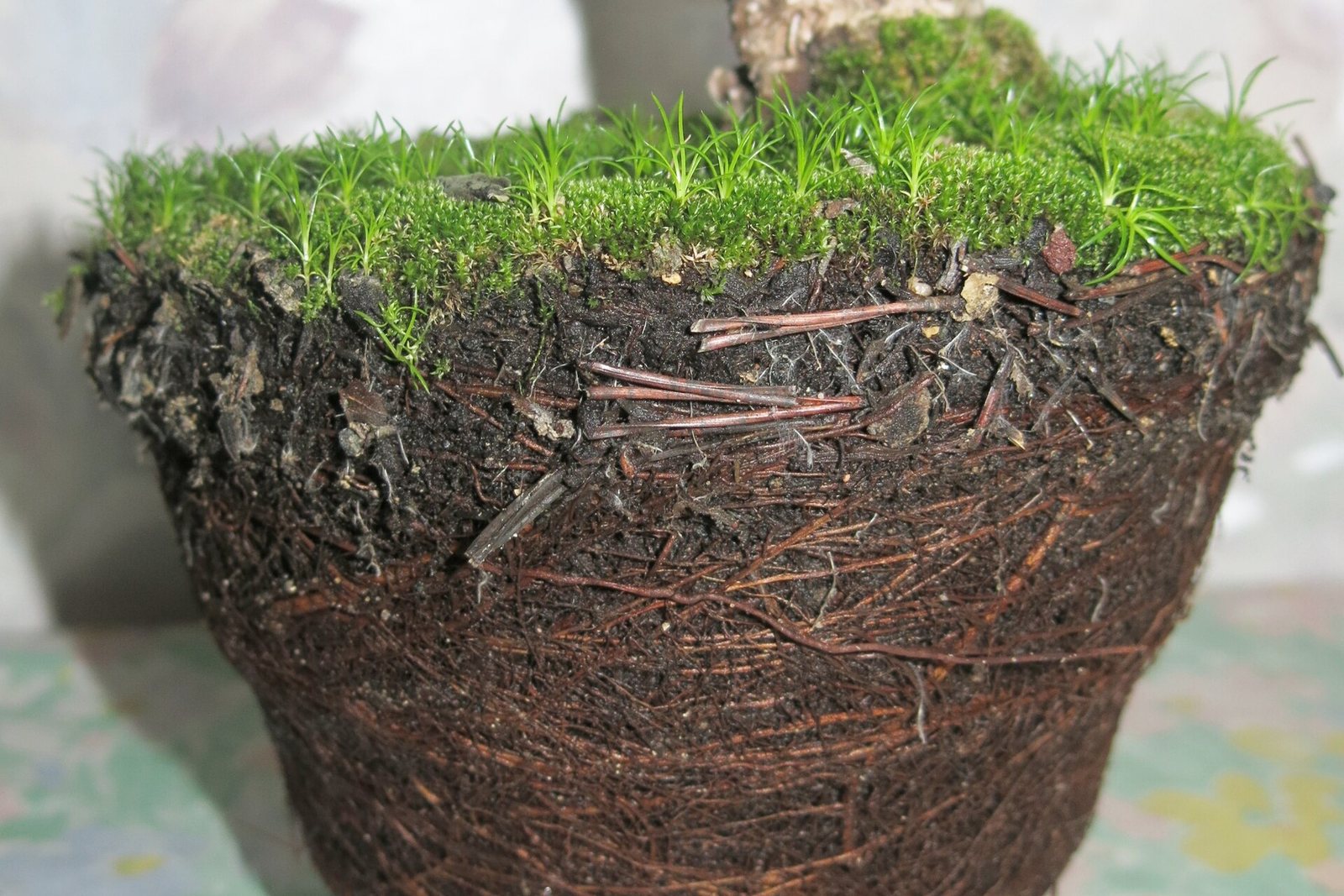
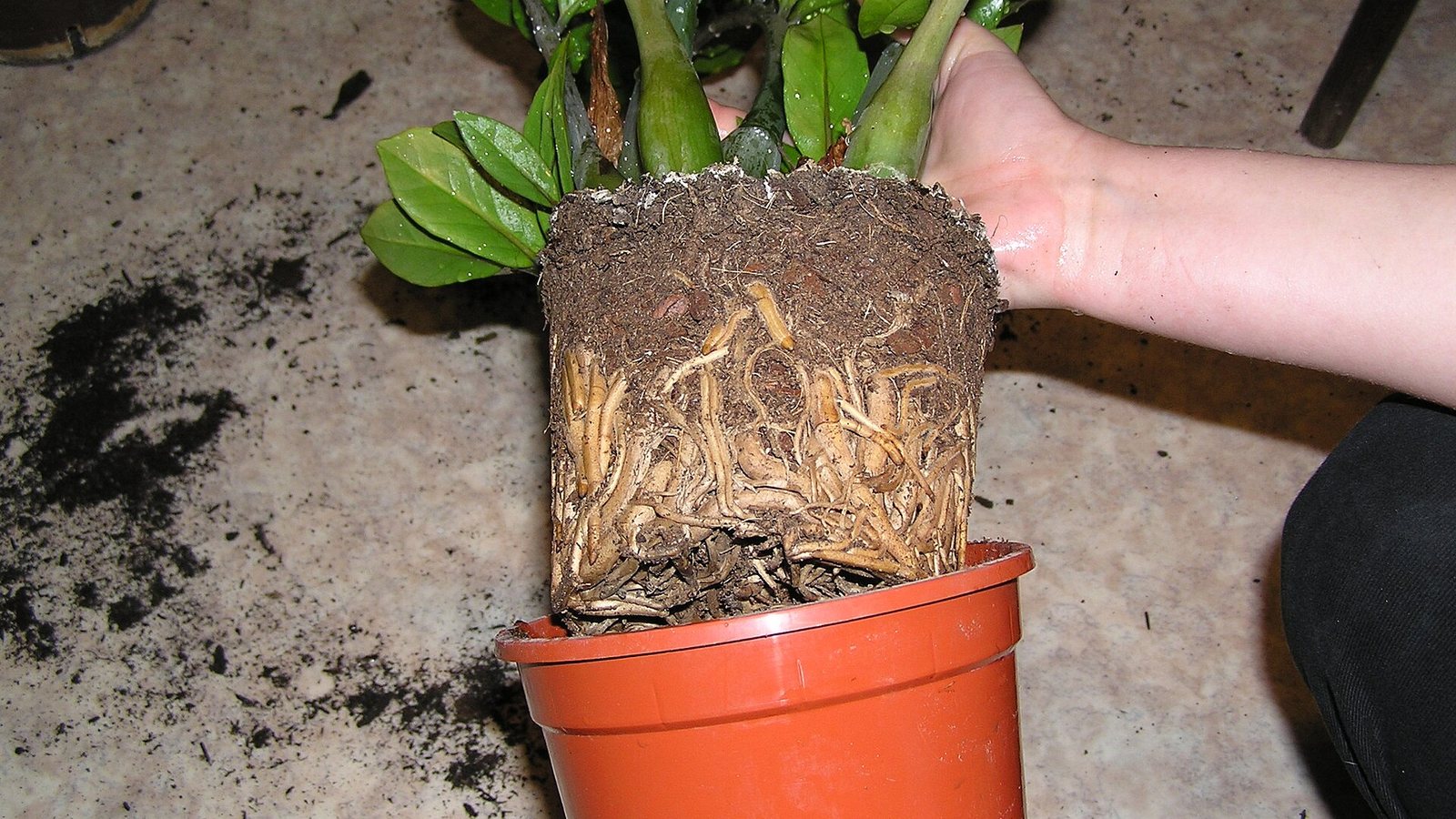 Photo: Conrad Nutschan · CC BY-SA 3.0
A plant is root bound when roots fill the pot and circle it in a dense mass. It dries out fast, wilts soon after watering and may push roots out of the holes. Tease or score the circling roots and move it to a pot 2.5–5 cm (1–2 in) wider in spring, or trim the roots and reuse the pot.
Key takeaways
- Root bound means roots circle the pot in a solid mass with little mix left between them.
- Typical effects: wilting soon after watering, water running straight through and slower growth.
- Tease circling roots apart; if they are too tight, score the root ball with a sharp knife.
- To keep the same pot, trim up to a quarter of the outermost roots and add fresh mix.
- Repot in spring if you can; in winter, water more carefully and wait unless the plant is failing.
On this page7
What does root bound mean?
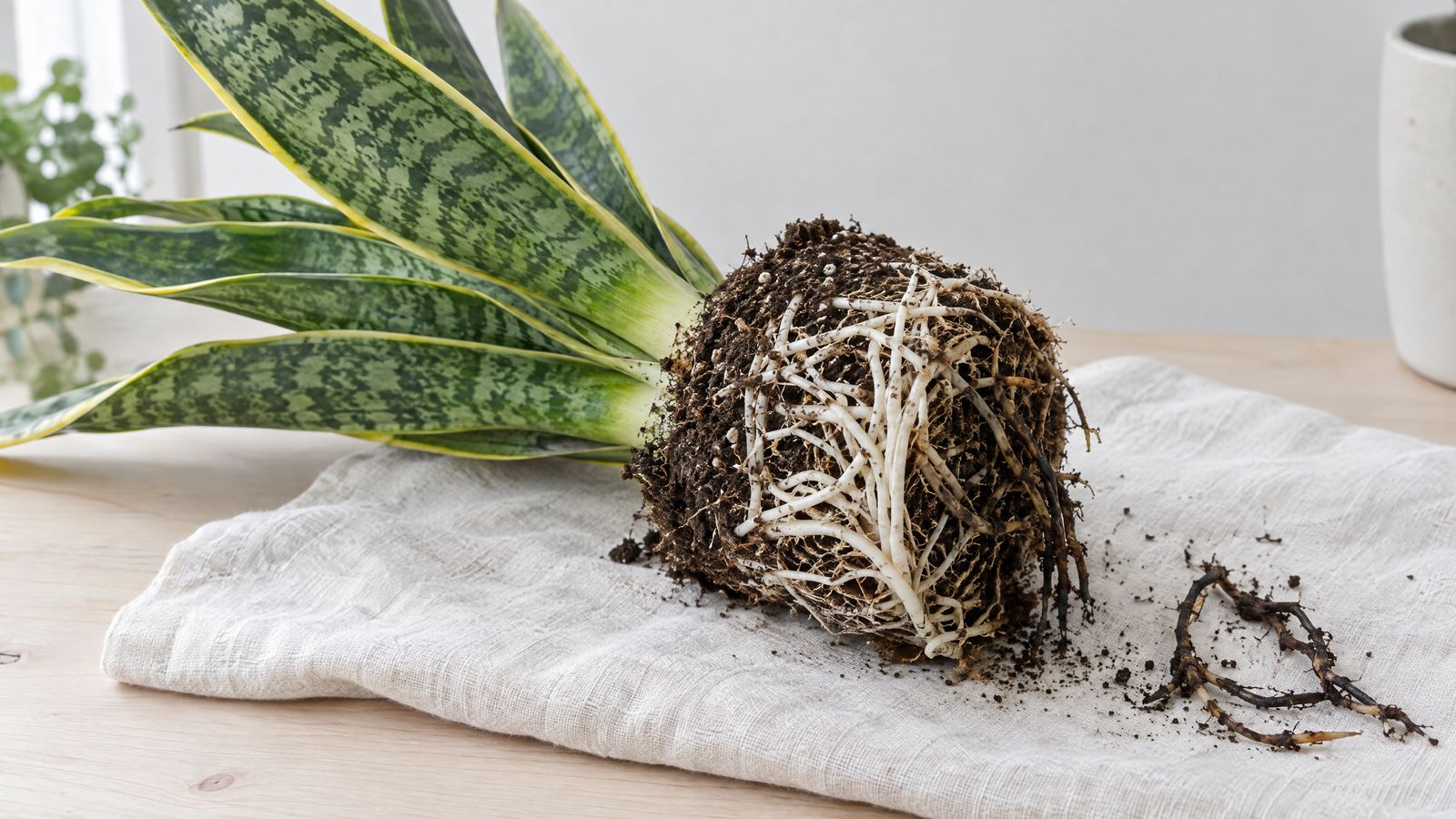
A root-bound plant (also called pot bound) has run out of room. Its roots have filled the pot, hit the walls and kept growing round and round, until the root ball is a dense mat of roots with very little potting mix left. When you slide it out, it keeps the exact shape of the pot. The Royal Horticultural Society (RHS) describes pot-bound roots as densely packed, often spiralling around the bottom and sides of the root ball, and warns that they must be loosened before they will spread into new compost.
This guide is about what to do once you have found a root-bound plant: how bad it is, whether it can wait, and how to untangle, trim or pot up the roots without setting the plant back. If you are still deciding whether your plant needs a new pot at all, start with our checklist of signs your plant needs repotting.
How to tell if a plant is root bound
Some clues show from the outside. Clemson Cooperative Extension lists roots growing out of the drainage hole, a plant that needs watering far more often than before, and a plant that wilts shortly after watering. The RHS adds slowed growth. But the only sure test is to look: spread your fingers over the mix on either side of the stem, turn the pot over and knock the rim gently on a solid edge until the root ball slides out.
| What you see out of the pot | How root bound | What to do |
|---|---|---|
| Roots visible at the sides, plenty of mix between them | Not root bound | Slide it back in; check again next spring |
| White roots wrapping the outside of the root ball, mix still visible inside | Mildly root bound | Pot up one size at the next spring repot |
| A solid mass of roots, circling the bottom, little mix left | Root bound | Tease or score the roots and pot up, or root prune and refresh the mix |
| Roots so packed the pot bulges, cracks or will not let go | Severely root bound | Cut or break the pot, score the roots, repot |
| Brown, mushy roots with a sour smell inside the mass | Root rot as well | Deal with the rot first |
If you find dark, soft roots, follow our root rot rescue plan before anything else. Healthy roots are white or light coloured and firm.
Is being root bound bad for a plant?
A little crowding is not an emergency, and a few plants seem to like it: Clemson notes that amaryllis does well when pot bound. For most houseplants, though, a tight root ball causes real problems over time.
- Water stress. With almost no mix left to hold water, the plant dries out within days and wilts between waterings.
- Poor drainage. The RHS warns that a mass of roots spiralling around the bottom of a container, or growing out through the holes, can stop water draining properly and lead to root rot.
- Slower growth. Roots with no space cannot support new leaves, so growth slows or stops.
- Roots that never spread. Circling roots planted as they are tend to keep circling, even in a bigger pot, unless they are loosened.
What to do with a root-bound plant
Option 1: Pot up one size
This is the usual fix for a plant you want to grow bigger. Colorado State University (CSU) Extension and Clemson recommend a new pot just 2.5–5 cm (1–2 in) wider than the old one, and the RHS says no more than a third larger. Resist the urge to jump several sizes to make up for lost time: a small root ball in a large pot of wet mix is a recipe for rot.
Option 2: Root prune and keep the same pot
For a plant that is already as big as you want, or a floor plant you cannot lift into a bigger pot, trim the roots instead. The RHS suggests pruning up to a quarter of the outermost roots of a pot-bound plant that is going back into the same container, then filling the space with fresh compost. For routine root pruning, a light trim of up to 15% every few years is often enough, and very congested roots are best reduced gradually over several years to limit stress.
Option 3: Wait, if it is the wrong season
Clemson advises repotting in spring or summer while the plant is actively growing, and not repotting plants that are sick, dormant or starting to flower. If you discover a root-bound plant in late autumn or winter and it is coping, water it a little more often, check the mix by touch and repot in spring. Only act now if the plant is wilting daily or water no longer soaks in at all.
How to loosen a root-bound root ball
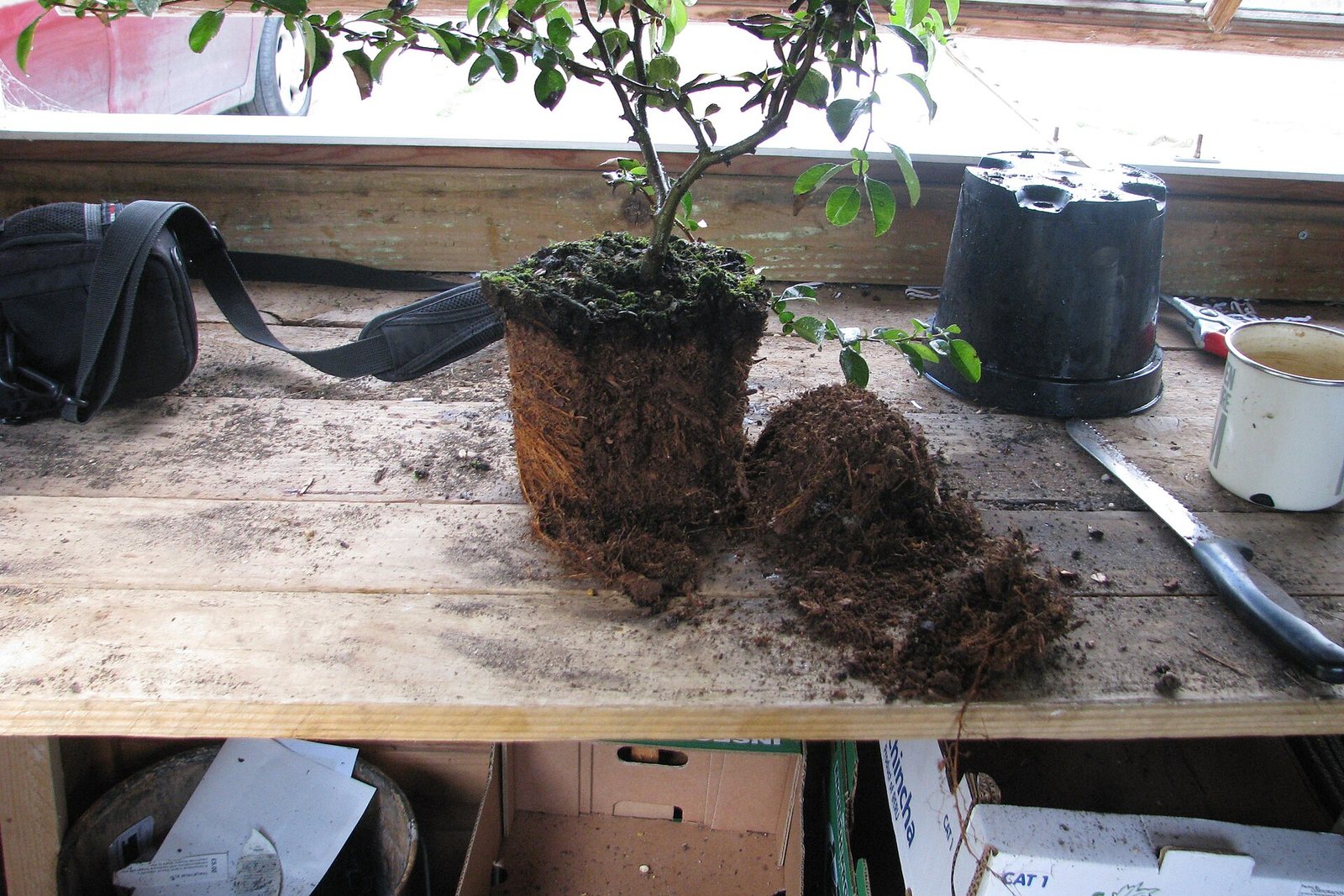
- Water first. A moist root ball holds together and slides out more easily than a dry one.
- Free the pot. Squeeze a plastic pot all round, or run a knife around the inside edge. If roots have grown through the drainage holes, trim them flush so the plant can come out. A cracked or bulging pot can simply be cut or broken away.
- Tease the roots. Work the circling roots loose with your fingers, starting at the bottom, so they point outwards again. The RHS suggests trimming them lightly as you go if needed.
- Score if needed. If the roots are too tight to tease apart, CSU and Clemson suggest scoring the root ball in a few places with a sharp knife.
- Replant at the same depth. Set the plant at its old soil line in fresh potting mix, firm gently and water thoroughly until water runs from the drainage hole.
For the full repotting method, from choosing the pot to the first watering, see our guide to repotting without stress.
What to expect after you fix it
Loosening and trimming roots is stressful, so some drooping in the first days is normal. Keep the plant in its usual spot, water only when the top of the mix starts to dry and hold off on fertilizer until new growth appears. Our guide to repotting shock explains how to tell normal recovery from trouble. In the Flori app you can set a repotting reminder for next spring, so you check the roots again before they wrap the pot a second time.
How to stop it happening again
Root binding creeps up slowly, so the fix is a habit rather than a product. Clemson notes that fast-growing plants may need repotting every year, while slow growers can go two to three years; the RHS says many container plants manage three to five years, depending on their vigour, the compost and the pot size. Slide the root ball out each spring and look. If the roots are only starting to wrap the outside, you have a season to plan; if they form a solid mat, act then rather than waiting for the plant to wilt in summer. Watch the mix level too: the RHS notes that compost settles over the years, and a mix that has sunk well below the rim is a sign to refresh it.
Frequently asked questions
How do I know if my plant is root bound without taking it out?
Roots growing out of the drainage holes, wilting soon after watering and water running straight through are strong hints. The only sure test is to slide the root ball out and look.
Should I break up roots when repotting a root-bound plant?
Yes, gently. Tease circling roots apart with your fingers, and if they are too tight, score the root ball in a few places with a sharp knife.
Can I keep a root-bound plant in the same pot?
Yes. The RHS suggests trimming up to a quarter of the outermost roots and adding fresh compost around the root ball before putting it back in the same container.
Do some plants like being root bound?
A few tolerate it well; Clemson Extension notes that amaryllis does well when pot bound. Most houseplants still need more room eventually, or they dry out too fast and stop growing.
When to repot a houseplant, how much bigger the new pot should be, which potting mix to use and how to water afterwards so the plant settles in fast.
Sources
Written and fact-checked by the Flori team. Every guide cites horticultural sources such as the RHS, university extension services and the ASPCA, and is updated when the advice changes. How we write our guides
General plant care information. Plants vary; when a plant is valuable or a problem spreads quickly, consult a local nursery or plant specialist.