Aloe vera · Asphodelaceae
Aloe Vera (Aloe vera): Care and Facts
How to care for aloe vera (Aloe vera): light, watering, soil, repotting, offsets, common problems and what the ASPCA says about cats and dogs.
- Full sun
- Little water
- Easy care
- Toxic to pets
Also called: Barbados aloe, medicinal aloe, true aloe, Aloe barbadensis; Aloe barbadensis
 By Flori editorial team · Updated
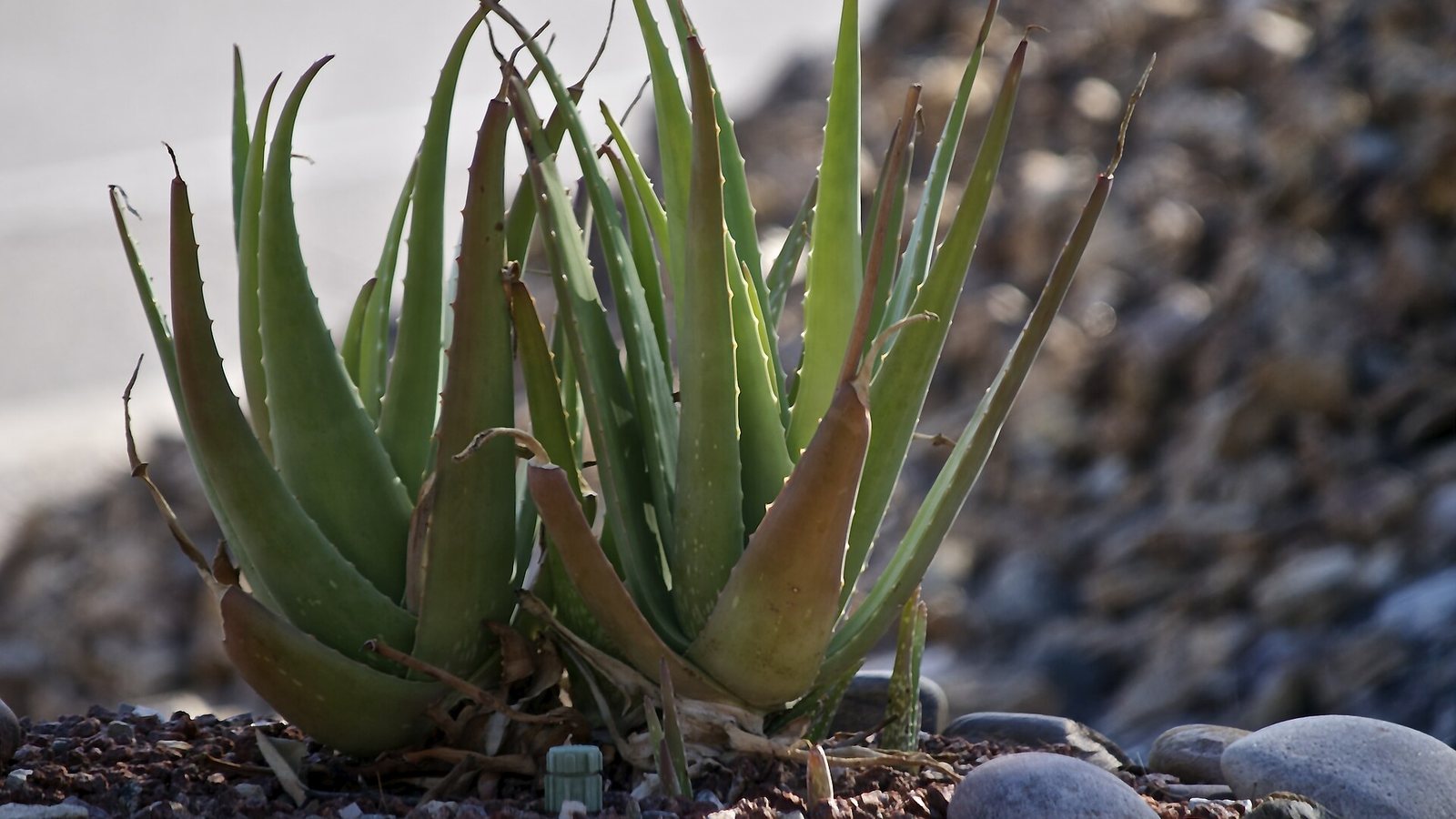 Photo: Dorian Wallender from Lake Havasu City, Arizona, USA · CC BY-SA 2.0
Aloe vera (Aloe vera) is a drought-tolerant succulent that wants bright light, from full sun to bright indirect. Water only when the soil has dried (much less in winter), grow it in coarse, fast-draining mix, and keep it frost-free. Root rot from overwatering is the main risk. The ASPCA lists it as toxic to cats, dogs and horses.
At a glance
- Light
- Full sun to bright indirect light; move into strong light gradually
- Watering
- Only when the top inch (2.5 cm) is dry; barely moist in winter
- Humidity
- Not covered by our sources
- Temperature
- Frost-free; not frost tolerant (Penn State); bring in before frost
- Soil
- Coarse, fast-draining cactus or succulent mix; big drainage holes
- Size
- About 30-60 cm (1-2 ft); up to about 1 m (3 ft)
- Toxicity
- Toxic to cats, dogs and horses (ASPCA): vomiting, lethargy, diarrhoea
- Origin
- Arabian Peninsula
On this page9
How much light does aloe vera need?
Aloe vera (Aloe vera, still sold as Aloe barbadensis) wants a lot of light. Penn State Extension says to aim for full sun to bright indirect light indoors, near a sunny window, and to rotate the pot now and then so every side gets light; grow lights help if the window is not enough. NC State says full sun to partial shade, and the RHS says full sun, ideally on a west- or south-facing site.
Move it into stronger light gradually. UF/IFAS warns that moving a plant from low to bright light too quickly can sunburn it, and that moving it from a sunny spot into dimmer indoor light can stress it. UF/IFAS also notes that indoor plants rarely bloom. If your windows are dim, our guide to grow lights for houseplants explains the options.
How often should you water aloe vera?
Rarely. Aloe is drought tolerant, and overwatering is the main way to lose one. NC State says to let the soil dry completely between waterings and to water less in winter; UF/IFAS says to water only when the top inch (2.5 cm) of soil is dry to the touch, and to water thoroughly. Penn State says to water thoroughly from early spring to early fall once the soil surface is dry, then in fall and winter to keep the soil barely moist so the leaves do not shrivel, and to "err on the side of underwatering".
| Season | What the sources say |
|---|---|
| Spring to early fall (growing season) | Water thoroughly once the soil surface is dry (Penn State); top inch dry (UF/IFAS) |
| Fall and winter | Reduce so the soil is barely moist and the leaves do not shrivel (Penn State) |
Never let the pot stand in water. Root rot from too much water is the main problem named by NC State, UF/IFAS and Penn State. If you suspect it, read our root rot rescue plan and overwatering versus underwatering.
What soil and pot does it need?
Use a coarse, fast-draining mix. Penn State says aloes prefer a coarse, well-draining potting mix and suggests equal parts potting soil, sand and perlite (or lava rock), or a commercial cactus and succulent mix. NC State says very well-drained soil suited to succulents, and prefers a clay pot with several drainage holes. The RHS suggests peat-free cactus compost, or loam-based compost mixed with grit. See the best soil for succulents and cacti.
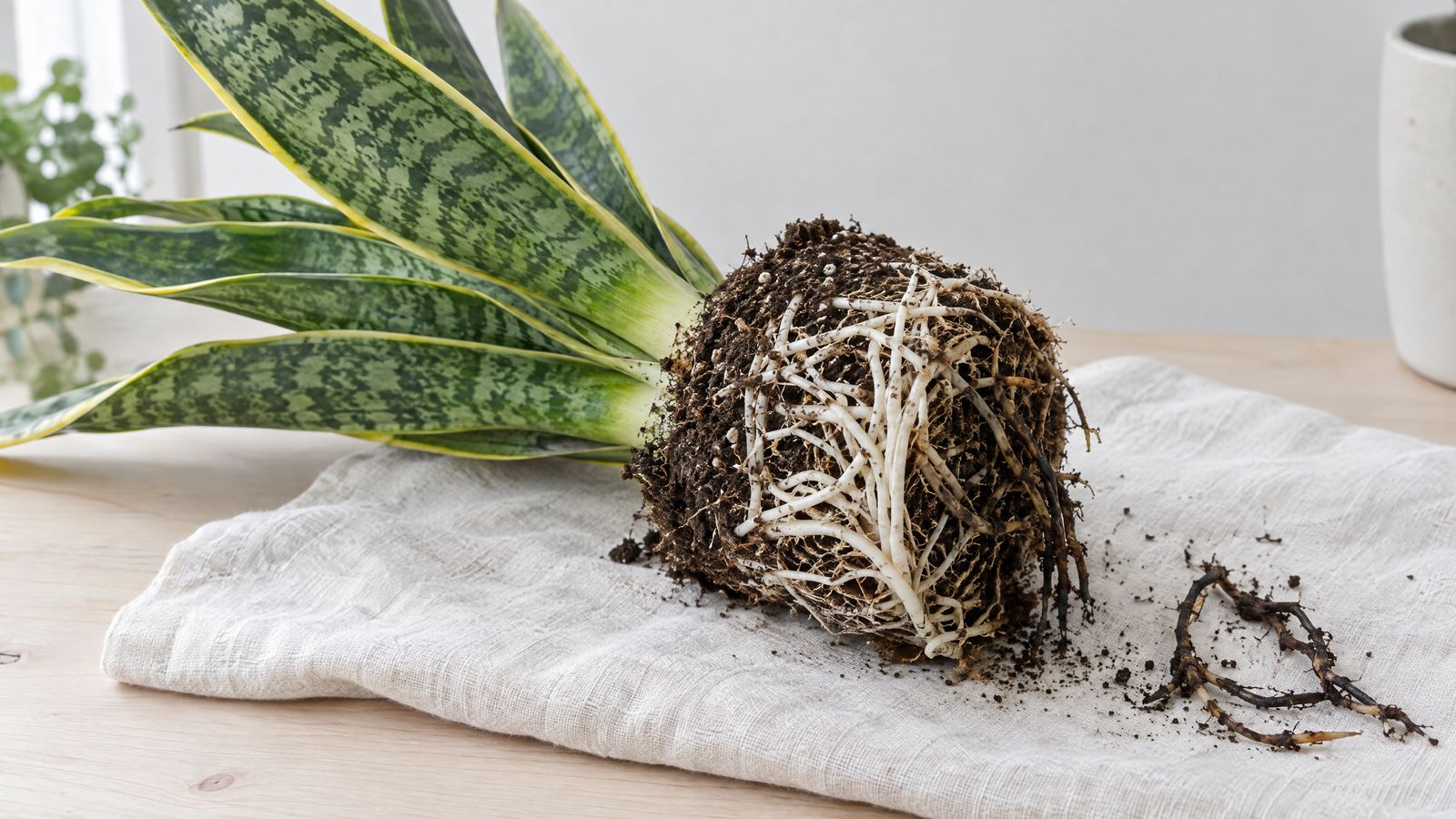
Do not oversize the pot. UF/IFAS says root rot can follow a container that is too large and holds too much moisture, and that pot size controls how big the plant gets; do not step up by more than two pot sizes. Penn State says to repot about every two years into a container only slightly larger, leaving 1 to 1.5 inches (2.5 to 4 cm) between the root ball and the pot edge, with the leaves just above the soil line. For the steps, see repotting without stress.
Flori has a care profile for each plant and can send watering reminders, which helps with a plant that wants water far less often than most.
What temperature does aloe vera like?
Keep it frost-free. Penn State says aloes are not frost tolerant and that plants moved outdoors for summer must come in before frost. The RHS rates it H1C: it can live outdoors in summer where nights stay above about 5 to 10 °C (41 to 50 °F) and needs protection in winter. NC State says it is hardy outdoors in USDA zones 10a to 12b, and UF/IFAS says it can grow outdoors year-round in zones 8 to 11. Our sources do not give an indoor temperature range or a humidity figure, so keep it at normal room temperature and away from cold windows in winter.
How and when should you feed it?
Lightly. The RHS suggests a general liquid fertiliser monthly from May to August in the northern hemisphere, which means the growing season. Follow the label and skip feeding when growth stops in winter.
How do you propagate aloe vera?
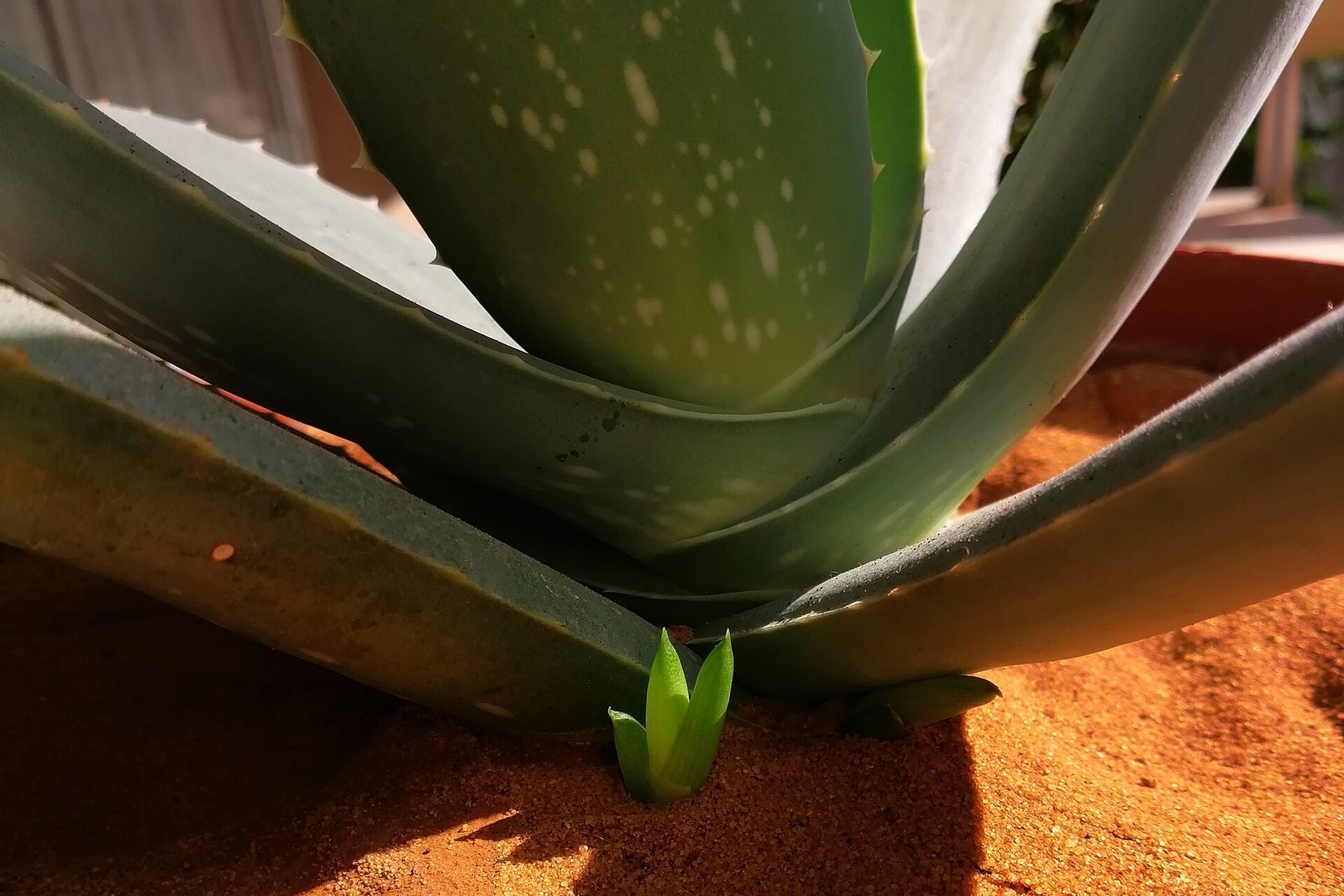
By offsets. NC State says it spreads by offsets and propagates by division, and Penn State says the pups can be removed and planted in separate pots.
What problems does it get?
- Root rot: too much water or a pot that is too big (see above).
- Sunburn and stress: from a sudden move into strong light or from a bright spot into dim light (UF/IFAS).
- Pests: NC State lists mealybugs, aphids and scale; the RHS lists scale insects and mealybugs. Check where leaves meet the stem.
- Leaf problems: NC State also lists leaf spot, aloe rust and sooty mould.
For other signs, the yellow leaves diagnosis guide is a good first stop.
Is aloe vera toxic to cats, dogs and people?
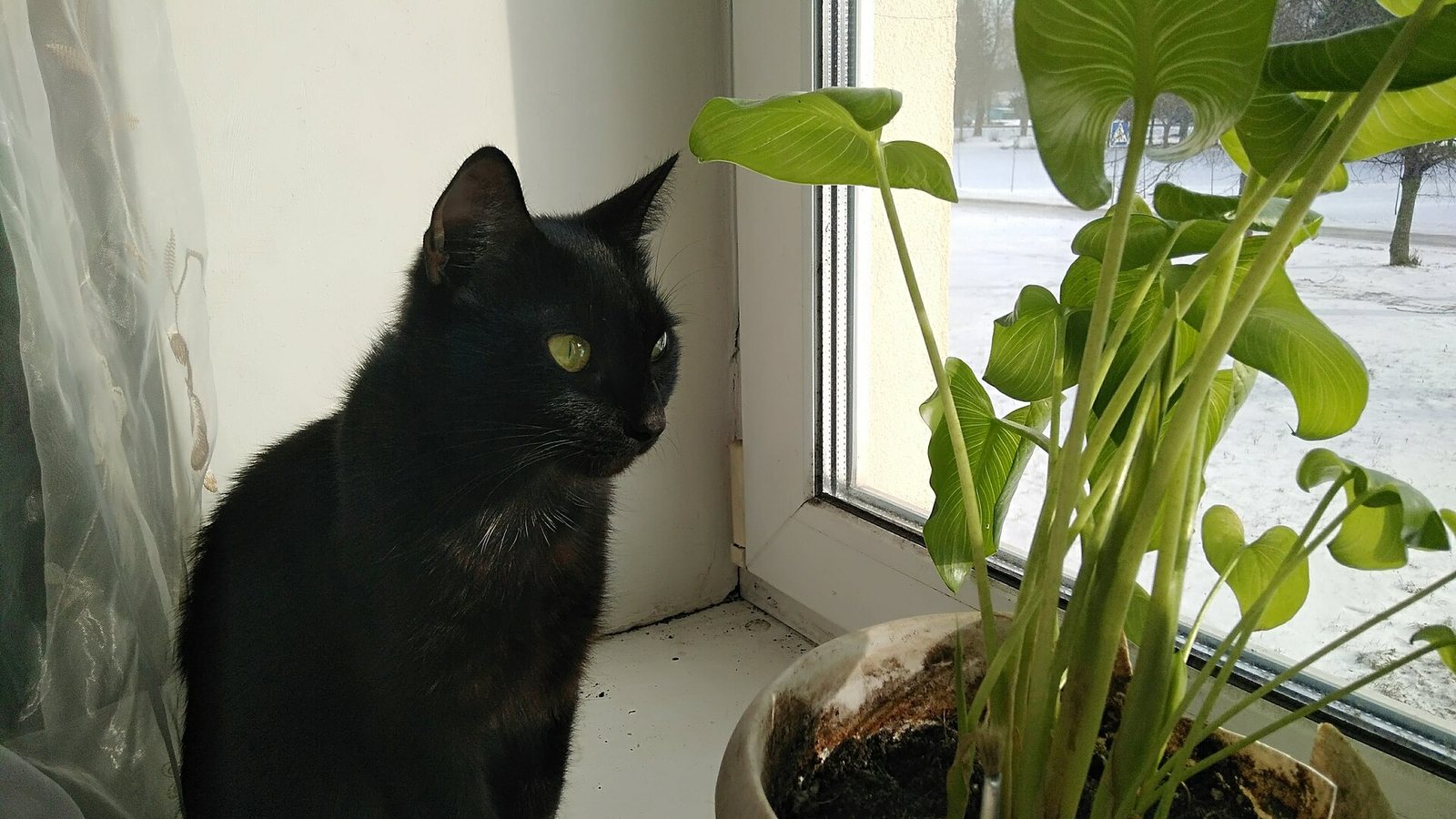
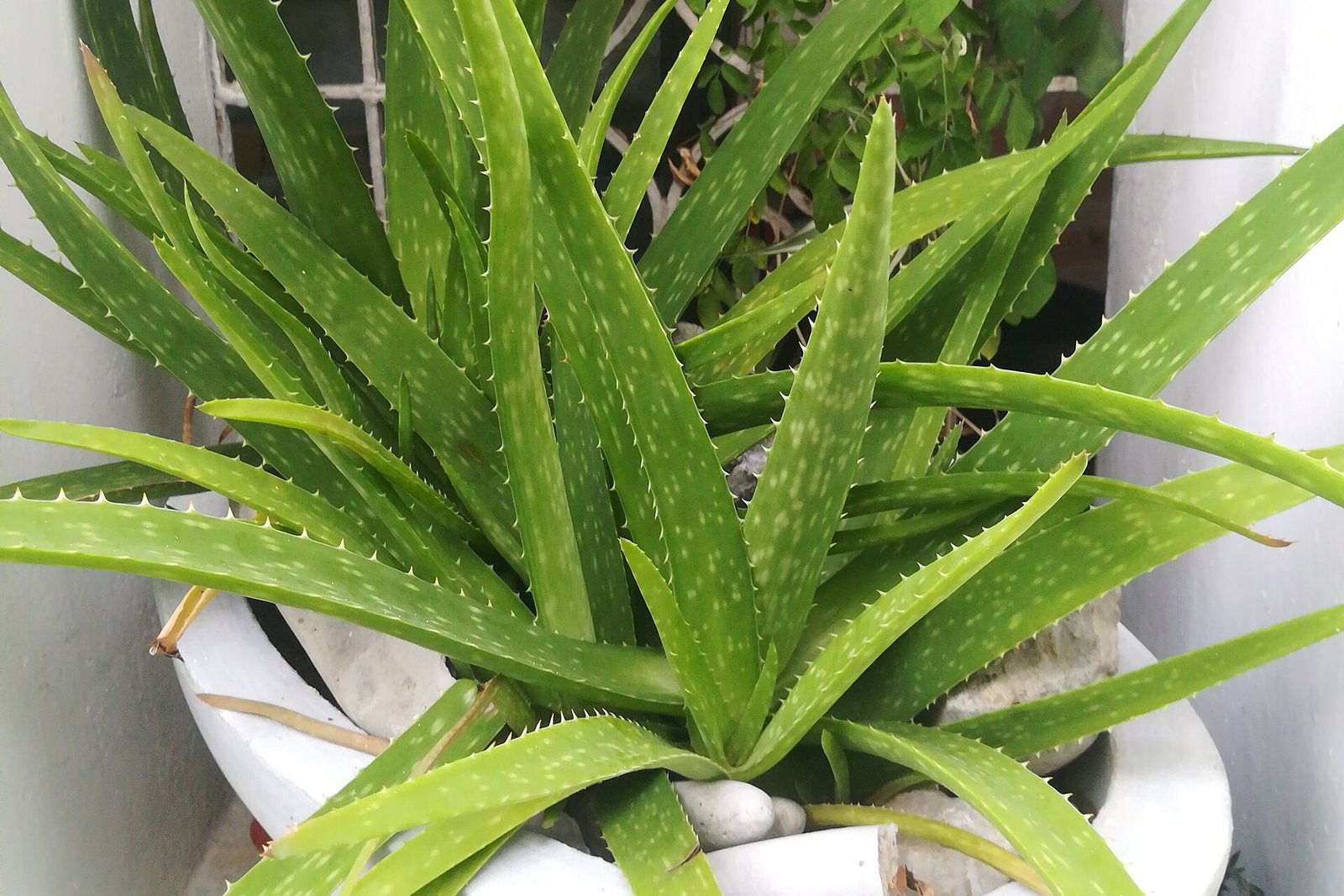
Yes, treat it as toxic. The ASPCA lists aloe vera as toxic to dogs, cats and horses; its toxic principles are saponins and anthraquinones, and the signs it lists are vomiting (not in horses), lethargy and diarrhoea. NC State says it is poisonous to humans at low severity through ingestion or skin contact, with possible abdominal cramping, diarrhoea, red urine and skin irritation; the leaves are the poisonous part. The RHS says it is harmful to people, dogs, cats and rabbits if eaten and advises wearing gloves when handling. Penn State mentions a gel inside the leaf and a bitter latex under the skin. We give no medical advice: if a pet or person has eaten it, call your vet, a poison line or doctor. See plants toxic to cats.
What is the plant called?
NC State lists aloe, Barbados aloe, medicinal aloe, medicine plant and true aloe among its common names, and gives Aloe barbadensis as a synonym of Aloe vera. Its native range is the Arabian Peninsula. NC State gives a size of about 1 to 2 feet (30 to 60 cm) tall, sometimes 2 to 3 feet, and the RHS up to about 0.5 to 1 m. For a similar, low-water plant, see the snake plant.
Frequently asked questions
How often should you water aloe vera?
Water thoroughly only when the top inch (2.5 cm) of soil is dry (UF/IFAS), and let it dry completely between waterings (NC State). Penn State says to water less in fall and winter, keeping the soil barely moist.
Does aloe vera need direct sun?
Penn State says full sun to bright indirect light indoors, and the RHS says full sun. Introduce strong light gradually, because a sudden move can sunburn the leaves (UF/IFAS).
Is aloe vera toxic to cats and dogs?
Yes. The ASPCA lists aloe vera as toxic to dogs, cats and horses, with saponins and anthraquinones as toxic principles and vomiting, lethargy and diarrhoea as signs. Call your vet if a pet has eaten it.
Why is my aloe vera dying?
Root rot from too much water, or from a pot that is too large, is the main problem named by NC State, UF/IFAS and Penn State. Sudden light changes can also stress or sunburn it (UF/IFAS).
How do you propagate aloe vera?
Remove the offsets (pups) that grow at the base and pot them up separately (Penn State). NC State says it propagates by division and spreads by offsets.
Sources
Written and fact-checked by the Flori team. Every guide cites horticultural sources such as the RHS, university extension services and the ASPCA, and is updated when the advice changes. How we write our guides
General plant care information. Plants vary; when a plant is valuable or a problem spreads quickly, consult a local nursery or plant specialist.