Spathiphyllum wallisii · Araceae
Peace Lily (Spathiphyllum): Care and Facts
How to care for a peace lily: light, watering, soil, flowers, problems and pet toxicity, with numbers from extension services and the ASPCA.
- Medium light
- Moderate water
- Easy care
- Toxic to pets
Also called: Spathiphyllum, spathe flower, white sails, closet plant
 By Flori editorial team · Updated
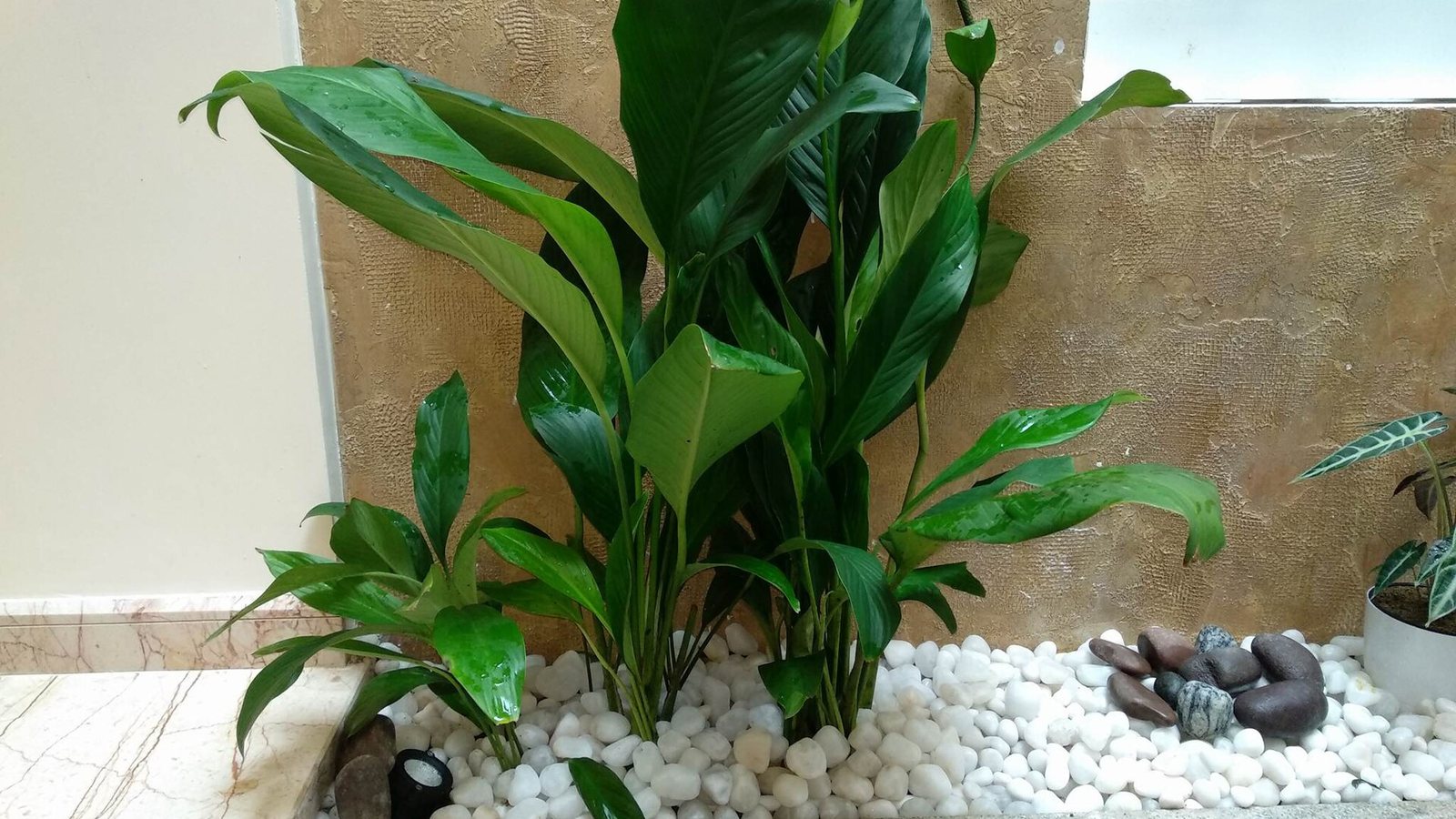 Photo: Anish nellickal · CC BY-SA 4.0
The peace lily (Spathiphyllum) is an arum-family houseplant from tropical America, not a true lily. It grows best in bright indirect light but tolerates low light, likes soil that is moist but not soggy, and needs warmth above about 16 °C (60 °F). It is toxic to cats and dogs, according to the ASPCA.
At a glance
- Light
- Bright indirect light; tolerates low light but flowers less; no direct sun
- Watering
- Keep soil moist, not soggy; let it dry slightly between waterings
- Humidity
- No target given; dry air browns leaf tips
- Temperature
- 20-29 °C (68-85 °F) by day; avoid below 16 °C (60 °F) and drafts
- Soil
- Well-drained mix high in organic matter; pot with drainage holes
- Size
- Usually about 90 cm (3 ft) indoors; 30 cm to 1.8 m (1-6 ft) by type
- Toxicity
- Toxic to cats and dogs (ASPCA): mouth burning, drooling, vomiting
- Origin
- Tropical Americas (mainly Central and South America)
On this page9
- How much light does a peace lily need?
- How often should you water a peace lily?
- What soil and pot suit a peace lily?
- Does it need humidity and warmth?
- How do you feed and propagate a peace lily?
- Why will my peace lily not flower, and what is the white part?
- What are the common peace lily problems?
- Is a peace lily toxic to cats and dogs?
- Which peace lily varieties are there?
How much light does a peace lily need?
A peace lily (Spathiphyllum) does best in bright, indirect light, and it is one of the few flowering houseplants that copes with low light. Clemson Cooperative Extension says it tolerates low light but grows best in "bright indirect light", and South Dakota State University (SDSU) Extension calls bright indirect light "the best" and an east- or north-facing window ideal. NC State lists the plant as suited to deep to partial shade and says not to place it in direct sun; Clemson warns that direct sun scorches the leaves.
Low light has a price. Clemson links a lack of flowers to plants under a year old or to too little light, so a peace lily that never blooms may simply need a brighter spot. If you are not sure how bright a corner is, the Smart light meter in Flori can measure it, and best plants for low-light rooms compares other options.
How often should you water a peace lily?
Keep the soil moist but not soggy, and let it dry slightly between waterings. That is the same advice from NC State, Clemson and SDSU. NC State adds that watering from below "works very well". Use room-temperature water and never leave the pot standing in water; Clemson says this leads to root problems, and SDSU names root and stem disease from overwatering as a common problem.
- Check the top of the soil with a finger and water when it is just starting to dry.
- Empty the saucer after watering.
- A drooping plant is usually thirsty: SDSU says drooping or wilting means not enough water.
SDSU suggests letting tap water stand overnight so the chlorine can evaporate, because the plant is sensitive to chemicals. Our guide on how often to water houseplants explains how to judge the interval for your room, and a care reminder in Flori can keep to it.
What soil and pot suit a peace lily?
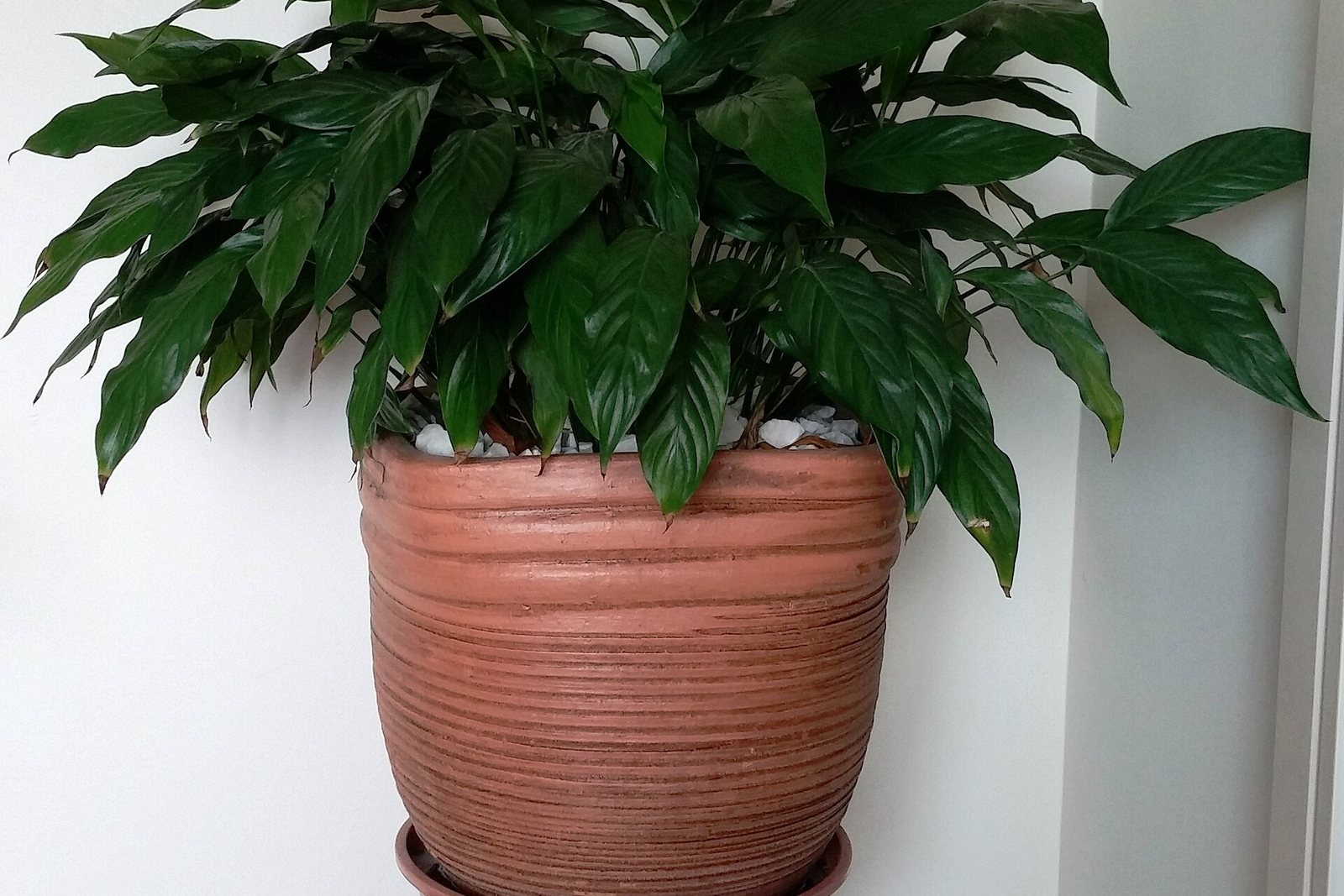
NC State recommends a potting mix high in organic matter with good drainage, and notes an acidic pH below 6.0; Clemson simply asks for a well-drained potting mix. Use a pot with drainage holes. NC State advises keeping the plant "somewhat pot-bound" and repotting only when necessary, in February or March. Clemson says to repot when roots grow through the drainage holes or circle the soil surface, into a pot "one to two inches larger" (2.5 to 5 cm), and notes that repotting in the growing season speeds recovery. SDSU adds that older leaves yellow if the plant has not been repotted for a while.
Does it need humidity and warmth?
It likes ordinary warm rooms. NC State gives a daytime range of 68 to 85 °F (20 to 29 °C) with no more than a 10-degree drop at night; Clemson gives the same daytime range and says to avoid temperatures below 60 °F (16 °C) and drafts or vents blowing on the plant. SDSU is stricter on the low end: it gives 65 to 80 °F (18 to 27 °C) and warns that the plant dies if it is exposed to cool temperatures for a long time. NC State says 40 to 60 °F (4 to 16 °C) slows growth considerably and long periods below 40 °F (4 °C) can damage leaves, stems and roots. It is hardy outdoors only in USDA zones 11 and 12 (NC State).
None of the three extension pages gives a humidity target, but all three link dry air to brown leaf tips. If the tips brown, see brown leaf tips and the indoor plant humidity guide.
How do you feed and propagate a peace lily?
Feeding. It needs little. Clemson suggests a balanced liquid houseplant fertiliser such as 20-20-20 every six to eight weeks in spring and summer, at one quarter of the recommended strength, and NC State also says one quarter strength and warns that over-fertilising and salt build-up can burn leaf tips and roots. SDSU recommends an organic fertiliser because the plant is very sensitive to chemicals. Always follow the label.
Propagation. NC State lists division: separate a clump with its roots and pot the pieces on their own.
Why will my peace lily not flower, and what is the white part?
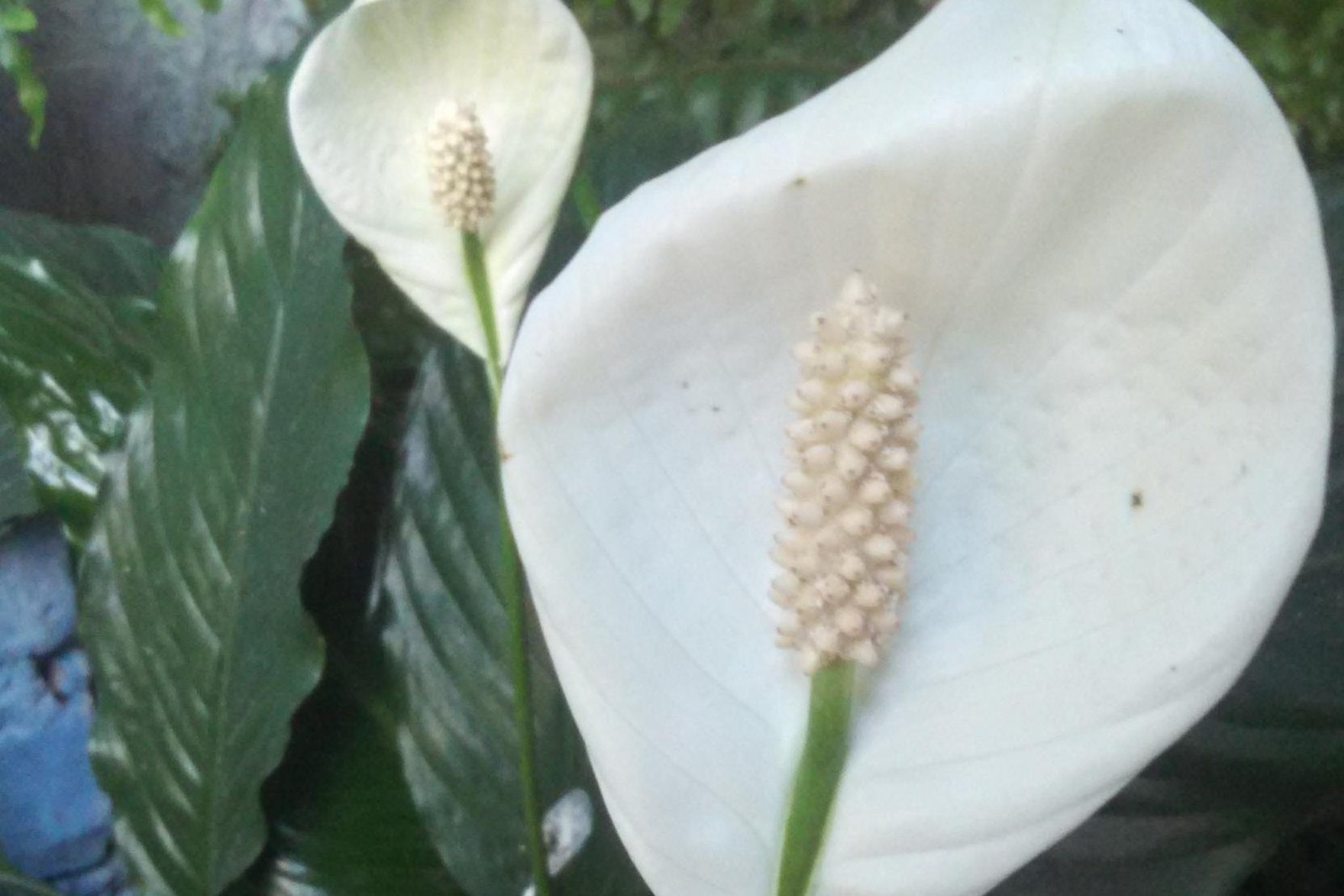
The white "flower" is a spathe, a modified leaf; the small spike in the middle (the spadix) holds the true flowers (NC State). NC State says the spathe is 4 to 12 inches (10 to 30 cm) long, turns pale green after about ten days and stays attractive for at least another month. The plant is not a true lily: Clemson and SDSU both place it in the arum family (Araceae) with caladiums, elephant ears and callas. If it does not bloom, look first at light and plant age (Clemson), then at over-fertilising.
What are the common peace lily problems?
- Brown leaf tips or edges: NC State names too much direct sun, underwatering or low humidity; Clemson adds over-fertilising; SDSU lists excessive light, over-fertilising, low water and low humidity.
- Yellow leaves: SDSU says overwatering or underwatering can be the cause, and older leaves yellow if the plant is overdue for repotting. Clemson also lists magnesium deficiency, with yellowing between the veins and stunted growth.
- Soft, collapsing growth at the base: root and stem disease from overwatering. See the root rot rescue plan.
- Pests: NC State says mealybugs are probably the most common insect indoors and advises cleaning the leaves with a damp cloth; Clemson also names fungus gnats, spider mites and scale.
If you cannot tell which it is, Dr. Flori can work from a photo and name the likely cause.
Is a peace lily toxic to cats and dogs?
Yes. The ASPCA lists the peace lily as toxic to both dogs and cats. The toxic principle is insoluble calcium oxalate, and the signs are mouth irritation, intense burning of the mouth, tongue and lips, drooling, vomiting and difficulty swallowing. NC State rates the severity as medium and adds that it is a problem for people (especially children) and horses; Clemson and SDSU also tell you to keep small children, cats and dogs from chewing it. Keep it where pets cannot reach, and call your vet or the ASPCA Animal Poison Control Center if a pet eats some. For more plants to avoid, see plants toxic to cats.
Which peace lily varieties are there?
Most houseplant peace lilies are hybrids sold under the genus name, which is why sources write Spathiphyllum without a species. NC State lists 'Mauna Loa' (leaves nearly 3 ft long, with a large spathe), 'Petite', and S. wallisii forms such as 'Domino' (white-striped leaves, 1 to 3 ft), 'Gemini' and 'Sensation' (over 5 ft). Clemson adds 'Little Angel' and 'Starlight' as dwarfs of 12 to 18 inches (30 to 45 cm). Care is the same for all of them; pick a size that fits the space.
Frequently asked questions
How often should I water a peace lily?
Keep the soil moist but not soggy and let it dry slightly between waterings, according to NC State, Clemson and SDSU Extension. Never leave the pot standing in water.
Can a peace lily live in low light?
Yes, Clemson Cooperative Extension says it tolerates low light, but it grows best in bright indirect light and may not flower in dim rooms.
Is a peace lily toxic to cats and dogs?
Yes. The ASPCA lists it as toxic to dogs and cats because of insoluble calcium oxalate: mouth irritation, burning, drooling and vomiting. Keep it out of reach.
Why are the tips of my peace lily brown?
Extension sources name too much direct sun, underwatering, low humidity or over-fertilising. NC State and SDSU list these causes.
Is a peace lily a true lily?
No. Clemson and SDSU Extension place it in the arum family (Araceae), with caladiums, elephant ears and callas.
Sources
Written and fact-checked by the Flori team. Every guide cites horticultural sources such as the RHS, university extension services and the ASPCA, and is updated when the advice changes. How we write our guides
General plant care information. Plants vary; when a plant is valuable or a problem spreads quickly, consult a local nursery or plant specialist.