Calathea Leaves Curling and Crispy: Causes
Calathea leaves curling and crispy? Dry air, tap water fluoride and uneven watering are the usual causes. Symptom table, fixes and a quick checklist.
 By Flori editorial team · Updated
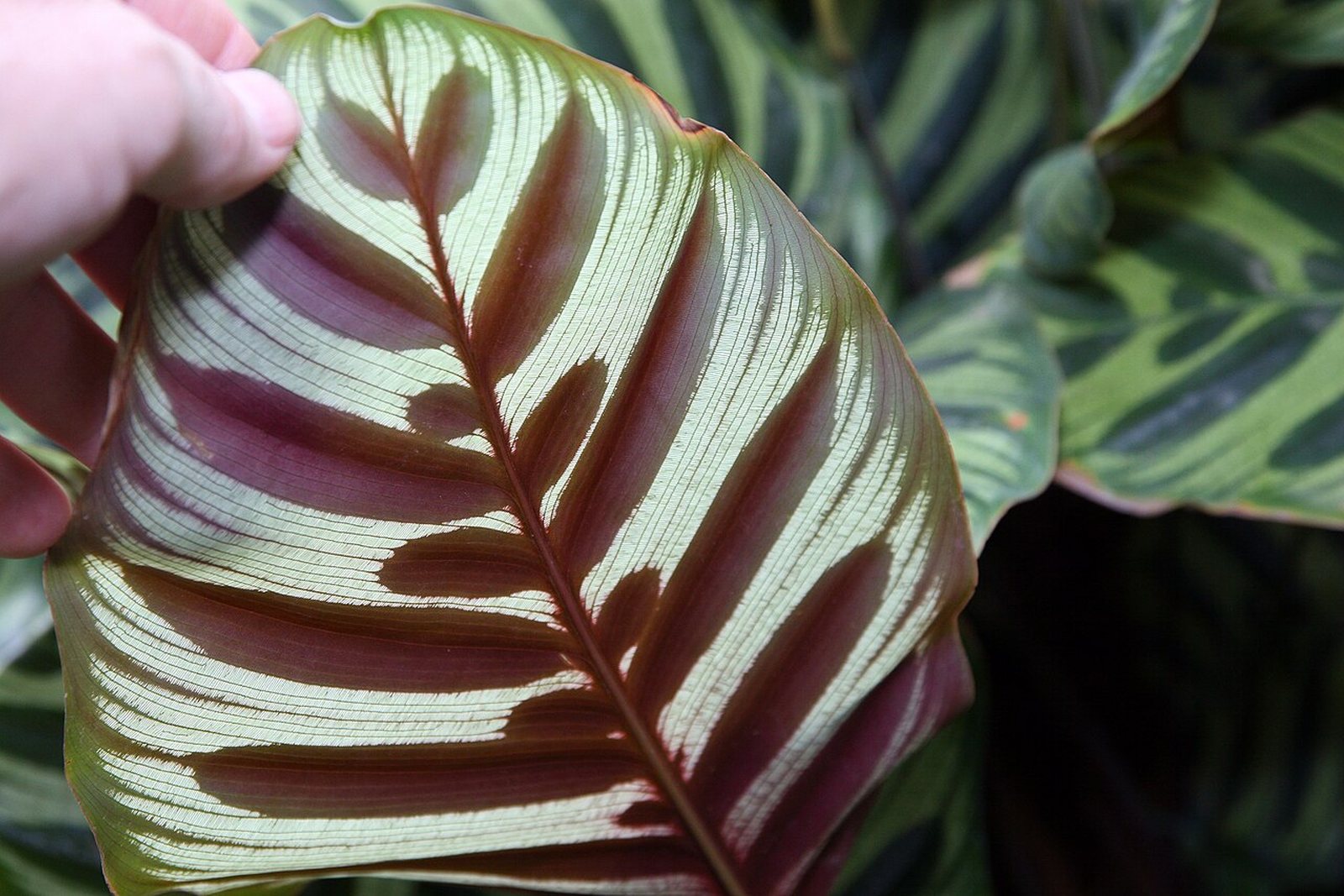
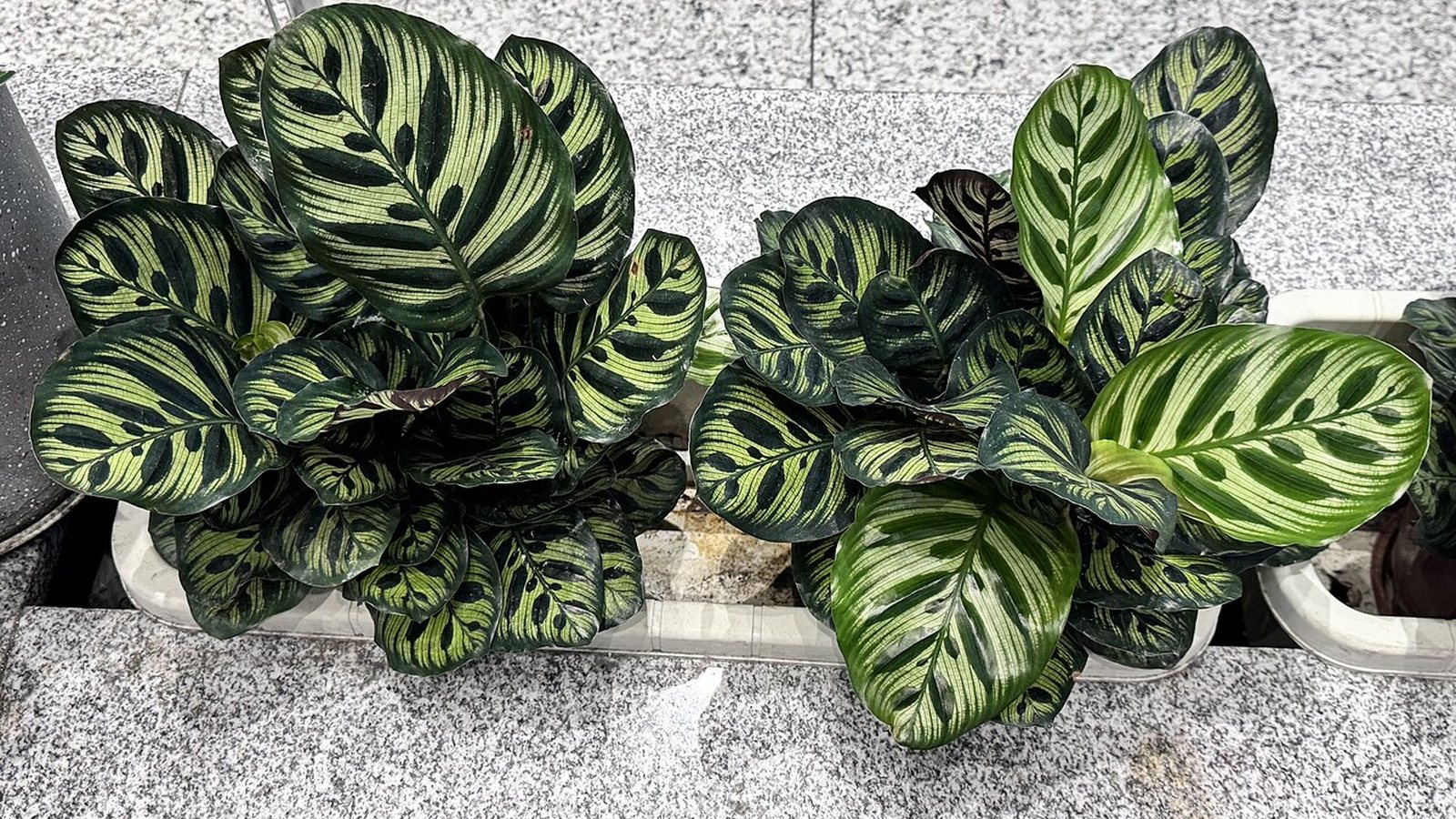 Photo: JULIANISME · CC0
Calathea leaves curl and crisp mainly from dry air, tap water (fluoride, lime, chlorine) and uneven watering. Aim for humidity above 60%, use rainwater or distilled water, keep the compost evenly moist and out of direct sun. Leaves folding at night is normal; damaged edges will not turn green again.
Key takeaways
- Fold-up at night is normal; curling that lasts all day, or crisp edges, is the problem.
- Dry air, tap water and uneven watering are the main causes, so check them before pests.
- NC State suggests humidity above 60% and distilled or rainwater; the RHS says tap water left 24 hours is tolerated.
- Keep it bright but out of direct sun, at a steady temperature away from radiators and draughts.
- Brown edges do not recover: trim them and judge progress by new leaves.
On this page10
- Why are my calathea leaves curling and going crispy?
- Is curling at night normal for a calathea?
- Symptom, cause and fix at a glance
- How dry is too dry for a calathea?
- Is it your water?
- Could it be light, heat or draughts?
- Could it be spider mites?
- Will crispy calathea leaves recover?
- Why is my calathea now labelled Goeppertia?
- The five-minute calathea checklist
Why are my calathea leaves curling and going crispy?
Almost always because the leaves are losing water faster than the plant can replace it. NC State Extension says calathea leaves can curl from lack of water and low humidity, and that brown edges and tips come from low humidity and from fluoride in tap water. The RHS adds browned tips and edges to the list of signs of dry air. So the first suspects are dry air, the water you use and uneven watering, in that order, before you think about pests or disease.
The trick with calatheas is to read the pattern, because the same plant says different things with different leaves. Use the table below, then the checklist at the end.
Is curling at night normal for a calathea?
Yes, and this is the most common false alarm. The RHS notes that many calatheas, like others in the prayer plant family (Marantaceae), fold their leaves upwards at night "like hands in prayer". If the leaves open again in the morning, nothing is wrong. Curling that stays all day, or crisp brown edges, is the problem.
Symptom, cause and fix at a glance
| What you see | Likely cause | First fix |
|---|---|---|
| Leaves roll inward all day, edges dry | Dry air or underwatering | Check the compost, then raise humidity |
| Brown tips and edges, leaf otherwise flat | Low humidity, or fluoride and minerals in tap water | Switch to rainwater or distilled water; raise humidity |
| Brown, bleached patches in the middle of the leaf | Too much direct sun (scorch) | Move out of direct sun |
| Curling plus yellowing, soggy compost | Overwatering, root trouble | Let the top dry, check the roots |
| Speckled or silvery leaves, fine webbing | Red spider mites | Isolate the plant and treat the mites |
| Damage on one side, near a heater or door | Heat, cold or draught | Move to a stable spot |
How dry is too dry for a calathea?
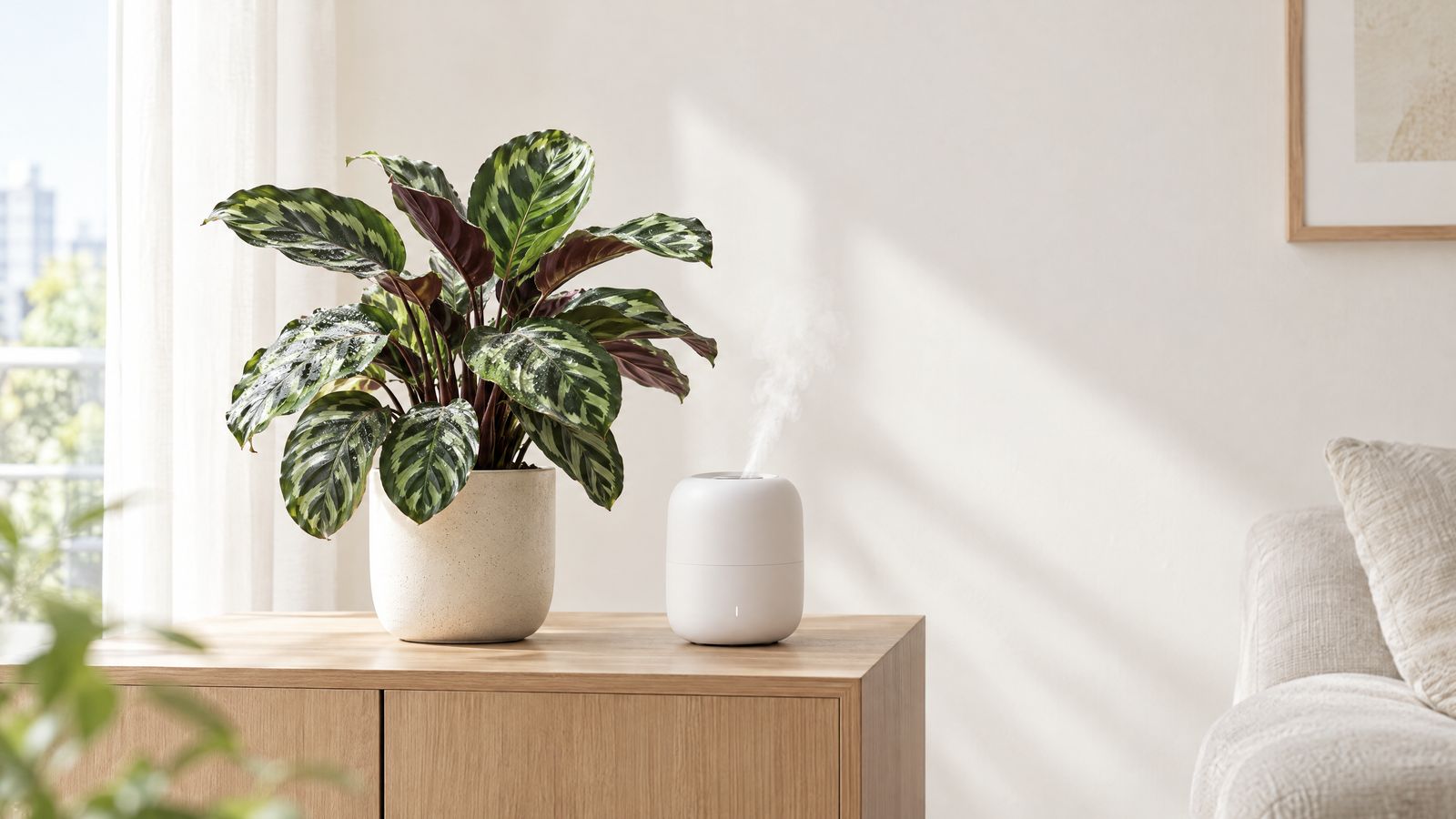
NC State's care notes for a calathea give humidity above 60%, which is higher than most homes. The RHS says calatheas enjoy high humidity and suggests keeping them in a bathroom, standing the pot in a wide tray of wet gravel or clay granules, or grouping them with other plants. NC State also suggests a humidifier or a wet pebble tray. In heating or air-conditioning season, indoor air is far drier than outdoors, so these leaf tips often show up in winter and in a closed, air-conditioned summer room. Our guides to indoor plant humidity and which plants need high humidity go into how to measure and raise it.
Is it your water?
Often. The RHS says all houseplants prefer rainwater, because mains tap water contains lime and chlorine, and that calatheas tolerate tap water left standing for at least 24 hours so the chlorine evaporates; it also suggests distilled water collected from a dehumidifier. NC State goes further: it recommends distilled or rainwater because fluoride in tap water can cause brown edges and tips. Standing water does not remove fluoride, so if the tips keep browning with good humidity, change the water source. More options in our guide to the best water for houseplants.
Watering rhythm: the RHS says to water moderately in spring and summer, keeping the compost evenly moist, and in autumn and winter to let the surface dry before watering again, without letting it dry out completely. Tip away any water left in the cover pot, because roots standing in water rot.
Could it be light, heat or draughts?
Yes. Calatheas want bright light out of direct sun. The RHS suggests a spot near a north- or east-facing window in summer and a south-facing windowsill in winter, and NC State says too much direct sun scorches leaves. For temperature the RHS gives 16-21 °C (61-70 °F) and NC State 18-24 °C (65-75 °F), both stable and away from draughts and radiators. In Mediterranean and Aegean summers a west- or south-facing window can scorch within hours, so draw a sheer curtain; in inland Anatolian and northern winters keep the plant off cold window glass.
Could it be spider mites?
If the crispy leaves are speckled, yellowing or silvery, check the underside with a magnifying glass. The RHS lists speckled, yellowing or silvery leaves and fine webbing as signs of red spider mites, which love the same dry air that makes tips crispy. Our spider mite guide shows what to do. For a photo-based second opinion, Dr. Flori can ask follow-up questions, name the likely cause and give a recovery plan, and the Plant Hospital keeps the plant under watch while it recovers.
Will crispy calathea leaves recover?
Damaged tissue does not turn green again. The RHS says you can snip off faded brown leaves to improve appearances, and remove dead stems just above the compost. Judge the plant by new leaves: if they unfurl flat and clean, you fixed the cause. If they come in already crisp at the edge, the problem is still there. A badly curled leaf may relax a little once watering and humidity are right, but a brown edge stays brown. Our general guides on curling leaves and brown leaf tips cover other plants.
Why is my calathea now labelled Goeppertia?
Plants sold as calathea have been renamed and split into three genera, Ctenanthe, Goeppertia and Stromanthe, the RHS says, but shops still label many of them calathea. They share the same care, so everything above applies. One difference the RHS points out: weak, poor growth from low light is a particular problem with Goeppertia species, so a dim corner will not do. NC State also warns that wetting the leaves while watering, or poor air circulation, can cause leaf spots, so pour water onto the compost, not over the foliage.
The five-minute calathea checklist
- Is it night? If the leaves open again in the morning, it is normal folding.
- Press the compost. Bone dry means water; soggy and yellowing means wait and check the roots.
- Check the water. Switch to rainwater or distilled water for a few weeks.
- Check the air. Move away from radiators and vents and raise humidity.
- Check the light. Bright and indirect, no hot sun.
- Look under the leaves for mites.
Calatheas are also a good pick with pets: the ASPCA lists calathea as non-toxic to dogs, cats and horses.
Frequently asked questions
Why are my calathea leaves curling and crispy?
Most often dry air, tap water (fluoride, lime and chlorine) or uneven watering. NC State says curling comes from lack of water and low humidity, and brown tips from low humidity and fluoride.
Is it normal for calathea leaves to curl at night?
Yes. The RHS says many calatheas fold their leaves upward at night like hands in prayer. If they open again in the morning, nothing is wrong.
Should I use distilled water for calathea?
NC State recommends distilled or rainwater because fluoride in tap water can brown the edges and tips. The RHS says calatheas tolerate tap water left standing for 24 hours so the chlorine evaporates.
Can I cut off crispy calathea leaves?
Yes. The RHS says you can snip off faded brown leaves to improve appearances, and remove dead stems just above the compost. Damaged tissue will not turn green again.
Are calatheas safe for cats and dogs?
The ASPCA lists calathea as non-toxic to dogs, cats and horses.
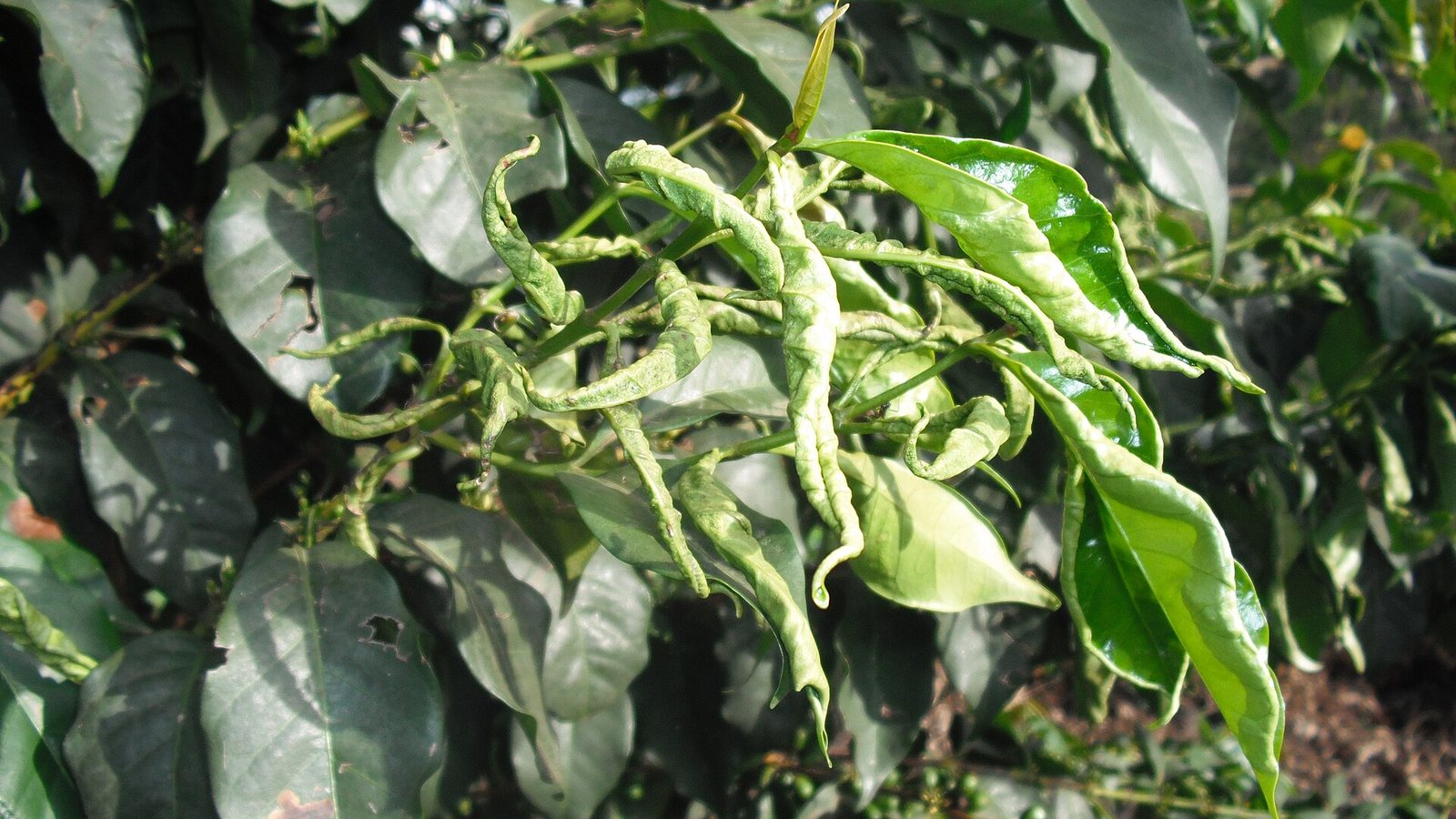
Leaves curl from too much light, heat, dry soil, dry air, soggy roots or pests. Read which leaves curl and which way, then use the table to fix it.
Sources
Written and fact-checked by the Flori team. Every guide cites horticultural sources such as the RHS, university extension services and the ASPCA, and is updated when the advice changes. How we write our guides
General plant care information. Plants vary; when a plant is valuable or a problem spreads quickly, consult a local nursery or plant specialist.