Cyclamen Drooping After You Bought It: Why
A cyclamen that droops after you bring it home is usually too dry, too warm or finished flowering. Check the soil first, then use this chart to fix it.
 By Flori editorial team · Updated
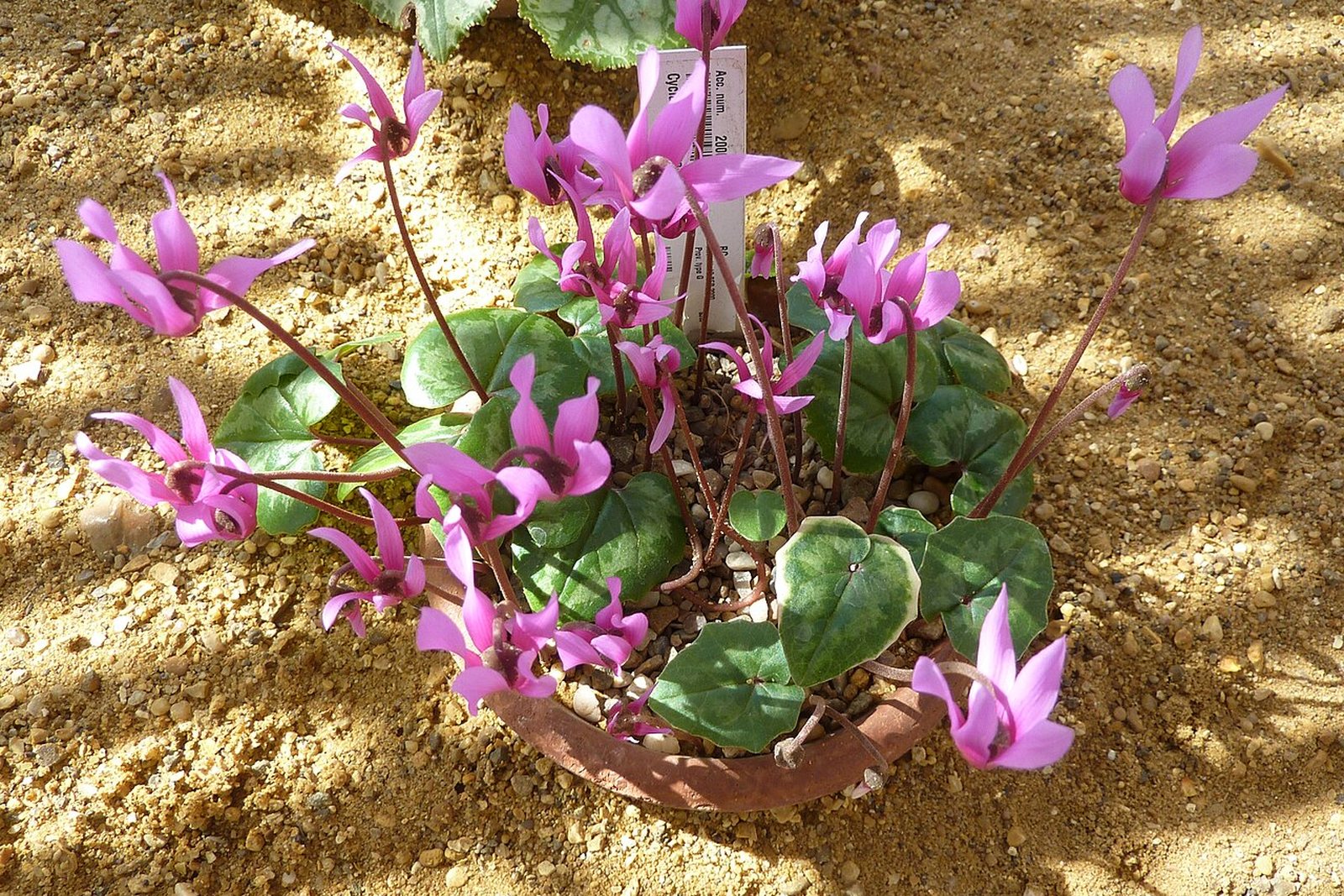
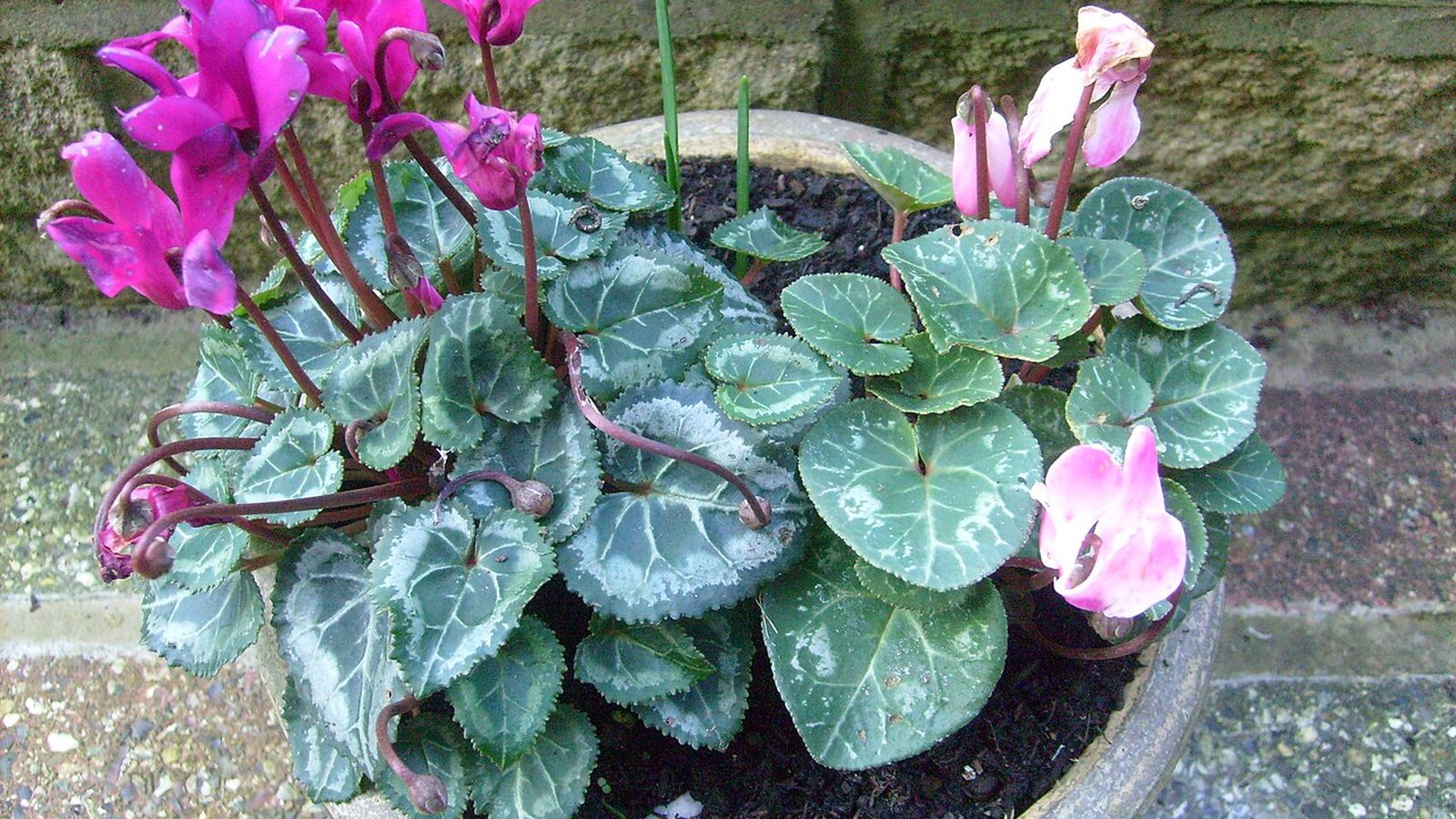 Photo: Mrmatiko · CC BY-SA 3.0
A new cyclamen usually droops because the soil is dry, the room is too warm (buds fail above 21 °C / 70 °F) or it has finished flowering. Check the soil, water from below for 15 minutes without wetting the crown, and move it somewhere bright and cool, about 15–18 °C (60–65 °F).
Key takeaways
- Push a finger into the soil first: dry soil and soft leaves mean thirst, wet soil and yellowing mean too much water.
- Water from below for about 15 minutes and keep the crown dry; let the surface dry before watering again.
- Cyclamen wants cool, bright conditions: 15–18 °C (60–65 °F) by day and about 10 °C (50 °F) at night.
- Drooping and yellow leaves after flowering ends in late spring can be normal summer dormancy.
- Cyclamen is toxic to cats and dogs, especially the tuber (ASPCA).
On this page8
- Why is my cyclamen drooping right after I bought it?
- Which cause is it? A quick drooping chart
- How should you water a drooping cyclamen?
- What temperature and light does a cyclamen want?
- How do you revive a limp cyclamen?
- Is drooping after flowering normal?
- Why are the flowers dropping or the buds not opening?
- Is cyclamen safe for cats and dogs?
Why is my cyclamen drooping right after I bought it?
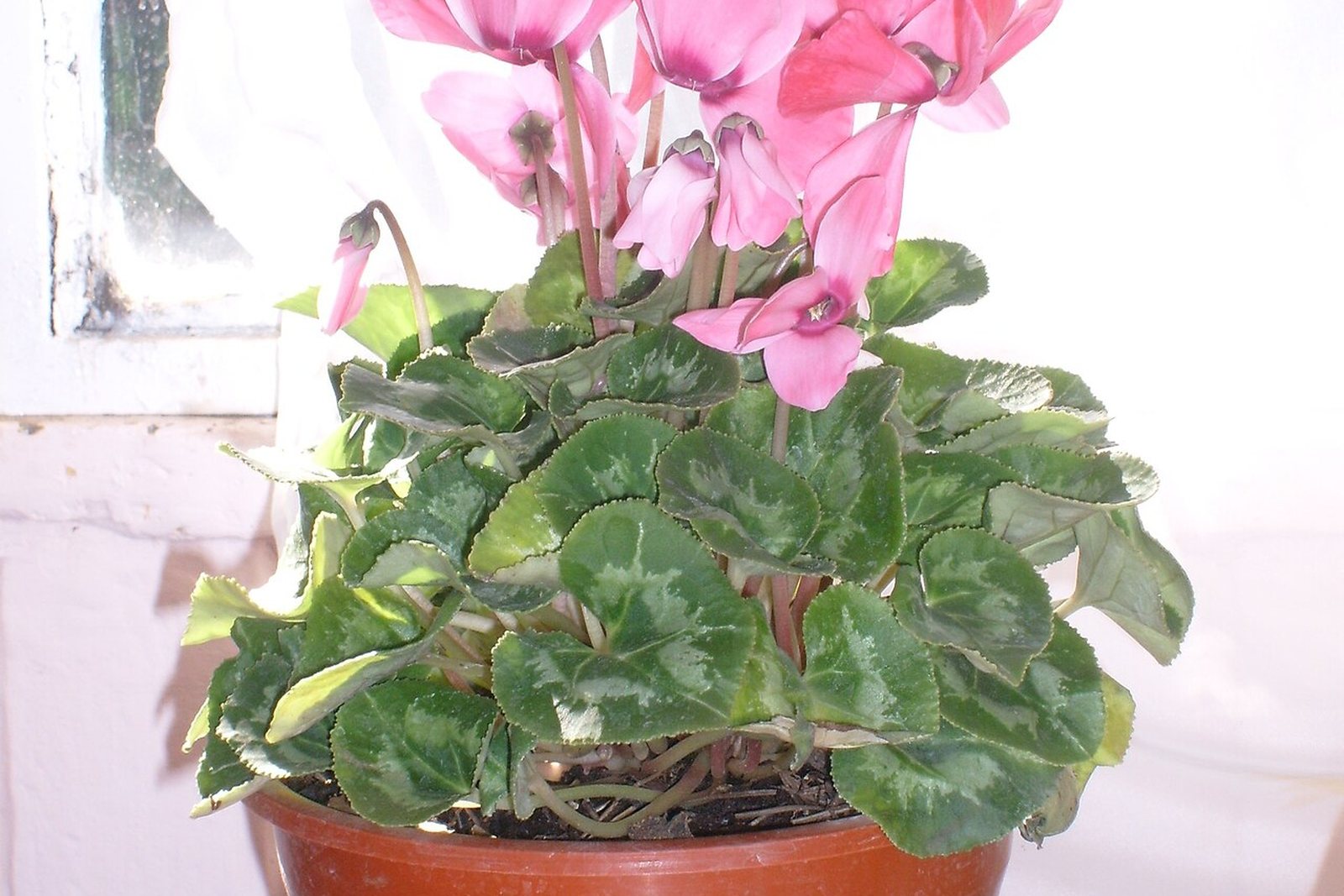
Almost always for one of four reasons: the soil is dry, the room is too warm, the leaves are in a draught or the plant has simply finished flowering. A shop cyclamen (Cyclamen persicum, florist's cyclamen) is grown in a cool greenhouse, then moved into a warm shop, a bag, a car and finally your living room. Drooping stems on the first day are the plant's way of telling you the change was too much. The good news is that a drooping cyclamen is usually easy to read, and most recover within a few days once the cause is fixed.
Before you do anything, lift the pot and push a finger into the soil. That one check separates the most common causes, as the table below shows.
Which cause is it? A quick drooping chart
| What you see | Likely cause | First fix |
|---|---|---|
| Soil dry, pot light, leaves and flowers soft and floppy | Too dry (Wisconsin Extension: soft foliage means the plant likely needs water) | Water from below (see next section), then let the surface dry before watering again |
| Soil wet, leaves yellowing, drooping continues, base of stems soft | Too wet or crown rot | Stop watering, tip out excess water, keep the crown dry, see below |
| Plant is in a warm room or beside a radiator, buds fail | Too hot: buds fail to develop above 21 °C (70 °F), says Clemson Extension | Move to the coolest bright room, away from heat vents |
| Flowering ended in late spring and leaves yellow and drop | Natural summer dormancy | Cut back watering; see the dormancy section |
| Leaves curl, flowers fall, bud tips brown | Dry, hot air or insufficient light | Bright indirect light, cooler room, tray of wet pebbles |
How should you water a drooping cyclamen?
From below, and without wetting the middle of the plant. Wisconsin Extension says to water thoroughly when the surface soil looks and feels dry, to avoid watering the crown or centre of the plant, and that bottom watering works: stand the pot in water for 15 minutes, then let it drain. Clemson Extension agrees, advising you to water along the pot's edge or from below to prevent tuber rot. Both say to keep the mix moist but not soggy.
Wisconsin adds that the soil should nearly dry before the next watering. In practice that means one deep drink when the top of the soil is dry, not a splash every day. If the pot is wrapped in decorative foil or sits in a cache pot full of water, lift it out and empty it. Our bottom watering guide shows the method step by step, and overwatering vs underwatering will help you tell the two apart if you are unsure.
What temperature and light does a cyclamen want?
Cool and bright. Wisconsin and Clemson give the same numbers: daytime 15–18 °C (60–65 °F) and about 10 °C (50 °F) at night. Wisconsin notes that cool conditions extend both the life of individual flowers and the whole blooming season, and Clemson says buds fail to develop above 21 °C (70 °F). That is why a cyclamen sulks in a heated living room but does well on a cool windowsill, in an unheated hall or a cool bedroom.
Both sources recommend bright, indirect light. Wisconsin suggests an east window often works well, and that in a cold northern winter a south window may be better. Keep it away from heat vents and warm draughts, which dry the soil too quickly (Clemson). If your radiator sits under the window, see radiator heat and dry air damage.
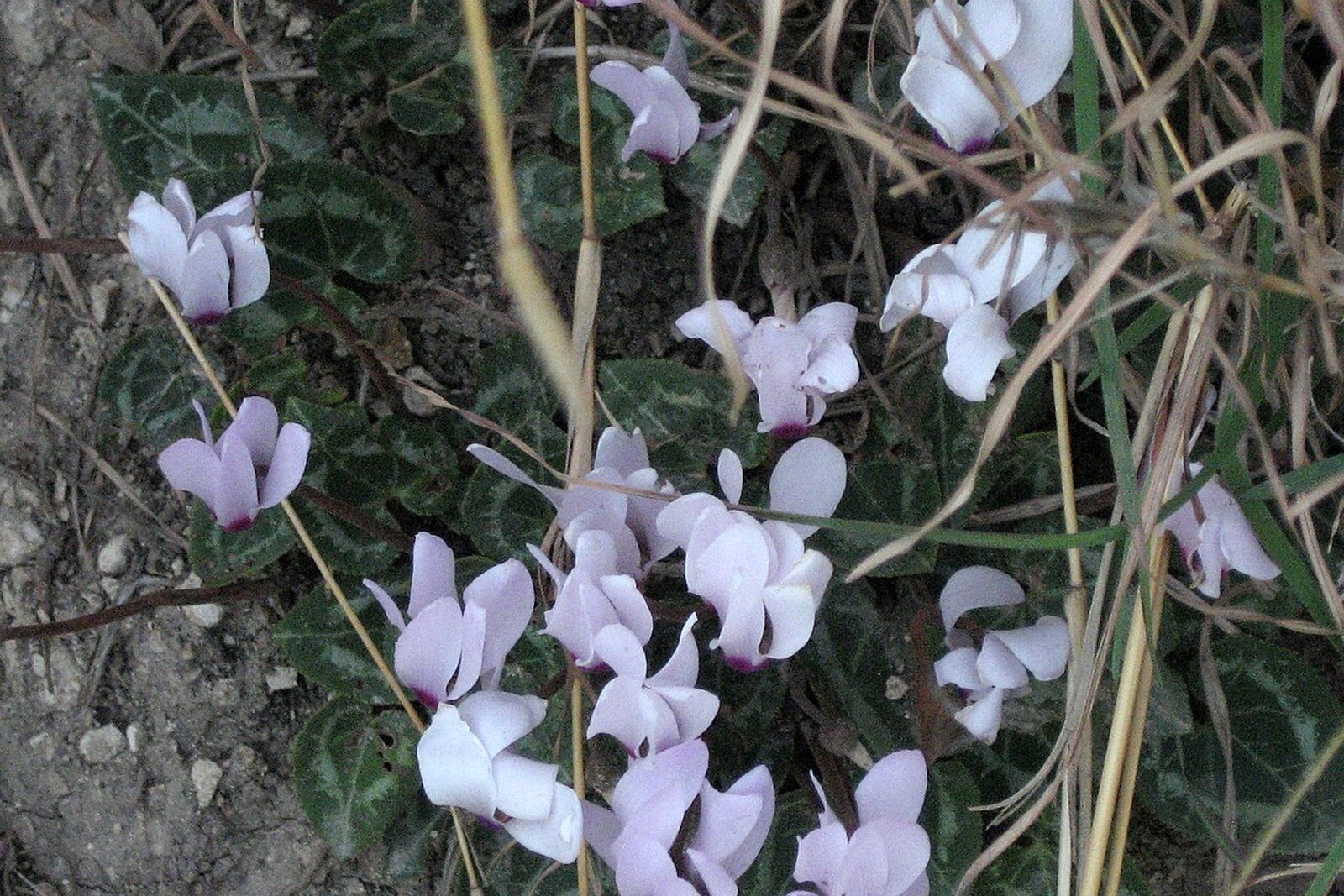
Frost is the other extreme. The cyclamen sold as a houseplant is frost-tender, according to Wisconsin Extension, so do not leave it on an unheated balcony in a hard freeze. In Mediterranean and Aegean regions of Türkiye a pot may be fine outside on a sheltered, frost-free balcony; in inland Anatolia bring it in at night. Do not mix it up with the small hardy garden cyclamens (C. hederifolium, C. coum), which the RHS grows outdoors.
How do you revive a limp cyclamen?
- Check the soil. If it is dry, water from below for 15 minutes and let it drain fully. Do not pour water onto the crown.
- If it is wet, stop watering, empty any water in the saucer and let the surface dry. Remove yellow leaves and any soft, brown stems by pulling them sharply from the base; Wisconsin describes twisting the stem and pulling to detach it cleanly.
- Move it somewhere cool and bright, away from radiators and the oven.
- Wait and watch. Firm, upright foliage is the goal, as the Wisconsin article puts it. Recovery is usually gradual, so give it a week before drawing conclusions.
If the plant keeps collapsing, tip it out of the pot. A tuber that is soft or smells sour is rotting; see our healthy vs rotten roots guide. A cyclamen is a short-lived indoor gift in some homes, and that is not your failure: heat is the usual culprit.
Is drooping after flowering normal?
Yes. Wisconsin says blooming stops in late spring, followed by a dormancy of two to three months. Clemson also notes that after flowering, cyclamen naturally go dormant, and the leaves turn yellow and drop. During dormancy, reduce watering and feeding. Wisconsin describes two options: keep the pot outdoors for summer and keep the mix from staying wet while the plant is leafless, bringing it in before the first frost, or withhold water gradually and store the dry tuber at about 10 °C (50 °F) for 6 to 12 weeks.
When new leaves appear, repot into well-drained mix with the top half of the tuber above the soil surface. Water again as new leaves form and feed until flower buds appear. Wisconsin suggests a low-nitrogen houseplant fertiliser every two weeks during active growth, and Clemson suggests monthly feeding; check the label and follow it. Too much fertiliser gives lush growth that is more prone to disease.
Why are the flowers dropping or the buds not opening?
Wisconsin Extension lists overwatering, underwatering, hot dry conditions and too little light as the causes of yellow leaves and bud blast. If your cyclamen has plenty of light and water but still drops buds, the room is probably too warm. Remove spent flowers by twisting the stem and pulling it cleanly from the base. If you see tiny insects or distorted new growth, aphids, mealybugs, spider mites and thrips are the common pests; both extension sources suggest insecticidal soap, always following the label. Cyclamen mite is very hard to control, and the extension advice is to discard a plant infested with it.
If you are not sure what is wrong, photograph the plant and ask Dr. Flori, which asks follow-up questions, names the likely cause and says how urgent it is.
Is cyclamen safe for cats and dogs?
No. The ASPCA lists cyclamen as toxic to dogs, cats and horses. The toxic principle is terpenoid saponins, with drooling, vomiting and diarrhoea as the signs; after large ingestions of tubers the effects can include irregular heart rhythm, seizures and death. The tuber is the most toxic part. Keep the pot where pets cannot reach it, and see plants toxic to cats for the wider list. If your pet chews it, call your vet or ASPCA Animal Poison Control at (888) 426-4435 straight away.
Frequently asked questions
Why is my cyclamen drooping even though I water it?
The soil may be too wet, or the room too warm. Wisconsin Extension says to let the soil nearly dry between waterings, and Clemson says buds fail above 21 °C (70 °F). Check the soil and move the plant somewhere cool.
Should I water a cyclamen from the top or bottom?
From below, or along the pot's edge. Both Wisconsin and Clemson Extension advise keeping water off the crown and centre of the plant, which helps prevent tuber rot.
Will a drooping cyclamen recover?
Usually, if the tuber is firm and the cause is dryness, heat or a draught. Recovery is gradual, so give it about a week. A soft, sour-smelling tuber is rotting and unlikely to recover.
Is cyclamen poisonous to pets?
Yes. The ASPCA lists cyclamen as toxic to dogs, cats and horses, and the tubers are the most toxic part. Call your vet or ASPCA Animal Poison Control at (888) 426-4435 if a pet chews it.
Why is my plant drooping? Check the soil first: dry means thirst, wet means root trouble. Our table covers heat, cold, pot-bound roots and quick fixes.
Sources
Written and fact-checked by the Flori team. Every guide cites horticultural sources such as the RHS, university extension services and the ASPCA, and is updated when the advice changes. How we write our guides
General plant care information. Plants vary; when a plant is valuable or a problem spreads quickly, consult a local nursery or plant specialist.