Houseplant Diseases: Identify and Treat Each One
Fungal and bacterial leaf spot, powdery mildew, grey mould and root rot: how to recognise each houseplant disease, tell look-alikes apart and treat it.
 By Flori editorial team · Updated
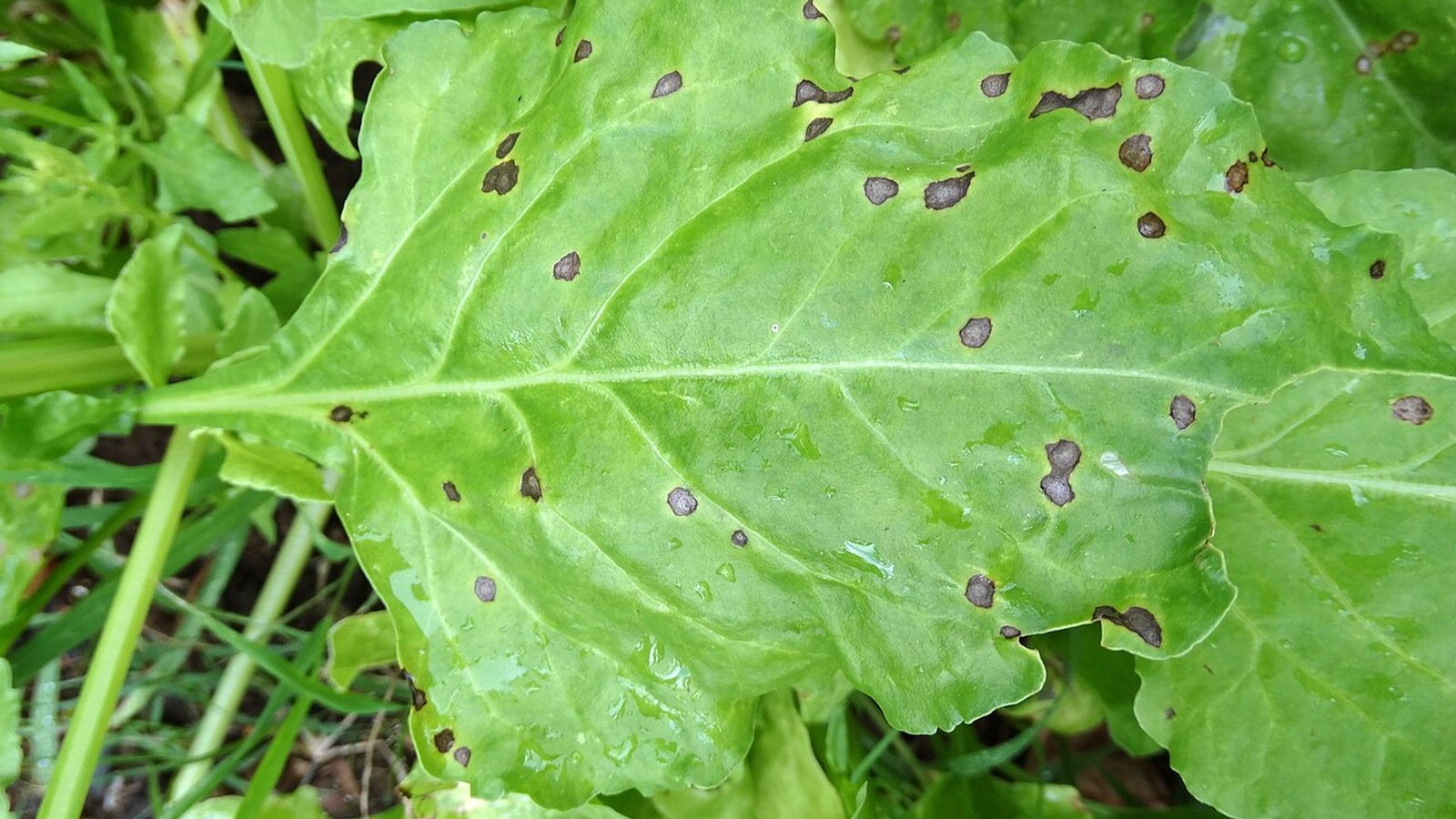 Photo: Plant pests and diseases · CC0
Most houseplant diseases are one of six: fungal leaf spot, bacterial leaf spot, powdery mildew, grey mould, root rot or bacterial stem rot. Match what you see to the table, remove affected tissue, disinfect your tools and fix air flow and watering. Sources advise against fungicides for houseplants, and severely rotted plants are often best discarded.
Key takeaways
- Spots, white powder, grey fuzz and mushy roots point to four different diseases.
- Check look-alikes first: edema, harmless soil mould, salt crust and insect honeydew are not infections.
- Remove affected tissue, disinfect tools, water the soil not the leaves, and add air flow.
- The RHS does not recommend fungicides on houseplants; follow any label exactly.
- Severely rotted or bacterially infected plants are often best discarded.
On this page9
- Which houseplant disease do you have?
- Houseplant diseases at a glance
- Is it really a disease?
- How do you tell fungal from bacterial leaf spot?
- Powdery mildew and grey mould: the humidity pair
- Root and stem rot: the disease that kills
- The five-step routine that works for nearly every disease
- Do you need a fungicide?
- Which plants get which disease?
Which houseplant disease do you have?
Probably fewer than you think. Most sick-looking houseplants are suffering from watering, light or pests, and true diseases come down to a short list: fungal and bacterial leaf spots, powdery mildew, grey mould, and root and stem rot. Each has a different look, and the look tells you what to do. This guide is the identification chart first, then how to tell look-alikes apart, then one treatment routine that works for nearly all of them. The honest headline from the sources: improving air flow, dryness and watering fixes or prevents most of these, and the Royal Horticultural Society (RHS) says that using fungicides on houseplants is not recommended.
Houseplant diseases at a glance
| Disease | What you see | Main cause | What to do first |
|---|---|---|---|
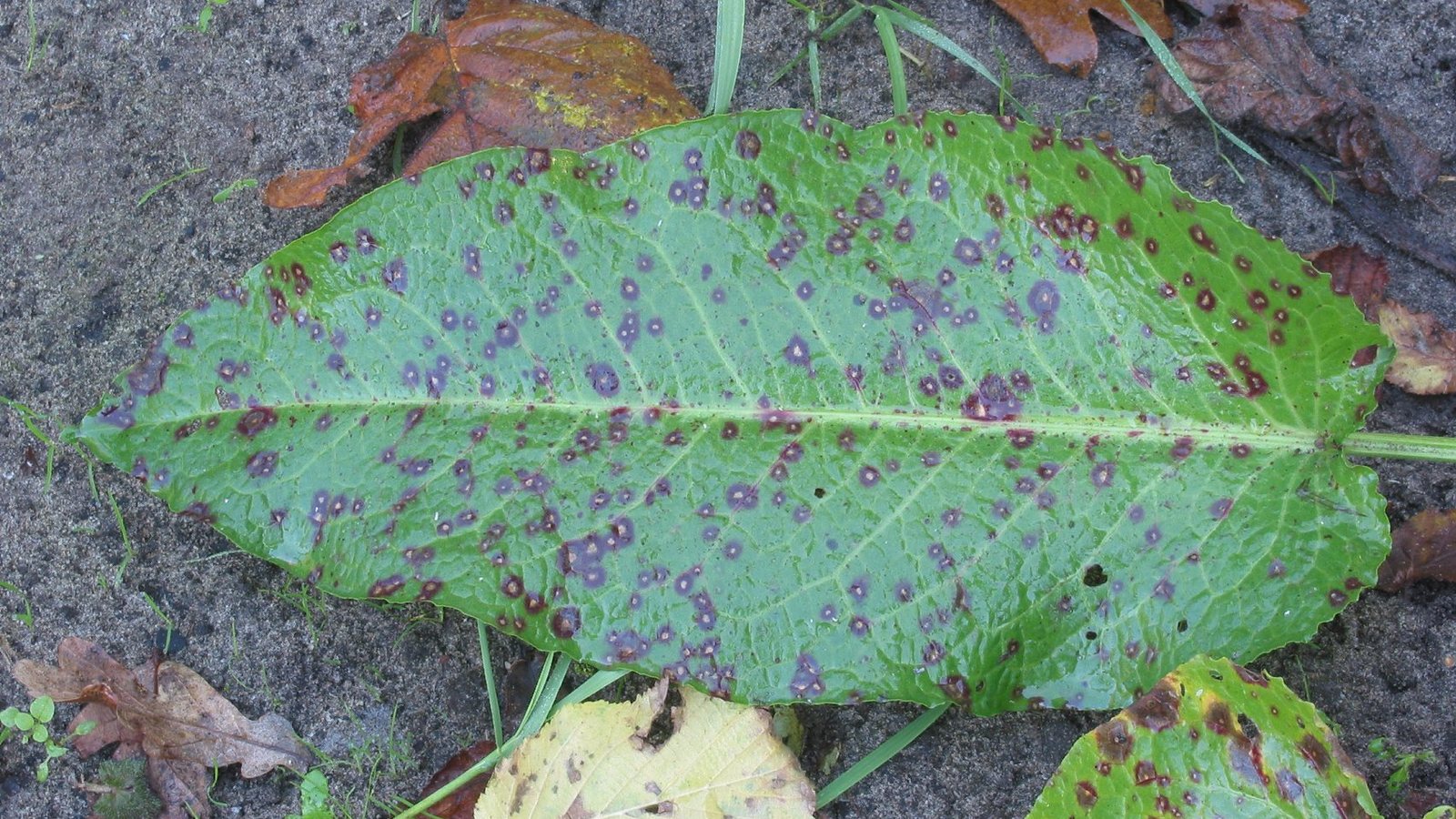
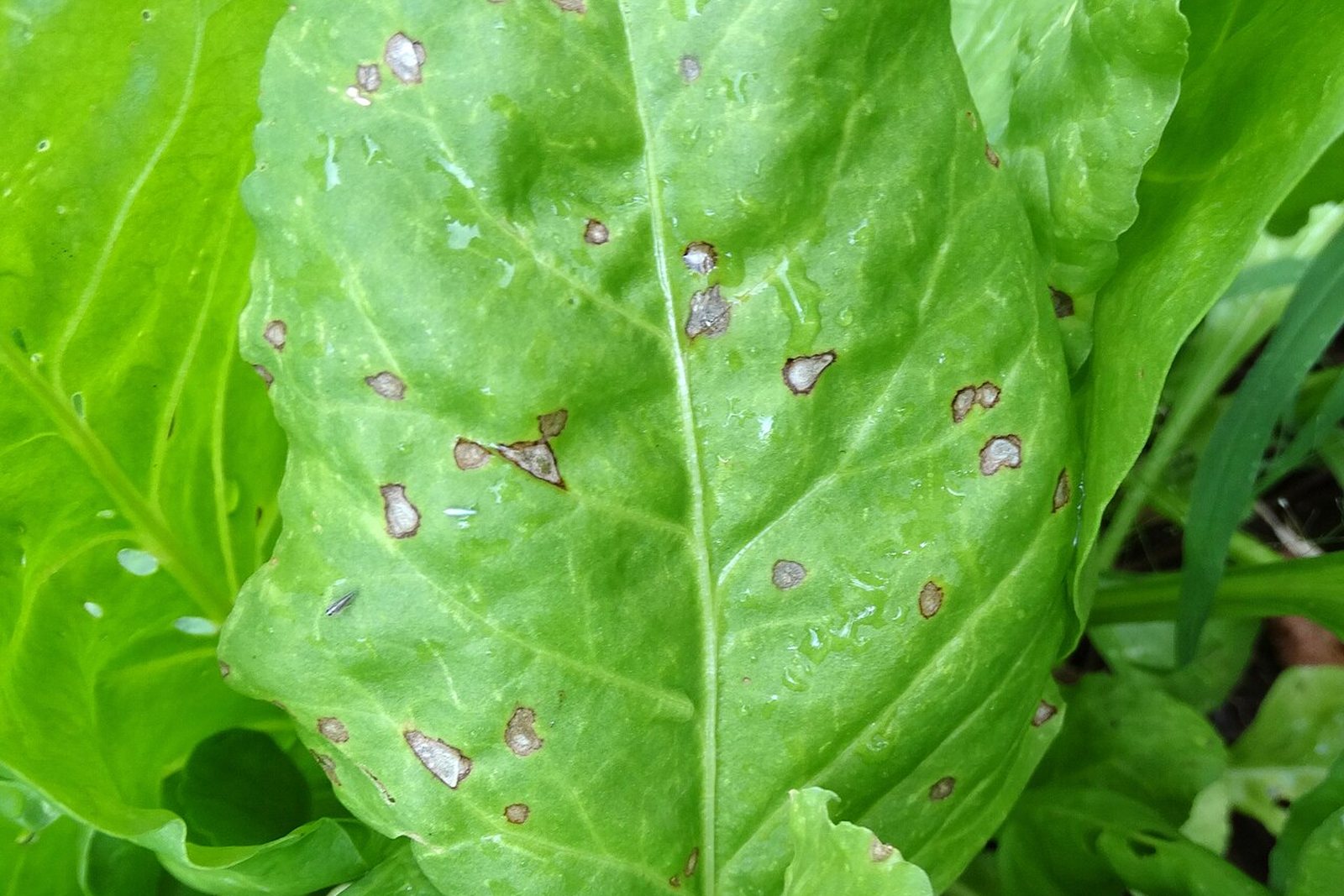
| Fungal leaf spot | Oval brown or black spots, often with a yellow halo or ring; tiny black dots in the middle | Fungi spread by splashing water and wet leaves | Remove spotted leaves, keep leaves dry |
| Bacterial leaf spot | Oily or water-soaked spots, often most visible on the leaf underside; may ooze | Bacteria, helped by wet foliage and crowding | Remove all diseased tissue, stop wetting leaves |
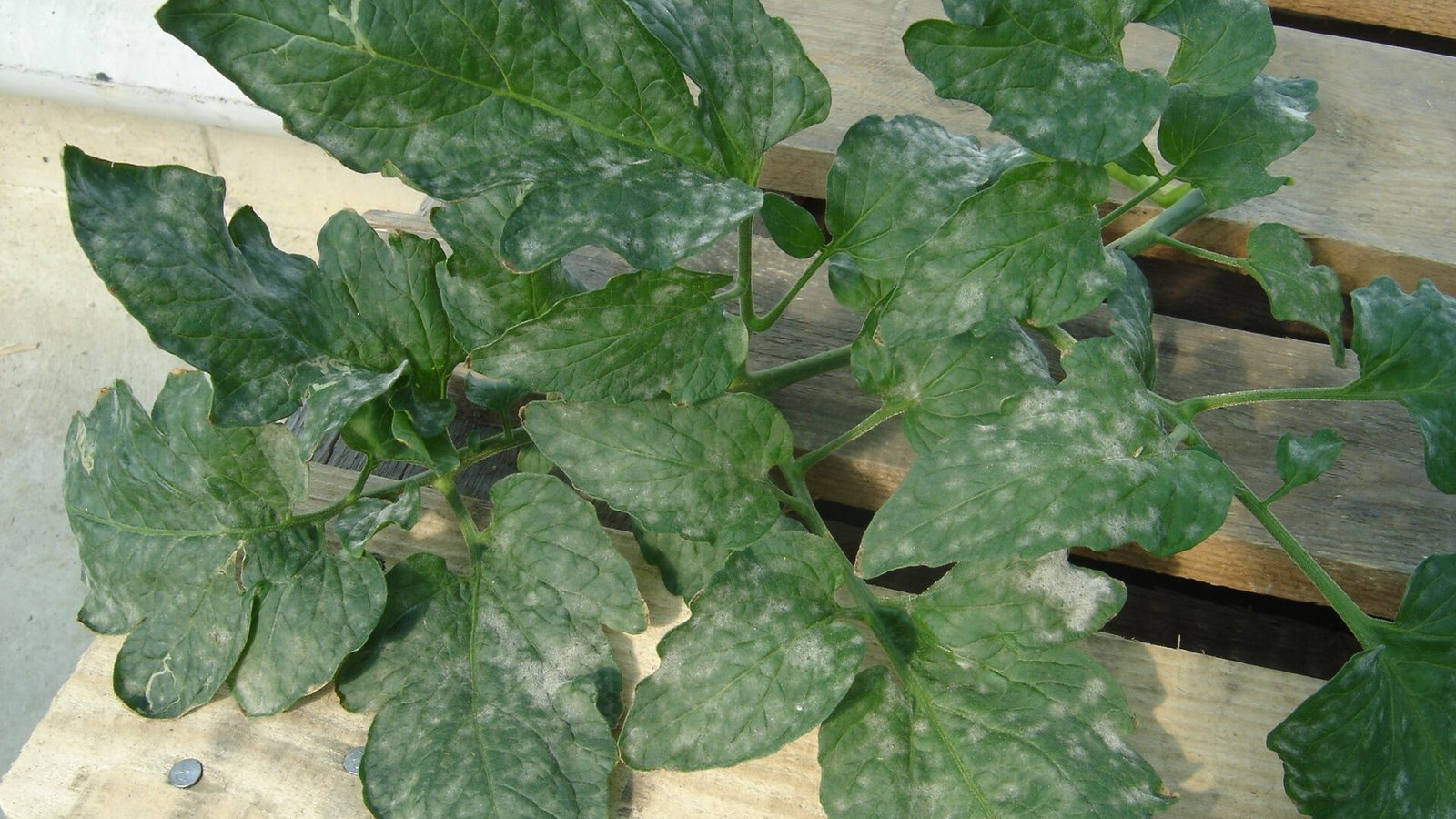
| Powdery mildew | White to grey powdery coating on leaves and stems | Humid, still air and low light | Remove bad leaves, add air flow and light |
| Grey mould (Botrytis) | Fuzzy grey-brown covering, brown wet patches, dusty grey spores | Cool, moist air and wet old tissue | Cut off affected parts, lower humidity |
| Root and stem rot | Wilting, yellowing, brown or black mushy roots, dark stem at the soil line | Overwatering, poor drainage | Check the roots, cut away rot, repot in fresh mix |
| Bacterial stem rot | Wilting, yellowing, soft mushy stem, sometimes a bad smell | Bacteria inside the plant | Often best to discard the plant |
Is it really a disease?
Check these look-alikes before you treat anything. They are common, harmless or not infectious, and they fool people daily.
- Blisters that turn to corky scabs on older leaves are usually edema, a watering disorder, not an infection. See edema on plant leaves.
- White fuzz on the soil is typically a harmless mould feeding on the mix; it shows the soil stays too wet. See white mould on houseplant soil. A hard white crust is mineral salts.
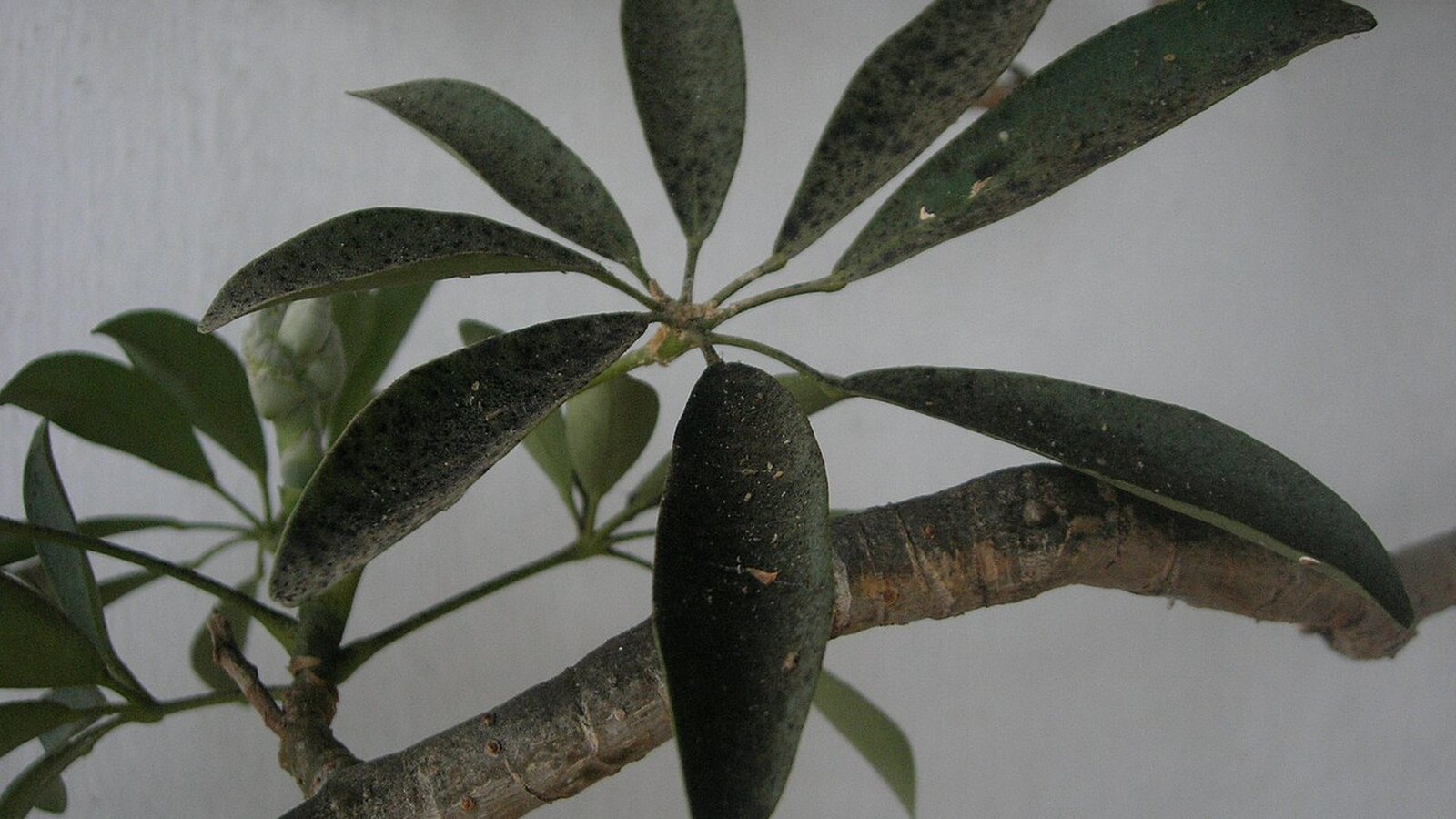
- Sticky leaves and black film. Look for insects first; sticky residue is usually insect honeydew.
- Brown, crisp tips or whole leaves often come from dry air, salts or watering, not disease.
How do you tell fungal from bacterial leaf spot?
Both give spots, and the treatment overlaps, so do not agonise. The clues differ slightly. Penn State Extension describes fungal leaf spot as oval brown or black spots that are not confined by the leaf veins, often with a yellow halo or purple band. Clemson Cooperative Extension adds small black fruiting bodies in dead tissue and spots that can merge until the leaf dies. Bacterial spots, by contrast, are described by Clemson as water-soaked and usually uniform in size, sometimes with a yellow halo or sticky ooze, and by UC IPM as oily or greasy, often easiest to see from the leaf underside.
What to do in both cases: remove the leaves as soon as spots appear, bin them (do not compost), stop wetting the foliage and water early in the day. For details on one common case, see fungal leaf spot on houseplants.
Powdery mildew and grey mould: the humidity pair
Both love still, humid air. Powdery mildew is a white to grey dusting that does not need wet leaves; UC IPM says it usually does not kill the plant but can cause leaf drop and looks unsightly, and that it is common on grape ivy, kalanchoe, begonias and pileas. Penn State names African violets, succulents and begonias. Grey mould (Botrytis) is fuzzier and wetter: grey-brown, dusty with spores, and it attacks old leaves and spent flowers first; the RHS notes it is common in bathrooms where air is too moist.
Fixes are the same for both: improve ventilation and spacing, give plants more light, water early in the day so surfaces dry quickly, and remove spent or infected parts. For the white-powder case in depth, see powdery mildew on plants.
Root and stem rot: the disease that kills
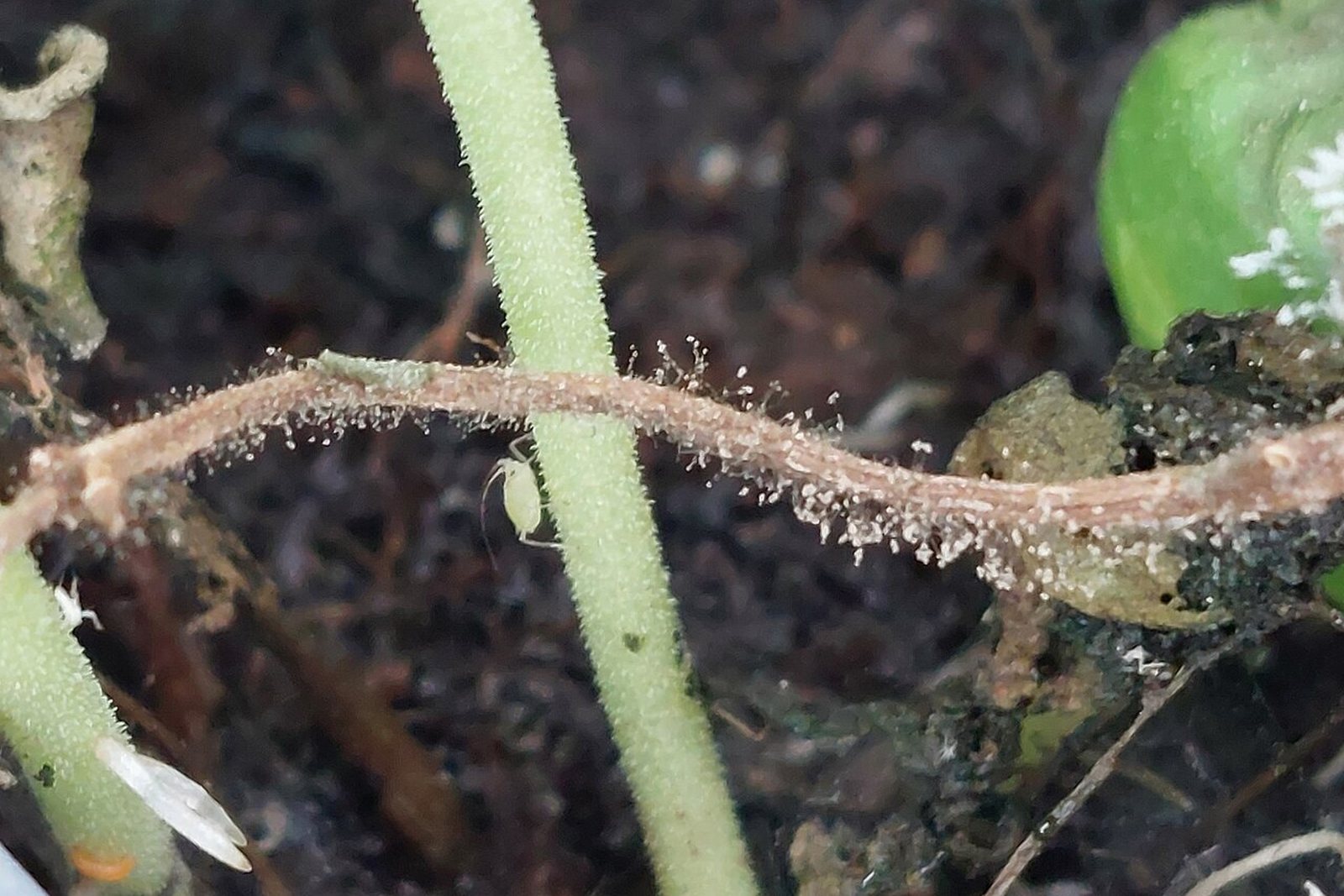
This is the one to take seriously, because it is out of sight. Above the soil you see wilting and yellowing, often while the soil is wet. Below, roots are brown to black and soft, where healthy roots are white. UC IPM explains that the causes are water moulds (Pythium and Phytophthora), and that plants often survive with a partly damaged root system.
- Tip the plant out of its pot and look at the roots.
- If only a few roots are affected, cut them out with clean tools and repot in fresh, sterile mix (Clemson).
- Use a clean pot with drainage holes and water only when needed.
- If most of the roots are mush, the plant may be beyond saving. Penn State advises discarding severely affected plants.
Our root rot rescue plan walks through it step by step. If the plant is a keeper, Dr. Flori in the Flori app can ask follow-up questions from a description or a photo, and the Plant Hospital keeps it under watch with a follow-up plan.
The five-step routine that works for nearly every disease
- Separate it. Move the plant away from others. New plants should be kept apart for about three weeks (Penn State); see how to quarantine new houseplants.
- Remove. Cut off mouldy, shrivelled, spotted or completely brown leaves and discard them.
- Disinfect your tools. UC IPM suggests 70% alcohol for pruners; Penn State suggests a 10% bleach solution or full-strength isopropyl alcohol. Wash your hands after handling infected plants.
- Fix the cause. Water the soil, not the leaves; water early; empty saucers; add air flow, space and light.
- Re-check weekly. New spots mean the cause is still there.
Do you need a fungicide?
Usually no. The RHS says improving ventilation, spacing and growing conditions helps avoid and control many fungal diseases, and that fungicides are not recommended on houseplants. Clemson lists some products, such as copper soap, sulfur and Bacillus amyloliquefaciens, as examples for after the diseased tissue has been removed, notes that its advice reflects South Carolina conditions, and says it is safest to spray houseplants outdoors in shade. For root rot it adds that fungicides probably cost more than a new plant. If you do use any product, follow the label exactly and keep it away from pets and children.
Which plants get which disease?
| Disease | Plants named in the sources |
|---|---|
| Fungal leaf spot | Palms, yucca, orchids, prayer plant, dumbcane (Penn State) |
| Powdery mildew | African violets, succulents, begonias, kalanchoe, pileas, grape ivy |
| Root rot | Orchids, cyclamen, succulents (Penn State) |
| Bacterial stem rot | Aglaonema, Dracaena, Kalanchoe, Syngonium, Dieffenbachia, Philodendron (UC IPM) |
Having a listed plant does not mean it will fall ill. It means to watch it for its signature symptom.
Frequently asked questions
How do I know if my houseplant has a fungal disease?
Look for spots with a yellow halo, a white powdery coat, a fuzzy grey covering or mushy brown roots. Each points to a different fungus, and the table in this guide matches symptom to disease.
Can a plant with root rot be saved?
Sometimes. If only a few roots are affected, cut them out and repot in fresh, sterile mix, as Clemson advises. Penn State advises discarding severely affected plants.
Do I need fungicide for houseplant diseases?
Usually not. The RHS says fungicides are not recommended for houseplants and that better ventilation, spacing and growing conditions help control many fungal diseases. Follow the label on any product.
Will diseased leaves spread disease to other plants?
They can: spores of leaf-spot and mildew fungi spread, so remove the leaves, bin them and keep the plant apart. Disinfect pruners with 70% alcohol between plants (UC IPM).
Is white fuzz on the soil a disease?
Usually not. It is typically a harmless mould feeding on the mix and a sign the soil stays too wet. Let it dry out more between waterings.
Match what you see on your plant to its likely cause: yellowing, brown tips, drooping, sticky leaves, spots or webbing. One chart, with what to check first.
Sources
Written and fact-checked by the Flori team. Every guide cites horticultural sources such as the RHS, university extension services and the ASPCA, and is updated when the advice changes. How we write our guides
General plant care information. Plants vary; when a plant is valuable or a problem spreads quickly, consult a local nursery or plant specialist.