How to Identify a Flower From a Photo
How to identify a flower from a photo: which flower parts to capture, how petal count and shape narrow it down, and how to check the name and toxicity.
 By Flori editorial team · Updated
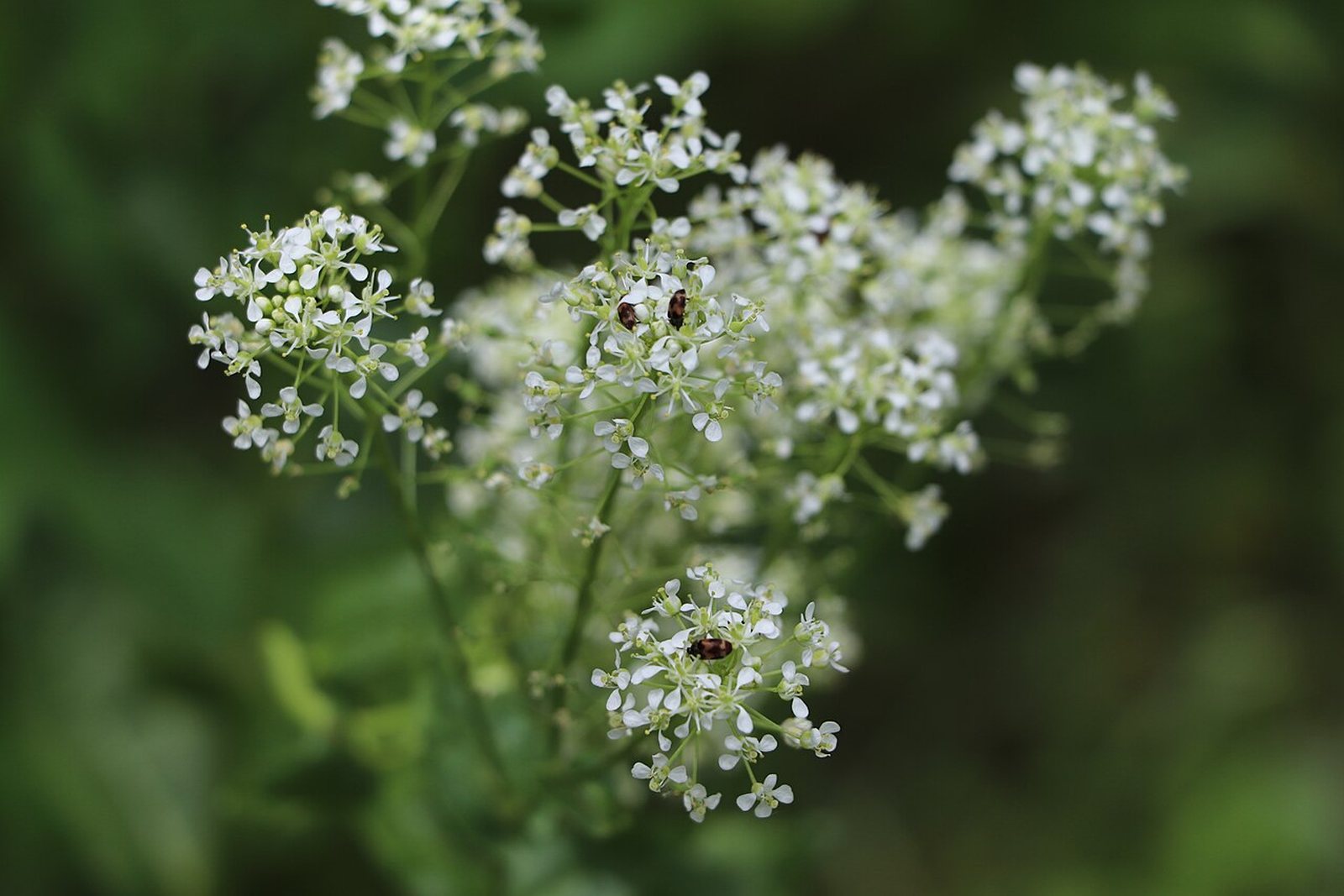
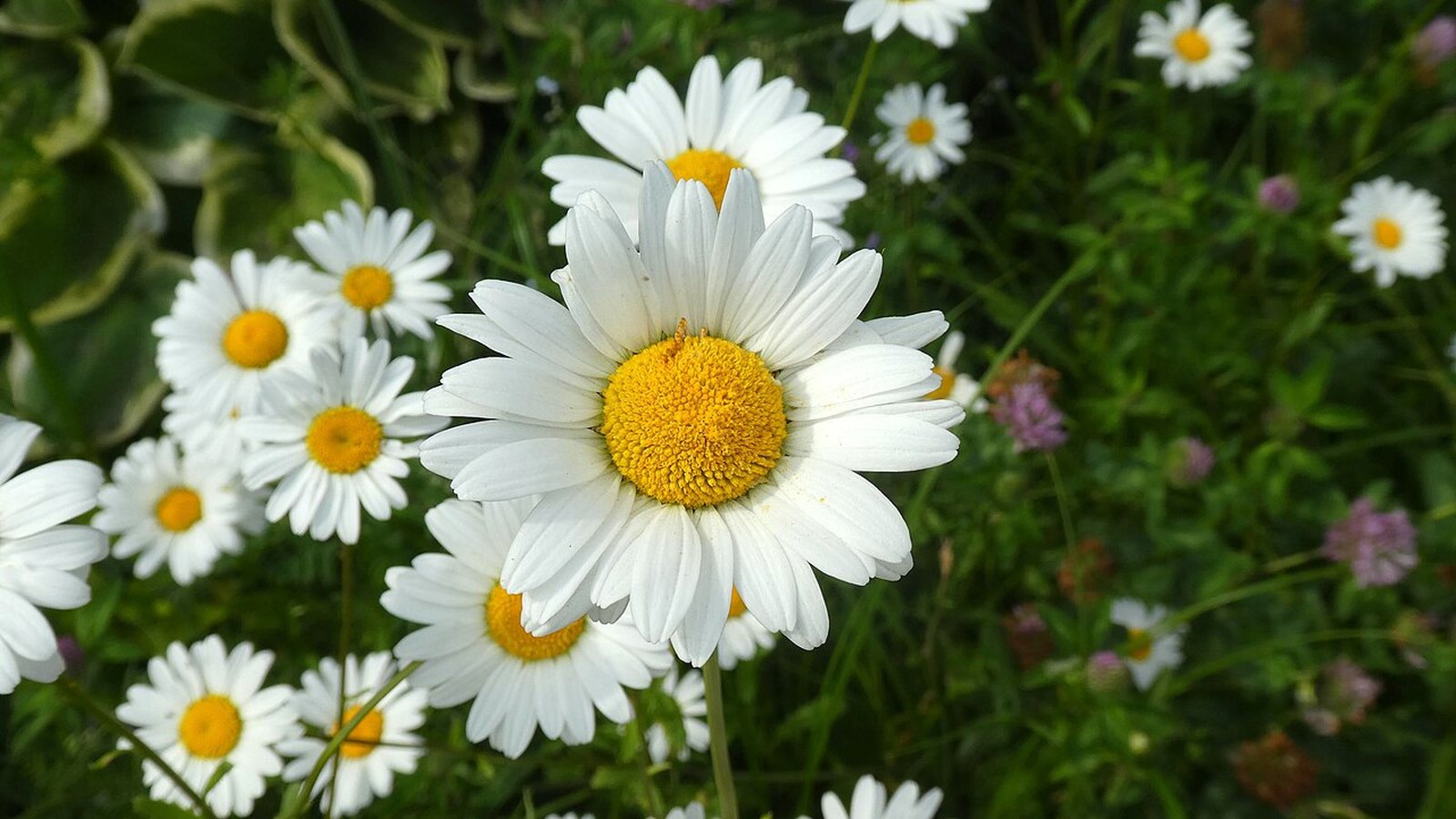 Photo: Екатерина Борисова · CC BY-SA 4.0
To identify a flower from a photo, shoot the open flower face-on and from the side, a bud or flower cluster, how the leaves sit on the stem and the whole plant, in daylight. Petal count, flower shape and the flower centre narrow the family. Then check the scientific name before trusting it.
Key takeaways
- A sharp face-on photo of an open flower, plus a side view, tells an app or a person far more than one leaf.
- Petal count and flower shape narrow the family: parts in threes point to monocots, fours and fives to dicots.
- Daisy-like flowers are a head of many tiny flowers, so photograph the centre and the green bracts under the head.
- Check the scientific name, then check pet toxicity by that name before you put a flower in a vase.
- Never eat a plant because an app named it; call a poison line if a child or pet has eaten one.
On this page8
How do you identify a flower from a photo?
You identify a flower from a photo by capturing the parts that vary between species: the open flower seen straight on and from the side, the way the flowers are grouped, the leaves on the stem and the whole plant. A flower in bloom is often the easiest thing to name, because its shape and parts separate close relatives much better than a leaf does. This guide is about flowers only: how to read a flower in the five seconds before you press the shutter, what to photograph, why daisy-like flowers fool apps and people, and how to check the answer. For plants in general (leaves, trees, houseplants), see our wider guide to identifying a plant from a photo.
What should you look at on a flower?
Montana State University Extension's plant identification basics, a good place to start, tells readers to always use multiple features of a plant rather than just one. For a flower, those features are:
- Petals: the showy next whorl, together called the corolla. Count them.
- Sepals: the outermost whorl that protects the bud, usually small and green but sometimes colourful. Together they are the calyx. If a flower has no separate sepals and petals, its single whorl is called tepals.
- Stamens and pistil: the male and female parts at the centre. Stamen number is often used in identification keys.
- Bracts: in the daisy family (Asteraceae), leaf- or scale-like structures around the base of the flower head.
- Flower stalk and clusters: flowers can be single, in a spike, a raceme, a flat-topped corymb or an umbrella-like umbel.
Many flower parts are small, so MSU notes a hand lens may be needed. In a photo, that means getting close and holding steady.
What does petal count tell you?
MSU Extension says that monocot flowers (the group that includes grasses) have floral parts in multiples of three, while dicot flowers have parts in multiples of four or five. That is a rule of thumb, not proof, and the guide itself stresses using several features together. The same guide gives these shape clues:
| What you see | What it suggests (MSU Extension) | Example named there |
|---|---|---|
| Parts in threes or sixes | Monocot | Grasses |
| Parts in fours or fives | Dicot | Beans, peas |
| Four petals in a cross | Mustard family (Brassicaceae) | Whitetop |
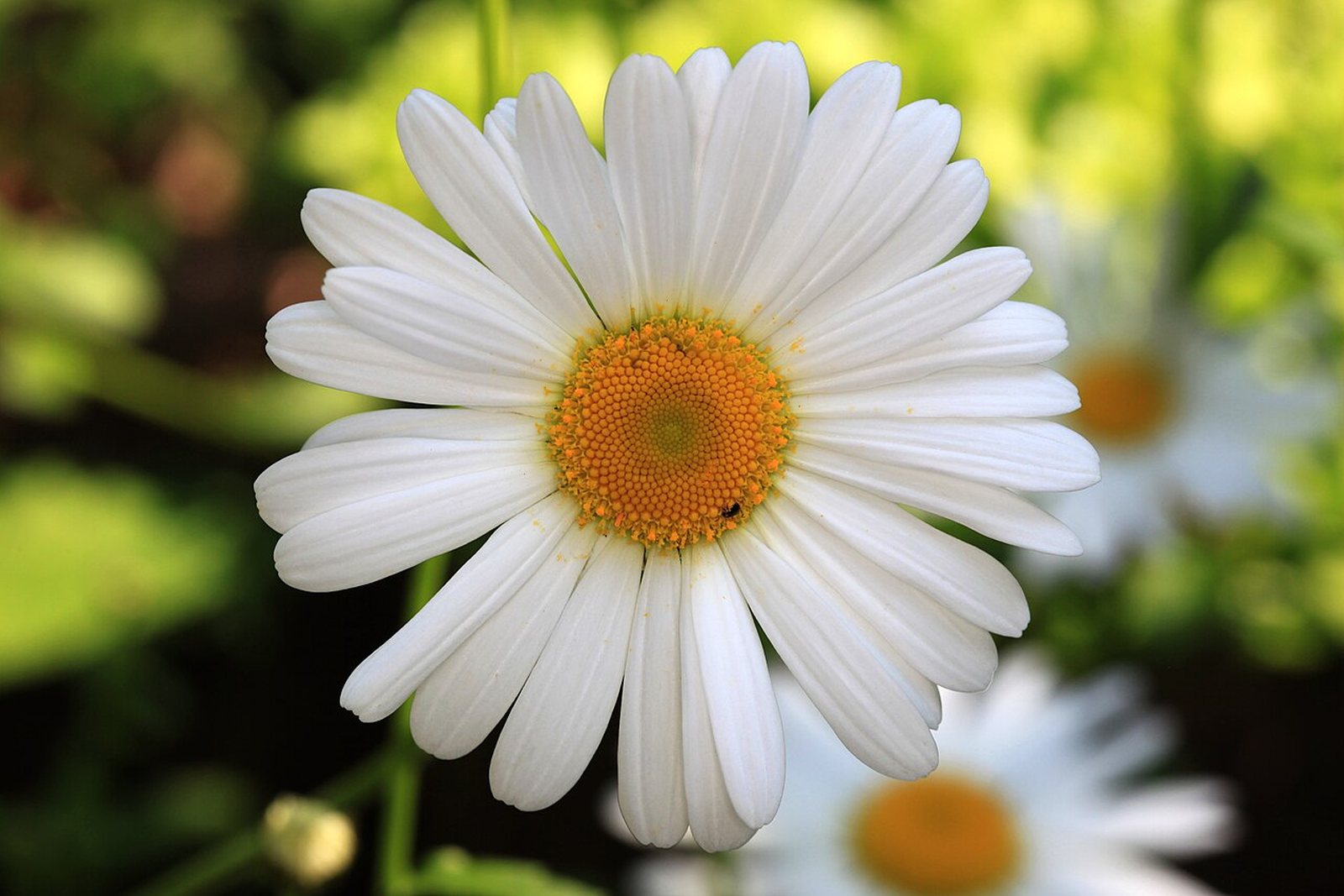
| Flowers in a head | Very likely daisy family (Asteraceae) | Oxeye daisy: yellow disc, white ray florets |
| No separate sepals and petals | Single whorl of tepals | See the guide |
Which photos should you take of a flower?
- Open flower, face-on. Fill the frame, tap to focus on the centre, and make sure the petals are not wilted.
- Same flower from the side, showing how petals join the stalk and what is behind them (sepals or bracts).
- A bud or the whole cluster, so the grouping is visible: single, spike, flat-topped, umbrella.
- The leaves on the stem. MSU says leaf arrangement is one of three types: alternate (one leaf per node), opposite (two per node) or whorled (three or more in a circle). Check the whole stem, because the arrangement can change along it.
- The whole plant with something for scale, in the place it grows.
Shoot in daylight, not with flash, and against a plain background if you can. Photograph the flower as you found it, not after picking: wilted cut flowers lose shape. Our guide on how accurate plant identifier apps are explains why more than one photo helps.
Why do daisy-like flowers fool apps and people?
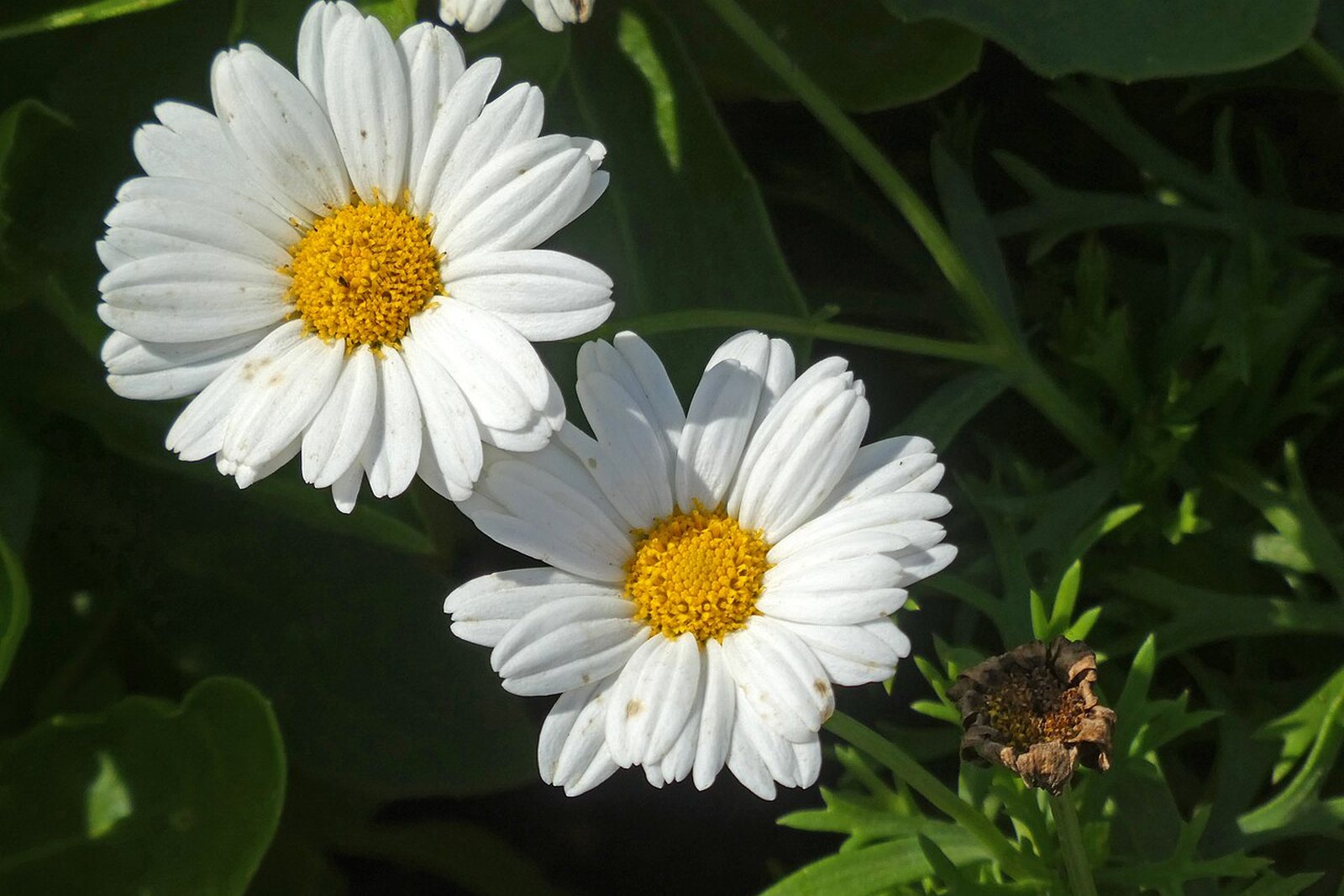
MSU describes why one "flower" can be a trick. In the daisy family, flowers in a head are made of ray florets, disc florets or both: the oxeye daisy has yellow disc florets in the centre and white ray florets around the edge. The bracts under the head matter: for knapweeds (Centaurea), they are among the most important identification traits. In practice, that means two daisy-like flowers can look the same from above and differ underneath. When you photograph a daisy-like flower, take the top, the centre in close-up and the underside of the head with its green bracts.
The same caution applies to unrelated look-alikes: a purple flower with a yellow centre is not a species. If you only have the top view, expect the app to give several possible names rather than one.
How do you check the name and toxicity?
- Look at the scientific name. Common names are shared by unrelated plants; the two-part Latin name points to one species.
- Compare with a reference. The NC State Extension Gardener Plant Toolbox holds 4,738 plants and can be searched by scientific or common name. Compare flower shape, size and leaves, not only colour.
- Check toxicity by name. The ASPCA tells readers to be sure to check the name of the plant to determine its toxicity, and notes individual plants may differ from the listing photos. Lilies (Lilium), for example, are listed as toxic to cats, with kidney failure the clinical sign; tulips and daffodils are toxic to dogs and cats, with the bulb the most toxic part. Roses are listed as non-toxic. Our list of plants toxic to cats goes further, and our guide to checking toxicity before you buy shows the routine.
- Use a regional guide for wild flowers. MSU recommends using its basics alongside a field guide or key.
How does Flori identify a flower?
In Flori, take or upload a photo of a plant and the app suggests a name and shows a care profile: light, watering, humidity, temperature and toxicity. If you already know a name, search the plant database instead. A flower in bloom is a good moment to scan, and if the plant is unwell, the Dr. Flori diagnosis chat is a separate step. Save the plant in your collection by location (indoor, balcony or garden) and set care reminders. The Free plan includes 2 identifications a month. For houseplants that bloom indoors, flowering houseplants shows which ones to look for.
When is a photo not enough?
- Never eat a plant because an app or a photo named it. Poison Control says to eat wild plants only if you know for certain what they are.
- If a child has eaten a flower, do not wait for a perfect name. Call a poison line now: US Poison Control 1-800-222-1222, NHS 111 in the UK or UZEM 114 in Türkiye. Poison Control notes that expert help depends on accurate plant identification, so take the plant or a photo.
- If a cat or dog has eaten a flower, call your vet or ASPCA Animal Poison Control at once; a consultation fee may apply.
- Mushrooms are not flowers, and photo identification of wild mushrooms has much stricter limits; read can an app identify mushrooms.
Frequently asked questions
What photo should I take to identify a flower?
An open flower face-on, the same flower from the side, a bud or the cluster, the leaves on the stem and the whole plant, in daylight. One blurry close-up is the weakest option.
Can petal count identify a flower?
It narrows it down. MSU Extension says monocot flowers have parts in multiples of three and dicots in fours or fives, but you still need other features.
Why does my app give different names for the same daisy-like flower?
Many daisy-family flowers look alike from above and differ in the centre and the bracts below the head. Photograph the top, a close-up of the centre and the underside.
How do I check if a flower is toxic to my cat?
Get the scientific name, then look it up on the ASPCA list. Lilies, for example, are listed as toxic to cats. If your pet ate it, call your vet or ASPCA Animal Poison Control.
Can I eat a flower once an app has identified it?
No. Poison Control says to eat wild plants only if you know for certain what they are. An app is a lead, not proof.
How to identify a plant from a photo: what to shoot for houseplants, flowers, trees and wild plants, how to frame it, and how to double-check the name.
Sources
Written and fact-checked by the Flori team. Every guide cites horticultural sources such as the RHS, university extension services and the ASPCA, and is updated when the advice changes. How we write our guides
General plant care information. Plants vary; when a plant is valuable or a problem spreads quickly, consult a local nursery or plant specialist.