Leaves Turning Black: Cold, Rot or Disease?
Black leaves on a houseplant come from cold, rot or disease. Match the pattern in our table to find the cause and the first fix before you cut anything.
 By Flori editorial team · Updated
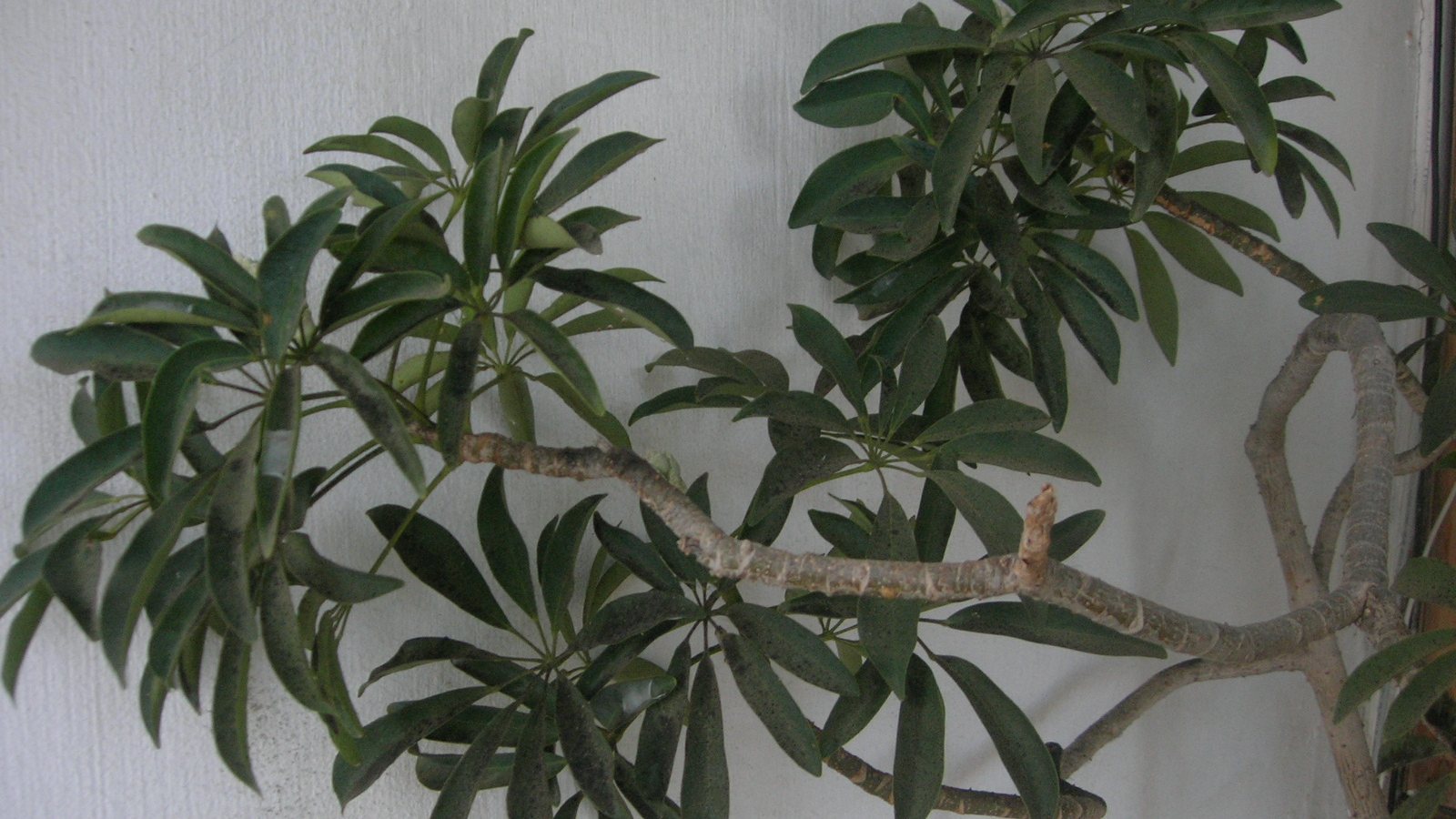 Photo: Amnon Shavit · CC BY-SA 3.0
Black leaves mean dead tissue, and the cause decides the fix. Black on the side facing glass after a cold night is cold damage. Soft black leaves or stem at the base with wet mix is rot. Round dark spots with a yellow edge are leaf spot, and a wipe-off film is sooty mould.
Key takeaways
- Where the black starts is the best clue: glass side means cold, base means rot, scattered spots mean disease.
- Black tissue is dead and will not turn green again; look for new growth to judge recovery.
- Check the roots if the mix has stayed wet: dark, soft roots mean rot.
- A black film that wipes off is sooty mould, so look for sap-sucking insects.
- Cut only fully black leaves, and spread the cutting over weeks if much of the plant is affected.
On this page8
Why are my plant's leaves turning black?
Black leaves on a houseplant always mean the tissue has died, but three very different things kill it: cold, rot and disease. They need opposite fixes, which is why guessing wrong costs plants. Cold damage needs warmth, rot needs less water, and a fungal spot needs dry leaves. The quickest way to tell them apart is to look at where the black starts and whether it is wet and soft or dry and papery. This guide is a pattern table first, then the detail for each cause. If your leaves are brown rather than black, start with why plant leaves turn brown.
Black leaves: what you see, the cause and the first fix
| What you see | Likely cause | First fix |
|---|---|---|
| Leaves blacken and droop within a day or two of a cold night, mostly on the side near glass or a door | Cold damage or a draught | Move to a stable, warmer spot; cut dead leaves later |
| Black, soft, mushy leaves or stems at the base; wet mix; old and new leaves yellowing | Overwatering, stem or root rot | Check the roots, let the mix dry, repot into fresh mix if roots are dark and soft |
| Round dark spots with a yellow edge, sometimes with tiny black dots in the middle | Fungal leaf spot | Remove spotted leaves, keep foliage dry, give air flow |
| Water-soaked dark spots that spread when leaves stay wet | Bacterial leaf spot | Remove affected leaves, water the soil only |
| Black film on the leaf surface, sticky underneath | Sooty mould on insect honeydew | Find and control the insects, then wipe the leaves |
Is it cold damage?
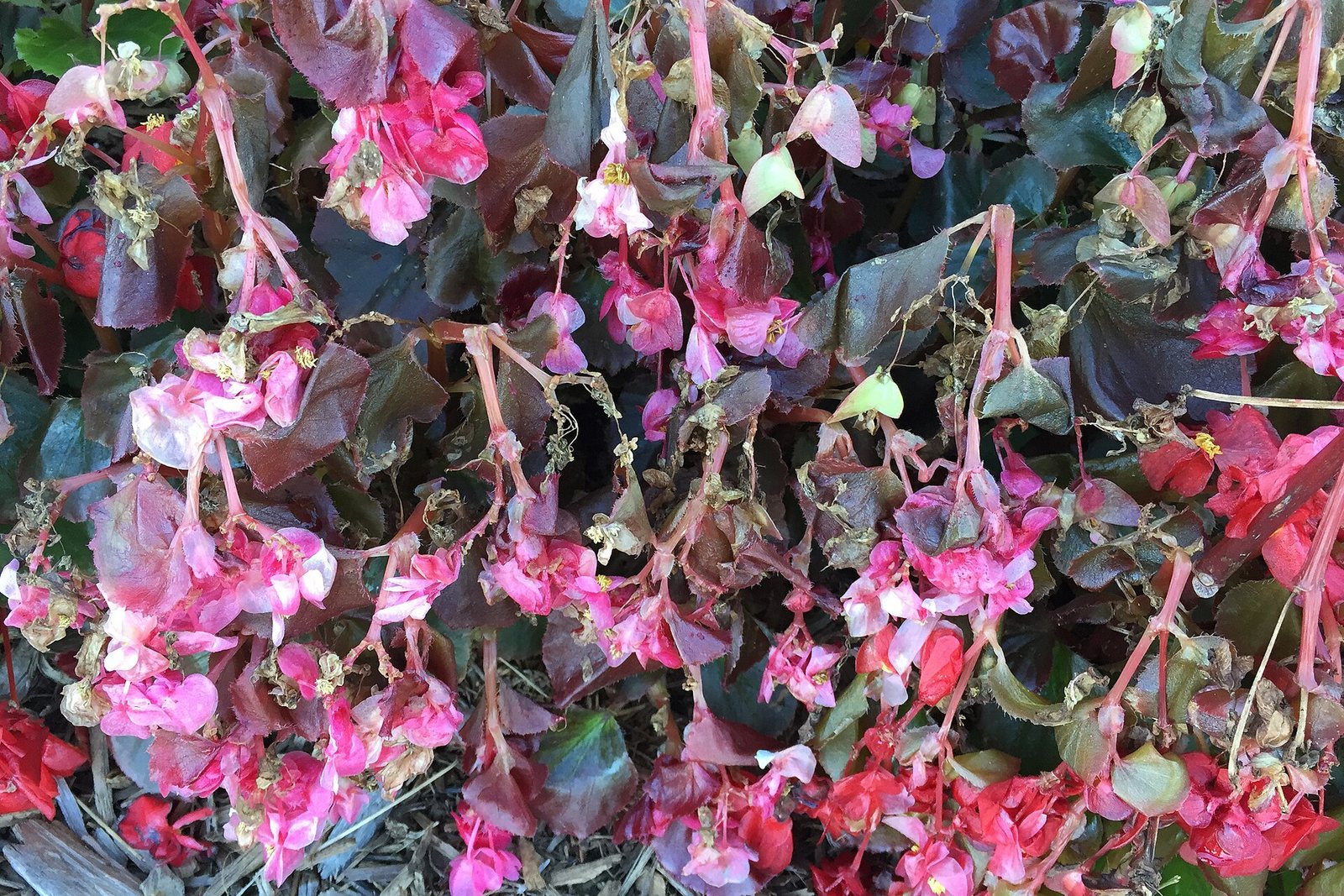
The Royal Horticultural Society (RHS) says that blackened leaves, drooping and collapse of the whole plant are symptoms of cold damage, and that it is common in unheated rooms such as porches over winter. The clues are timing and position. The damage appears after a cold night, an open window, a delivery to a cold doorstep or a trip in a cold car, and it is worst on the leaves closest to the glass or the draught. The affected leaves often look wet and dark at first, then dry and papery.
Clemson Extension notes that tropical houseplants are susceptible to chill injury at or below 10 °C (50 °F), which is well above frost, so a cold windowsill behind a curtain can do it. Our guide on how cold is too cold for houseplants lists the cold spots to check.
What to do: move the plant to a steady, warmer room away from glass, vents and doors, and do not fertilise it. Black leaves will not turn green again. Leave them for a week or two while you see how far the damage goes, because leaves that look doomed sometimes keep a living midrib, then cut off the ones that are fully black and soft. New growth from the centre or the base is the sign of recovery.
Is it rot from overwatering?
Roots that sit in wet mix run short of oxygen and die, and the rot then climbs. The RHS lists dark, mushy roots and stem rot among the signs of overwatering, along with old and new leaves yellowing and dropping together. Clemson Extension adds that roots affected by root rot are brown to black and may be soft, and that stem rot shows as a ring of brown or black tissue at or near soil level, with wilting.
Black from rot usually starts at the base: the lower leaves, or the stem at the soil line. The leaves are soft and may smell sour, and the mix stays wet for days. Because the plant cannot take up water, it can also wilt, which is why it is easy to mistake for thirst. Feel the mix before you water again.
- Lift the plant out of its pot and look at the roots. Firm and pale to tan roots are healthy; dark, soft or stringy roots are rotten.
- Tip away standing water and cut off soft, black roots with clean scissors.
- Repot into fresh, free-draining mix in a pot with a drainage hole, and water only when the top layer is dry.
- If a few roots are infected, Clemson says to cut them out and repot in sterile mix. If most roots are dark, soft and dead, it is usually better to take a healthy cutting and discard the rest.
Our healthy roots versus rotten roots guide shows what to look for, and the root rot rescue plan covers the full recovery.
Is it a leaf spot disease?
Fungal leaf spots are small brown to black spots with a yellow margin, sometimes in rings, with tiny black dots in the dead centre. Bacterial leaf spots look water-soaked and spread when leaves stay wet, and cool, wet conditions make them worse. Both start on single leaves rather than on a whole plant overnight. UC IPM says that fungicide treatment is generally not warranted for leaf spots and that most infections can be tolerated. So the useful steps are simple: remove spotted leaves, pick up fallen ones, water the soil rather than the foliage, and give the plant room so the leaves dry quickly. The details are in our guides to black spots on leaves and fungal leaf spot.
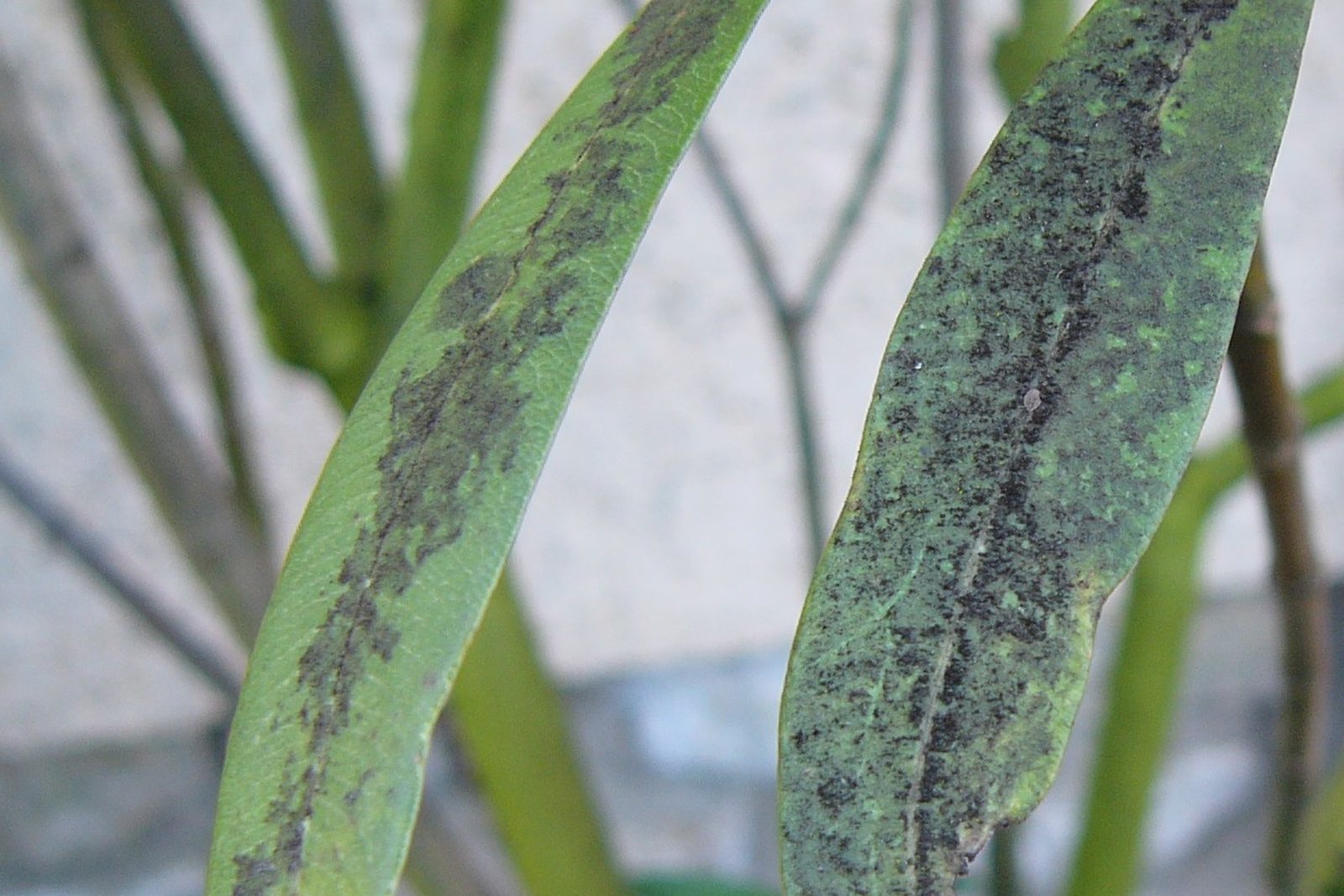
Is it sooty mould?
If the black coating wipes off with a damp cloth, it is probably sooty mould. Iowa State Extension explains that it is a group of fungi that grow on honeydew, the sugary waste of aphids, scale insects, mealybugs and similar insects. The fungus does not infect the plant, but the dark layer can block light. The fix targets the insects, not the mould: look under leaves and along stems, then follow the least-toxic steps for the pest you find and always follow the label on any product.
How to work out which one you have
- Look at the position. Black on the side facing glass points to cold; black at the base points to rot; scattered round spots point to disease; a wipe-off film points to sooty mould.
- Feel the mix. Wet for more than a week in a cool room is the rot warning.
- Check the roots if you are unsure. It takes two minutes.
- Check the date. Did the blackening follow a cold night, a heavy watering or a new plant?
If you cannot tell, the Flori app can help: describe the problem or send a photo to Dr. Flori, which asks follow-up questions, names the likely cause and gives a recovery plan. A diagnosis from a photo is a good starting point, not a certainty, so confirm with the roots and the mix.
Should you cut off black leaves?
Yes, once you know the cause. Black tissue is dead and will not recover. Cut leaves that are fully black, soft or mouldy back to the stem with clean scissors, and leave leaves that are only partly affected until the plant has settled. Removing too many leaves at once from a stressed plant slows recovery, so spread it over a few weeks if a lot of the plant is affected.
Frequently asked questions
Can a plant recover from black leaves?
The black leaves themselves cannot recover, but the plant can. If the stem and roots are firm and new growth appears, remove the dead leaves and keep care steady.
Why are the leaves turning black after winter watering?
Roots sitting in cool, wet mix lose oxygen and rot, and the rot can climb into the stem. Lift the plant out and check whether the roots are dark and soft.
Is black on leaves always a fungus?
No. Cold damage, rot and sooty mould on insect honeydew are all common, and only some are fungal diseases of the leaf. Look at the pattern before treating.
Should I use fungicide on black leaves?
Rarely. UC IPM says fungicide is generally not warranted for leaf spots. Fix watering, airflow and cold first, and follow the label on any product.
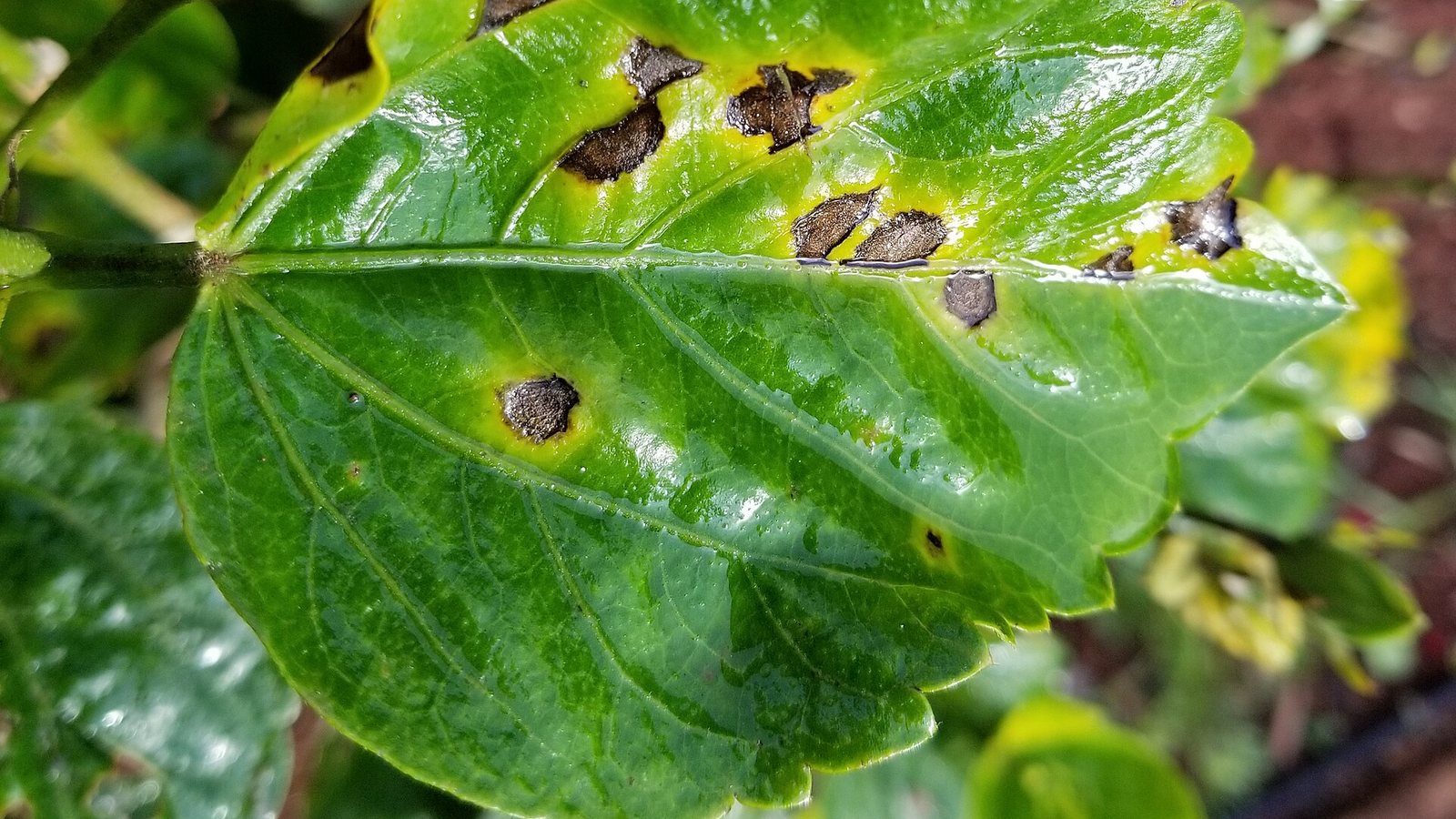
Black spots on leaves can be leaf spot disease, sooty mould, cold damage, root rot or rose black spot. Tell them apart and treat the right cause first.
Sources
Written and fact-checked by the Flori team. Every guide cites horticultural sources such as the RHS, university extension services and the ASPCA, and is updated when the advice changes. How we write our guides
General plant care information. Plants vary; when a plant is valuable or a problem spreads quickly, consult a local nursery or plant specialist.