Leaves Turning White: Mildew, Minerals, Mites or Sun
White on plant leaves can be powdery mildew, mineral crust, mealybugs, mites or sun scorch. Use the look-and-wipe test and a symptom table to find out.
 By Flori editorial team · Updated
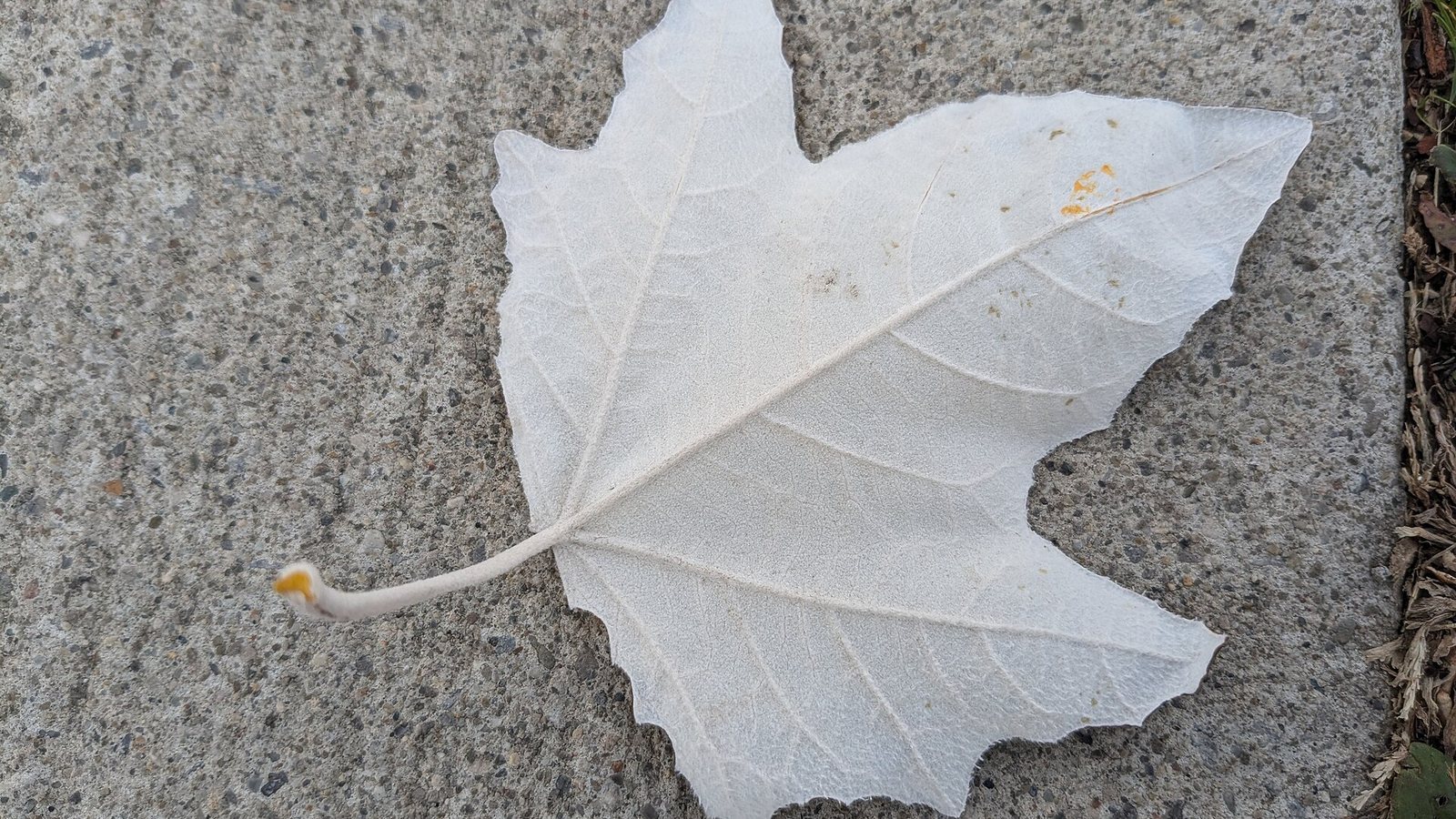 Photo: Hannah Clover · CC BY-SA 4.0
White on houseplant leaves is usually powdery mildew (a grey-white powder), mineral or salt deposits that wipe off, white pests such as mealybugs, mites or whitefly, or pale sun scorch. Wipe a patch with a damp cloth and check leaf undersides to tell them apart.
Key takeaways
- A powder that wipes off cleanly is often minerals or salts; powder on top of leaves that returns is more likely powdery mildew.
- Cotton-like fluff, white flecks, webbing or tiny flying insects mean mealybugs, spider mites or whitefly.
- Salt crust on soil or pot rims points to over-fertilising; flush with clear water.
- Pale patches on the window side of a plant are sun scorch.
- Use the least toxic control first and follow the label on any product.
On this page8
Why are my plant's leaves turning white?
White on a leaf can be a living thing (fungus or insects), a dried-on deposit (minerals or fertiliser salt) or the leaf itself bleaching in the sun. The quickest way to tell is to look at how it is shaped and whether you can wipe it off. This guide sorts the causes into four groups, mildew, minerals, mites and other pests, and sun or cold, and gives a first step for each. It does not cover white mould on soil; that has its own guide, white mould on houseplant soil. It draws on Clemson Cooperative Extension, Iowa State Extension, Colorado State Extension and the Royal Horticultural Society (RHS).
What does each kind of white look like?
| What you see | Likely cause | First step |
|---|---|---|
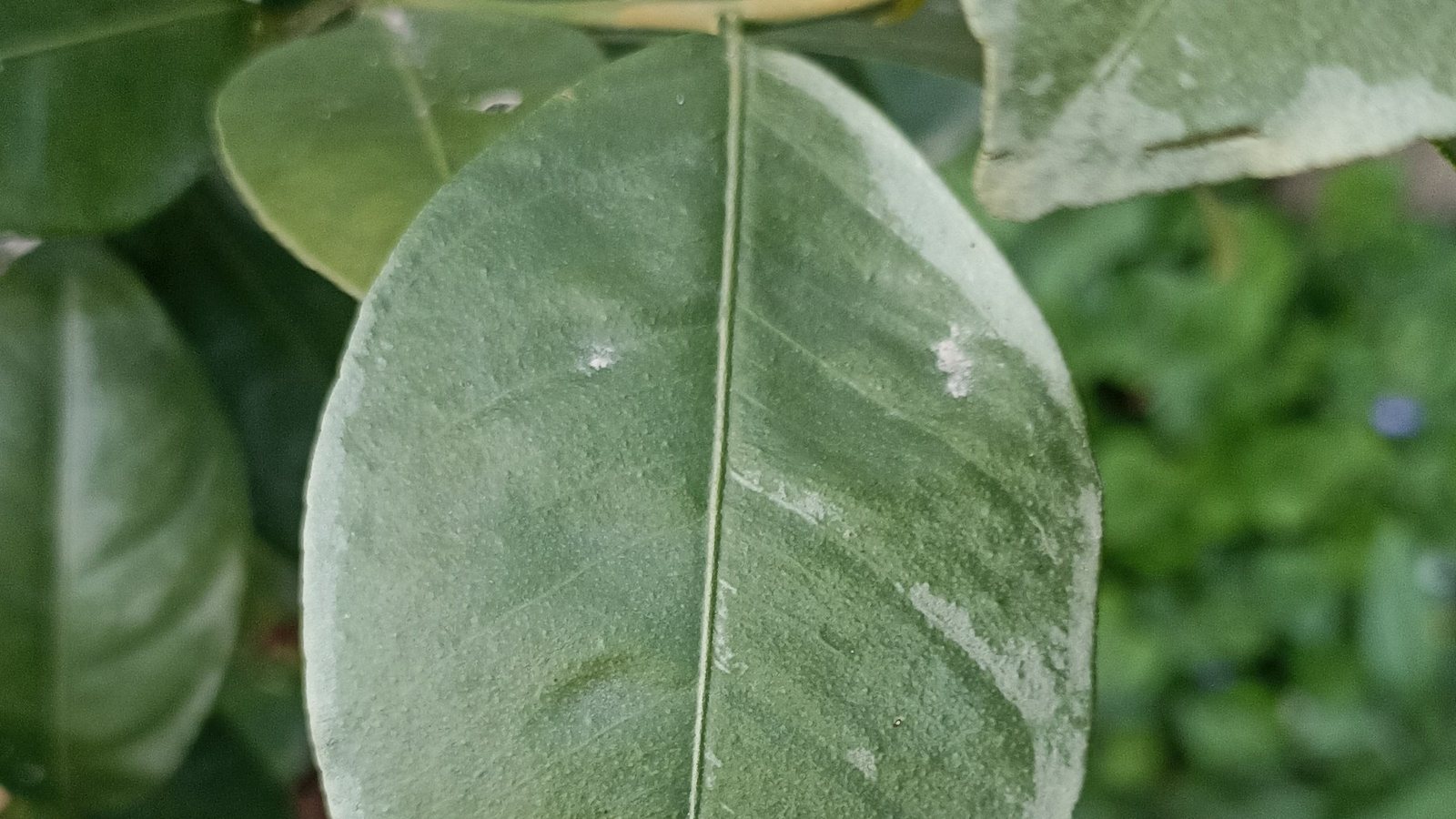
| Grey-white powdery film on the top of leaves, often on lower leaves first | Powdery mildew (fungus) | Remove affected leaves, isolate the plant, improve airflow, water at the base |
| White crust on soil, pot rim or saucer; leaf tips browning | Salts from fertiliser or hard water | Flush with clear water, feed at half strength |
| Chalky film or dried droplet spots on leaves that wipe off | Water residue from misting or splashes | Wipe with a damp cloth; use softer water for misting |
| White cottony fluff in leaf joints and under leaves, sticky leaves | Mealybugs | Dab with alcohol, wipe, isolate |
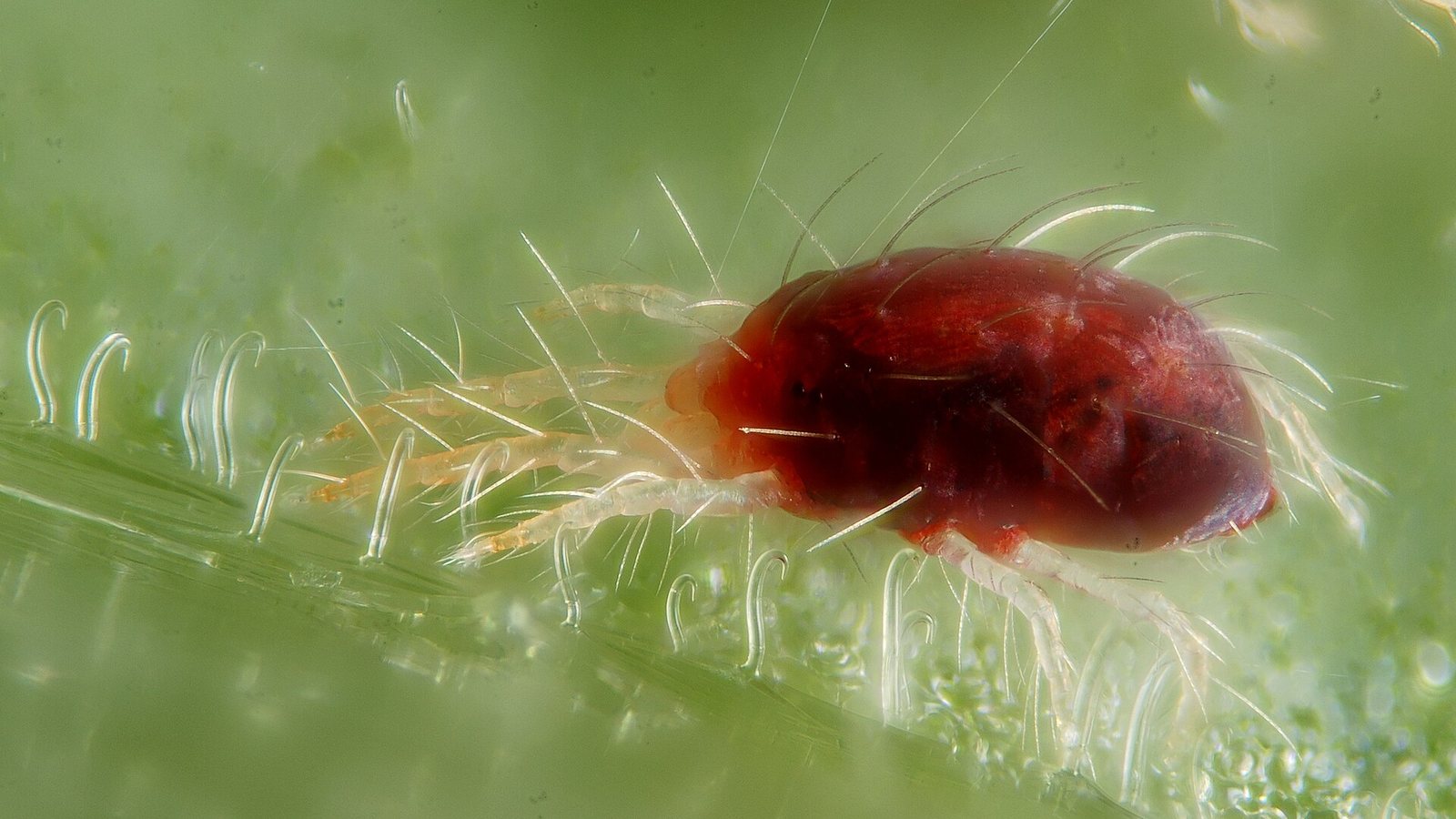
| Tiny white flecks on leaf undersides, grey or bronzed leaves, fine webbing | Spider mites | Rinse with water, repeat for weeks, raise humidity |
| Tiny white winged insects flying up when you touch the plant | Whitefly | Yellow sticky traps, vacuum, wash leaves |
| Pale or white patches on the side facing the window | Sun scorch | Move to a shadier spot or filter the light |
| White or straw-coloured spots after watering or spraying | Cold water splashes or aerosol products | Use room-temperature water; avoid leaf shine and sprays |
Is it powdery mildew?
Clemson describes powdery mildew as a "grayish-white, powdery mat" on the upper leaf surface, often starting on the lower leaves. Leaves may curl, twist or discolour first, and later yellow or dry out. Humidity helps the spores form, and the fungus does not need wet leaves to infect, so it can show up on a plant that you never mist. It is rarely fatal but can weaken a plant. Clemson's advice is to remove the few affected leaves and water at the base rather than over the leaves. If you decide to use a fungicide, apply it as soon as symptoms appear and follow the label exactly. Our guide to powdery mildew on plants has the full routine.
Could it be salt or minerals?
Iowa State Extension says salt build-up from over-fertilising shows up "as a crust on the soil surface, in saucers, or on the outside of porous clay containers". The remedies are watering thoroughly with clear water to flush the salts, feeding at half or quarter strength, and repotting in fresh soil if the build-up is severe. The RHS adds that hard tap water can cause nutrient problems and recommends rainwater instead. Where only the leaves are white, think of water that dried on them: a chalky film or ring on leaves that were misted or splashed. Test it by wiping with a damp cloth; a mineral film comes off, while mildew and pest damage may smear or stay. Our guide on how to clean plant leaves shows the gentle way.
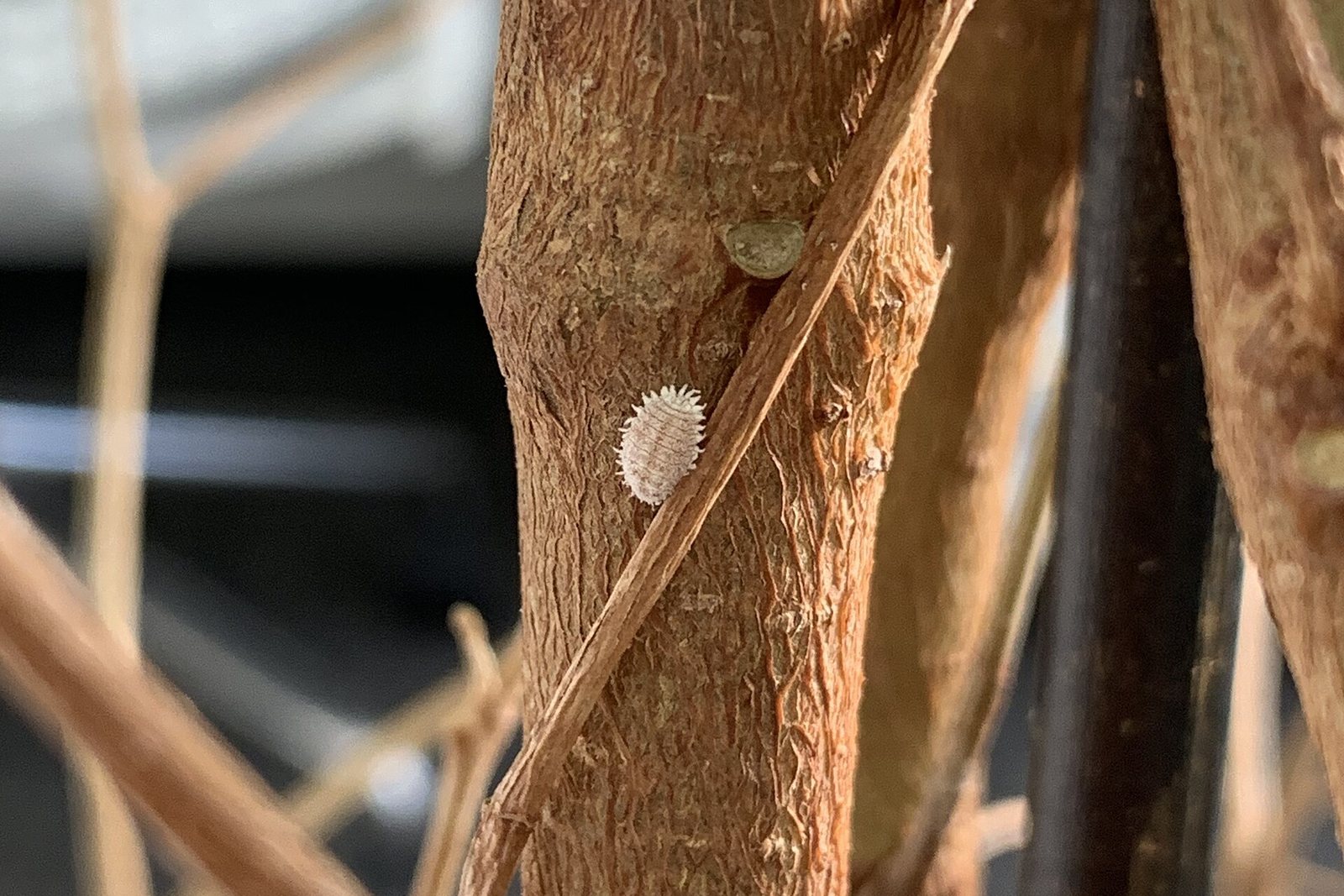
Are white bugs the problem?
Several houseplant pests look white. Colorado State Extension describes mealybugs as soft-bodied insects with cottony masses on stems and leaves, often leaving sticky honeydew; spider mites as tiny white flecks on leaf undersides near the veins, with leaves turning grey or bronzed and heavy infestations producing webbing; and whiteflies as small gnat-like adults covered in fine white wax that fly up when disturbed, with flat translucent nymphs on the undersides. Read the pests apart with mealybugs and spider mites on houseplants.
Least-toxic controls come first. Colorado State suggests washing plants with a strong jet of water to dislodge mites, repeating over several weeks, handpicking mealybugs, swabbing them with alcohol diluted to 25 to 50 percent (test a small area first because alcohol can burn leaves), and using yellow sticky traps for adult whiteflies. Insecticidal soap works only on contact and can injure some plants, so test first. Use only products labelled for houseplants, follow the label exactly and quarantine new plants for at least three weeks. If you cannot tell which pest you have, Flori's pest analysis tools and Dr. Flori can work from a photo and ask follow-up questions.
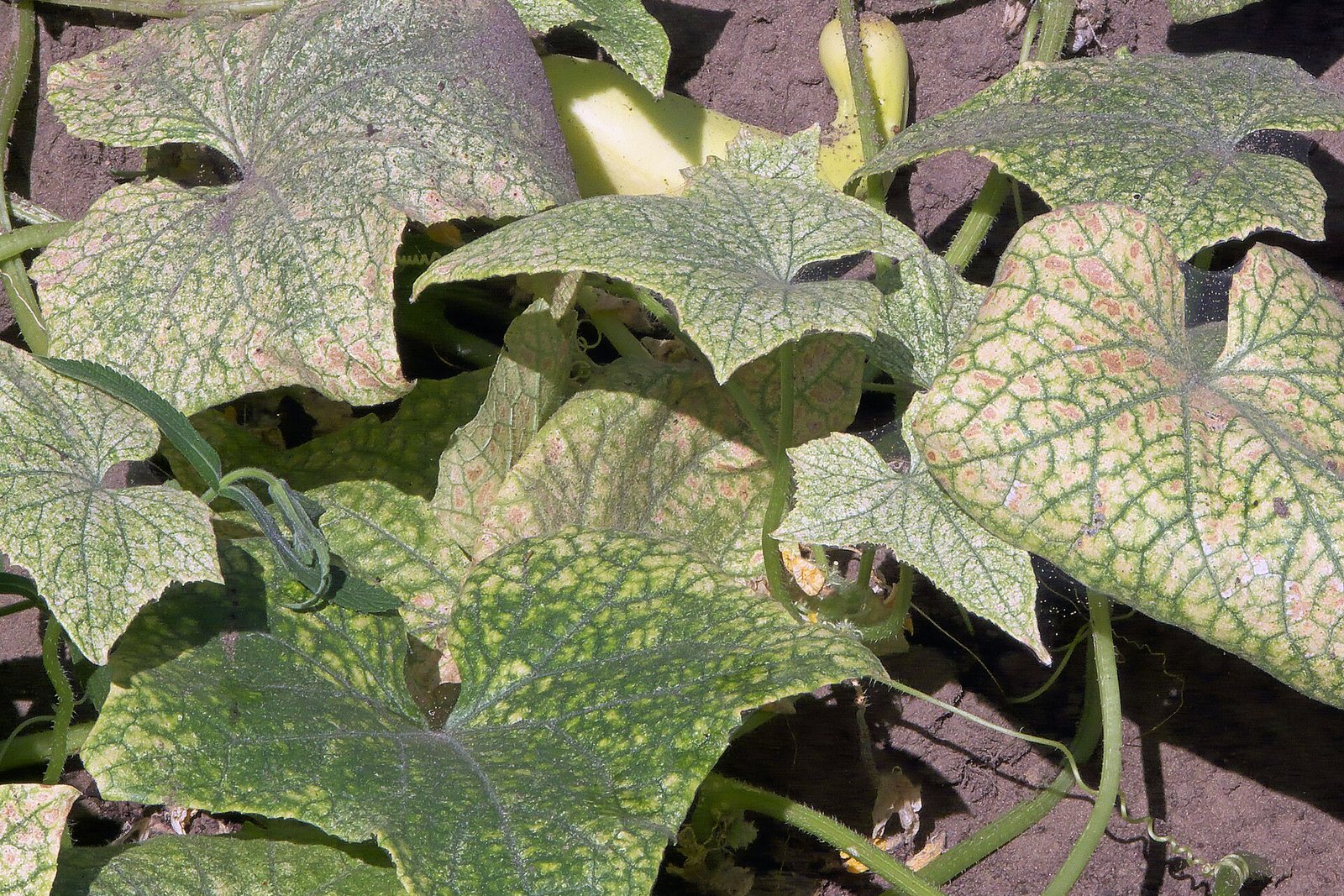
Is it sun or cold?
The RHS says too much midday sun can scorch leaves and that pale spots form when plants get too much sun; the fix is to move the plant to a shadier spot. Bleached patches usually sit on the side facing the glass and are often on the top leaves, and they do not spread. White or straw-coloured spots can also come from cold water splashes or from aerosol products, so let water reach room temperature and avoid leaf shine and insecticide sprays. See leaf sunburn on houseplants for how to tell sun damage from disease.
What should you do first?
- Wipe a white patch with a damp cloth. If it comes off cleanly, it was a deposit.
- Look under the leaves and in the leaf joints for insects, flecks or webbing, with a magnifier if you have one.
- Separate the plant from others for three weeks if you see powder, fluff or insects.
- Check the soil surface and pot rim for crust.
- Look at where the plant stands: direct sun on the white side points to scorch.
How do you keep leaves from turning white again?
Most of the prevention is the same habits that keep plants healthy anyway. Clemson recommends spacing plants well, watering at the base rather than overhead and avoiding excess nitrogen, which promotes soft new growth that mildew likes. Iowa State's advice on salts is to feed at half or quarter strength and flush the pot with clear water from time to time. The RHS suggests letting water reach room temperature before use, and Colorado State suggests quarantining new plants for at least three weeks and inspecting them before they join the rest. A care reminder for feeding and for a weekly leaf check keeps these habits from slipping.
Frequently asked questions
Why do my plant leaves look dusty and white?
Usually powdery mildew, which Clemson describes as a grey-white powdery mat on the upper leaf surface, or dried mineral residue from water. Wipe a patch to see which.
Is white powder on leaves dangerous to the plant?
Powdery mildew is rarely fatal but can weaken a plant. Remove affected leaves, improve airflow and water at the base. Follow the label on any fungicide.
How do I remove white crust from soil?
Iowa State Extension advises watering thoroughly with clear water to flush salts, feeding at half or quarter strength and repotting in fresh soil if the build-up is severe.
Can sun turn leaves white?
Yes. The RHS says too much sun can scorch leaves and cause pale spots; move the plant to a shadier spot.
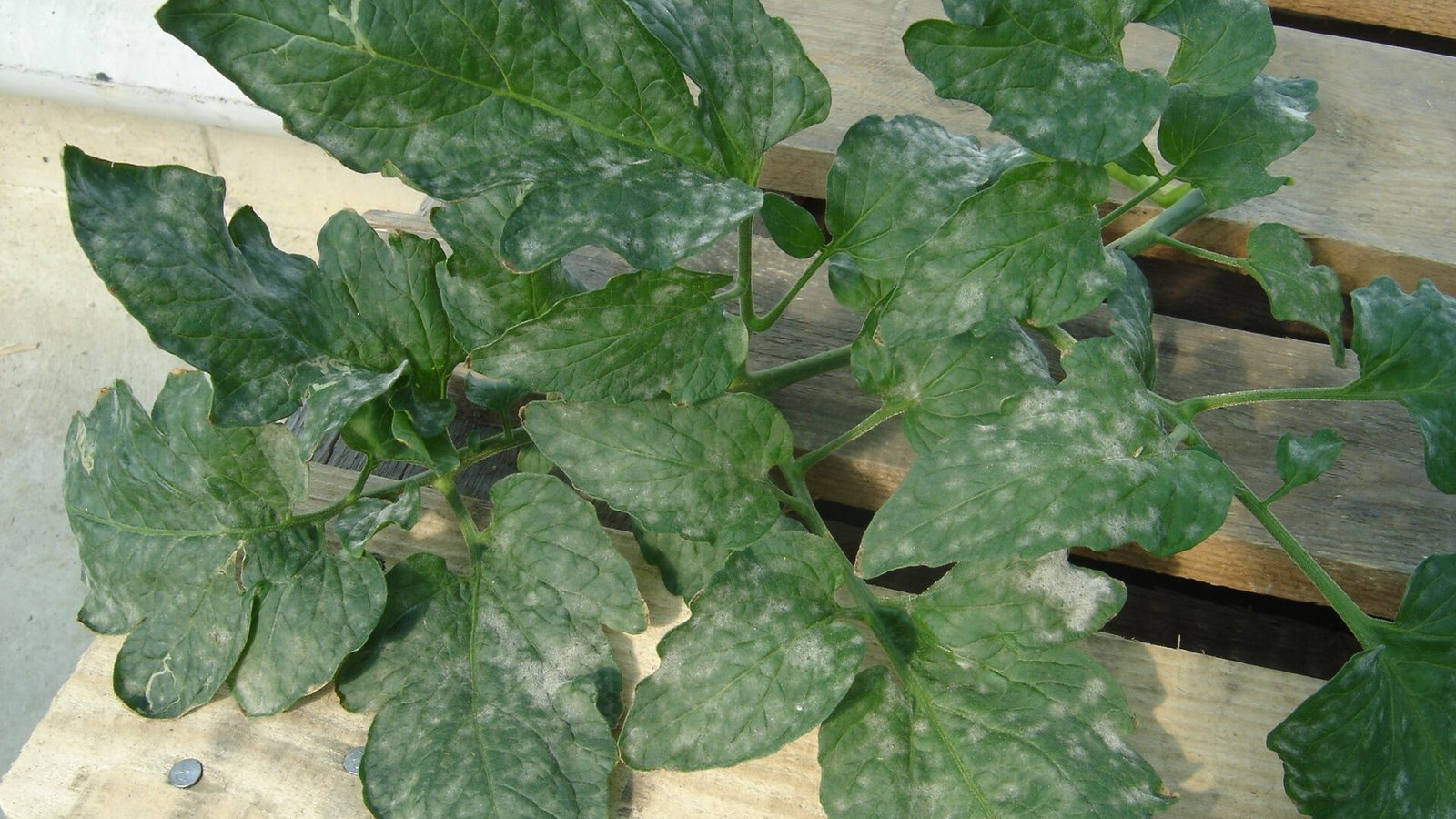
How to spot powdery mildew on houseplants and garden plants, what causes it (not wet leaves), and how to treat it, starting with the least-toxic steps.
Sources
Written and fact-checked by the Flori team. Every guide cites horticultural sources such as the RHS, university extension services and the ASPCA, and is updated when the advice changes. How we write our guides
General plant care information. Plants vary; when a plant is valuable or a problem spreads quickly, consult a local nursery or plant specialist.