How to Clean Plant Leaves (and Why It Matters)
Dust on leaves cuts the light a plant can use. How to clean large, small and fuzzy leaves, why to skip leaf shine, and how often to do it.
 By Flori editorial team · Updated
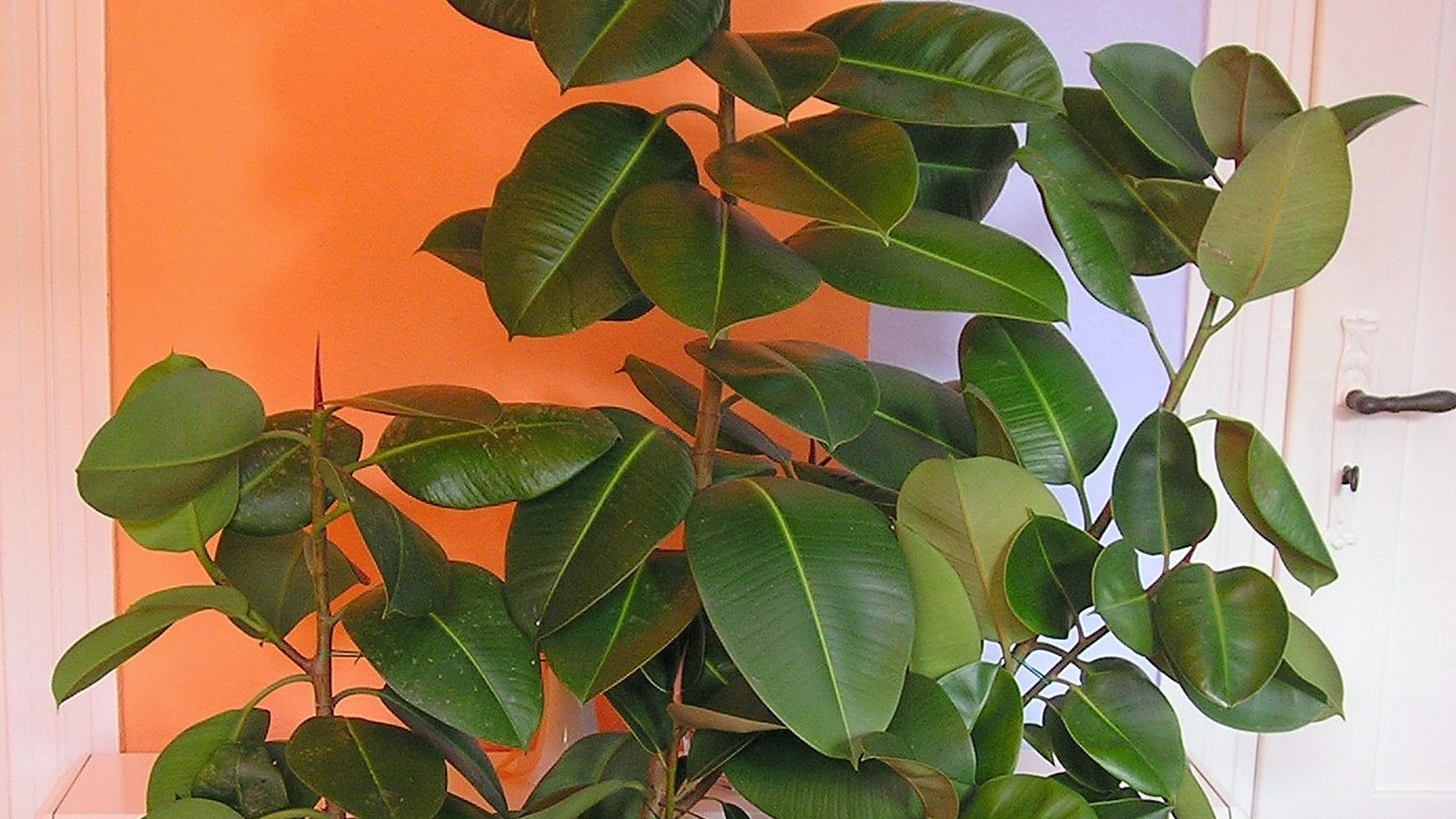
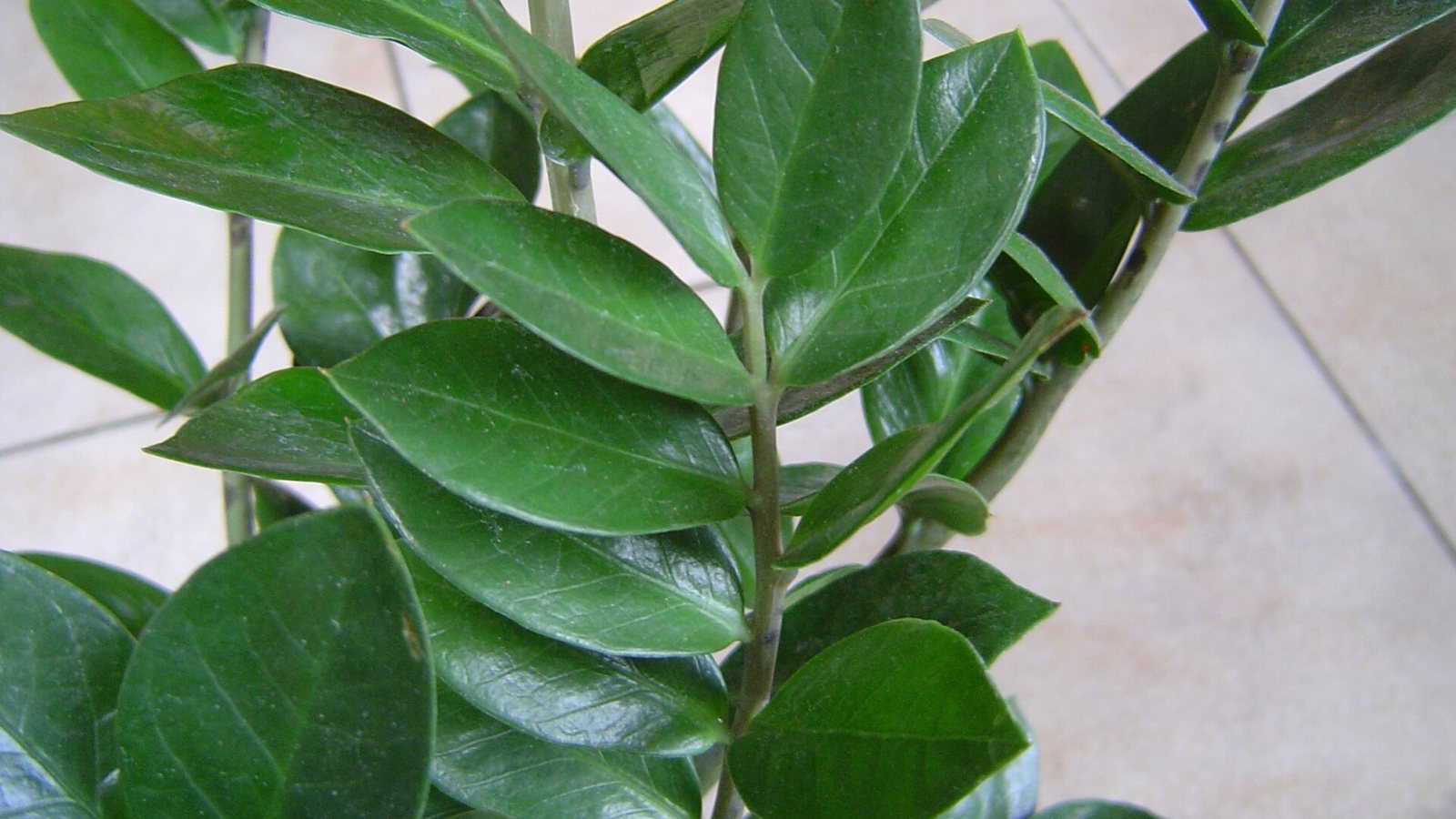 Photo: User:WeFt · CC BY-SA 3.0
Wipe large, smooth leaves with a soft cloth dampened with room-temperature water, supporting each leaf from below, and dry off any droplets. Rinse small-leaved plants under a lukewarm shower and dust fuzzy leaves with a soft dry brush. Skip leaf shine: it can clog leaf pores and trap more dust. Clean whenever dust shows.
Key takeaways
- Dust that builds up indoors reduces the light a leaf can use, especially in winter.
- Wipe big leaves with a damp soft cloth, shower small-leaved plants, and brush fuzzy leaves dry.
- Use plain room-temperature water and do not leave droplets standing on the leaves.
- Skip leaf shine, milk, oil and household cleaners; they leave residue and can clog pores.
- Every cleaning is a pest check: look under leaves for webbing, sticky patches and cottony tufts.
On this page6
Why should you clean houseplant leaves?
Cleaning plant leaves is not just about looks. Indoors there is no rain to rinse foliage, so dust settles on it week after week. Clemson Extension explains that dust and dirt that build up over autumn and winter can reduce a plant's ability to make food from light, which can lead to a general decline. In a home where light is already the limiting factor, especially in winter, a grey film on the leaves is light the plant never gets. Cleaning is also the best pest check you will ever do, because it puts your eyes on every leaf, top and bottom. This guide covers how to clean each type of leaf, what to use and what to skip (including the leaf shine debate), and how to turn a cleaning session into an early warning for pests.
How do you know a plant needs cleaning?
- Leaves look matt or grey instead of glossy.
- A fingertip run along a leaf leaves a clean line.
- Dark leaves show a visible film when the light hits them sideways.
- The plant sits near a kitchen, an open window onto a busy street, or a heater that moves dusty air.
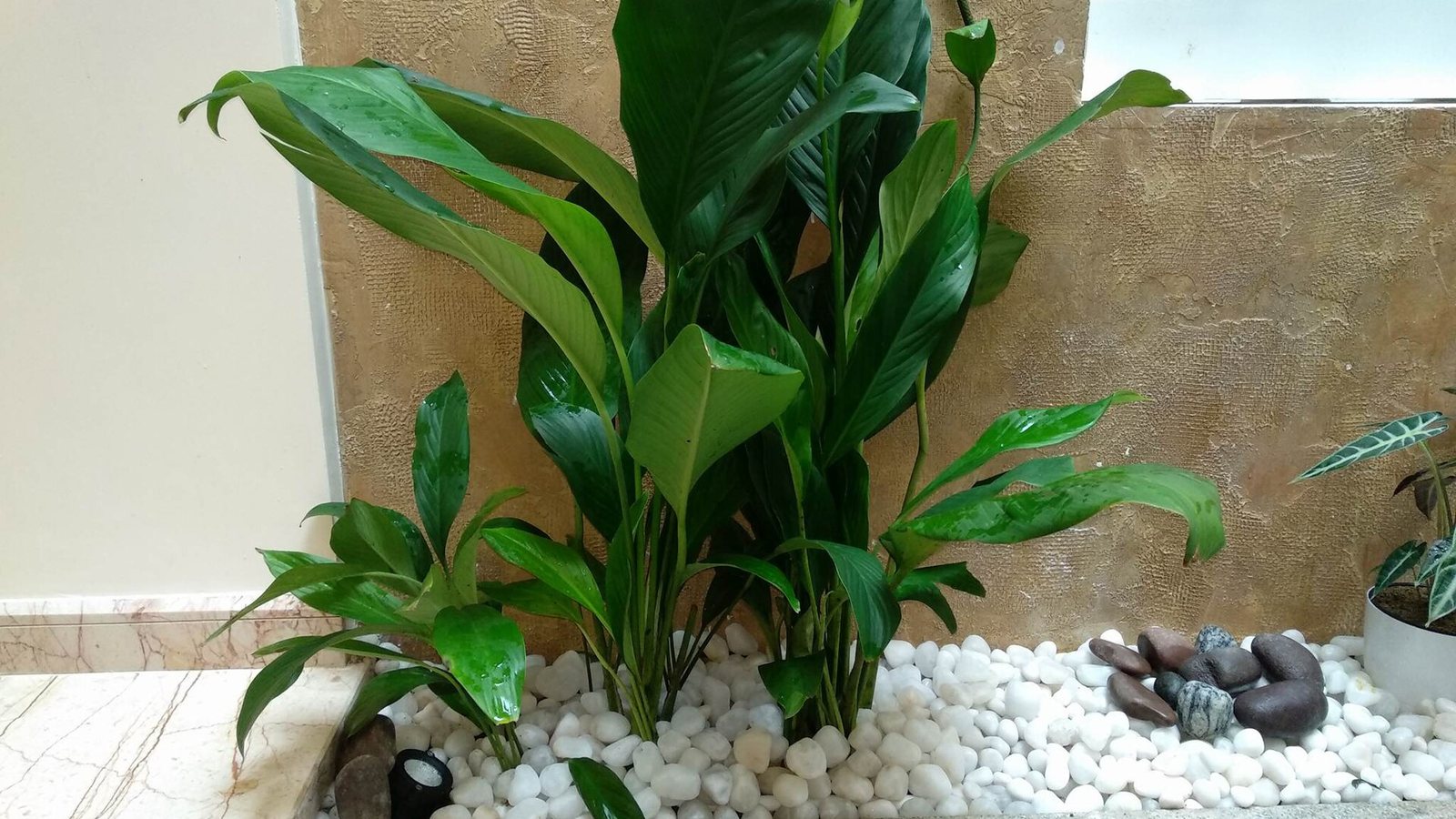
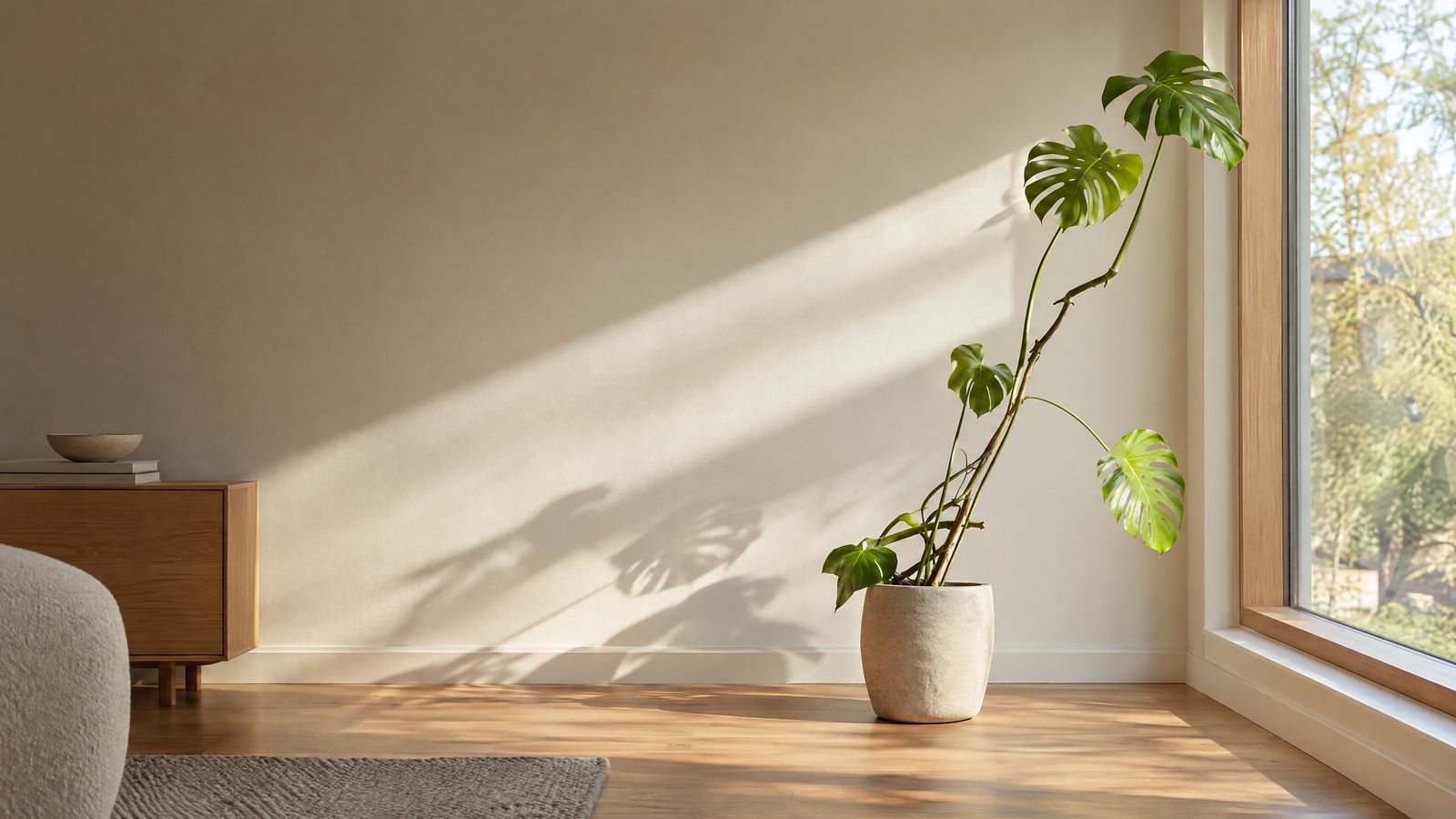
Big, flat, glossy leaves show dust first and collect the most of it: monstera, rubber plant, fiddle leaf fig, peace lily and other broad-leaved plants. Small-leaved and fuzzy plants collect dust too, but you clean them differently.
How to clean plant leaves: the method for each leaf type
| Leaf type | Examples | Best method | Avoid |
|---|---|---|---|
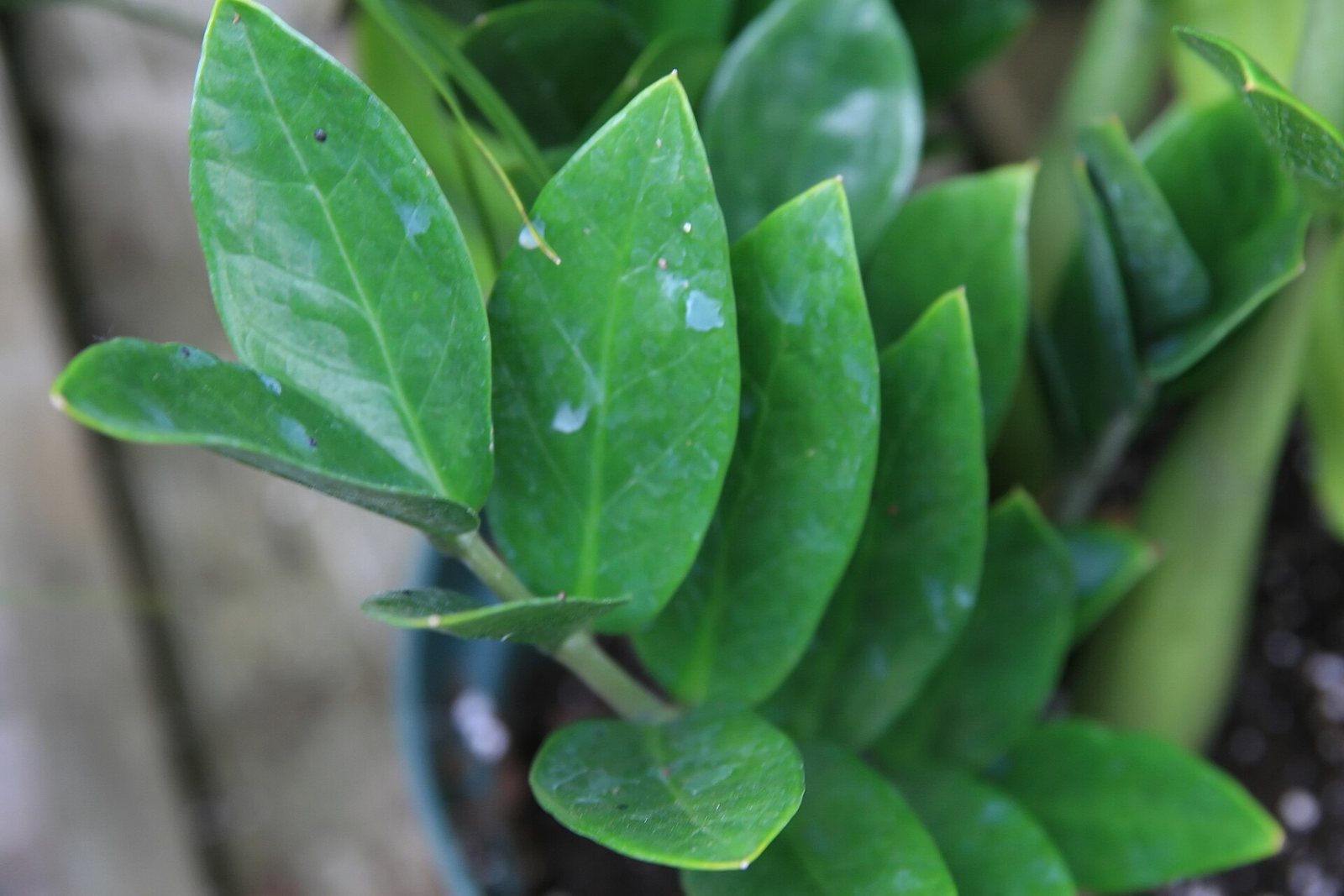
| Large, smooth leaves | Monstera, rubber plant, fiddle leaf fig, peace lily | Damp soft cloth, one leaf at a time, hand supporting from below | Rubbing hard, polish, oily products |
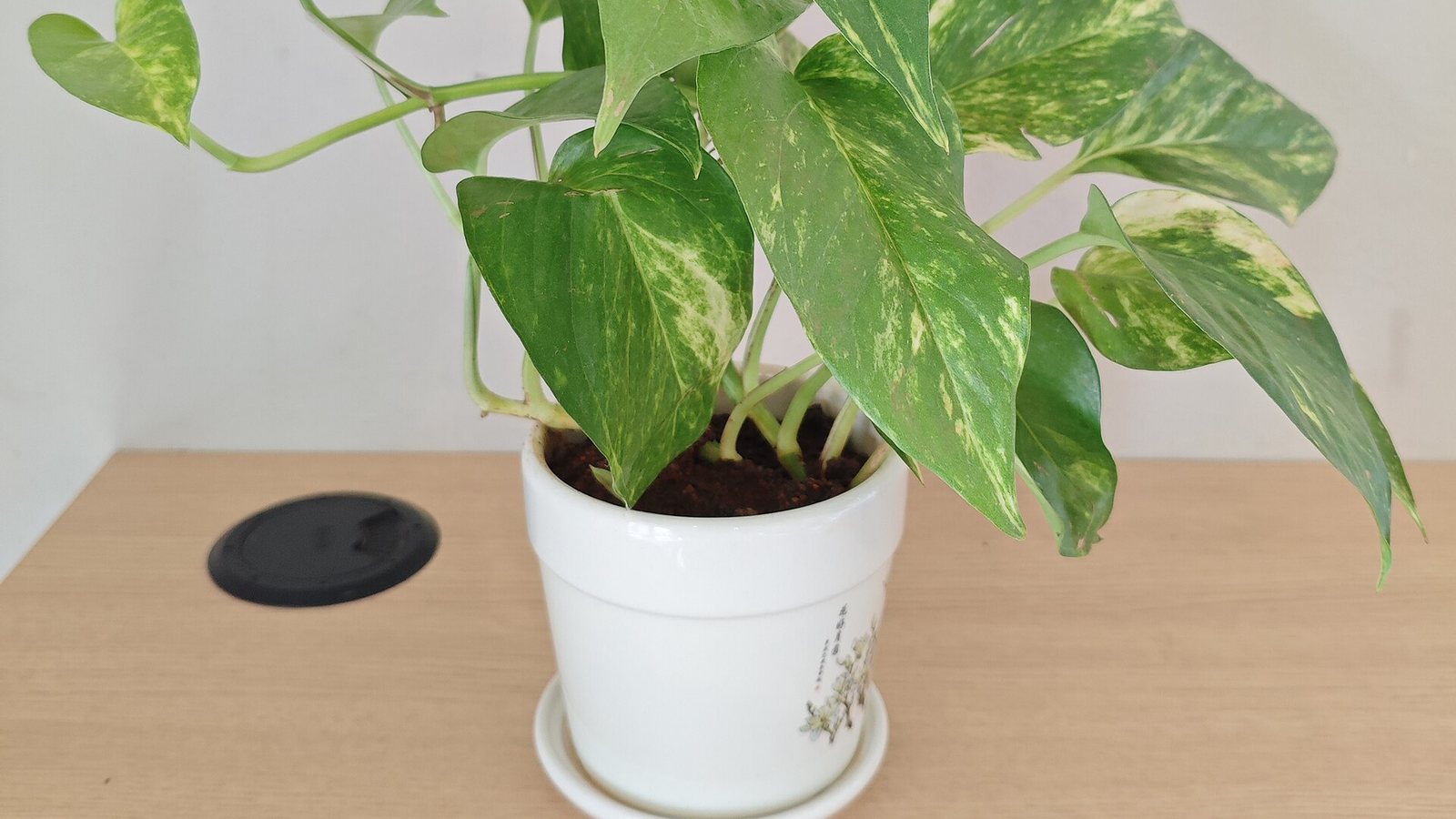
| Many small leaves | Ficus benjamina, pothos, small ferns | Lukewarm shower or rinse, then let drain | Wiping leaf by leaf (slow, and tears small leaves) |
| Fuzzy or hairy leaves | African violet, some begonias | Soft dry brush, keep them dry | Wet cloths, cold water, sun on wet leaves |
| Spiny or waxy plants | Cacti, many succulents | Soft brush or a puff of air | Soaking, wiping off the natural waxy bloom |
Wiping large leaves
- Use a soft, damp cloth; Clemson suggests a damp microfibre cloth. Plain water at room temperature is enough.
- Support each leaf with one hand underneath and wipe gently from the stem towards the tip with the other.
- Clemson's guide focuses on the top surface, where dust settles. Give the underside a light wipe too, because that is where pests hide.
- Rinse the cloth often so you are not moving dust from one leaf to the next, and use a fresh cloth for each plant so you do not carry pests from one pot to another.
- Do not leave the leaves wet: Clemson recommends going over any standing droplets or streaks with a dry cloth.
Showering small-leaved plants
Iowa State lists a gentle shower as a good alternative to wiping. Take the plant to the shower or sink, cover the soil with a plastic bag or your hand if you do not want to water it, and rinse with lukewarm water for a minute. Tip the pot to let water run off the leaves, then let it drain fully before putting it back. Do this in the morning so the foliage dries the same day.
Plants too big to move
Carrying a tall monstera or rubber plant to the shower can hurt you and the plant. Clean big plants where they stand: lay a towel around the pot, fill a bowl with room-temperature water and start at the top, working down, so dust falling from above does not land on leaves you have already cleaned. Use a step stool for high leaves rather than pulling stems towards you, and empty the saucer when you finish.
Fuzzy leaves
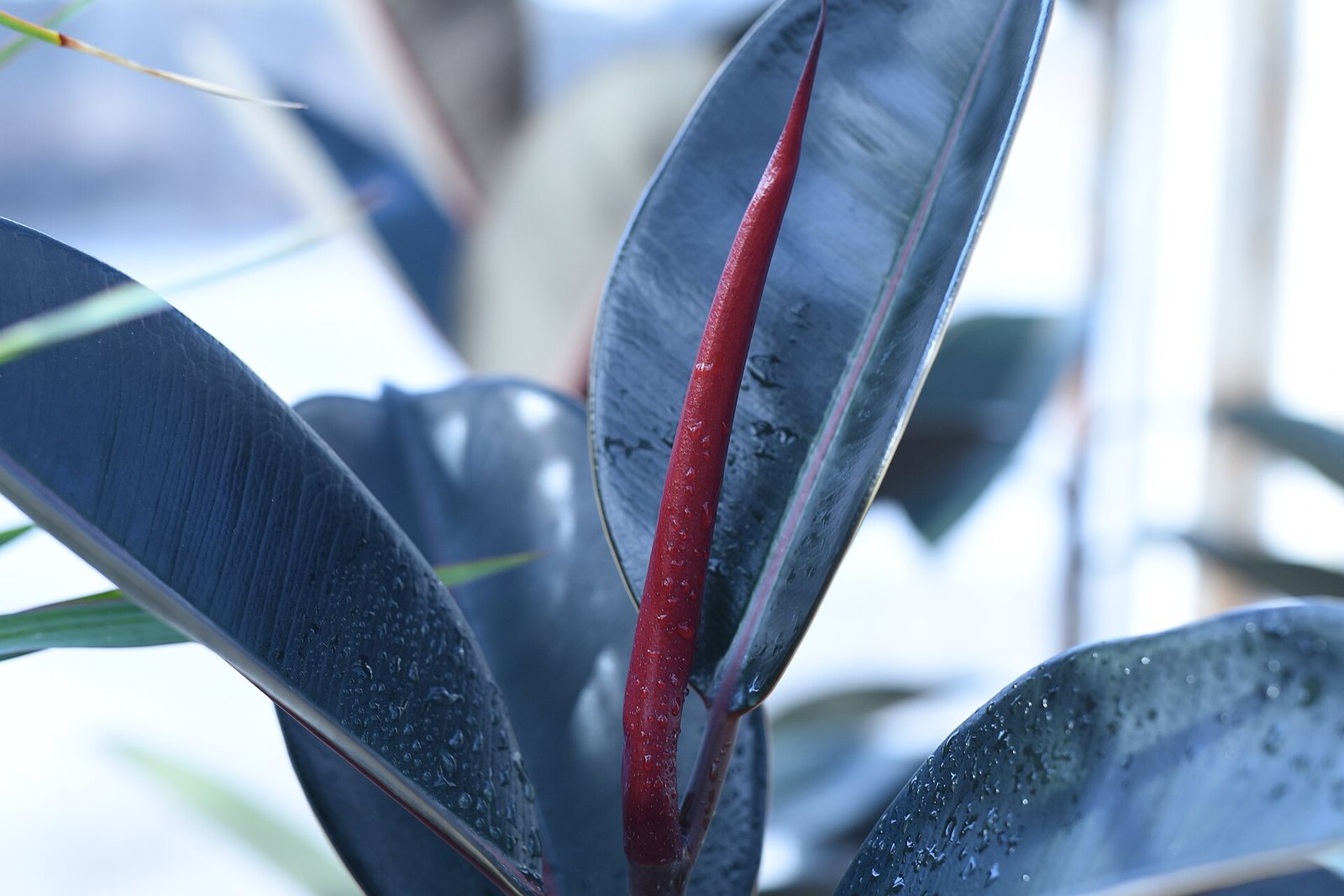
Hairy leaves trap water, and water sitting on them marks them. The RHS warns that water that is too cold can leave blotches, rings or pale spots on African violet leaves and advises against wetting the plant at all, because it can lead to mould or rotting. It also notes that sun shining through water droplets can leave small, papery spots. Dust these leaves with a soft, dry brush, such as a clean make-up or paint brush, working from the centre outwards.
Should you use leaf shine?
No. Extension services are consistent here. Penn State Extension calls commercial leaf shine unnecessary and warns that it may just clog the plant's pores; a soft, damp cloth is all you need. Iowa State adds that leaf shine products may make foliage look better briefly, but they can affect a plant's ability to harvest light and photosynthesize, and frequent use can clog the stomata and leave a sticky film that collects more dust. Removing the dust usually brings back the natural shine most houseplant leaves already have.
The same caution applies to the home remedies you will see recommended: milk, mayonnaise, oil and beer leave a residue on the leaf. Plain water is the safest choice. Never use household cleaners, furniture polish or glass sprays on plants.
How often should you clean plant leaves?
There is no fixed interval; it depends on how dusty your home is. A practical rhythm:
- Large-leaved plants: wipe whenever a fingertip test shows dust, often every few weeks.
- Small-leaved plants: a shower every month or two.
- Before winter and at the end of winter: a full clean, as Clemson recommends, when light is lowest and dust from heating builds up.
- After painting, building work or a dusty spell: clean straight away.
An easy way to make it a habit: if you use Flori's care reminders for misting or pruning, give the leaves a quick check and wipe each time one of those reminders comes up, instead of waiting until the plant already looks grey.
Use cleaning time as a pest check
Wiping and rinsing are not only cosmetic. Colorado State Extension notes that washing plants with a vigorous jet of water is one of the most effective controls for spider mites and aphids, and that mealybugs and scales can be dabbed off with a cotton swab dipped in alcohol, after testing a small area because alcohol can burn leaves. While you clean, look for:
- Fine webbing and pale specks: possible spider mites.
- Sticky patches or a shiny film that is not dust: honeydew from sap feeders; see sticky leaves.
- White cottony tufts in leaf joints, or brown bumps on stems: mealybugs or scale.
If you find any of these, isolate the plant and follow a step-by-step plan rather than just wiping and moving on. Our natural pest prevention guide has a weekly routine that fits neatly around cleaning, and if a clean plant still leans and stretches, the issue is light itself: see signs your plant needs more light.
Frequently asked questions
Can I use soap to clean plant leaves?
Plain water is enough for dust. Household soaps and cleaners can damage leaves. If you are treating pests, use a product labelled as insecticidal soap and follow the label.
Is leaf shine bad for plants?
Extension services advise against it. It can clog the leaf's pores, may affect how well the leaf uses light, and leaves a film that attracts more dust. A damp cloth brings back the natural shine.
How do I clean African violet leaves?
Keep them dry and use a soft, dry brush. Water on the hairy leaves, especially cold water, can leave pale spots and rings and may lead to rot.
Should I clean the underside of leaves?
A light wipe is worth it. Dust settles mostly on top, but spider mites, thrips and other pests hide underneath, so cleaning both sides doubles as a pest check.
Stop spider mites, mealybugs, scale and fungus gnats early: quarantine new plants, check leaf undersides weekly and use the least-toxic fix first.
Sources
- Clemson Cooperative Extension HGIC: End-of-Winter Houseplant Care
- Iowa State University Extension: Diagnosing Houseplant Problems Related to Poor Culture
- Penn State Extension: To Buy or Not to Buy: The Gear Your Houseplants Really Need
- Royal Horticultural Society: How to grow African violets
- Colorado State University Extension: Managing Houseplant Pests
Written and fact-checked by the Flori team. Every guide cites horticultural sources such as the RHS, university extension services and the ASPCA, and is updated when the advice changes. How we write our guides
General plant care information. Plants vary; when a plant is valuable or a problem spreads quickly, consult a local nursery or plant specialist.