How and When to Prune a Pomegranate Tree
Prune a pomegranate in winter dormancy before buds open, remove suckers all season and keep 3 to 6 trunks. Timing by climate, steps and common mistakes.
 By Flori editorial team · Updated
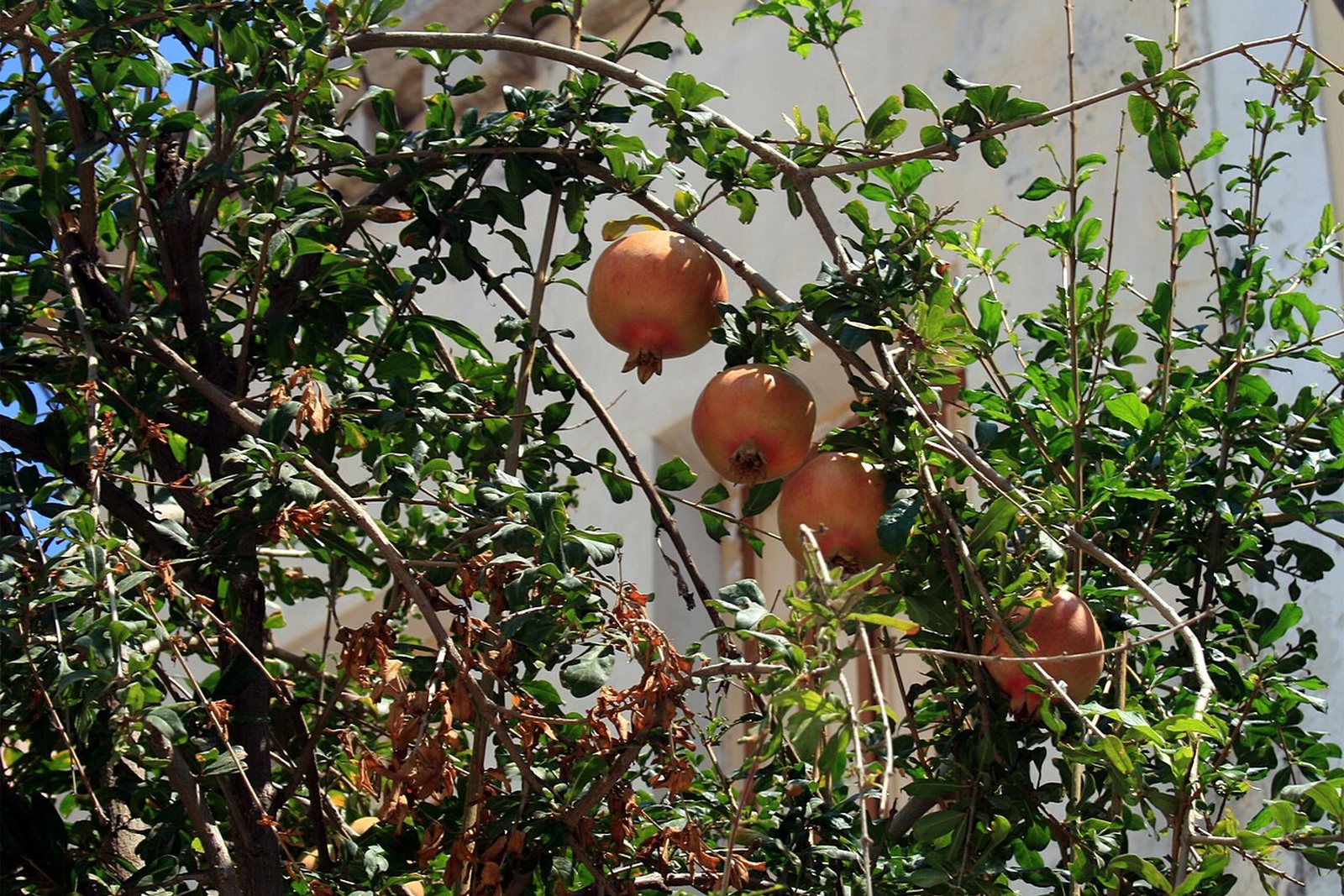
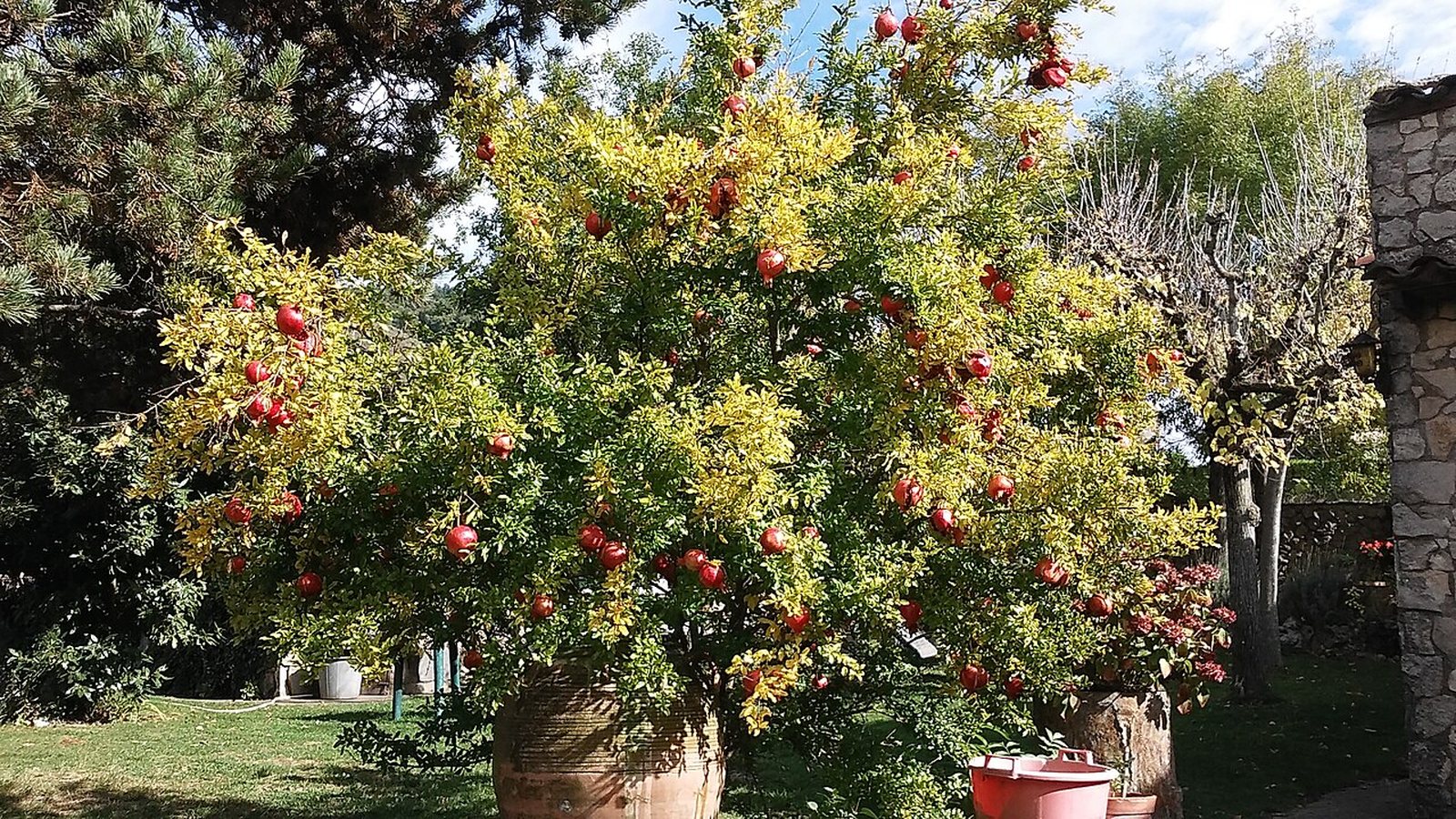 Photo: Dreyescat · CC BY-SA 4.0
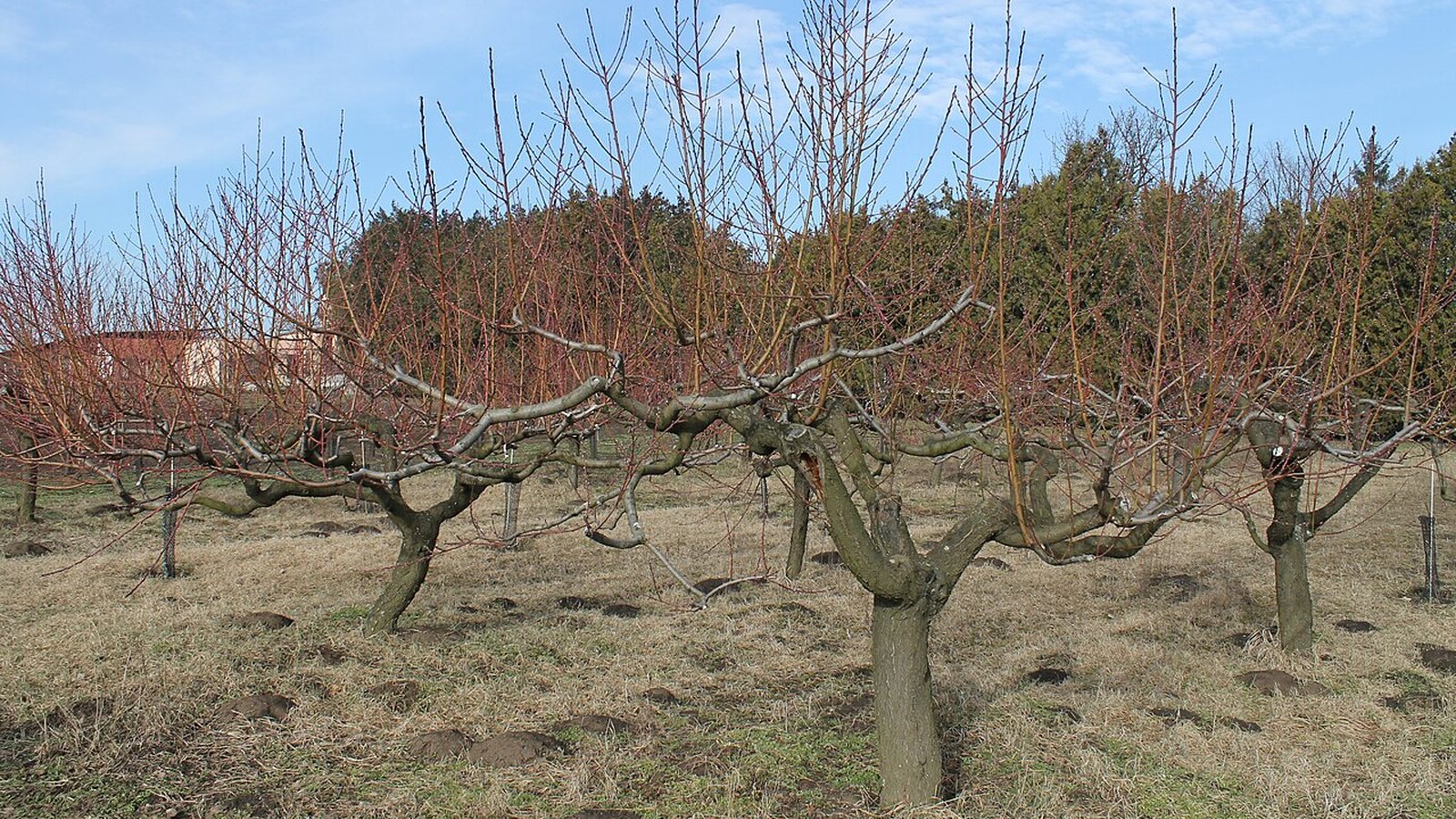
Prune a pomegranate tree in winter while it is dormant, after the hardest frosts and before the buds open. Remove dead wood and suckers, keep 3 to 6 trunks, and cut lightly: heavy pruning reduces fruit. Take suckers off through the growing season, but do structural cuts only in dormancy.
Key takeaways
- Prune the structure in winter dormancy, before buds open; take only suckers and excess sprouts in the growing season.
- Keep 3 to 6 trunks and remove suckers at the base at least once a year.
- Prune lightly: Clemson says heavy pruning reduces fruit, and fruit forms on 2- to 3-year-old wood.
- In cold winters a multi-trunk shrub is safer, because suckers can replace frost-killed trunks.
- Wear gloves and long sleeves, since the plant is thorny.
On this page7
When should you prune a pomegranate tree?
Prune the main structure in winter, while the tree is dormant, after the hardest frosts and before the buds open, then remove suckers whenever they appear. That is the short answer, and three university sources agree on it. Clemson says to prune before new spring growth begins, the University of California says to prune while the plant is dormant, after frost danger has passed but before full bloom, and the University of Georgia says major pruning belongs in the winter months before bud break, with minor sucker removal in mid-summer. This guide turns that into a plan by climate, with the exact cuts, the mistakes that cost you fruit, and what to do after a hard winter.
| Where you garden | Main prune (about) | Sucker removal |
|---|---|---|
| Mediterranean and Aegean coast of Türkiye, mild winters | Late winter, when the leaves are down and the buds have not swollen | Through the growing season |
| Inland Anatolia, cold winters | Late winter to very early spring, only after the hardest frosts have passed | Through the growing season |
| Temperate Northern Hemisphere (a tree that survives winter) | Winter dormancy, about January to March, before buds break | Through the growing season, including mid-summer |
| Southern Hemisphere | Winter dormancy, about July to September, before buds break | Through the growing season |
The months in the table are approximate: the signal is dormancy and bud swell, not the calendar. If you are unsure whether a given cut falls in the right week, our pruning calendar shows the other trees' windows, and the winter fruit-tree guide covers apples, pears and olives.
Why do pomegranates need pruning at all?
Because a pomegranate left alone becomes a dense thicket. Clemson notes that pomegranates sucker heavily from the base, and unless you remove the suckers routinely the plant fills with stems. Light annual pruning, though, is what keeps it fruiting: Clemson says it encourages new fruiting spurs on 2- to 3-year-old wood, and that pomegranates flower on new growth. The University of California states it more simply, that pomegranates fruit on second-year wood. The sources describe the same principle in slightly different words: keep some young but established wood, and do not cut so hard that little remains.
That is why heavy pruning backfires. Clemson warns that it reduces fruit production, and lists over-pruning among the causes of fruit failure. A tree with plenty of old wood and few new shoots will not flower well, and one with only soft new shoots has little to fruit on.
How do you prune a pomegranate, step by step?
Use clean, sharp secateurs and loppers, and wear gloves and long sleeves, because the University of California warns that the plant is thorny. Then work in this order:
- Cut out dead, damaged and diseased wood. The University of California says to remove dead and damaged wood every year.
- Remove suckers. Take them off at the base of the plant and from the trunks. UF/IFAS advises removing suckers from around the main trunks regularly. Cut each one as low as you can.
- Choose your trunks. The University of California keeps 3 to 6 trunks, because more can reduce fruit. The University of Georgia gives three to six strong trunks for a multi-stemmed shrub.
- Take out crossing and inward-growing branches. The aim is an open shape that lets light and air reach the middle.
- Shorten lightly if you need to. Cut only enough to keep the shape you want; leave the fruiting wood.
- Stand back. After year three the University of California says to prune lightly each year, more after a year of little growth, and lightly after a year with little or no crop.
For a newly planted tree the University of California cuts it back to 60 to 75 cm (24 to 30 in) after planting, and in late dormancy of the following year shortens branches by one third, removes crossing branches and leaves 3 to 5 shoots per branch. UF/IFAS differs: it says to let the tree grow without pruning in the first year, then to select four to six strong sprouts in the second year to form the structure. When two reliable sources differ, choose one and be consistent; both end up with 3 to 6 main stems.
Should you train it as a tree or a shrub?
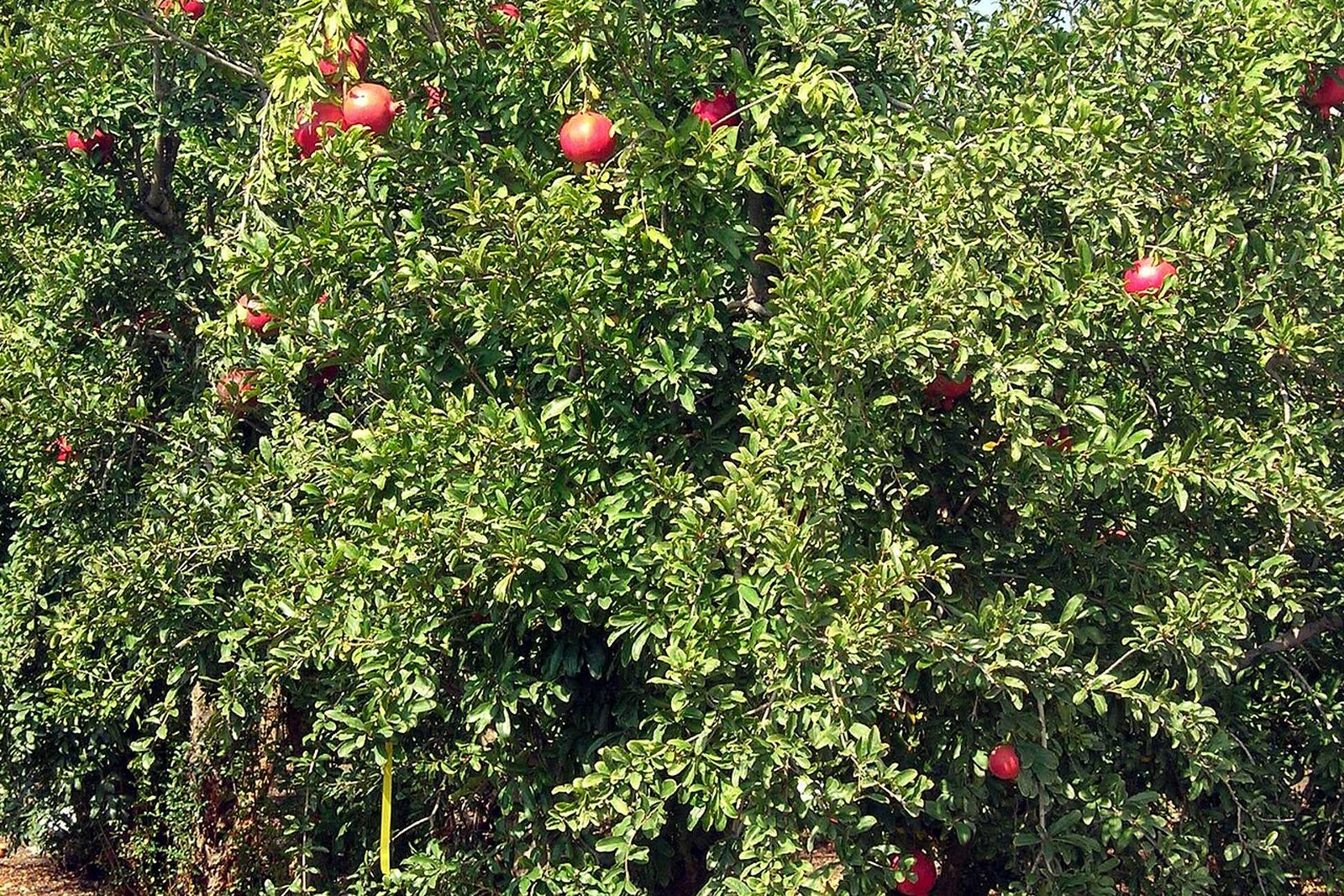
A pomegranate naturally grows as a multi-trunk, bushy shrub, says UF/IFAS, and a tree form needs you to prune off suckers and let only one trunk develop. The University of Georgia describes both: a single trunk with five or six main branches in a vase shape, or three to six trunks rising from the ground. It adds that the multi-trunk form is probably best in Georgia, because you can replace frost-damaged trunks with suckers without a major yield loss, whereas single-trunk plants need less sucker removal over time. The University of California makes the same point for its coldest places: in the high desert a shrub form works best.
The practical choice follows your winters. If freezing weather is rare, one trunk is tidy and easy to mow around. If hard frosts come, a multi-trunk shrub is the safer design, because the suckers you would otherwise cut are your spare trunks.
What if a hard winter damaged the tree?
Pomegranates are not equally hardy everywhere. Clemson gives USDA zones 8 to 10, with zone 7b possible with protection. In zone 7b plants usually survive the winter but can be killed to the ground by temperatures below 10 °F (about -12 °C), and they usually resprout from the crown. The 'Nana' and 'State Fair' types are listed as very cold hardy, and the Russian series is listed as hardy to zone 6. This is the case for a multi-trunk plant: the crown stays alive even when the stems do not.
After a cold winter, cut out the dead wood in the following dormant season and use the suckers as replacement trunks, as the University of Georgia suggests. For protection before winter, see our guide to protecting garden plants from frost. If you are planning a new tree, when to plant fruit trees explains the timing. In frost-free regions there is no cold to dodge: UF/IFAS notes that in South Florida a pomegranate may fruit year-round.
What are the common pruning mistakes?
| Mistake | What happens | Do this instead |
|---|---|---|
| Cutting hard every year | Fruit production falls (Clemson) | Prune lightly; more only after a year of little growth |
| Pruning after full bloom | You remove the flowering wood (University of California advises before full bloom) | Finish in dormancy, before buds open |
| Leaving every sucker | A dense thicket of stems (Clemson) | Remove them at the base, at least once a year; check more often in the growing season |
| Keeping more than 6 trunks | Fruit can be reduced (University of California) | Choose 3 to 6 and cut the rest |
| Leaving dead wood after frost | Weak, crowded growth | Remove dead and damaged wood every year |
Can you prune in summer?
Only lightly. UF/IFAS says to remove excess branches and sprouts frequently during the growing season, and the University of Georgia keeps minor pruning for sucker removal in mid-summer. Do not do structural pruning then. If it helps you remember, a care reminder in the Flori app can nudge you for pruning, but the rule is the same: structure in winter, suckers all year.
If you grow a fig as well, the same approach of waiting for dormancy applies, and our guide to pruning a fig tree shows what differs.
Frequently asked questions
When is the best time to prune a pomegranate?
In winter dormancy, before the buds break. Clemson says before new spring growth, the University of California says after frost danger but before full bloom, and the University of Georgia says winter before bud break.
How many trunks should a pomegranate have?
The University of California keeps 3 to 6 trunks because more can reduce fruit, and the University of Georgia gives three to six for a multi-trunk plant. A single trunk is also possible if you remove the suckers.
Should I remove pomegranate suckers?
Yes, routinely. Clemson says unchecked suckers fill the plant with stems; UF/IFAS advises removing them from around the main trunks regularly. Keep a few only if you want replacement trunks.
Can I prune a pomegranate in summer?
Only lightly: remove suckers and excess sprouts. The University of Georgia keeps minor pruning for mid-summer, and structural pruning belongs in winter.
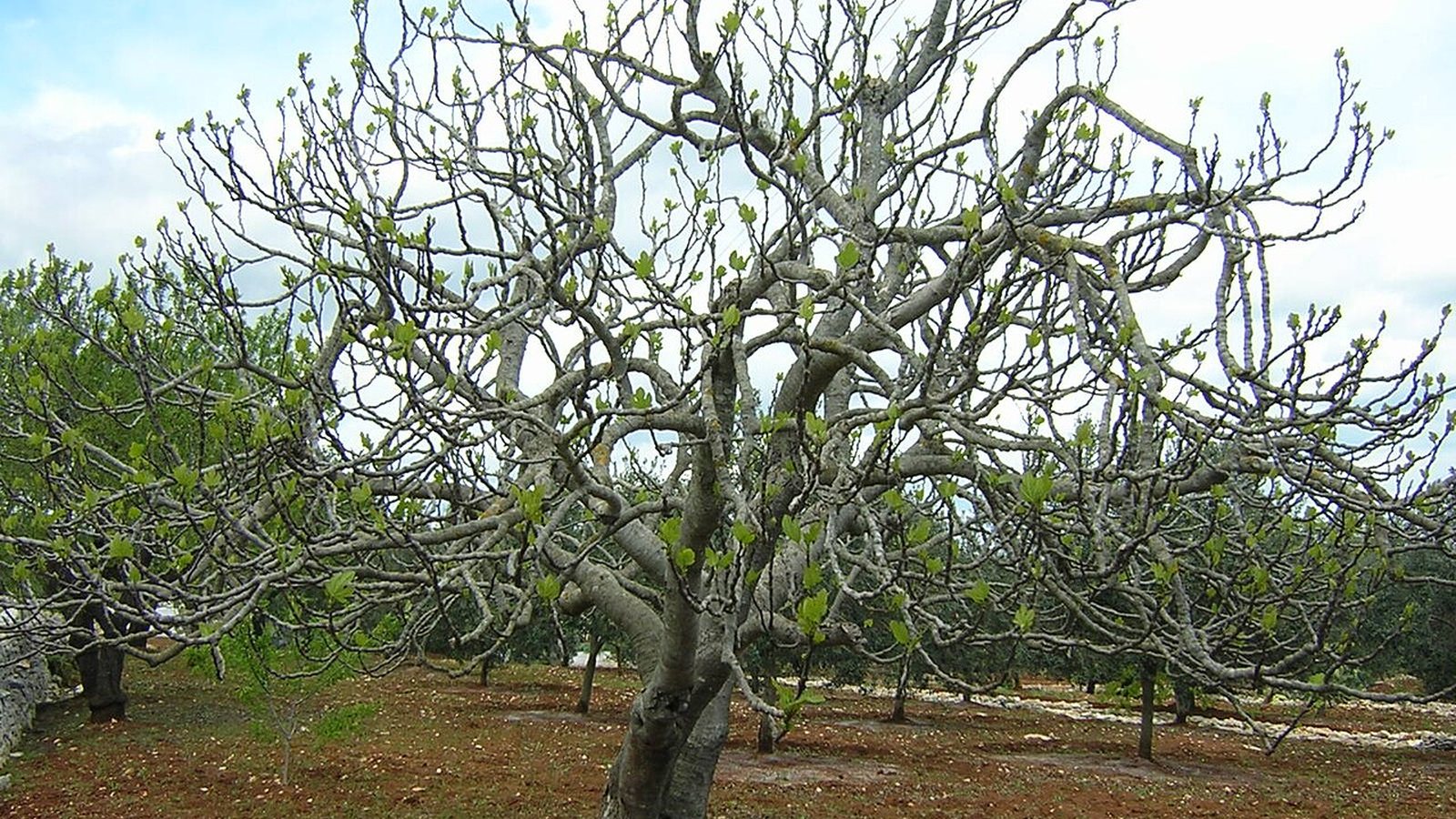
Prune a fig lightly after hard frosts end and before growth starts, with a summer pinch. Month table, step-by-step cuts and a fix for no fruit.
Sources
Written and fact-checked by the Flori team. Every guide cites horticultural sources such as the RHS, university extension services and the ASPCA, and is updated when the advice changes. How we write our guides
General plant care information. Plants vary; when a plant is valuable or a problem spreads quickly, consult a local nursery or plant specialist.