Springtails and Soil Mites: Jumping Bugs in Pots
Tiny bugs jumping in your plant pots are usually harmless springtails. Learn how to tell them from soil mites and fungus gnats, and how to get rid of them.
 By Flori editorial team · Updated
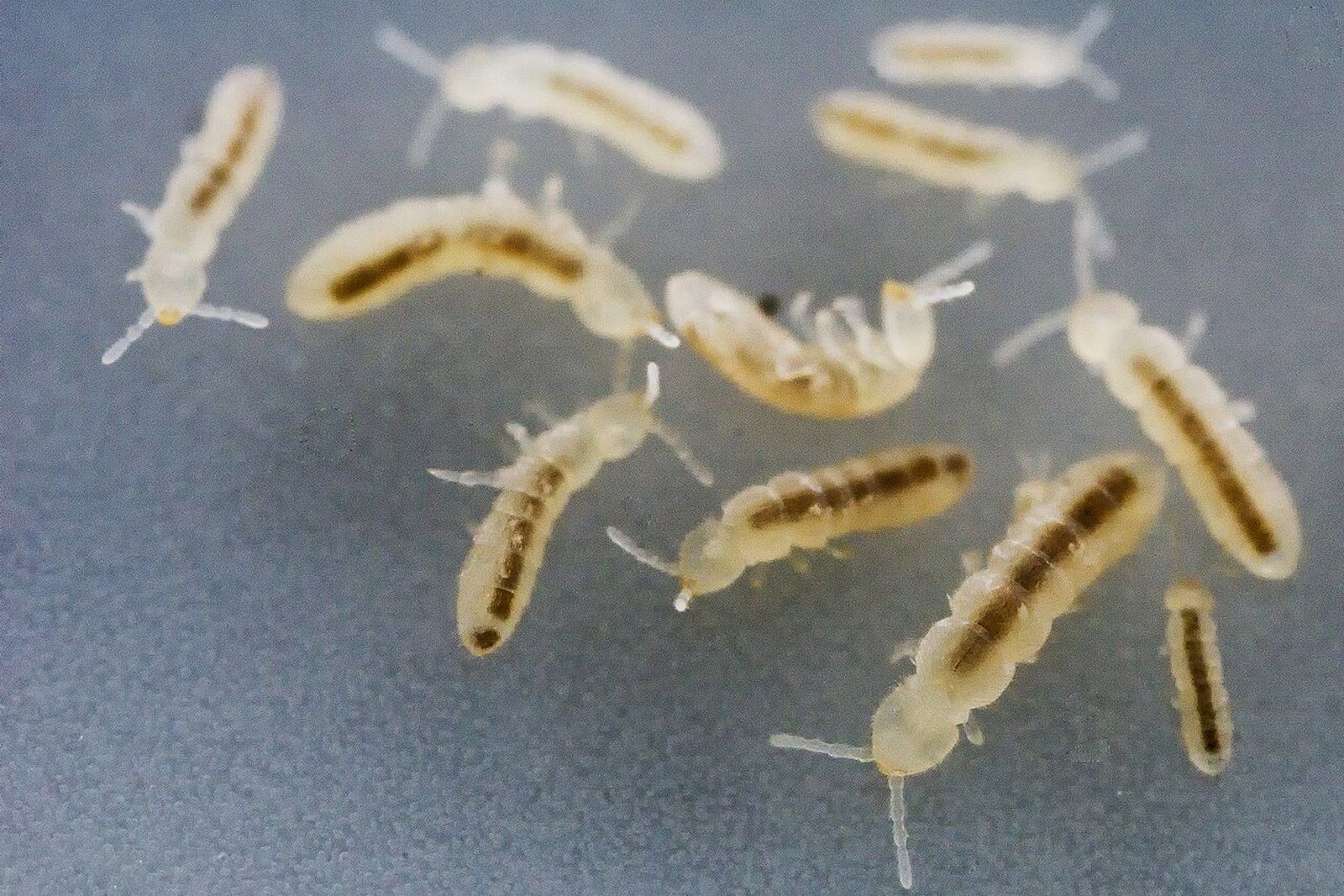
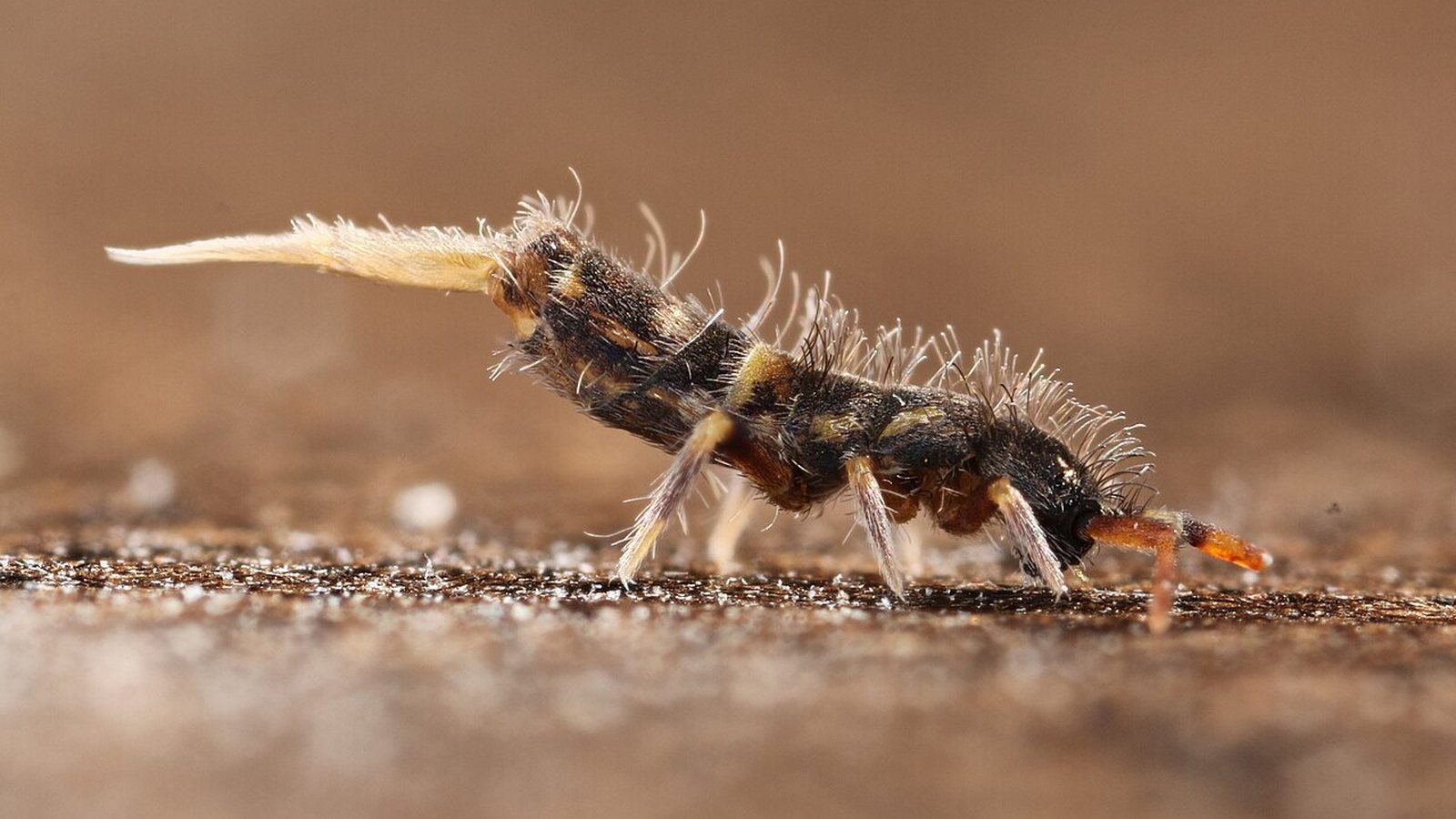 Photo: Donald Hobern from Copenhagen, Denmark · CC BY 2.0
Tiny specks that jump when you water are springtails; slow, round crawlers are soil mites. Both feed on decaying matter in damp potting mix and are usually harmless to healthy plants, though some springtails chew seedlings. The fix is the same for both: let the soil dry between waterings and empty the saucer.
Key takeaways
- Specks that jump are springtails; slow crawlers are soil mites. Both are usually harmless.
- They are a sign of wet soil, so treat the watering, not the bugs.
- Let the soil dry out between waterings and empty saucers.
- Insecticide sprays are generally not recommended; start with drier soil and follow any label.
- Webbing or speckled leaves point to spider mites, which do damage plants.
On this page9
- What are the tiny jumping bugs in my plant pots?
- Springtails or soil mites? A quick comparison
- Are springtails harmful to plants?
- How do you get rid of springtails and soil mites?
- Do you need insecticide for springtails?
- Why did I suddenly get springtails?
- What if they are in the bathroom or kitchen too?
- What if the bugs do not jump?
- When should you worry?
What are the tiny jumping bugs in my plant pots?
If tiny specks pop up and spring away when you water or touch the soil, they are springtails, and they are almost always harmless. If the specks are slow, round and crawl rather than jump, they are probably soil mites, which are harmless too. This guide gives the two-second test to tell them apart, the difference between a harmless soil mite and a plant-eating spider mite, and the one fix that works for both: drier soil.
Both live on decaying organic matter in damp potting mix. They are not a disease of the plant, they are a sign of what the soil is like, and the moisture is what you actually treat.
Springtails or soil mites? A quick comparison
| Springtails | Soil mites (oribatid) | |
|---|---|---|
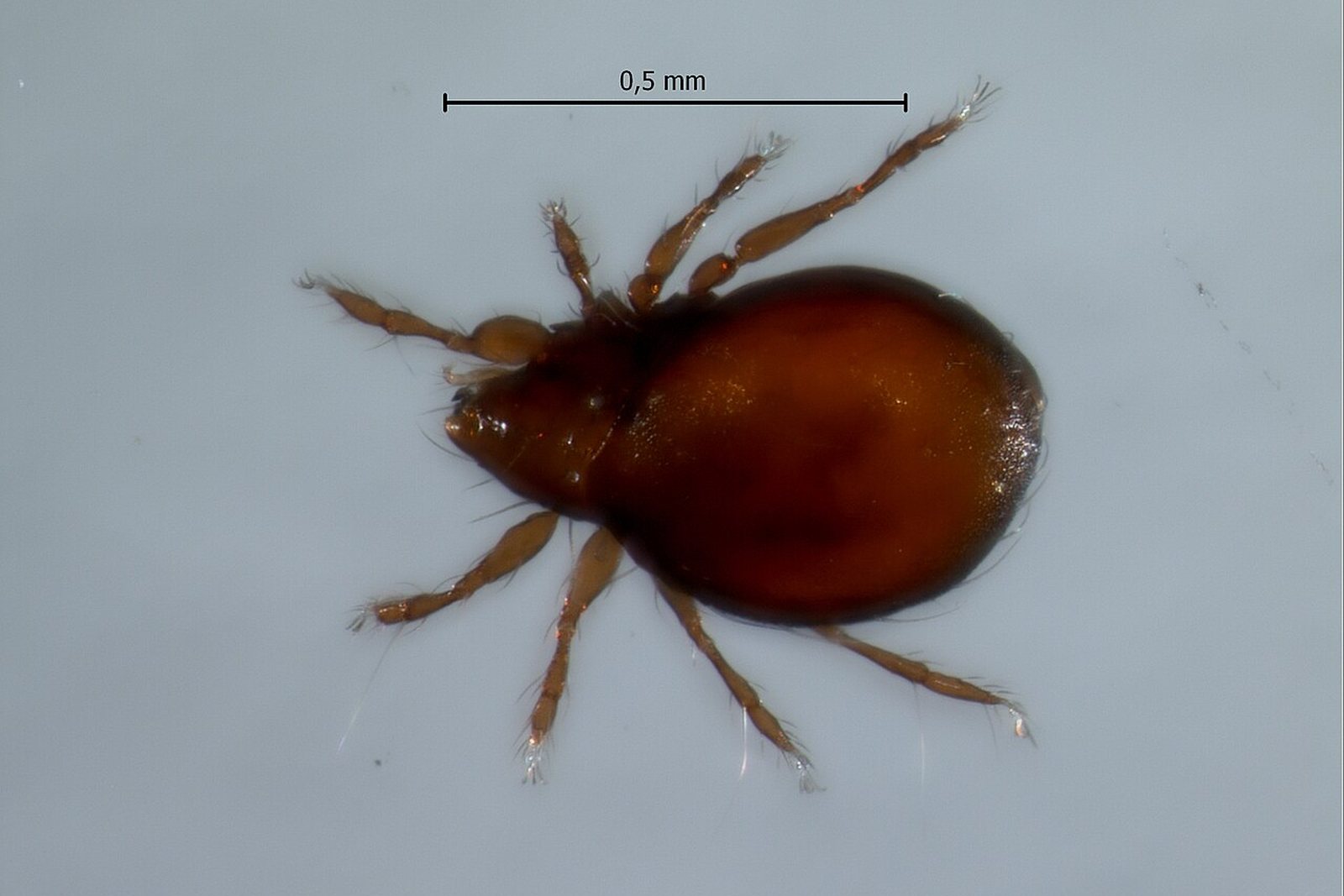
| Movement | Jump when disturbed, using a forked tail folded under the body | Walk; mites in general cannot jump or fly (University of Maryland) |
| Size | About 1.5 mm (UC IPM, Colorado State); rarely over 5 mm (Virginia Tech) | Tiny; look like "baby" ticks (WSU) |
| Colour | Whitish, bluish, grey to black (UC IPM); pale brown or cream (Virginia Tech) | Reddish brown in the WSU photo |
| Where | On the soil surface, most noticed just after watering | In soil and organic matter |
| Eat | Decaying plant matter, fungi, mould, algae | Thought to be scavengers that help break down decaying matter (WSU) |
| Harm to the plant | Little or none; some species chew seedlings | None expected (WSU) |
The WSU fact sheet says "not much is known" about oribatid mites, so treat soil mites with the same rule as springtails: if the plant looks healthy, they are not the cause of any problem.
Are springtails harmful to plants?
Almost never. UC IPM calls them mainly harmless scavengers that feed on decaying organic matter, fungi, mould and algae, and says they do not bite people or pets, spread disease or damage furnishings. Colorado State says they cause little or no damage in potting soil. The one exception is seedlings: some species chew them, leaving minute pits or holes (UC IPM), so a tray of freshly sown seed is the place to act. Mature plants are not significantly injured.
The bigger lesson is in a Virginia Tech warning: people who overwater may blame springtails for a plant's decline, when the excessive watering is the likelier cause. A big springtail population is a signal that the soil stays wet, so look at the plant's watering before you look at the bugs. Our overwatering vs underwatering guide shows how to tell.
How do you get rid of springtails and soil mites?
- Let the soil dry. Colorado State and Virginia Tech both say to let the soil dry out somewhat between waterings. Virginia Tech says this makes them leave or die.
- Empty the saucer. UC IPM says not to let drain water sit in saucers.
- Fix the damp. Repair leaks, run a fan or a dehumidifier and ventilate bathrooms (UC IPM, Colorado State).
- Vacuum clusters if you see them. Virginia Tech and UC IPM both suggest it.
- Remove rotting matter and mould from the soil surface; soil mites follow organic matter, and WSU says removing it helps (our white mould guide covers the fluff on top of soil).
- Check drainage. A pot that stays soggy keeps the population going.
Expect numbers to fall over a week or two as the top layer dries. They will not vanish overnight, and they do not need to.
Do you need insecticide for springtails?
Usually not. UC IPM says insecticide sprays are generally not recommended and are often no better than vacuuming, with only temporary relief if the moisture is not fixed. Virginia Tech says managing moisture is more effective than sprays. Colorado State adds that springtails are fairly resistant to most insecticides, so effectiveness is questionable. Colorado State says to avoid indoor insecticides when possible. Start with the dry-soil steps above; if you ever do use a product, make sure the label says it is for houseplants and indoor use, and follow it exactly.
Why did I suddenly get springtails?
Usually one of three reasons: you watered more than before, a new pot came in damp, or the weather outside changed. Colorado State says indoor springtail invasions often follow hot, dry summer weather pushing them out of lawns and soil, and that these migrations usually last under a week. UC IPM says they enter through screens, doors and on potted plants, and die soon after entering unless they find moisture. In hot Turkish summers, plants that spend the season on a balcony or in a garden are the usual way they come indoors.
What if they are in the bathroom or kitchen too?
Springtails also gather wherever moisture collects: kitchen sinks, bathtubs, drains, damp basements and the soil of potted plants (UC IPM, Colorado State). In a sink or tub, wash them down the drain; UC IPM says never to pour or spray insecticide down drains. Fix leaks, ventilate the bathroom, clean mouldy grout and weatherstripping (Virginia Tech), and seal gaps around doors and screens. Springtails that find no moisture die soon after coming in, so drying the house works faster than chasing individual bugs.
What if the bugs do not jump?
Look again. Tiny black specks can be other pests: small flies that fly up from the soil are fungus gnats, which can harm roots in large numbers, and the broader sorting is in our tiny black bugs on plants and small flies around houseplants guides. Mites on leaves are a different story: plant-feeding mites pierce plant cells and cause stippling and distorted growth (University of Maryland), so webbing or speckled leaves point to spider mites, not soil mites. If you cannot tell what you have, Flori's Lab tools can analyse a pest from a photo.
When should you worry?
Worry when the plant is declining, not when bugs are present. Yellowing, wilting or soft stems with wet, sour-smelling soil point to root problems, and the springtails are only along for the ride. Check the roots: healthy roots are white, and brown or black roots suggest rot. Fix the watering, let the pot dry, and the jumping specks fade on their own.
Frequently asked questions
Are springtails in houseplants harmful?
Usually not. UC IPM calls them mainly harmless scavengers that eat decaying matter, fungi and mould. Some species chew seedlings, but mature plants are not significantly injured.
How do I get rid of springtails in plant pots?
Let the soil dry between waterings, empty the saucer, fix damp spots and vacuum clusters. Extension sources say moisture control works better than sprays.
Are soil mites the same as spider mites?
No. Oribatid soil mites are scavengers that should not damage plants (WSU). Spider mites feed on leaves and cause speckling and distorted growth.
Why are there springtails in my plant after watering?
Springtails need moisture, so they gather in wet soil and are most noticeable just after watering. A big population usually means the soil stays too wet.
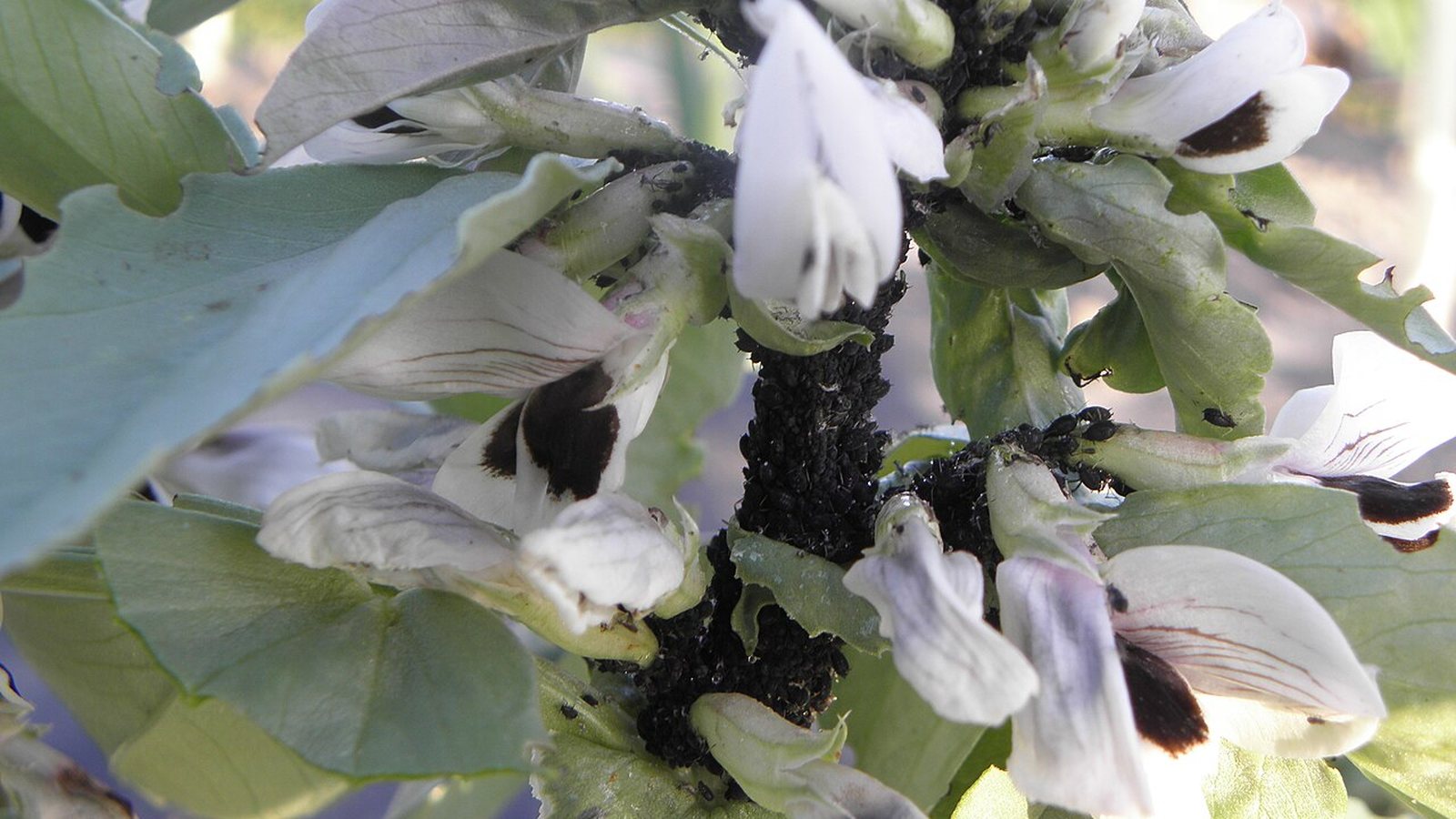
Tiny black bugs on your plant are usually aphids, fungus gnats, springtails or thrips. Tell them apart by where they sit and how they move, then fix them.
Sources
Written and fact-checked by the Flori team. Every guide cites horticultural sources such as the RHS, university extension services and the ASPCA, and is updated when the advice changes. How we write our guides
General plant care information. Plants vary; when a plant is valuable or a problem spreads quickly, consult a local nursery or plant specialist.