Yellow Orchid Leaves: Normal Ageing or a Problem?
Why are your orchid leaves turning yellow? Tell normal ageing of one old leaf from overwatering, root rot, sun or cold, plus a symptom table.
 By Flori editorial team · Updated
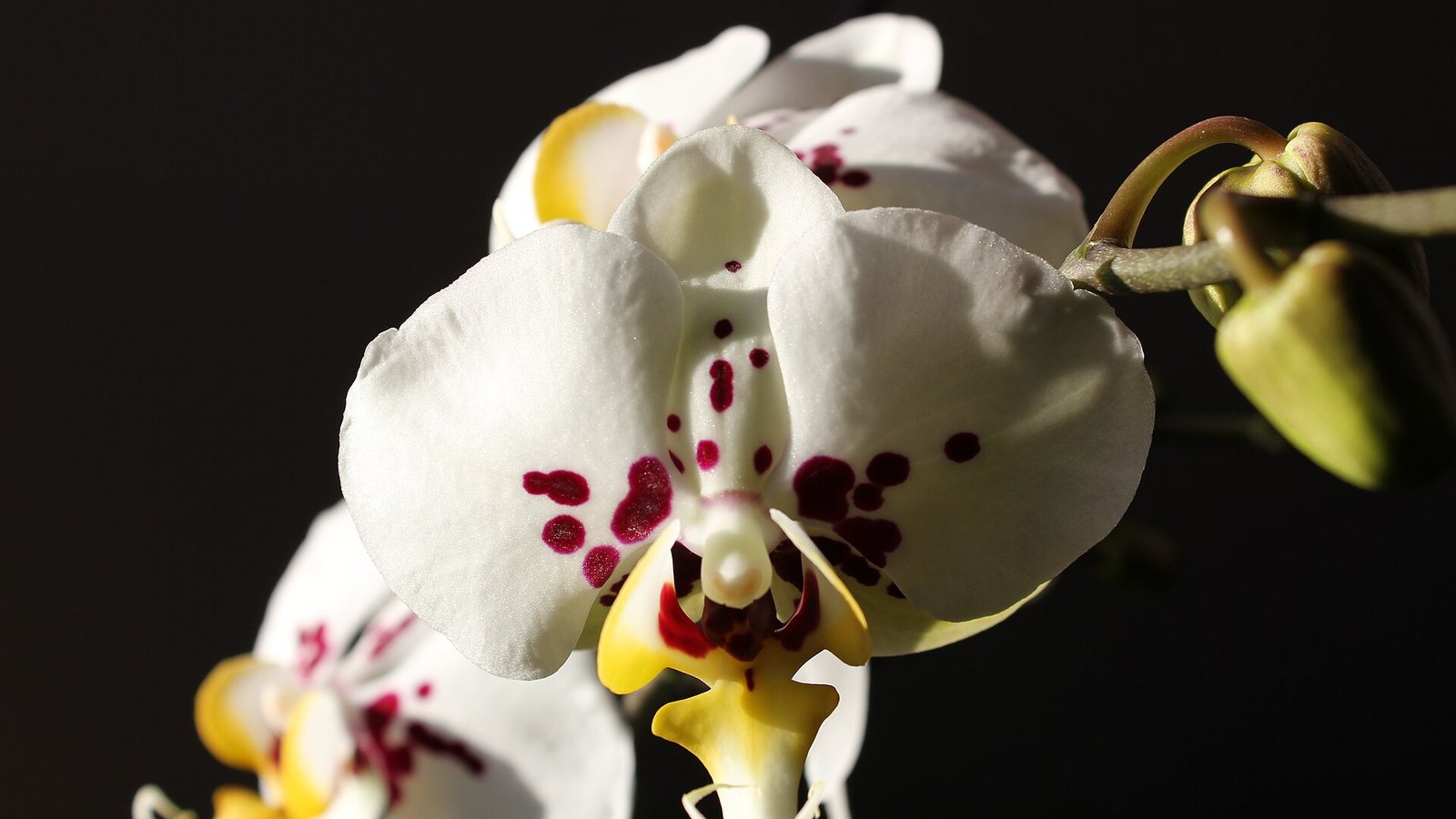 Photo: terri_bateman · CC0
One yellow bottom leaf on a healthy orchid is usually normal ageing: the oldest leaf yellows and falls as new ones grow. Several yellow leaves, or yellowing with mushy roots, usually means overwatering or root rot. Yellow patches facing a window suggest sun scorch, and yellow with dry edges can mean cold draughts.
Key takeaways
- A single yellowing lowest leaf on an otherwise firm, green plant is usually normal ageing, so leave it until it comes away easily.
- Several yellow leaves at once, especially with soft, brown or hollow roots, point to overwatering and root rot.
- Yellow or pale patches on the leaves facing the window suggest sun scorch, since moth orchids burn in direct sun.
- Cold draughts can cause leaf yellowing and dry leaf edges, so keep orchids above 16 °C (60 °F) away from cold glass.
- Check the roots before you change anything: plump, firm, silvery-white roots mean the plant is fine.
On this page7
Why are my orchid leaves turning yellow?
Yellow leaves on an orchid mean one of two things: the plant is shedding an old leaf normally, or something is wrong at the roots. The difference is almost always visible if you look at which leaf is yellow, how many, and what the roots look like. This guide uses RHS, NC State and Clemson advice and focuses on moth orchids (Phalaenopsis), the orchid most people own. If your plant has yellow leaves but also will not flower, read why is my orchid not blooming afterwards.
Is a yellow orchid leaf normal?
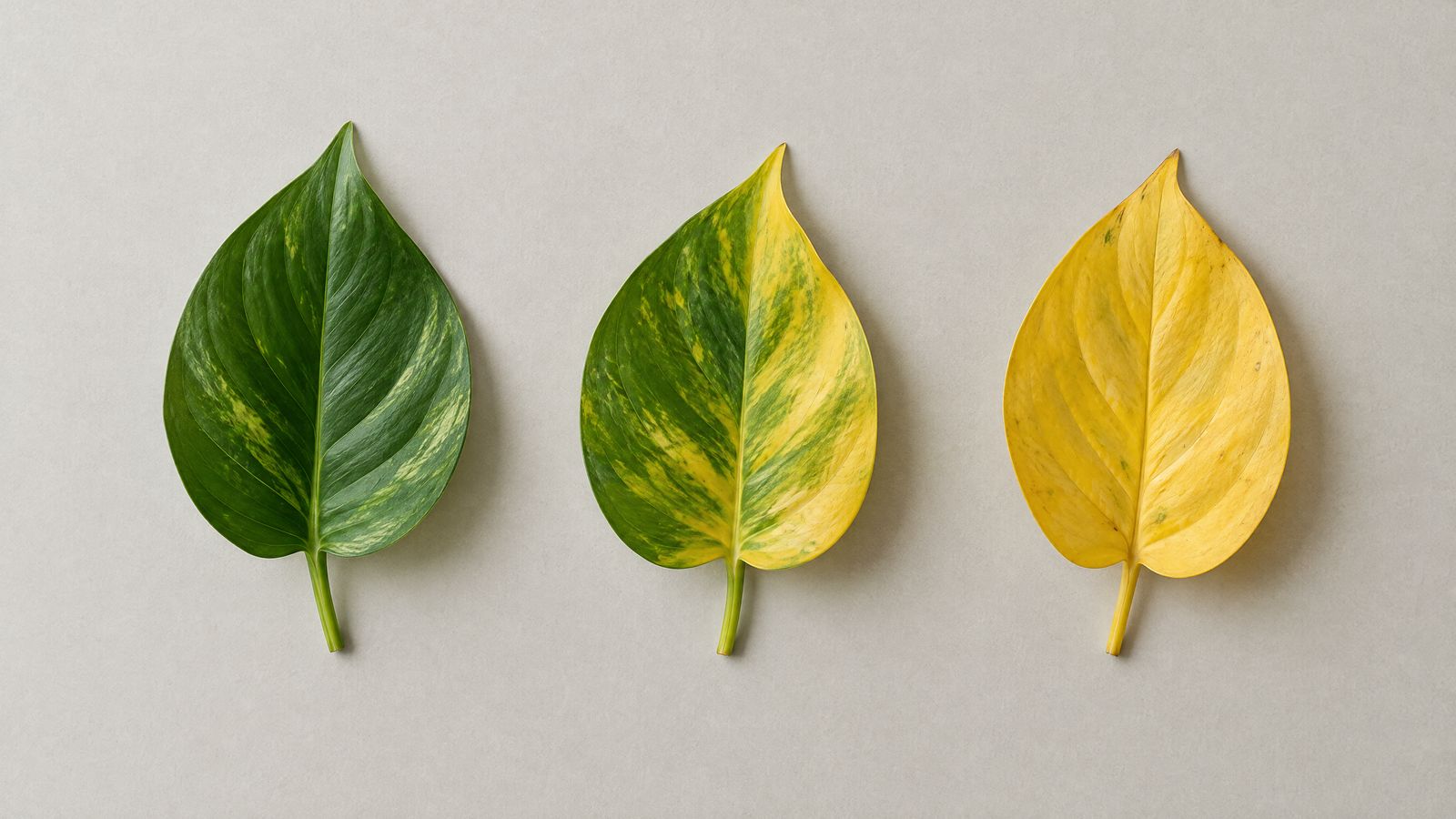
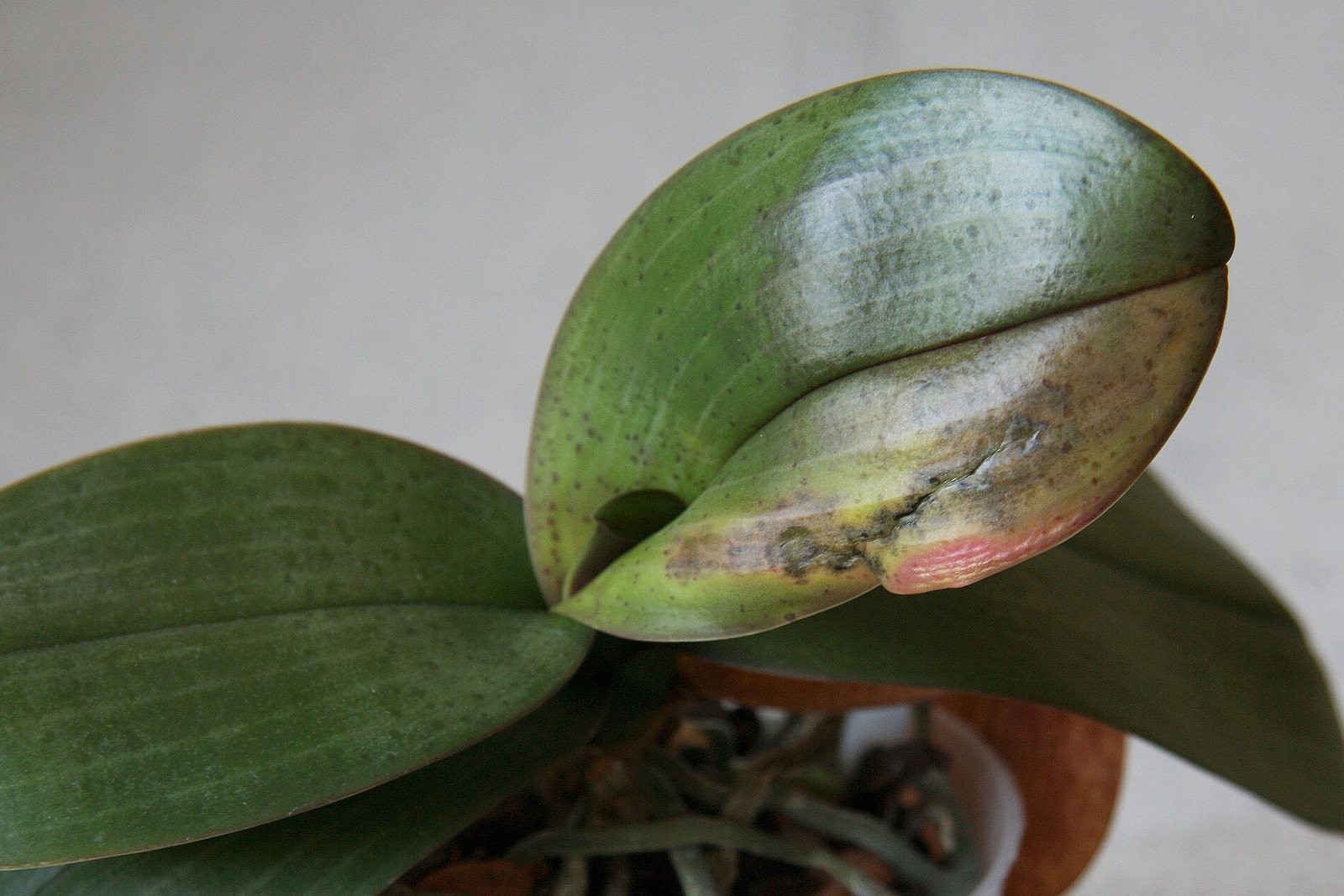
Often, yes. The RHS says old leaves dropping naturally is no cause for concern: older leaves on a healthy plant can yellow and die back as it matures. On a moth orchid this is typically the lowest, oldest leaf. It slowly turns a clear yellow, goes soft and papery, then comes away. The rest of the plant stays firm, glossy and green, and the roots are healthy.
Signs that it is normal ageing:
- Only one leaf, the lowest or oldest, is yellowing.
- The yellowing is even and slow, over weeks.
- The remaining leaves are firm and green and new leaves or roots are appearing.
- Roots are plump, firm and silvery-white when the plant is dry, with green tips when growing (RHS).
Leave a yellow leaf in place until it comes away with a gentle tug. The RHS suggests cutting off old leaves as they start to fade to keep the plant looking its best, using a clean blade.
Symptom, likely cause and what to do
| What you see | Likely cause | What to do |
|---|---|---|
| One bottom leaf yellows slowly, plant otherwise healthy | Normal ageing | Do nothing; remove the leaf when it detaches |
| Several leaves yellow and soft, mix always wet | Overwatering, root rot | Unpot, check roots, cut off rotten ones, repot in fresh bark mix |
| Yellow with wrinkled, limp leaves and shrivelled roots | Too little water or dead roots | Soak and check roots; see below |
| Pale or yellow patches on leaves facing the window | Sun scorch | Move out of direct sun; remove the leaf only if it is fully dead |
| Yellowing with dry leaf edges near cold glass or a vent | Cold draught or heat | Move away from glass, radiators and draughts |
| Yellow leaves with sticky residue or tiny insects | Pests such as mealybugs or mites | Isolate, inspect with a hand lens and treat; follow the label |
Could overwatering be the cause?
This is the most common serious cause. The RHS says that if moth orchids are kept too wet, the roots are likely to rot, and Clemson warns that one of the fastest ways to kill an orchid is to let it sit in a waterlogged pot. When roots rot they cannot feed the leaves, so leaves yellow and go limp. The RHS says that rotten roots look brown, shrivelled, mushy or hollow, in contrast to plump, firm, silvery-white healthy roots.
To check, slide the plant out of its pot. If several roots are brown, mushy or hollow, cut them off with clean scissors and repot into fresh bark-based orchid compost, never into ordinary potting soil. Our root rot rescue plan shows the full method, and overwatering vs underwatering helps you tell the two apart. NC State says mature moth orchids need water about once a week, more often in summer heat, with the mix drying somewhat between waterings, and to let the pot drain fully so roots never stand in water.
Could the orchid be too dry?
Yes, though it looks different. NC State says shrivelled or wrinkled leaves are a sign that the leaves are not getting enough water, either because the medium is too dry or because roots are damaged, often rotted by soggy medium. The RHS says overly dry roots may shrivel and die. The RHS general houseplant guidance adds that the older leaves at the base of a dry plant often yellow and fall first. The confusing part is that rotten roots and dry roots both cause a thirsty-looking plant. Always check the roots before adding more water.
Could it be sunburn or cold?
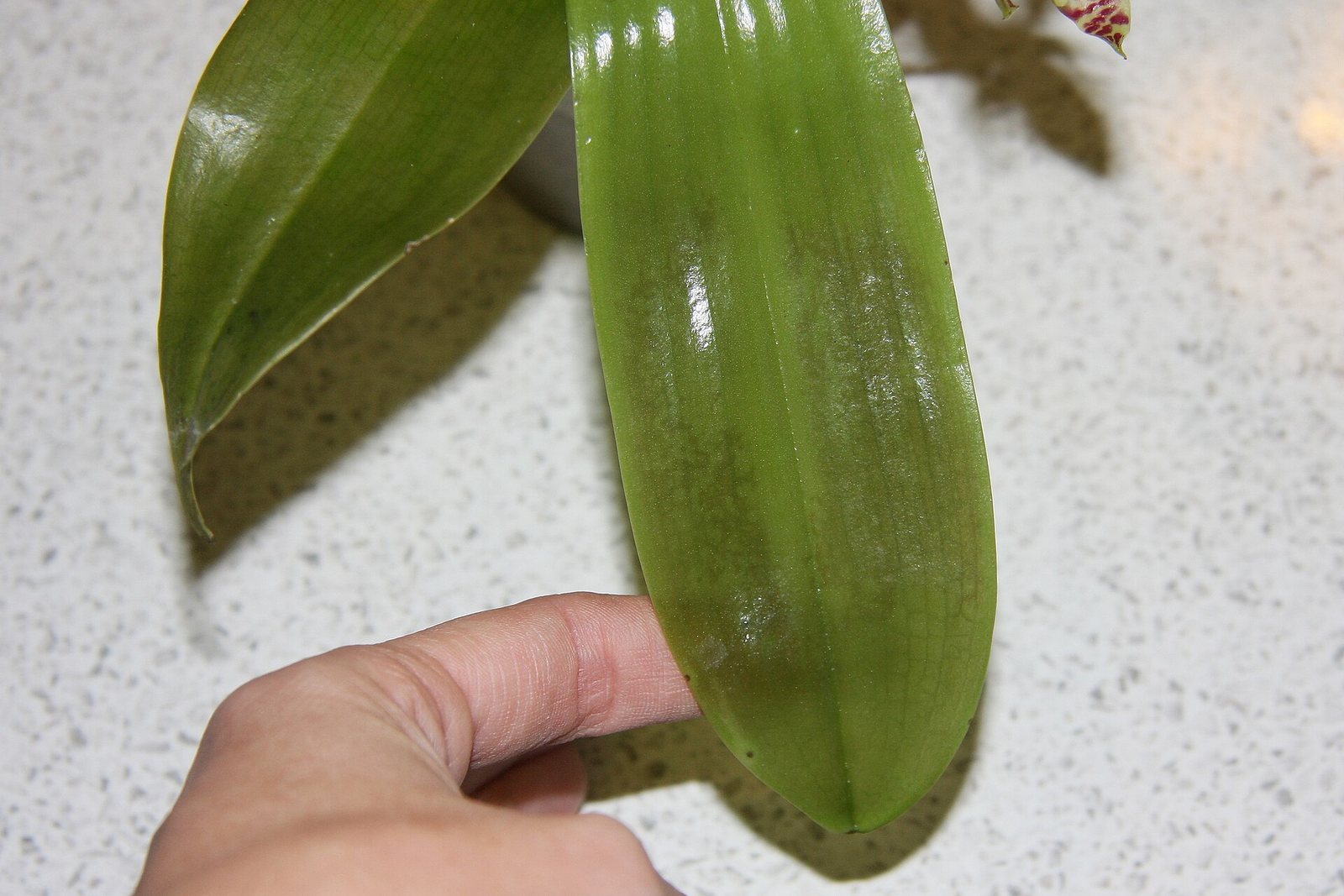
Sun. The RHS says to keep moth orchids out of direct summer sun, which can scorch the leaves. Scorched patches look bleached or yellow-brown on the side facing the glass. See our guide to leaf sunburn. NC State says moth orchids prefer lower light, with an east window best.
Cold. The RHS says moth orchids prefer 19-30 °C (66-86 °F) by day and 16-19 °C (61-66 °F) at night, should stay above 16 °C (60 °F), and dislike draughts, radiators and fluctuating temperatures. Its houseplant guidance adds that draughts can cause leaf yellowing and dry leaf edges. In winter a windowsill behind a curtain can be much colder than the room. Our guide on how cold is too cold for houseplants has more.
What should you not do?
- Do not cut off a leaf that is still partly green. The plant is still drawing some value from it.
- Do not repot at the first yellow leaf. Check the roots through the pot or lift the plant out gently first.
- Do not fertilize a sick orchid to green it up.
- Do not water on a schedule. Check the pot: a clear pot and lifting it to feel its weight show moisture quickly.
For a broader checklist across plant types, our yellow leaves diagnosis guide has more. You can also describe the leaf to Dr. Flori, which asks follow-up questions, names the likely cause and gives a recovery plan, or add the orchid to the Plant Hospital for follow-up.
Frequently asked questions
Is it normal for the bottom leaf of an orchid to turn yellow?
Yes, if only one lowest leaf yellows slowly and the rest of the plant is firm and green. The RHS says older leaves on a healthy plant can yellow and die back naturally.
Should I cut yellow leaves off an orchid?
Wait until a yellow leaf comes away easily, or cut it with a clean blade once it is fully faded. Do not cut leaves that are still partly green.
Why are several orchid leaves yellow at once?
Usually overwatering or root rot, so check the roots. The RHS says rotten roots look brown, shrivelled, mushy or hollow, while healthy roots are plump, firm and silvery-white.
Can too much sun make orchid leaves yellow?
Yes. The RHS says direct sun can scorch moth orchid leaves. Move the plant to bright indirect light, such as an east window.
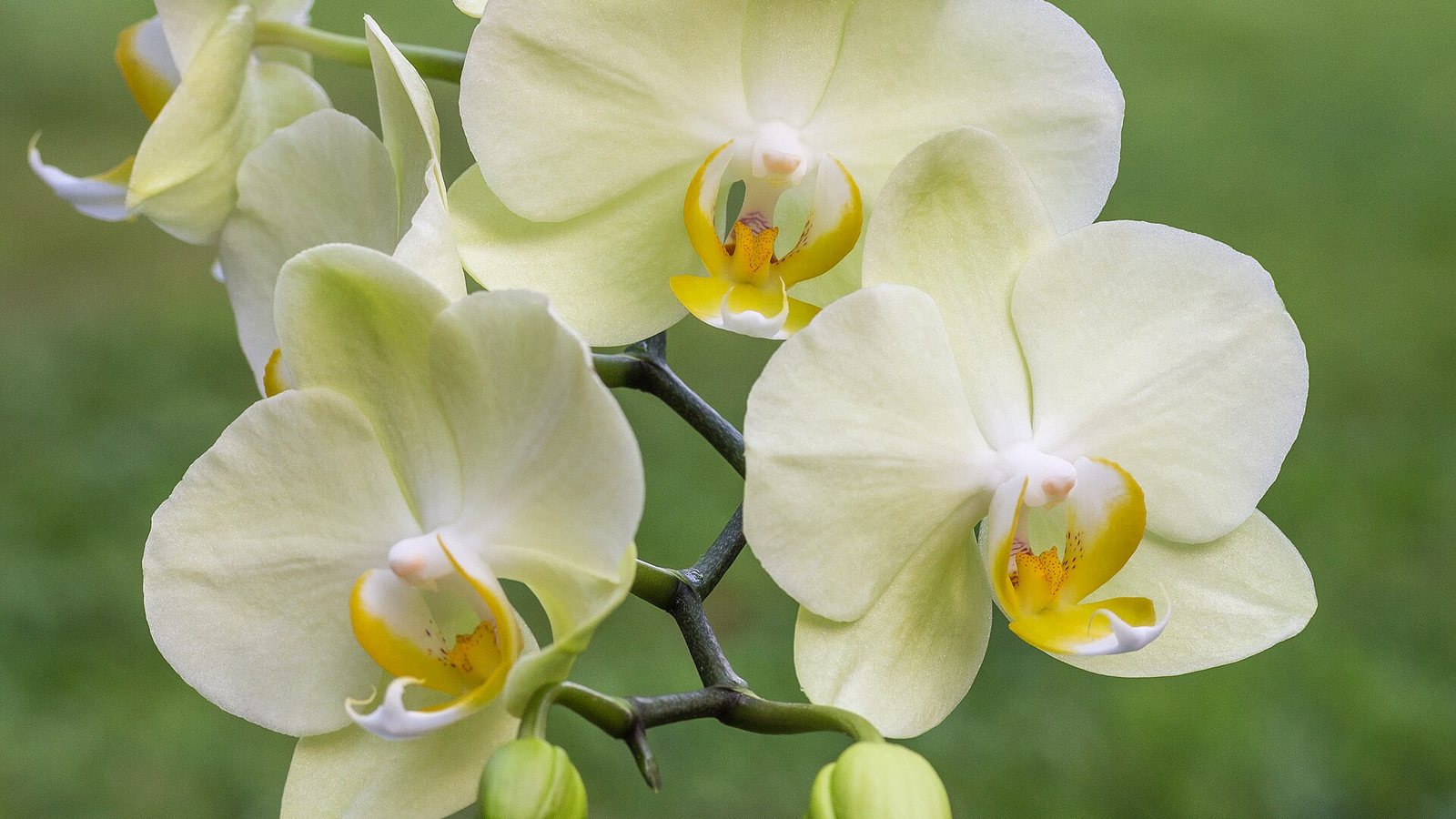
An orchid that won't bloom usually lacks light, cooler autumn nights or healthy roots. Read the leaves, fix the cause and trigger a new flower spike.
Sources
Written and fact-checked by the Flori team. Every guide cites horticultural sources such as the RHS, university extension services and the ASPCA, and is updated when the advice changes. How we write our guides
General plant care information. Plants vary; when a plant is valuable or a problem spreads quickly, consult a local nursery or plant specialist.