Schlumbergera × buckleyi · Cactaceae
Christmas Cactus (Schlumbergera): Care and Facts
How to care for a Christmas cactus: light, watering, soil, getting it to bloom, bud drop and pet safety, with numbers from extension services and the ASPCA.
- Bright indirect light
- Moderate water
- Easy care
- Not toxic to pets (ASPCA)
Also called: holiday cactus, true Christmas cactus, Schlumbergera, Thanksgiving cactus (a close relative); Epiphyllum × buckleyi
 By Flori editorial team · Updated
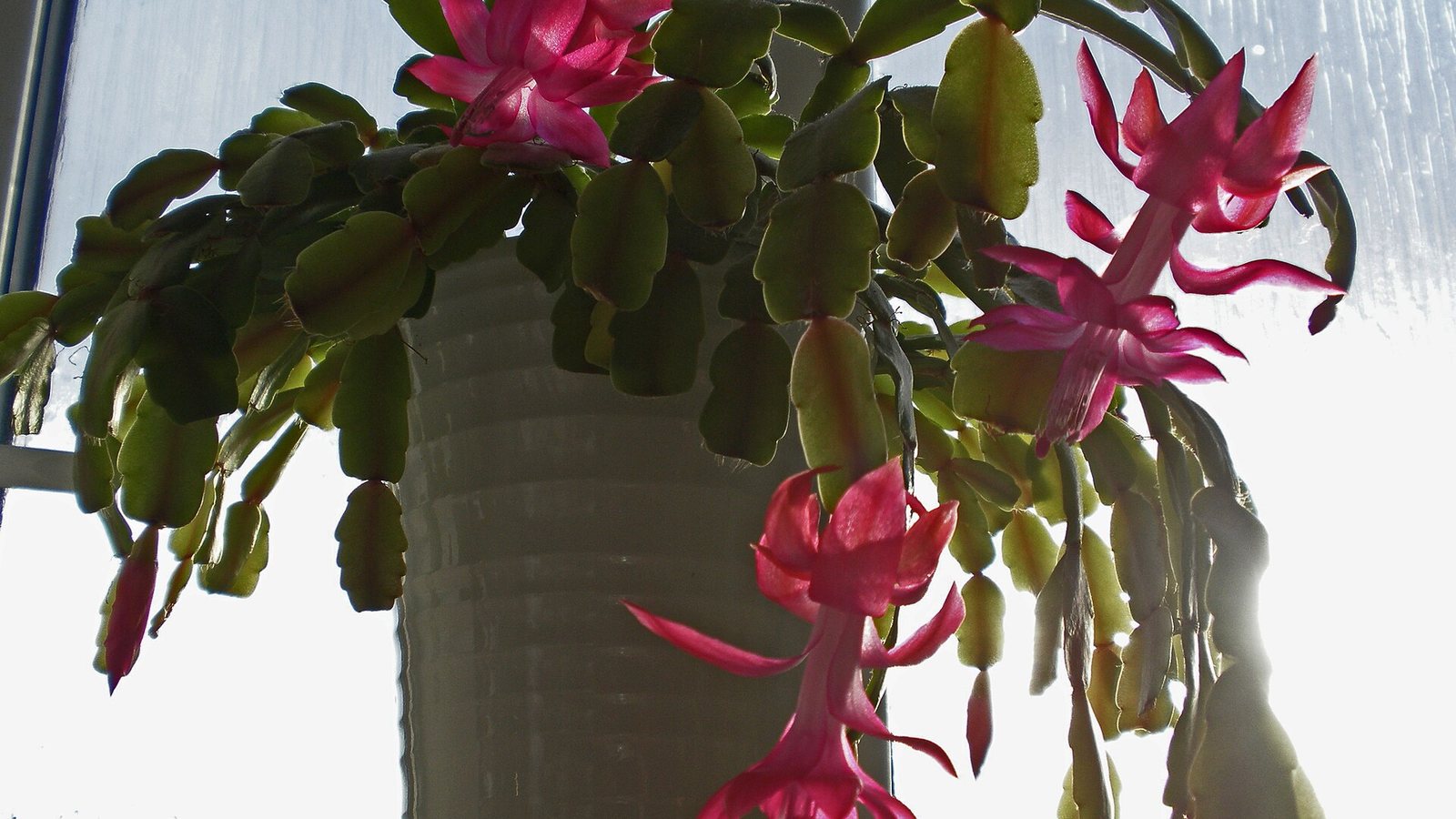
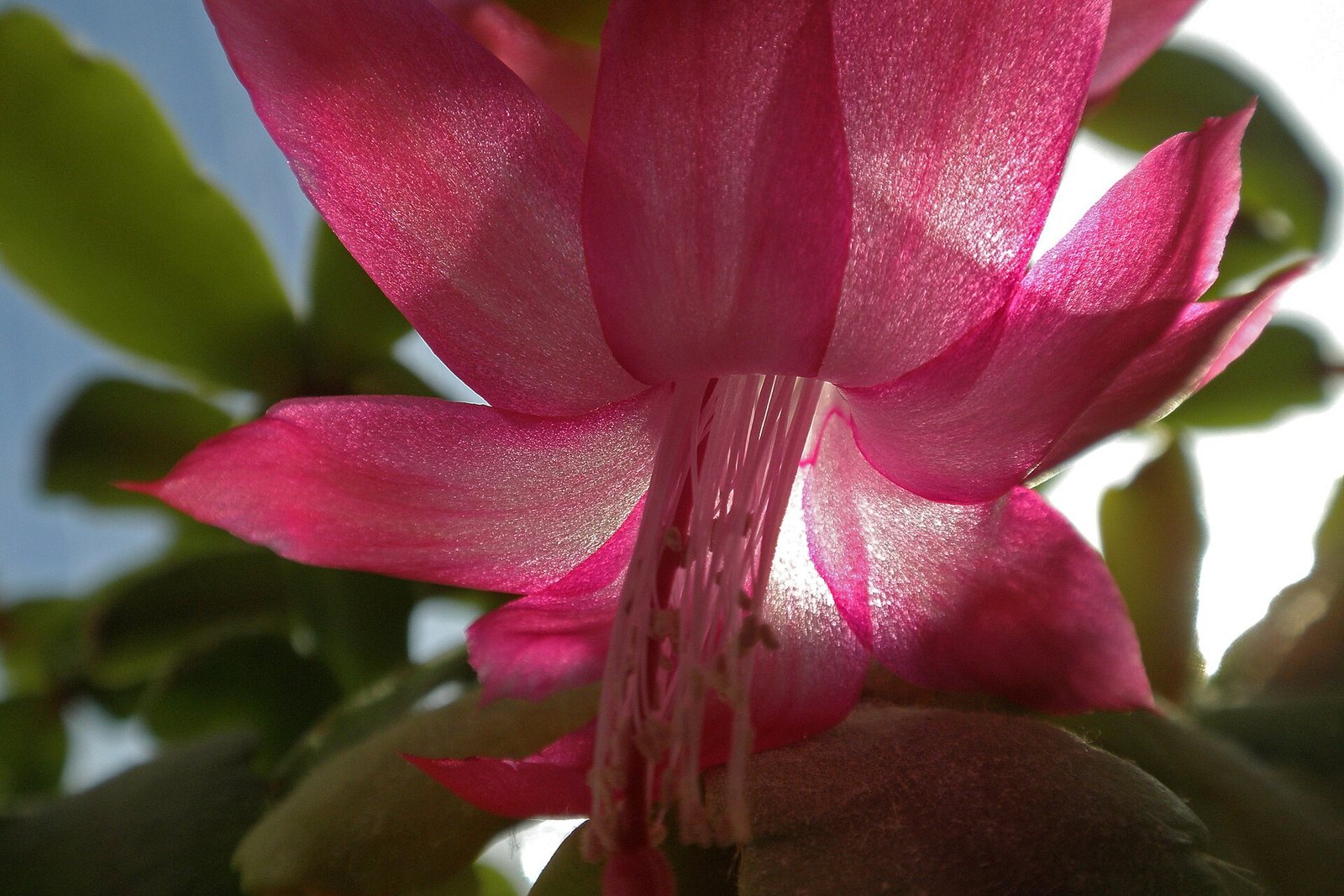
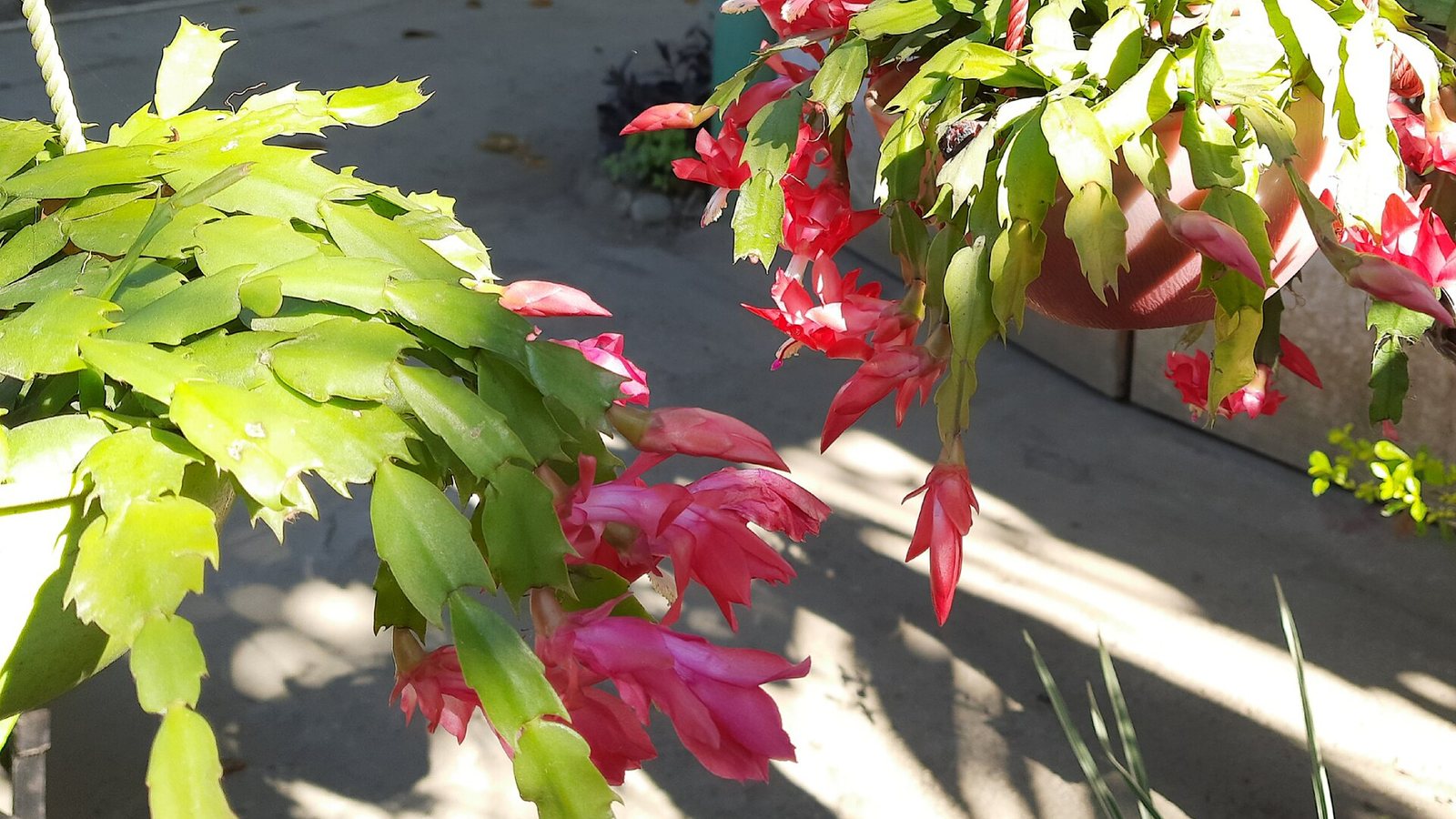 Photo: Rumi Borah~aswiki · CC BY-SA 4.0
The Christmas cactus (Schlumbergera × buckleyi) is a forest cactus from Brazil that blooms in winter. It likes bright indirect light, water when the top inch of soil is dry, and long dark nights with cool temperatures to set buds. The ASPCA lists it as non-toxic to cats and dogs.
At a glance
- Light
- Bright indirect light; full sun can bleach the stems
- Watering
- When the top inch (2.5 cm) of soil is dry; less after buds form and after flowering
- Humidity
- Prefers high humidity (NC State)
- Temperature
- 21–27 °C (70–80 °F); nights 13–18 °C (55–65 °F) to set buds; no frost
- Soil
- Moist, well-drained airy mix: cactus mix, or peat, sand and perlite
- Size
- 15–30 cm (6–12 in) tall, 30–60 cm (12–24 in) wide; hanging habit
- Toxicity
- Non-toxic to cats, dogs and horses (ASPCA)
- Origin
- Hybrid made in England in the 1840s; parent species from Brazil
On this page9
- How much light does a Christmas cactus need?
- How often should you water a Christmas cactus?
- What soil and pot suit a Christmas cactus?
- Does a Christmas cactus need humidity and warmth?
- How do you make a Christmas cactus bloom?
- How do you feed, prune and propagate it?
- What are the common Christmas cactus problems?
- Is a Christmas cactus toxic to cats and dogs?
- Which Christmas cactus varieties are there?
How much light does a Christmas cactus need?
A Christmas cactus (Schlumbergera × buckleyi, a hybrid) grows best in bright, indirect light. UF/IFAS suggests a spot within about six feet (2 m) of a south-, east- or west-facing window, and NC State warns that full sun can bleach the stems. It is a forest cactus from Brazil, not a desert one, so strong midday sun behind glass is a risk rather than a reward.
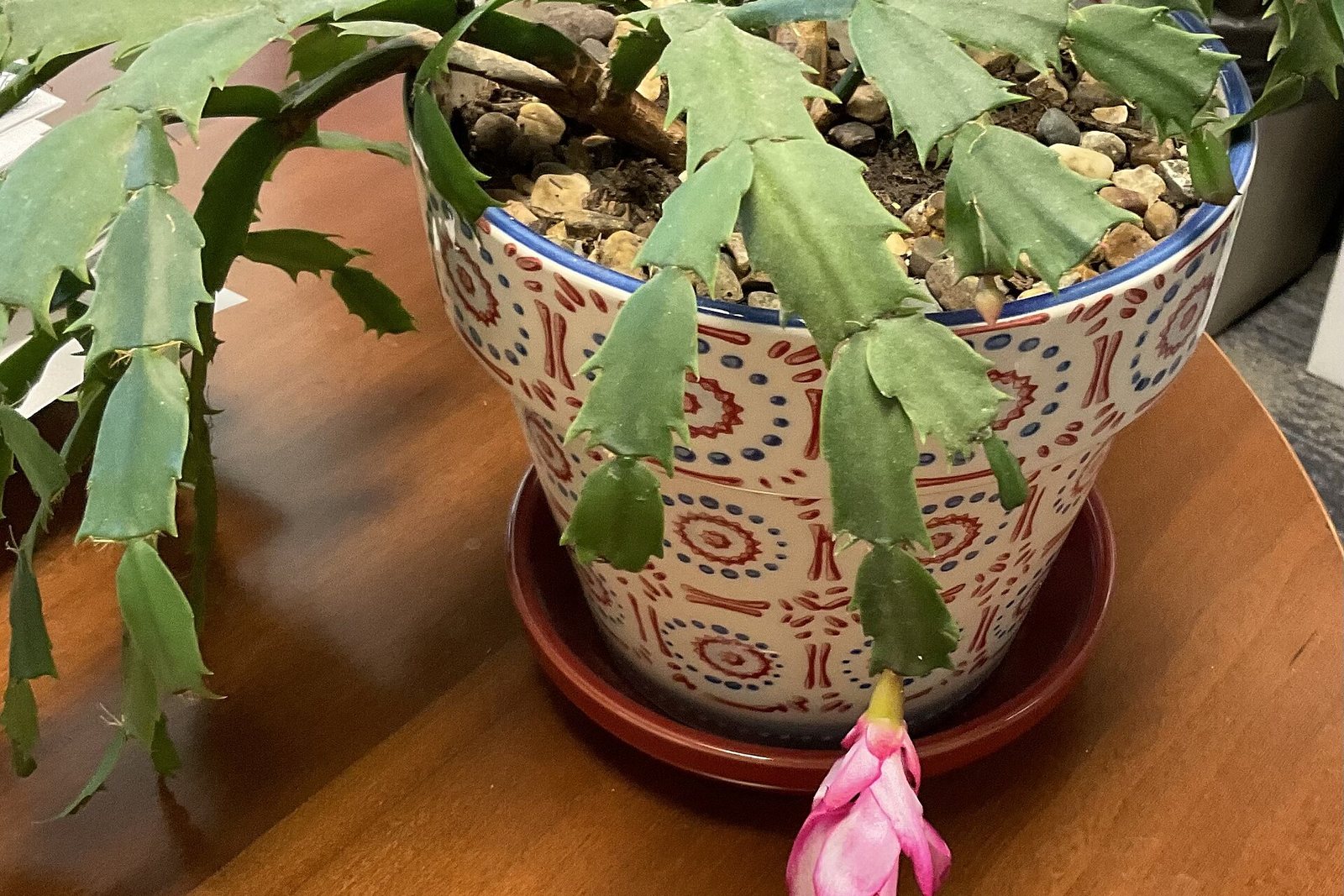
The two most common holiday cacti are easy to mix up. NC State says the Thanksgiving cactus (Schlumbergera truncata) has pointed projections on the stem margins and upright flowers, while the true Christmas cactus has rounded margins and hanging flowers. Both are cared for in the same way.
How often should you water a Christmas cactus?
When the top of the soil is dry, not on a calendar. UF/IFAS says to water only when the upper inch (2.5 cm) of soil feels dry, to water thoroughly until it runs out of the bottom, and to pour off what is left in the saucer. It also says that letting the soil dry out completely makes flowers drop, and that too much water rots stems and roots. NC State says to keep the soil moist but not soggy or dry from spring to summer, and to reduce watering in mid-September as buds develop and again after flowering.
- Check first: press a finger into the soil to the first knuckle.
- Always use a pot with drainage holes.
- Keep the plant steady while it carries buds: moving it or changing its routine is a common reason buds drop.
Our guide on overwatering vs underwatering helps you tell the two apart, and how to water houseplants covers the method.
What soil and pot suit a Christmas cactus?
A moist but well-drained, airy mix. NC State suggests a cactus or succulent potting mix, or a blend of peat moss, sand and perlite, with a pH from acid to neutral. UF/IFAS says the plant prefers to be a bit root-bound, so do not choose a pot too large. Repot only when the roots fill the pot, and go up one pot size.
Does a Christmas cactus need humidity and warmth?
It likes comfortable room temperatures and, according to NC State, high humidity: 21 to 27 °C (70 to 80 °F) is the preferred range, and bathrooms are a popular spot for it. It is hardy outdoors only in USDA zones 10 to 12 and must be protected from freezing. Keep it away from draughts and heat sources such as vents, fireplaces and televisions (UF/IFAS). Our indoor plant humidity guide shows easy ways to raise humidity.
How do you make a Christmas cactus bloom?
It flowers in response to short days and cool nights. UF/IFAS says buds form "in response to shorter days in the fall", that cooler temperatures help, and that plants exposed to artificial light at night will not set buds as expected. NC State asks for at least 13 hours of uninterrupted darkness a night, with night temperatures of 13 to 18 °C (55 to 65 °F), starting in mid-September.
UF/IFAS gives a practical routine: move the plant to a dark place such as a closet from 5 p.m. to 8 a.m. every day for about six weeks. Plants treated this way bloom in about ten weeks; starting around 14 October should bring full bloom around 23 December (northern hemisphere). In the southern hemisphere the seasons are reversed, so count the weeks back from the date you want flowers.
The same habits keep the buds on the plant. UF/IFAS says bud drop usually follows environmental change, especially high temperatures, and can also come from improper watering. Our guide to flowering houseplants lists other plants that bloom indoors, and Christmas plants to give compares the usual gift choices.
How do you feed, prune and propagate it?
Feeding. UF/IFAS says to fertilise every one to two months during the growing season (April to September), monthly when the plant grows fast. Use less than the label rate if in doubt, because excess salts can damage roots. A care reminder in Flori can keep the schedule.
Pruning. Pruning encourages branching and flowering, but UF/IFAS says not to prune beyond mid-summer, or you will cut off the future buds.
Propagation. Take a cutting of two or three jointed sections. NC State says to let the cutting callus for a few days, then plant it in a moist, well-draining mix; roots form in a few weeks. Keep it in bright indirect light until new growth appears (UF/IFAS).
Size. NC State gives 15 to 30 cm (6 to 12 in) tall and 30 to 60 cm (12 to 24 in) wide, with a hanging habit.
What are the common Christmas cactus problems?
- Buds or flowers falling: sudden changes in temperature, light or watering, drafts, heat sources, or soil that dried out completely (UF/IFAS, NC State).
- Soft, rotting stems or roots: too much water. See the root rot rescue plan.
- Yellow or bleached stems: too much direct sun (NC State).
- Cottony white clusters, webbing, sticky bumps: mealybugs, red spider mites, aphids or scale, the pests NC State lists. Gray mould can follow high humidity with poor air flow.
- No flowers: too little darkness or artificial light at night.
If you are unsure what you are seeing, Dr. Flori can work from a description or a photo and suggest the likely cause. In winter the plant benefits from the advice in our winter houseplant care guide.
Is a Christmas cactus toxic to cats and dogs?
The ASPCA lists the Christmas cactus as non-toxic to dogs, cats and horses. Its page for "Christmas cactus" gives the scientific name Schlumbergera bridgesii, so the listing is for the holiday cacti group rather than for this exact hybrid. NC State tags the hybrid as non-toxic for cats and dogs. Non-toxic does not mean harmless to chew: a pet that eats a lot of any plant can still have an upset stomach, so call your vet if one does. See also pet-safe houseplants for cats and dogs.
Which Christmas cactus varieties are there?
Most plants sold as Christmas cactus are hybrids, and nurseries label the Thanksgiving cactus the same way. Flowers come in red, pink, magenta, white and orange tones. NC State describes the true Christmas cactus as blooming in winter, typically December to February, with tubular, drooping flowers from magenta-red to pink, followed by red berries. The Thanksgiving cactus (Schlumbergera truncata) blooms earlier, from late November. If you want to know which one you have, look at the stem edges and the way the flowers sit, as NC State describes.
Frequently asked questions
How do I get my Christmas cactus to bloom?
Give it short days and cool nights. NC State asks for at least 13 hours of uninterrupted darkness at 13–18 °C (55–65 °F); UF/IFAS suggests a dark closet from 5 p.m. to 8 a.m. for about six weeks.
Why is my Christmas cactus dropping buds?
UF/IFAS says bud drop usually follows environmental change, especially high temperatures, and can also come from improper watering. Keep it away from drafts and heat sources.
How often should I water a Christmas cactus?
When the upper inch (2.5 cm) of soil feels dry (UF/IFAS). Water thoroughly and empty the saucer; too much water rots stems and roots.
Is a Christmas cactus toxic to cats and dogs?
The ASPCA lists the Christmas cactus as non-toxic to dogs, cats and horses. A pet that eats a lot of any plant can still get an upset stomach.
What is the difference between a Christmas and a Thanksgiving cactus?
NC State says the Thanksgiving cactus has pointed projections on the stem margins and upright flowers; the true Christmas cactus has rounded margins and hanging flowers.
Sources
Written and fact-checked by the Flori team. Every guide cites horticultural sources such as the RHS, university extension services and the ASPCA, and is updated when the advice changes. How we write our guides
General plant care information. Plants vary; when a plant is valuable or a problem spreads quickly, consult a local nursery or plant specialist.