Crassula ovata · Crassulaceae
Jade Plant (Crassula ovata): Care and Facts
How to care for a jade plant: light, watering, soil, size, flowering, problems and pet toxicity, with numbers from extension services and the ASPCA.
- Bright indirect light
- Little water
- Easy care
- Toxic to pets
Also called: jade tree, money plant, lucky plant, Crassula argentea; Crassula argentea
 By Flori editorial team · Updated
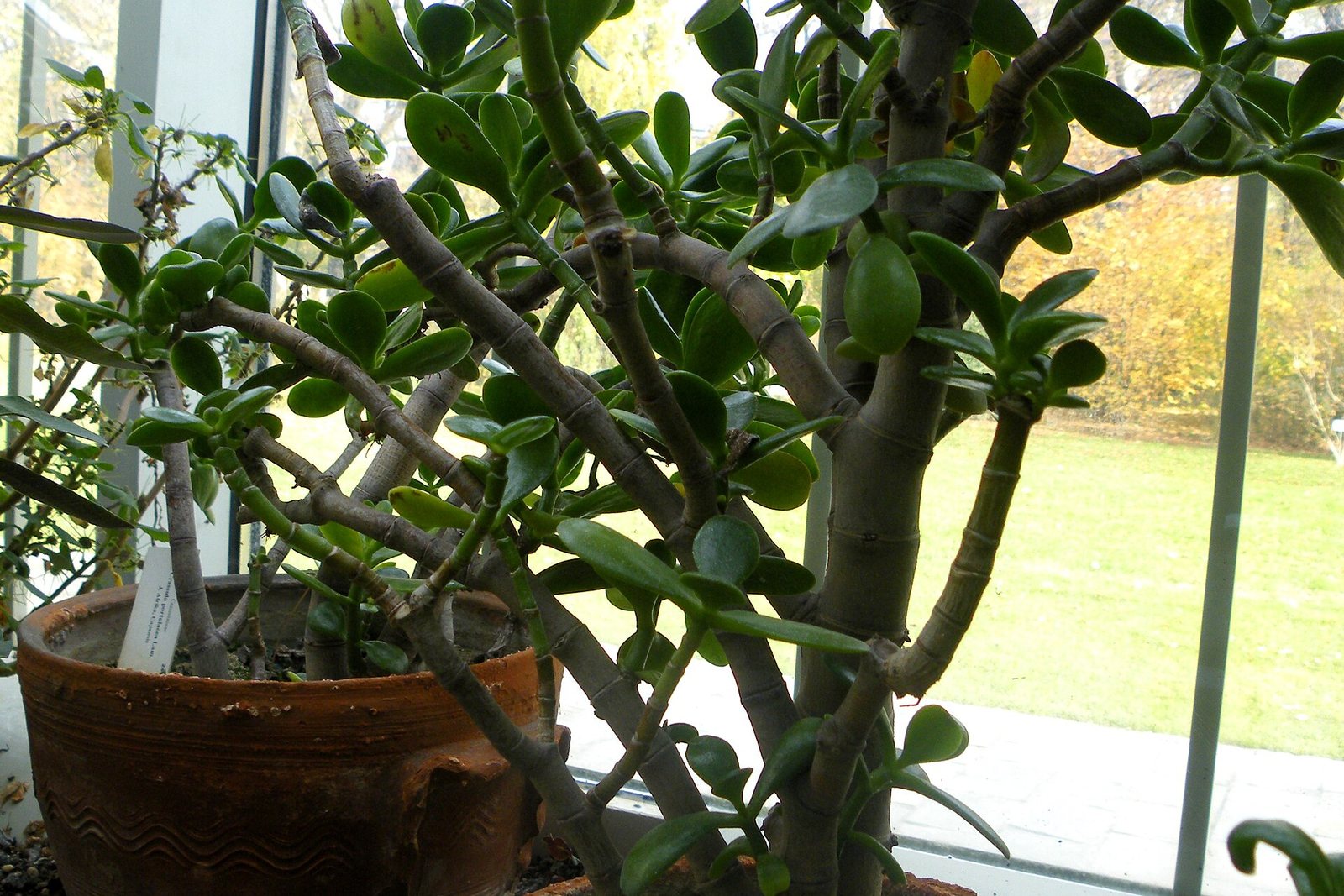
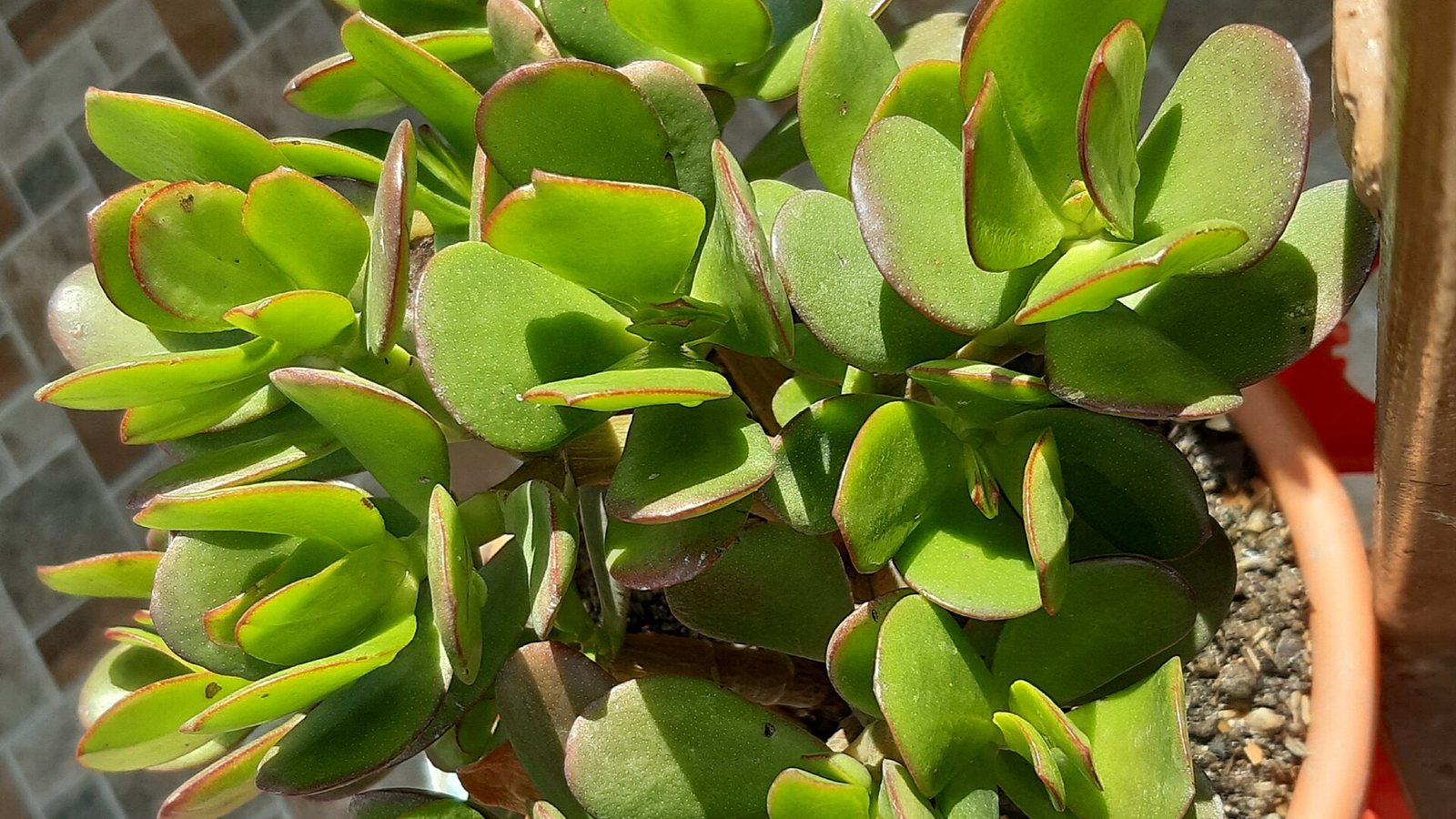 Photo: Sabina Bajracharya · CC BY-SA 4.0
The jade plant (Crassula ovata) is a slow-growing succulent shrub from South Africa. It wants bright light with at least four hours of direct sun, deep watering only after the soil has dried, and a gritty, fast-draining mix. It is toxic to cats and dogs, according to the ASPCA.
At a glance
- Light
- Bright light; 4+ hours of direct sun, or 6+ hours of bright indirect light
- Watering
- Deeply, only when the soil is dry; much less in winter
- Humidity
- Tolerates a wide range; no misting needed
- Temperature
- Ideal 16–24 °C (60–75 °F); no frost
- Soil
- Cactus or succulent mix, or potting soil with sand or perlite
- Size
- 0.9–1.8 m (3–6 ft) tall, 0.6–0.9 m (2–3 ft) wide; slow growing
- Toxicity
- Toxic to cats and dogs (ASPCA): vomiting, depression, incoordination
- Origin
- South Africa (Eastern Cape and KwaZulu-Natal)
On this page8
- How much light does a jade plant need?
- How often should you water a jade plant?
- What soil and pot suit a jade plant?
- What temperature and humidity does it like?
- How do you feed, prune and propagate a jade plant?
- What are the common jade plant problems?
- Is a jade plant toxic to cats and dogs?
- Which jade plant varieties are there?
How much light does a jade plant need?
A jade plant (Crassula ovata, once sold as Crassula argentea) wants a lot of light. The University of Wisconsin Extension says it needs "four or more hours of direct sun" and tolerates bright indirect light, while South Dakota State University (SDSU) Extension asks for at least six hours of indirect light a day. NC State describes the ideal spot as a sunny place indoors with some afternoon shade.
Too little light makes the plant leggy, with deep green leaves and drooping stems (Wisconsin, SDSU). Too much sudden sun can scorch young leaves, so move it into brighter light gradually. A south or west window with a little afternoon shade suits it well in most homes.
| Position | What to expect |
|---|---|
| Four or more hours of direct sun | Compact growth, the best leaf colour (Wisconsin) |
| Bright indirect light | Tolerated; at least six hours a day (SDSU) |
| Dim room | Leggy stems, deep green leaves, drooping growth |
How often should you water a jade plant?
Less often than most people think. SDSU puts it in a few words: "less is more", and it is better to err on the dry side. Water deeply, let the soil dry out, and only then water again. NC State says to water in moderation when the soil is dry and to reduce watering from autumn to late winter.
- Check first: poke a finger into the soil (SDSU). If it still feels damp, wait.
- Water thoroughly, then empty the saucer so the pot never stands in water (Wisconsin).
- Always use a pot with drainage holes.
Overwatering is the main way a jade plant dies: Wisconsin says it makes the leaves drop and the stem rot. There is no fixed day count, because light, pot size and temperature change the rhythm. Our guides on overwatering vs underwatering and saving a plant from root rot show what to look for.
What soil and pot suit a jade plant?
A fast-draining mix. SDSU says a pre-mixed cactus soil is good, and if you use ordinary potting soil you should add sand, perlite or pebbles. Wisconsin asks for a "well-drained, high-porosity potting mix designed for succulents or cacti" and suggests perlite or sharp sand to open up a standard mix. NC State mentions a well-drained potting soil with plenty of loam. Our guide to the best soil for succulents and cacti compares the options.
Older plants become top-heavy, so a heavy clay or ceramic pot is steadier than a light plastic one. Wisconsin suggests repotting every two to three years or when the plant tips over easily, SDSU every few years for a young plant and every 4 to 5 years for a mature one. Repot as new growth starts, and water sparingly until the plant settles.
What temperature and humidity does it like?
Ordinary rooms are fine. SDSU calls 16 to 24 °C (60 to 75 °F) ideal, NC State says average to cool indoor temperatures, and Wisconsin says the plant tolerates a wide range of humidity, so no misting is needed. It may survive a light frost, but freezing conditions kill it. If you put it outdoors for summer, move it out gradually and bring it back inside before the first frost. NC State lists it as hardy outdoors only in USDA zones 11 to 12.
How do you feed, prune and propagate a jade plant?
Feeding. SDSU says a balanced fertiliser once a year in early spring is enough; Wisconsin suggests feeding every two months during active growth, or using a dilute fertiliser more often. Either way, none in winter. A care reminder in Flori can keep the rhythm for you.
Pruning. Wisconsin says to prune in spring, cutting stems back to a lateral branch. That keeps the plant compact and helps the trunk carry its weight.
Propagation. NC State says propagation is easily achieved by leaf cutting, and stem cuttings work too. Wisconsin says to let the cuttings dry for a few days before planting them in dry, well-drained soil, where they root quickly.
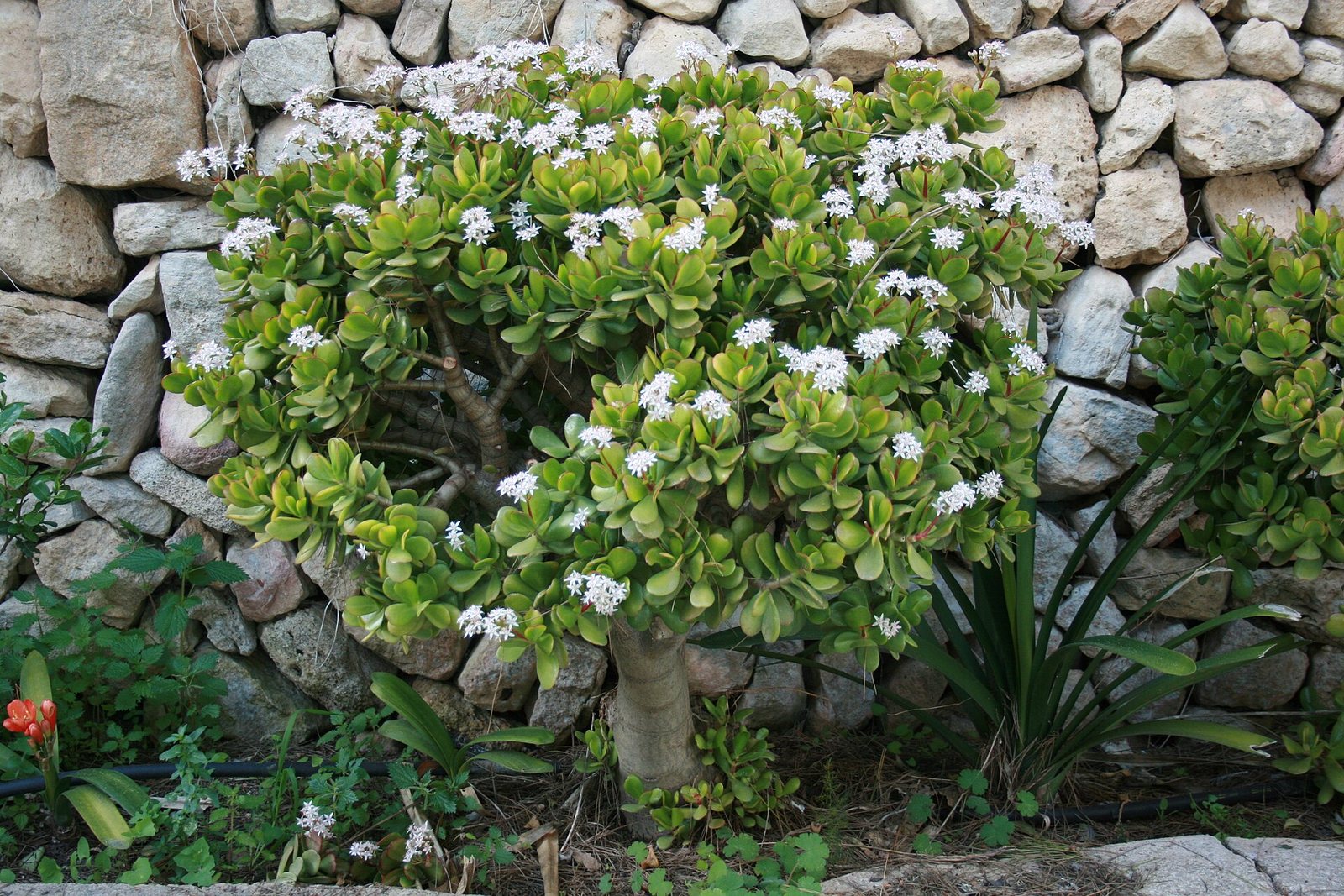
Flowers. Small white or pink star-shaped flowers form in response to long nights. Wisconsin says to withhold water in autumn, keep the plant cool (about 13 °C, 55 °F), and give no extra light, for several weeks, then return to regular watering.
Size. A jade plant grows slowly. NC State gives a height of 3 to 6 ft (0.9 to 1.8 m) and a width of 2 to 3 ft (0.6 to 0.9 m).
What are the common jade plant problems?
- Leaves dropping, squishy or wrinkled: usually a watering problem, according to SDSU. Wet soil causes soft, mushy leaves and stems; a long drought can also cause leaf drop and wrinkling.
- Soft, mushy stem: root rot from overwatering, or bacterial soft rot, which SDSU says has no cure.
- White cottony patches on the underside of leaves: mealybugs, the most common pest (Wisconsin). Wipe them off with a cotton swab dipped in rubbing alcohol and repeat for several weeks. Wisconsin warns that insecticides can damage the succulent leaves, so use them cautiously and follow the label.
- Fine webbing or stippling: spider mites, an occasional pest (NC State, Wisconsin).
Our winter houseplant care guide covers the cooler months. If you cannot tell what you are seeing, Dr. Flori can work from a description or a photo and suggest the likely cause. With its water-storing leaves and dry-between-waterings routine, the jade plant is cared for much like the snake plant.
Is a jade plant toxic to cats and dogs?
Yes. The ASPCA lists the jade plant as toxic to dogs, cats and horses, with vomiting, depression and incoordination as signs, and says the toxic principle is not known. NC State also flags it as a problem for cats and dogs. Keep it out of reach of pets that chew leaves, and call your vet or the ASPCA Animal Poison Control Center if a pet eats some. For other plants to avoid, see plants toxic to cats.
Which jade plant varieties are there?
NC State lists many cultivars of Crassula ovata. Among them are 'Hobbit' and 'Gollum' (leaves that are curled or tubular), 'Hummel's Sunset' (yellow to orange-red foliage), 'Variegata' (green, white and yellow, sometimes pink), 'Minima' (a dwarf with small dark green leaves) and 'Skinny Fingers' (long, thin, tubular leaves). Care is the same for all of them.
Frequently asked questions
How often should I water a jade plant?
Only when the soil is dry. SDSU Extension says less is more and that it is better to err on the dry side; water much less from autumn to late winter.
How much sun does a jade plant need?
The University of Wisconsin Extension says four or more hours of direct sun; SDSU Extension asks for at least six hours of indirect light a day.
Is the jade plant toxic to cats and dogs?
Yes. The ASPCA lists it as toxic to dogs, cats and horses, with vomiting, depression and incoordination as signs. Keep it out of reach of pets.
Why is my jade plant dropping leaves?
Most often a watering problem. Wisconsin Extension says overwatering makes the leaves drop and the stem rot, and drought or too little light can also cause leaf drop.
How do I propagate a jade plant?
From leaf or stem cuttings. Let them dry for a few days, then plant them in dry, well-drained soil, where they root quickly (Wisconsin Extension).
Sources
Written and fact-checked by the Flori team. Every guide cites horticultural sources such as the RHS, university extension services and the ASPCA, and is updated when the advice changes. How we write our guides
General plant care information. Plants vary; when a plant is valuable or a problem spreads quickly, consult a local nursery or plant specialist.