Yellow Leaves on Monstera: Causes and Fixes
Why is your monstera getting yellow leaves? Match the pattern to overwatering, thirst, low light, cold or hunger, check the roots and fix the cause first.
 By Flori editorial team · Updated
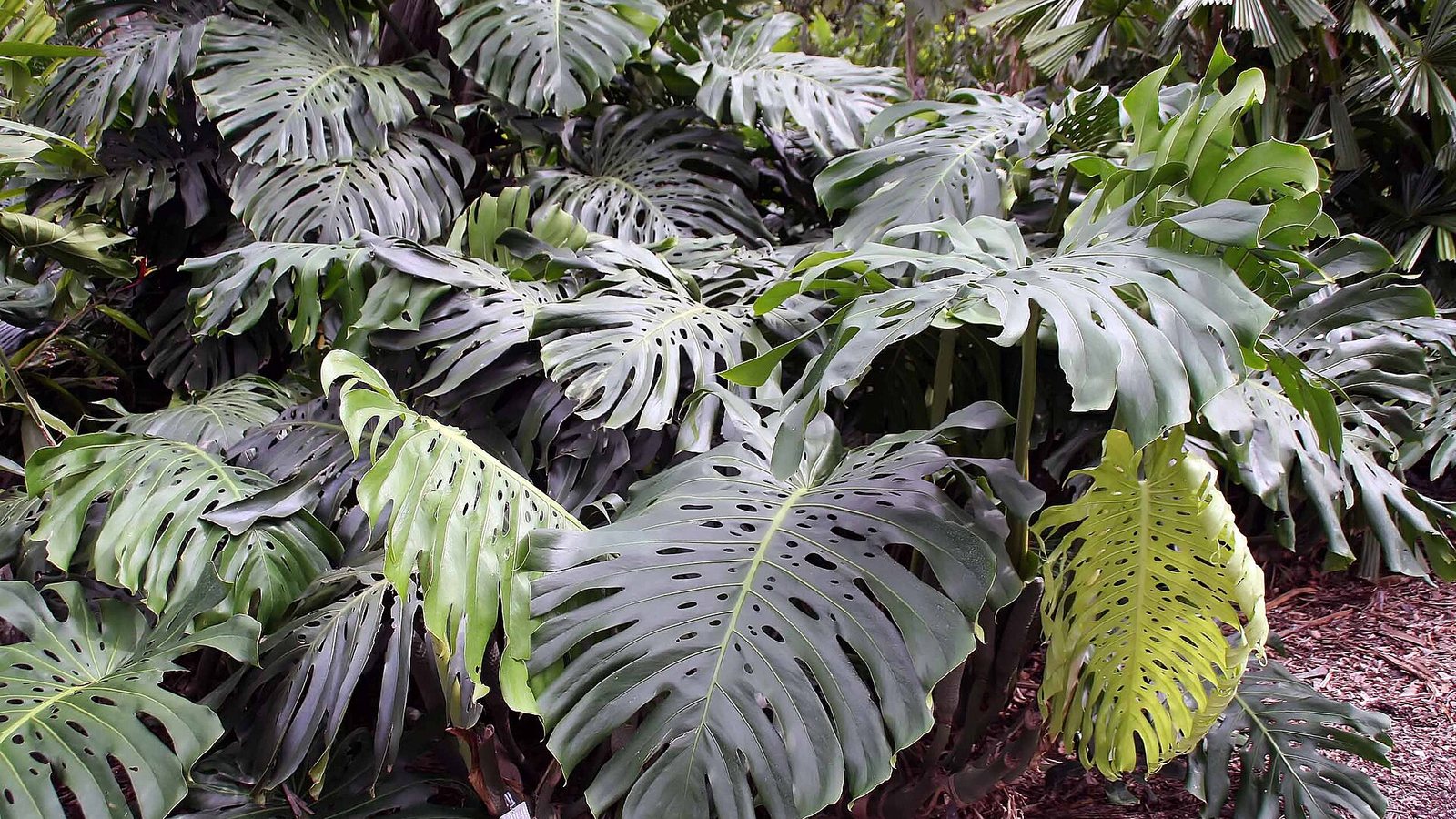
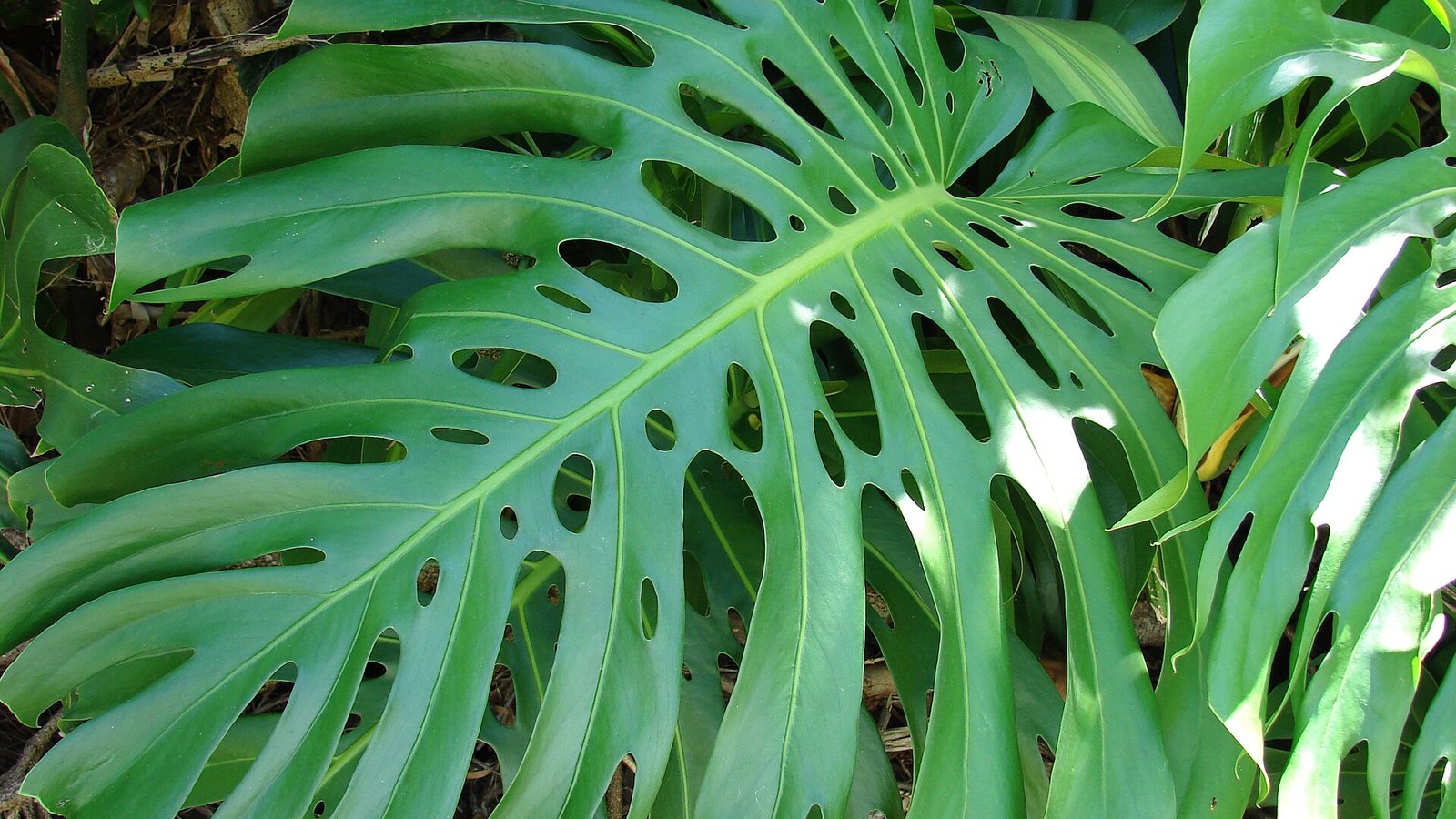 Photo: Forest & Kim Starr · CC BY 3.0
Yellow leaves on a monstera most often mean overwatering: the roots sit in wet compost or a saucer of water and start to rot. Thirst, too little light, cold draughts and exhausted compost cause yellowing too. Check which leaves are yellow, feel the compost and look at the roots before changing anything. One old lower leaf yellowing now and then is normal.
Key takeaways
- Old and new monstera leaves yellowing together, with wet compost, points to overwatering.
- Water only when the top quarter to third of the compost is dry, and never leave the pot standing in water.
- Old lower leaves yellowing first on a light, dry pot suggests underwatering.
- Pale, small leaves on long stems mean too little light; bleached or brown patches mean direct sun.
- Fully yellow leaves will not turn green again, so judge recovery by the new leaves.
On this page8
Why are my monstera's leaves turning yellow?
Yellow leaves on a monstera (Monstera deliciosa, the Swiss cheese plant) are a signal, not a disease in themselves. The most common cause by far is too much water, but a monstera left dry, kept in a dim corner, chilled by a draught or grown for years in the same tired compost can turn yellow as well. This guide is specific to monsteras: a symptom table built around how this plant grows, followed by a check of the roots, which is where most answers are found. For yellowing on other plants, use our general yellow leaves diagnosis guide.
First, a reassurance. A monstera is a big, fast plant, and an old leaf at the base yellowing and dropping now and then is normal ageing. One leaf every few months is not a problem. Several leaves at once, new leaves turning yellow or yellow leaves with brown, soft patches are.
Which leaves are yellow?
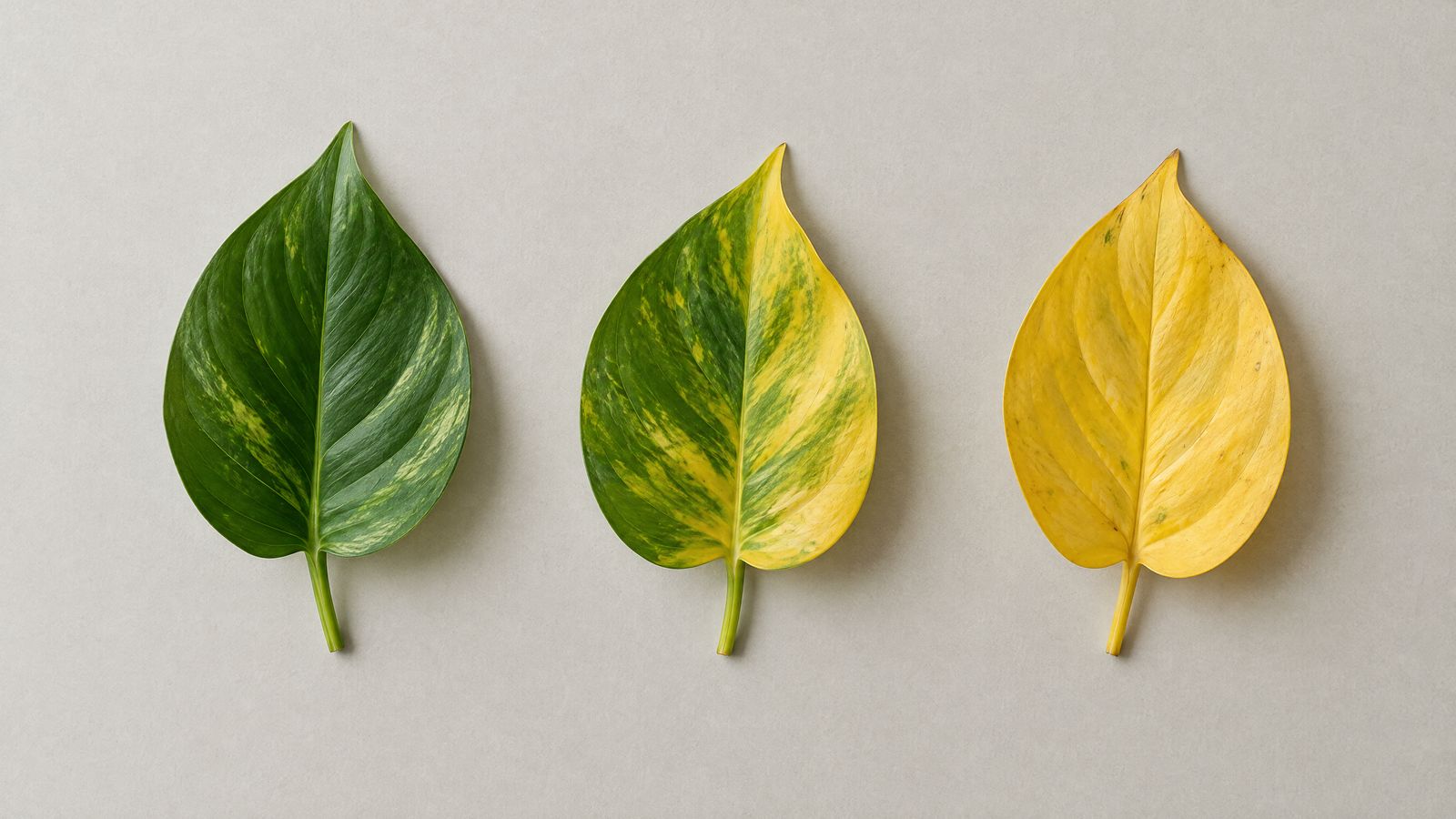
Position is the quickest clue. The RHS gives a simple rule for houseplants that suits monsteras well: on a dry plant, the older leaves at the base usually yellow and fall first, while old and new leaves yellowing and dropping at the same time is a sign of overwatering. Pale new leaves with weak, stretched growth point to light, and yellowing with dry edges on the side nearest a door or window points to cold air.
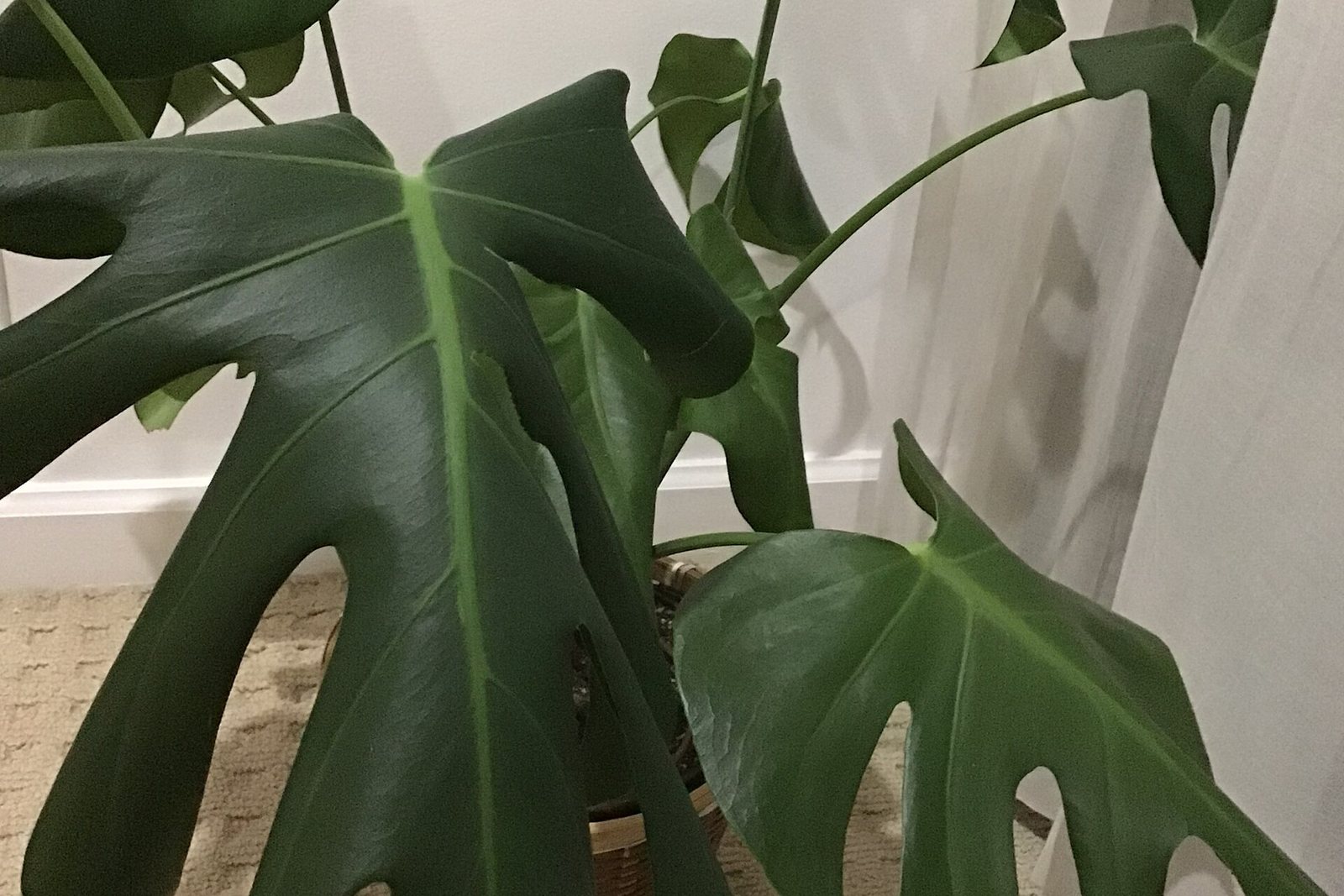
Monstera yellow leaves: symptom, cause and fix
| What you see | Likely cause | First fix |
|---|---|---|
| Old and new leaves yellowing, compost wet for days, sour smell | Overwatering, possible root rot | Stop watering, empty the saucer, check the roots |
| Lower leaves yellow and crisp, pot light, compost pulling from the sides | Underwatering | Water thoroughly until it drains, then check more often |
| Pale leaves, small leaves without holes, long gaps on the stem | Too little light | Move closer to a bright window, out of direct summer sun |
| Bleached, yellow-brown patches on the side facing the glass | Sun scorch | Move back from the window or filter the light |
| Yellowing with dry edges near a door, window or vent in winter | Cold draughts | Move to a steady 18–24 °C (64–75 °F) spot |
| Older leaves slowly paler, same compost for years, weak growth | Exhausted compost, lack of feeding | Feed in the growing season or repot into fresh compost |
| Yellow speckles, fine webbing or small brown bumps | Spider mites or scale insects | Inspect leaf undersides and stems, wipe pests off |
Is my monstera overwatered?
Clemson Extension says that, most often, yellowing in houseplants is a symptom of overwatering, and monsteras are no exception. The plant likes moisture, but its roots need air too. The RHS advises letting the compost almost dry out before watering thoroughly, and warns that overwatering or leaving the pot standing in water for long periods can make the roots rot. NC State Extension gives a practical measure: water thoroughly, then let the top quarter to third of the compost dry before you water again.
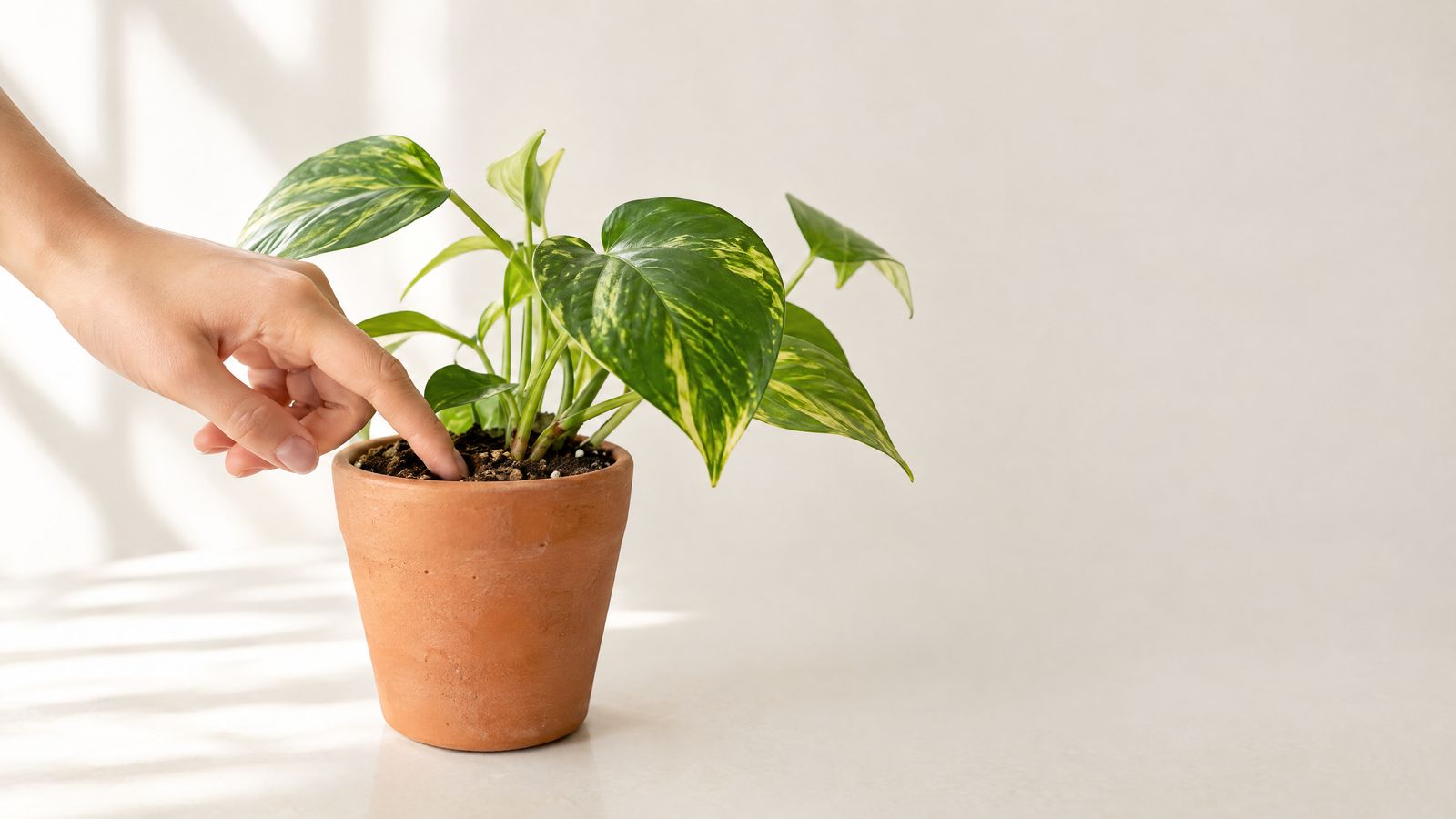
- Push a finger or a wooden stick into the compost. If the top quarter is still damp, do not water.
- Tip out any water in the saucer or the decorative outer pot, which is where many monsteras quietly drown.
- Check that the inner pot has drainage holes; Clemson suggests checking drainage first when yellowing appears.
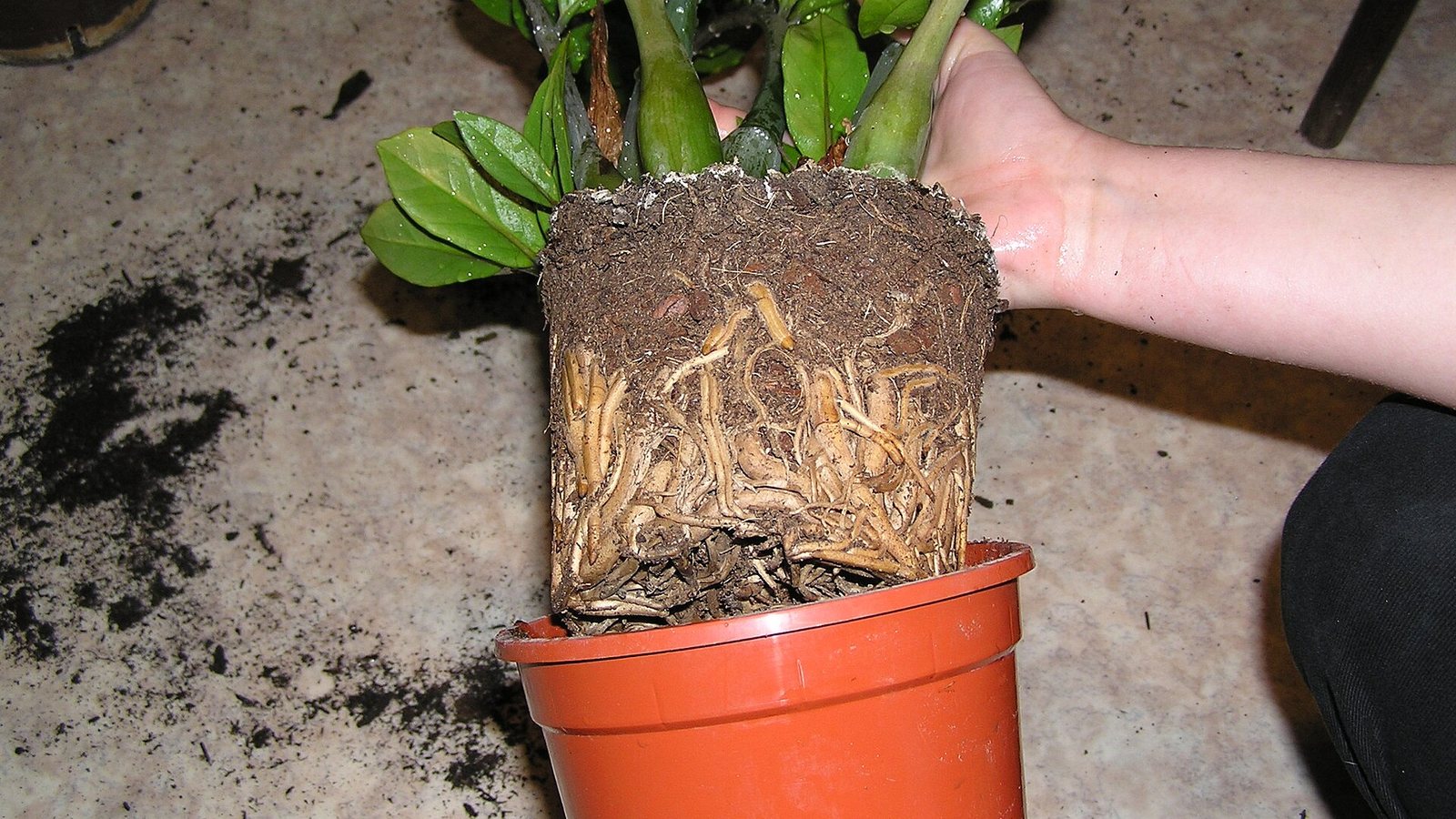
- Slide the plant out and look at the roots. Healthy roots are firm and pale. Dark, soft, mushy roots mean rot.
If only a few roots are affected, cut them away and repot into fresh, free-draining mix; our root rot rescue plan covers the steps. Clemson notes that when most of the roots are dark, soft and dead, the plant is usually better discarded, though with a monstera you can often save a healthy stem section with a node as a cutting.
Could it be thirst instead?
Monsteras are forgiving of a short dry spell, but a plant left bone dry for weeks yellows from the bottom up. The leaves feel crisp rather than soft, the pot is noticeably light and the compost may have shrunk away from the sides. Water slowly until it runs from the drainage holes, let it drain fully and then return to a check-first routine. Our guide on how to water houseplants explains how to read the compost and the weight of the pot. The RHS adds that rainwater is preferable to tap water where possible.
Is it light, sun or temperature?
Monsteras want bright but indirect light. NC State describes moderate brightness without direct sun, and notes that variegated cultivars need more light than plain green ones. In a dim corner a monstera produces pale, small leaves without holes on long, stretched stems, and the lower leaves may yellow and fall. The RHS lists weak, spindly growth and pale leaves as signs of too little light. See the signs your plant needs more light for what to look for.
The opposite problem looks different: the RHS warns that leaves can scorch in direct summer sun, leaving bleached or brown patches. Temperature matters too. The RHS gives 18–24 °C (64–75 °F) as the comfortable range, and NC State lists 16–29 °C (60–85 °F). The RHS also notes that draughts can yellow houseplant leaves, and that windowsill plants can be chilled when curtains trap cold air against the glass on winter nights.
Could it be hunger or pests?
A monstera that has grown in the same compost for years can run short of nutrients, with older leaves gradually paling and growth slowing. The RHS suggests a liquid feed during the growing season and repotting into fresh compost when growth is weak. Never feed a plant whose roots are rotting; fix the watering first. Our monstera care guide covers feeding and repotting.
Sap-sucking pests leave speckled, yellowing leaves. Check the undersides and stems for fine webbing (spider mites) or small brown bumps (scale insects; NC State lists fern scale as a common pest). Small numbers can be wiped or picked off, as the RHS advises. If you use a product, choose the least-toxic option and follow the label.
What should I do with the yellow leaves?
A leaf that has turned fully yellow will not green up again. Once you have fixed the cause, cut it off at the base with clean scissors. Change one thing at a time and judge progress by the next new leaf, which on a healthy monstera should open green and firm. If you are torn between two causes, Dr. Flori can ask follow-up questions about the leaves, compost and light, and say how urgent it is.
Wear gloves when you handle cut leaves and stems. The ASPCA lists Monstera deliciosa as toxic to cats and dogs: its insoluble calcium oxalate crystals can cause mouth irritation, drooling, vomiting and difficulty swallowing. Keep fallen leaves away from pets.
Frequently asked questions
Should I cut yellow leaves off my monstera?
Yes, once a leaf is fully yellow it will not recover, so cut it at the base with clean scissors. Fix the watering, light or temperature problem first, or new leaves will follow.
How often should I water a monstera to stop yellow leaves?
There is no fixed schedule. Water thoroughly when the top quarter to third of the compost is dry, empty the saucer and never leave the pot standing in water.
Can a monstera recover from yellow leaves?
The plant can, the yellow leaves cannot. If the roots are still mostly firm and pale, correct the cause and new leaves should come in green.
Why is my monstera yellowing in winter?
Usually because the compost stays wet longer in cooler, darker conditions, or because the plant sits in a cold draught near a window or door. Water less often and keep it at 18–24 °C (64–75 °F).
Why are your plant's leaves turning yellow? Read which leaves yellow first, check soil and roots, and match the pattern to its cause and first fix.
Sources
Written and fact-checked by the Flori team. Every guide cites horticultural sources such as the RHS, university extension services and the ASPCA, and is updated when the advice changes. How we write our guides
General plant care information. Plants vary; when a plant is valuable or a problem spreads quickly, consult a local nursery or plant specialist.