Monstera deliciosa · Araceae
Monstera (Monstera deliciosa): Care and Facts
How to care for a monstera: light, watering, soil, support, problems and pet toxicity, with numbers from extension services and the ASPCA.
- Bright indirect light
- Moderate water
- Easy care
- Toxic to pets
Also called: Swiss cheese plant, split-leaf philodendron, ceriman, hurricane plant
 By Flori editorial team · Updated
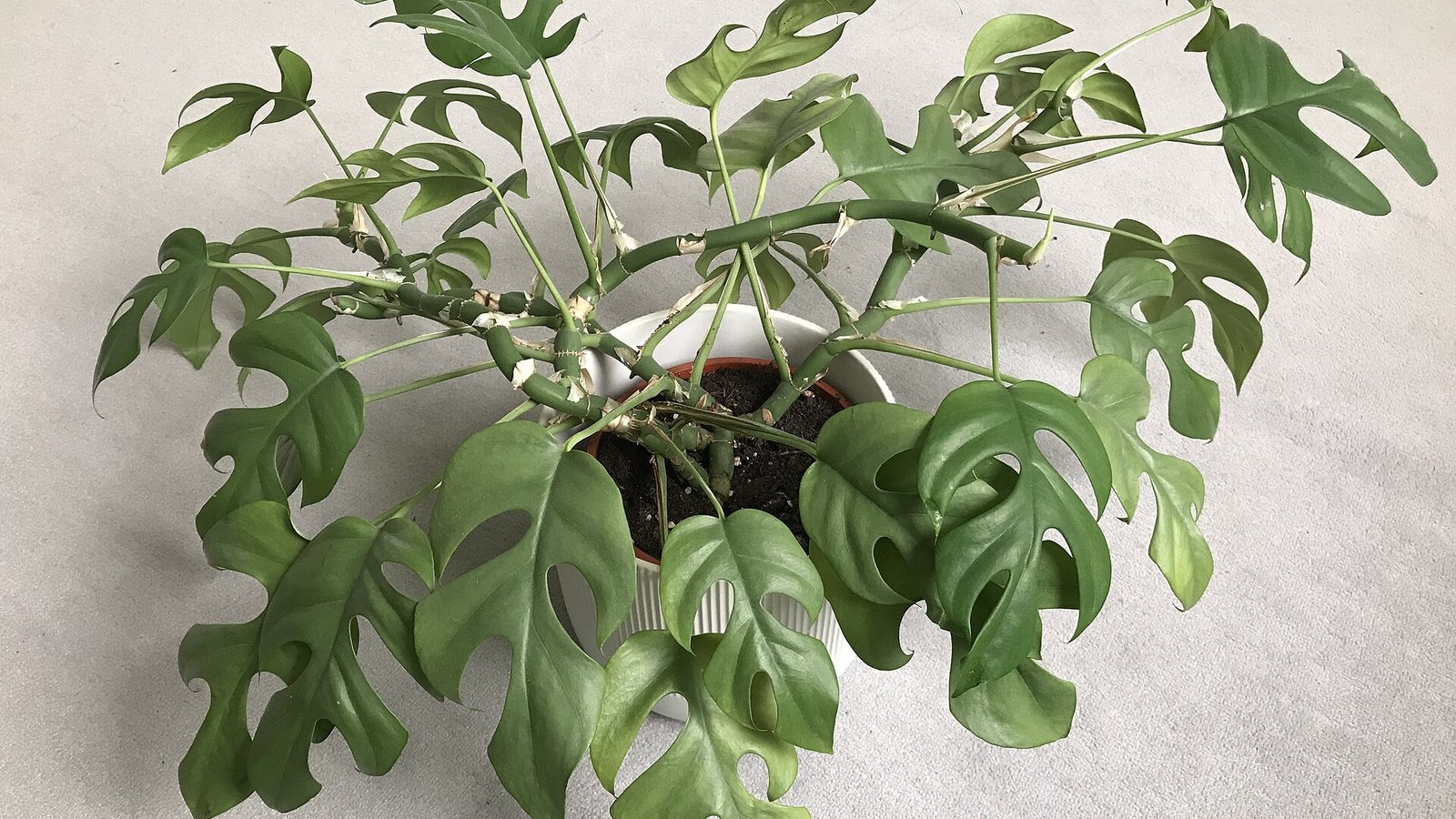
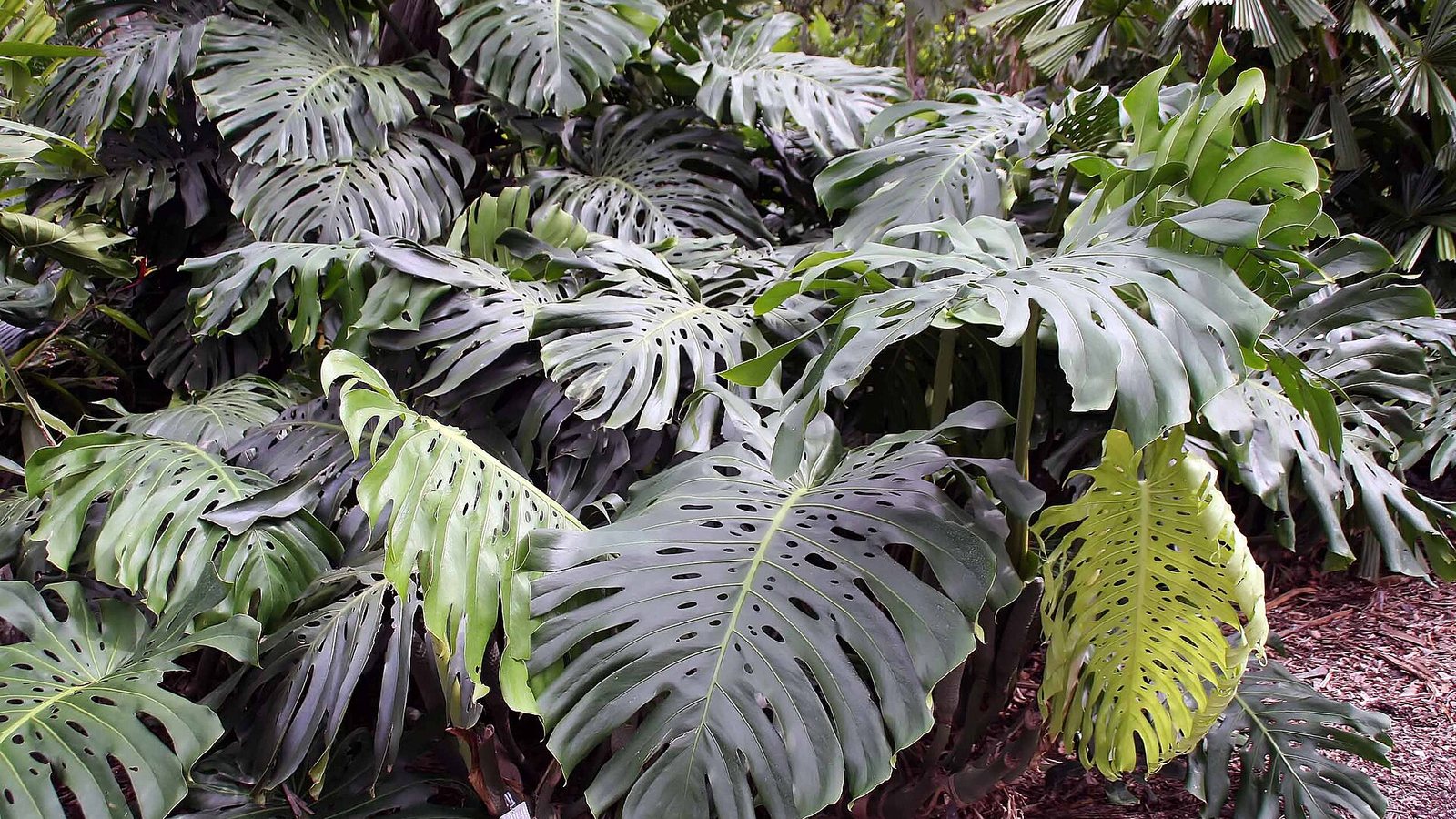 Photo: Photo by David J. Stang · CC BY-SA 4.0
Monstera (Monstera deliciosa) is a climbing rainforest plant from Mexico to Panama. It grows best in bright light without direct sun, with the top 2.5 to 5 cm (1 to 2 in) of soil dry between waterings, and needs a sturdy support. It is toxic to cats and dogs, according to the ASPCA.
At a glance
- Light
- Bright light without direct sun; low light makes it leggy
- Watering
- Water thoroughly when the top 2.5-5 cm (1-2 in) of soil is dry
- Humidity
- Prefers humidity above 50 percent; a humidifier helps in dry rooms
- Temperature
- 16-29 °C (60-85 °F); avoid cold drafts
- Soil
- Well-draining, organic-rich mix, pH 6.0-8.0; pot with drainage holes
- Size
- About 1.8-2.4 m (6-8 ft) indoors; up to 21 m (70 ft) in the wild
- Toxicity
- Toxic to cats and dogs (ASPCA): mouth burning, drooling, vomiting
- Origin
- Mexico to Panama (Central American rainforest)
On this page8
- How much light does a monstera need?
- How often should you water a monstera?
- What soil, pot and support does it need?
- Does it need humidity and warmth?
- How do you feed, prune and propagate a monstera?
- What are the common monstera problems?
- Is a monstera toxic to cats and dogs?
- Which varieties are there, and does it fruit?
How much light does a monstera need?
Monstera (Monstera deliciosa, the Swiss cheese plant) grows best in bright light without direct sun. Penn State Extension advises a site "near a sunny window where it can receive bright light but not direct sun", and NC State describes the light need as moderate brightness, not direct sunlight. In a dim room the stems stretch: Penn State says low light makes the plant "leggy". Variegated types need more light than plain green ones (NC State).
In the wild this is a rainforest climber from southern Mexico to Panama. It starts on the forest floor and climbs trees towards the light, so an indoor spot a little back from an east or west window suits it well. If you are unsure how bright a corner really is, the Smart light meter in Flori can measure it.
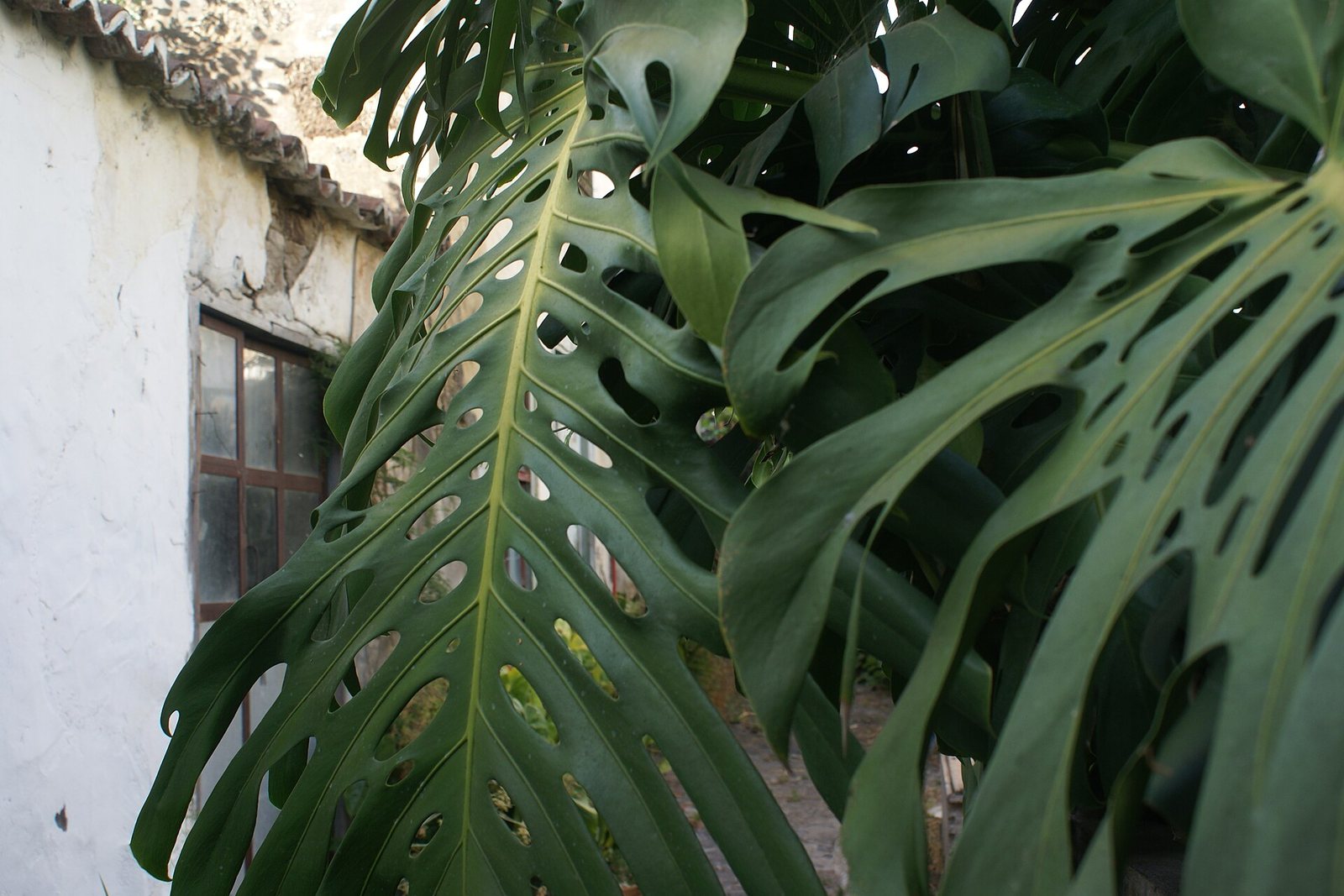
The famous holes come with age. Penn State notes that young leaves are small and mostly uncut, and that mature leaves become perforated or deeply cut. A young plant with whole leaves is not unhealthy.
How often should you water a monstera?
When the top of the soil has dried, not on a fixed day. Penn State says to water thoroughly and let the top 1 to 2 inches (2.5 to 5 cm) of soil dry before watering again, and warns that overwatering can cause root rot. NC State gives a similar rule: water thoroughly, then let the top quarter to one third of the soil dry between waterings.
- Push a finger into the soil to the second knuckle before you water.
- Water until it runs out of the drainage holes, then empty the saucer.
- Expect to water less often in a cool, dim room and in winter.
Our guide on how often to water houseplants explains how pot size and light change the interval, and a care reminder in Flori can keep the rhythm for you.
What soil, pot and support does it need?
Penn State recommends a well-draining, soilless potting mix rich in organic matter, with a neutral pH of 6.0 to 8.0; charcoal, bark or perlite can be added to a store-bought mix. NC State also asks for good drainage and high organic matter. Use a pot with drainage holes, and use the same mix when you repot. Penn State gives no repotting interval, so repot when the roots fill the pot or circle the bottom.
Because it is a climber, a monstera needs something to hold on to. Penn State says indoor plants reach about 6 to 8 ft (1.8 to 2.4 m) and need sturdy support such as a moss stick, trellis or stake, attached gently to the stem and aerial roots. NC State says the wild plant can reach 70 ft (21 m).
Does it need humidity and warmth?
It prefers warmth and humid air. Penn State gives 60 to 85 °F (16 to 29 °C), says the plant "abhor[s] cold drafts", and prefers humidity above 50 percent; a humidifier can help in very dry rooms. NC State suggests a humidifier or a pot on a tray of wet pebbles. It is hardy outdoors only in USDA zones 10 to 12 (NC State), so it stays inside in most of the world. Keep it away from radiators and open winter windows. The complete monstera care guide goes further on temperature and humidity.
How do you feed, prune and propagate a monstera?
Feeding. Penn State suggests a balanced houseplant fertiliser every two weeks through the growing season and about monthly in winter. Follow the label on the pack, and do not feed a plant that is sitting in soggy soil.
Pruning. Penn State only says to wipe dusty leaves; NC State says to prune or repot in spring if needed. Cut above a node rather than mid-stem, and keep the cuttings.
Propagation. Penn State says monstera is propagated most easily by air layering or stem cuttings, and NC State lists layering and stem cutting. A cutting needs a piece of stem with a node. Wear gloves when you cut it, because of the sap (see the toxicity section below).
What are the common monstera problems?
Penn State calls diseases uncommon and lists root rot from overwatering and legginess from low light as the main troubles. For pests it names scale, aphids, mealybugs, spider mites, thrips and fungus gnats; NC State adds fern scale. Check the undersides of leaves and the leaf joints when you wipe the leaves.
- Yellow, soft leaves and wet, smelly soil: too much water. See the root rot rescue plan.
- Long gaps between small leaves: not enough light.
- Fine webbing or speckled leaves: spider mites. Read spider mites on houseplants.
- Scale bumps, cottony clusters or sticky leaves: scale or mealybugs; check each leaf.
If you are not sure what you are looking at, Dr. Flori can work from a photo and suggest the likely cause.
Is a monstera toxic to cats and dogs?
Yes. The ASPCA lists the Swiss cheese plant as toxic to dogs and cats. The toxic principle is insoluble calcium oxalate, and the signs are oral irritation, intense burning and irritation of the mouth, tongue and lips, drooling, vomiting and difficulty swallowing. NC State rates the severity as low and adds that it is a problem for horses and that it can cause contact dermatitis. Penn State says all parts are toxic to humans and pets if eaten, except fully ripe fruit, which is rarely seen on houseplants, and advises gloves when handling it. Keep the plant where pets and small children cannot chew it, and call your vet or the ASPCA Animal Poison Control Center if a pet eats some. See plants toxic to cats for more.
Which varieties are there, and does it fruit?
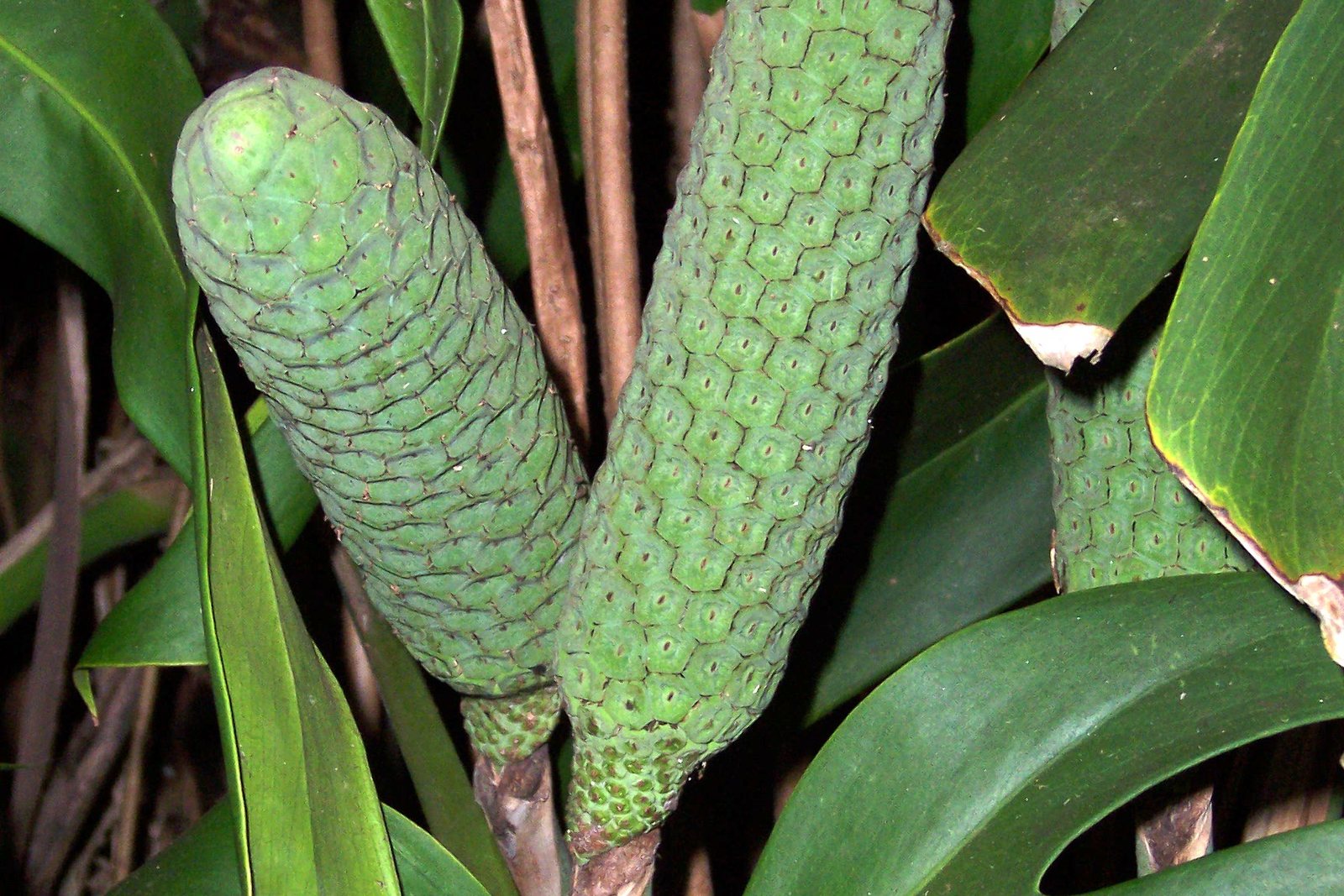
The plain green Monstera deliciosa is the common houseplant. NC State names the variegated 'Albo Variegata', which is rare and expensive, and 'Thai Constellation' with cream marbling; Penn State says the second is more compact. Both need more light. Indoors it rarely flowers or fruits. NC State says the cream spathe can reach about 1 ft (30 cm) and that the fruit, which has green hexagonal scales, ripens when the scales fall off; the page describes only the ripe fruit as edible and notes that some people are allergic. We do not recommend eating fruit from a houseplant.
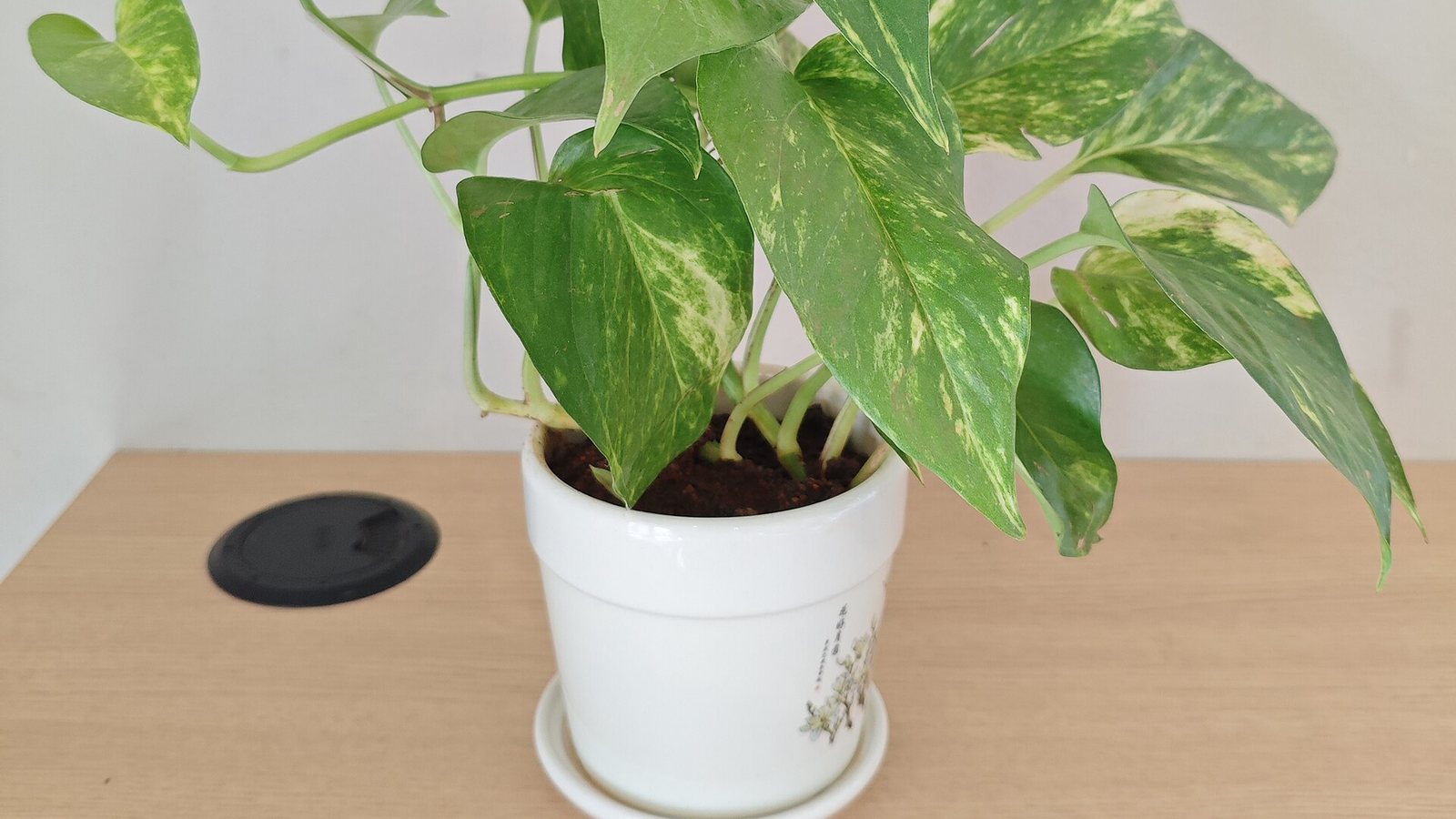
Two plants are often confused with it: Monstera adansonii, a denser plant with small leaves and oval holes, and Rhaphidophora tetrasperma (NC State, Penn State). Pothos has similar needs and is also toxic to pets: see the pothos page.
Frequently asked questions
How often should I water a monstera?
When the top 1 to 2 inches (2.5 to 5 cm) of soil are dry, according to Penn State Extension. Water thoroughly, then empty the saucer.
Why does my monstera have no holes in its leaves?
Penn State Extension says young leaves are small and mostly uncut, and mature leaves become perforated or cut. A young plant with whole leaves is normal.
Is monstera toxic to cats and dogs?
Yes. The ASPCA lists it as toxic to dogs and cats because of insoluble calcium oxalate, causing mouth burning, drooling and vomiting. Keep it out of reach.
How do you propagate a monstera?
Penn State Extension says it is propagated most easily by air layering or stem cuttings. A cutting needs a piece of stem with a node.
Does a monstera need a moss pole?
It needs sturdy support. Penn State Extension lists moss sticks, trellises, bamboo stakes and sphagnum-covered boards, attached gently to the stem.
Sources
Written and fact-checked by the Flori team. Every guide cites horticultural sources such as the RHS, university extension services and the ASPCA, and is updated when the advice changes. How we write our guides
General plant care information. Plants vary; when a plant is valuable or a problem spreads quickly, consult a local nursery or plant specialist.