Zamioculcas zamiifolia · Araceae
ZZ Plant (Zamioculcas zamiifolia): Care and Facts
How to care for a ZZ plant: light, watering, soil, size, problems and pet toxicity, with numbers from extension services.
- Bright indirect light
- Little water
- Easy care
- Toxic to pets
Also called: Zanzibar gem, aroid palm, eternity plant, Zamioculcas; Caladium zamiifolium, Zamioculcas lanceolata, Zamioculcas loddigesii
 By Flori editorial team · Updated
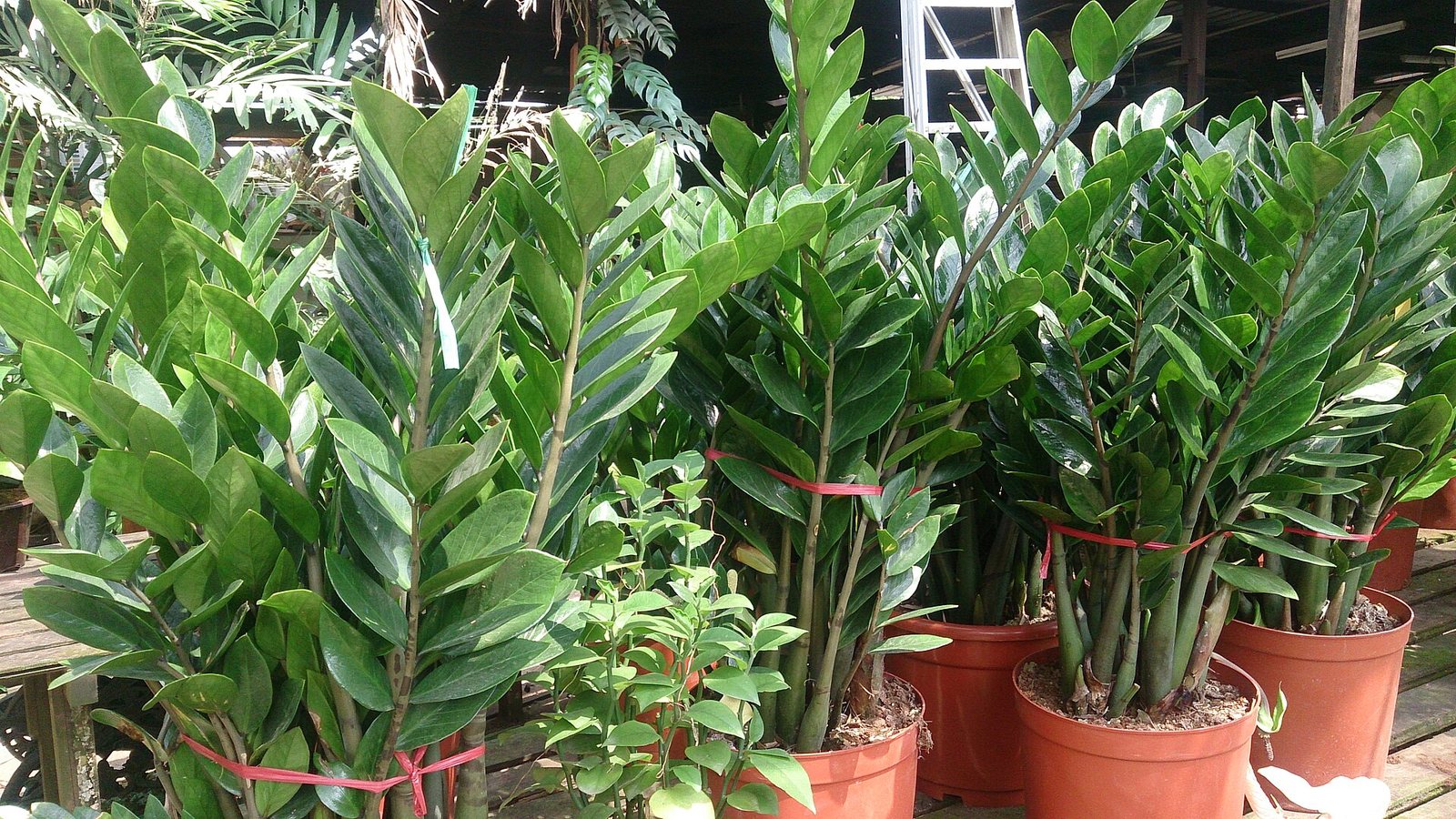 Photo: Mokkie · CC BY-SA 3.0
The ZZ plant (Zamioculcas zamiifolia) is a slow-growing African houseplant that stores water in thick rhizomes. It does best in bright indirect light but tolerates low light, needs water only when the mix is completely dry, and wants a coarse, well-drained mix. Treat it as toxic to cats and dogs.
At a glance
- Light
- Bright indirect light best; tolerates very low light; avoid direct sun
- Watering
- Only when the mix is completely dry; about 1 to 2 times a month (sources vary)
- Humidity
- Normal indoor humidity is enough; no misting needed
- Temperature
- Keep above 16 °C (60 °F); damaged at 0 °C (32 °F)
- Soil
- Coarse, fast-draining mix with perlite and sand; pot with drainage holes
- Size
- 60 to 120 cm (2 to 4 ft) tall and wide; slow growth
- Toxicity
- Toxic: calcium oxalate (NC State). Not found in the ASPCA lists
- Origin
- Tropical Africa, from Kenya and Tanzania to KwaZulu-Natal
On this page8
- How much light does a ZZ plant need?
- How often should you water a ZZ plant?
- What soil and pot suit a ZZ plant?
- Does a ZZ plant need humidity or warmth?
- How do you feed, repot and propagate a ZZ plant?
- What problems do ZZ plants get?
- Is a ZZ plant toxic to cats and dogs?
- Does it flower, and which varieties are there?
How much light does a ZZ plant need?
The ZZ plant (Zamioculcas zamiifolia) is known for coping with dim rooms, but it still grows best in bright, indirect light. Iowa State Extension says it "performs best in bright, indirect light" and tolerates very low light, while NC State Extension describes it as growing in very low light but doing best in bright indirect sun. Direct sun is the thing to avoid: NC State warns it can scorch and brown the leaves, and Iowa State says hard afternoon sun may damage the foliage.
In a dim corner a ZZ plant will survive, but growth is slow even in good light, so expect very little new growth in shade. A spot a metre or two (3 to 6 ft) back from a bright window is a safe choice. If your rooms are dark, see our list of the best plants for low-light rooms.
How often should you water a ZZ plant?
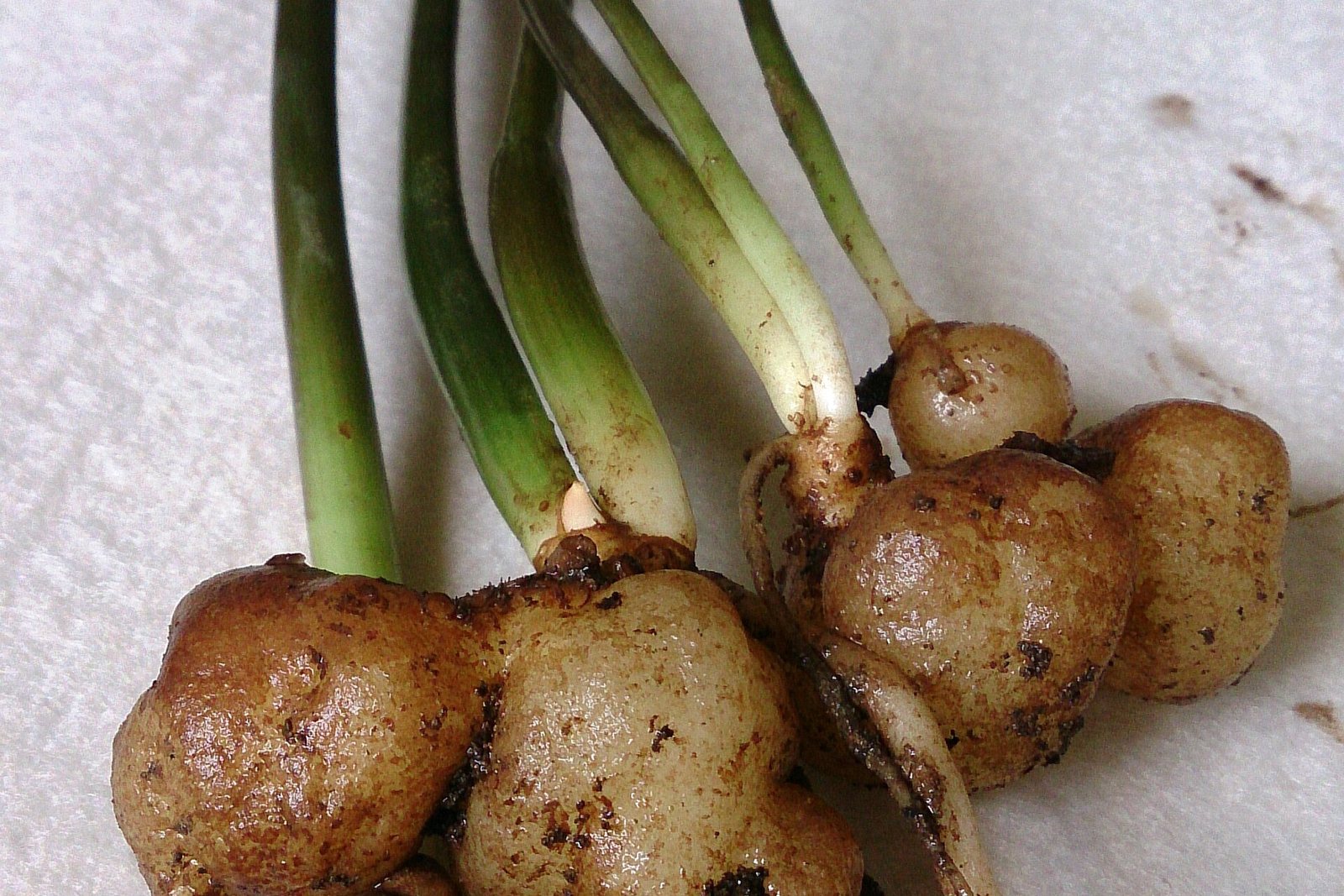
Rarely. The plant grows from thick underground rhizomes that store water (UF/IFAS Extension), which is why it handles drought far better than soggy soil. NC State says "wet feet are not tolerated". The rule every source agrees on is to let the mix dry completely before you water again. The day counts differ, so treat them as a range, not a schedule:
| Source | Watering advice |
|---|---|
| Clemson HGIC | 1 to 2 times a month, only once the potting mix has completely dried |
| NC State Extension | About twice a month in summer if the soil has dried completely; about once a month in winter |
| Iowa State Extension | A thorough watering every 7 to 14 days is usually fine, letting the soil dry well in between |
Light, pot size and room temperature all change the answer, so test the soil (a finger or a wooden skewer pushed to the bottom of the pot) before you water. Water until it drains from the bottom, then empty the saucer. Our guides on how often to water houseplants and overwatering vs underwatering help you read the signs.
What soil and pot suit a ZZ plant?
A coarse, fast-draining mix. Clemson HGIC suggests 50% peat- or coir-based potting soil, 25% perlite and 25% sand, and NC State asks for well-drained soil. Use a pot with drainage holes, and make sure the pot has fully drained before it goes into a decorative cover pot or onto a saucer.
Does a ZZ plant need humidity or warmth?
Ordinary indoor humidity is enough; Clemson HGIC notes the plant is adapted to arid conditions, so no misting is needed. It is the cold that matters. Clemson says to keep it above 16 °C (60 °F), and NC State says to bring a container plant indoors when temperatures fall below 60 °F. UF/IFAS says it is easily damaged at 0 °C (32 °F). NC State lists it as hardy outdoors only in USDA zones 9 to 10.
How do you feed, repot and propagate a ZZ plant?
Feeding. Sources disagree, which tells you it needs very little. NC State says a balanced liquid houseplant fertiliser once or twice a year, Clemson says once or twice during the growing season, and Iowa State says a dilute solution once or twice a month in spring and summer. The low end of that range is the safest.
Size. NC State and Clemson give 60 to 120 cm (2 to 4 ft) in height and width, and Iowa State says about 90 cm (3 ft) tall and up to 120 to 150 cm (4 to 5 ft) wide, growing slowly and in spurts. Repot only when the rhizomes crowd the pot, and go up one size.
Propagation. Division of the rhizomes is the simplest method, and leaf cuttings or stem cuttings also work (NC State, Iowa State, UF/IFAS).
What problems do ZZ plants get?
Few. Clemson says there are no serious insect or disease problems, and NC State lists scale insects as the one pest to watch for. Nearly every real problem is water.
- Mushy, yellow stems and a soft base: overwatering and root rot (Clemson). See the root rot rescue plan.
- Small bumps or sticky patches on stems and leaves: check for scale insects.
- Scorched, brown patches: too much direct sun (NC State).
- Dark spots on the stems: Clemson says black spots on the stems are normal.
If you are unsure what you are seeing, Dr. Flori can work from a description or a photo and name the likely cause.
Is a ZZ plant toxic to cats and dogs?
Treat it as toxic. NC State rates the severity as medium, names calcium oxalate in the leaves as the cause, and says eating them in quantity may cause diarrhoea and vomiting. NC State notes medium toxicity to cats and dogs, Clemson labels the plant "not pet safe", and UF/IFAS says all parts are considered toxic. We did not find the ZZ plant in the ASPCA lists of plants for cats or dogs, so the ASPCA gives no rating either way, and that is not the same as safe. Keep it out of reach of chewing pets, and call your vet or the ASPCA Animal Poison Control Center if a pet eats some. For alternatives, see our list of plants toxic to cats. The snake plant is toxic to pets too.
Does it flower, and which varieties are there?
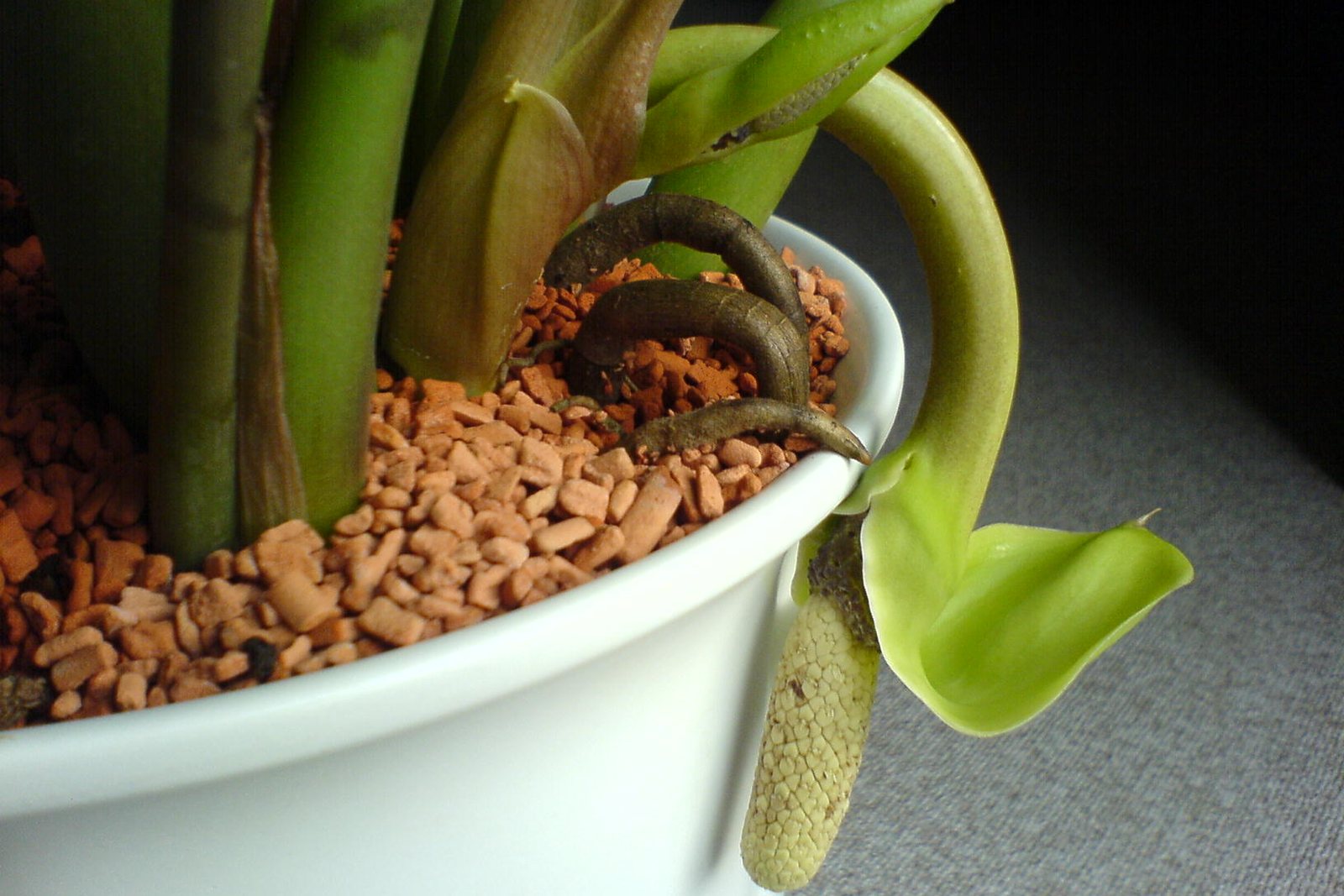
Mature plants occasionally flower, producing a spathe and spadix like a small arum (UF/IFAS), though the flower is easy to miss among the stems. NC State lists three cultivars: 'Chameleon', whose new leaves are golden yellow and turn dark green, 'Lucky' with wide, rounded leaflets, and Raven™ 'Dowon', with lime-green new growth that ages to purple-black. UF/IFAS adds the dwarf types 'Zamicro' (under 60 cm / 2 ft) and 'Zenzi' (no more than 38 cm / 15 in). Care is the same for all of them.
Frequently asked questions
How often should I water a ZZ plant?
Only when the potting mix is completely dry. Clemson says 1 to 2 times a month; NC State says about twice a month in summer and once a month in winter; Iowa State says every 7 to 14 days is usually fine.
Can a ZZ plant live in low light?
Yes. NC State says it grows in very low light and Iowa State says it tolerates it, but it does best in bright indirect light and grows slowly.
Is the ZZ plant poisonous to cats and dogs?
Treat it as toxic. NC State rates it medium severity because of calcium oxalate; Clemson says it is not pet safe. It was not found in the ASPCA plant lists, which is not the same as safe.
Why are the stems of my ZZ plant turning yellow and soft?
Usually overwatering and root rot, according to Clemson. Let the mix dry, check the rhizomes and roots, and use a pot with drainage.
How big does a ZZ plant get?
NC State and Clemson give 60 to 120 cm (2 to 4 ft) tall and wide. Dwarf types such as 'Zenzi' stay near 38 cm (15 in), according to UF/IFAS.
Sources
Written and fact-checked by the Flori team. Every guide cites horticultural sources such as the RHS, university extension services and the ASPCA, and is updated when the advice changes. How we write our guides
General plant care information. Plants vary; when a plant is valuable or a problem spreads quickly, consult a local nursery or plant specialist.