Pothos Leaves Turning Yellow: Causes and Fixes
Pothos leaves turning yellow? Match the pattern to overwatering, direct sun, low feed, draughts or pests, check the roots and fix one thing at a time.
 By Flori editorial team · Updated
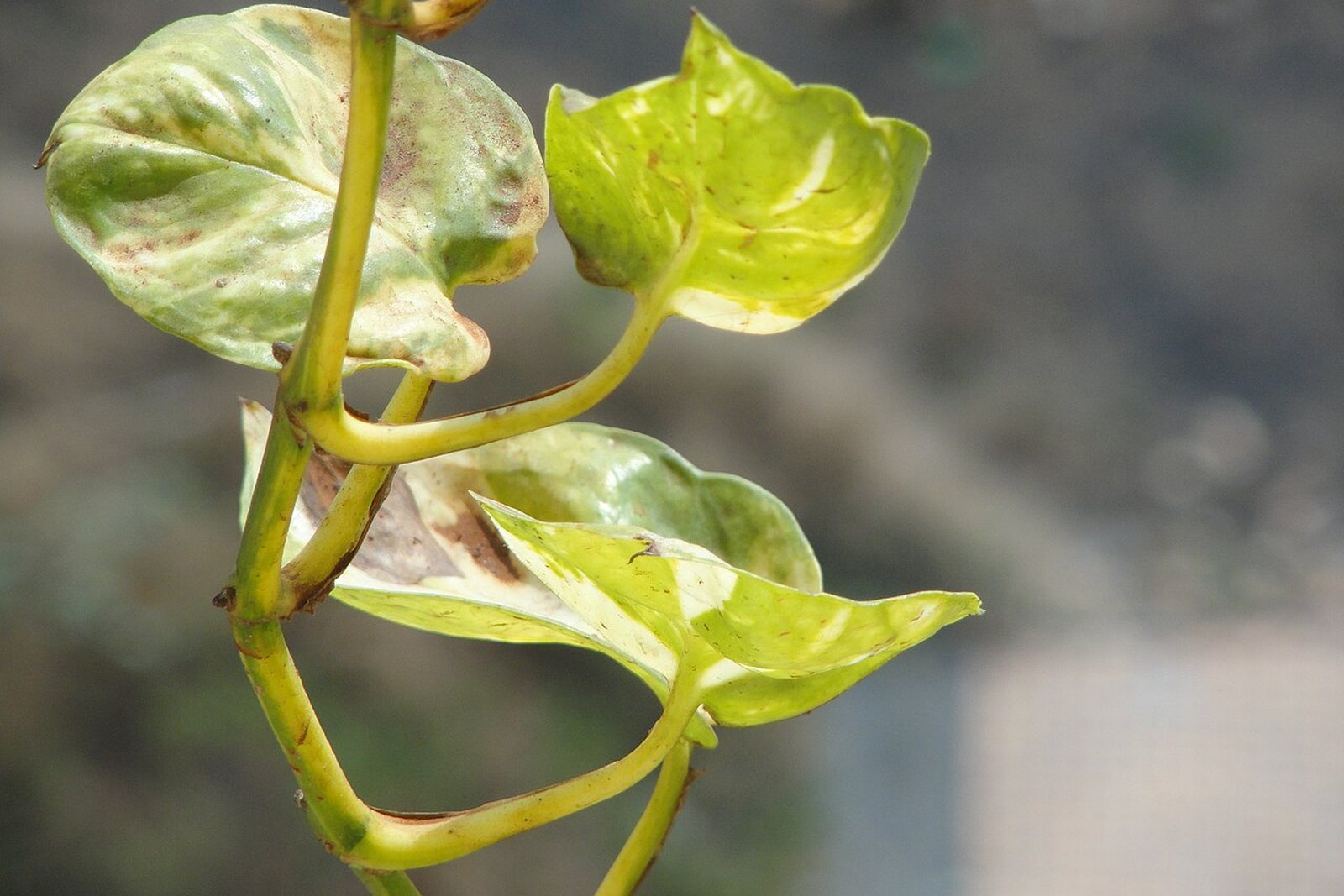
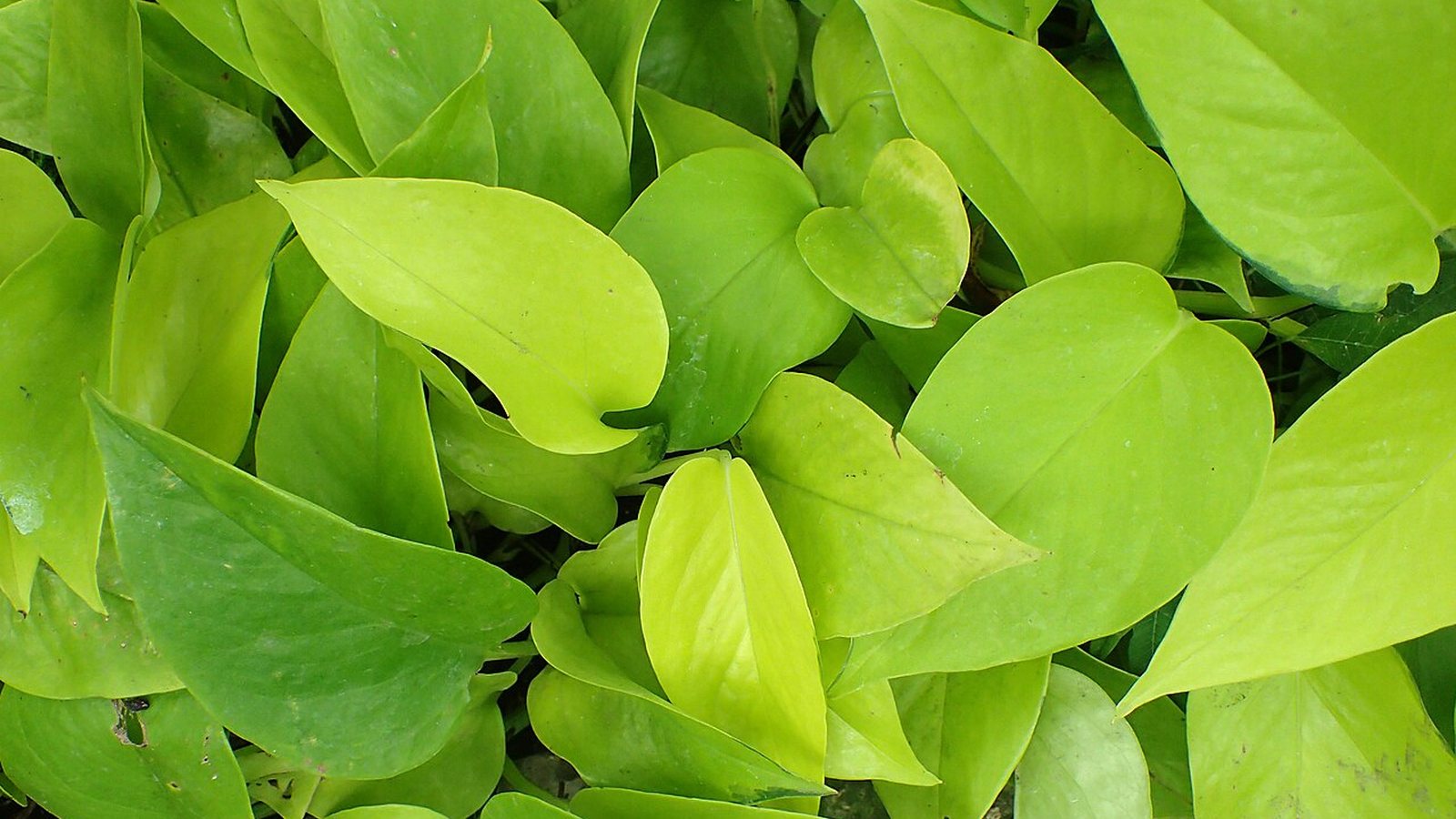 Photo: Krzysztof Ziarnek, Kenraiz · CC BY-SA 4.0
Yellow pothos leaves are most often a sign of overwatering or low feed, but direct sun, cold draughts, pests and ordinary ageing cause it too. If old and new leaves yellow together and the soil stays damp, stop watering and check the roots. One old leaf yellowing now and then is normal.
Key takeaways
- Old and new leaves yellowing together with damp soil points to overwatering and possible root rot.
- Let the soil dry before watering again; pothos copes better with too dry than too wet.
- Direct sun yellows leaves, while long-term low light gives pale, sparse growth.
- Feed lightly in spring and summer and follow the label; sources differ on how often.
- A fully yellow leaf will not turn green again, so judge recovery by new growth.
On this page8
Why are my pothos leaves turning yellow?
The quick answer: too much water is the usual culprit, but pothos (Epipremnum aureum) also yellows from direct sun, hunger, cold air and, very often, plain old age. Do not reach for the watering can when a leaf yellows. A pothos is better kept a little too dry than too wet, as Penn State Extension puts it. Work out the pattern first, then fix one thing. For other plants, see our general yellow leaves diagnosis guide.
Start with a calm check: is it one leaf or many? NC State Extension notes that over time pothos leaves yellow and fall off, which leaves the foliage concentrated at the ends of the stems. One old leaf near the base turning yellow now and then is normal ageing. Several leaves at once, or new growth turning yellow, is your plant telling you something.
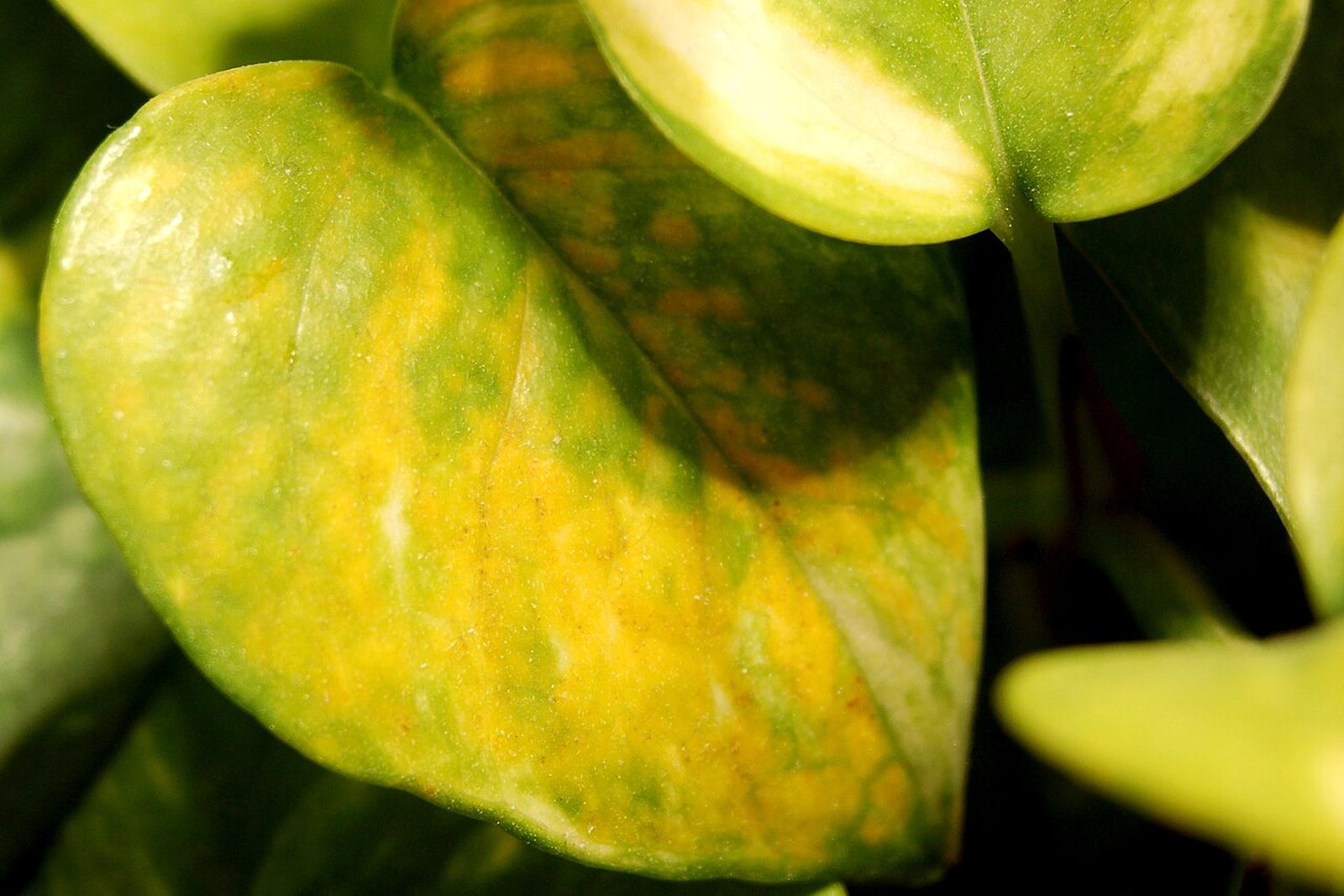
Which yellow leaves tell you what?
| What you see | Likely cause | First fix |
|---|---|---|
| Old and new leaves yellow and dropping together, soil damp, maybe black leaf edges | Overwatering, possible root rot | Stop watering, empty the saucer, check the roots |
| Oldest leaves at the base yellow first, soil dry and light, stems limp | Underwatering | Soak thoroughly, let it drain, check more often |
| Bright yellow or bleached leaves on the side facing the window | Direct sun | Move back or filter the light |
| Slow, even paling over the whole plant, little new growth | Low fertility, old soil | Feed in spring and summer, repot if root-bound |
| Yellowing with dry edges near a vent, door or cold glass | Cold or hot draught | Move to a steady spot |
| Yellow speckles, fine webbing or white cottony fluff | Spider mites or mealybugs | Inspect undersides and joints, wipe pests off |
Is overwatering the cause?
Most likely. Clemson Extension says yellow pothos leaves are often caused by overwatering or low fertility, and both Penn State and NC State link overwatering to root rot. The RHS gives a useful rule: old and new leaves yellowing and dropping at the same time suggest too much water, while on a dry plant the older leaves at the base usually yellow and fall first. Wilting can fool you in winter, because a drowning plant droops just like a thirsty one.
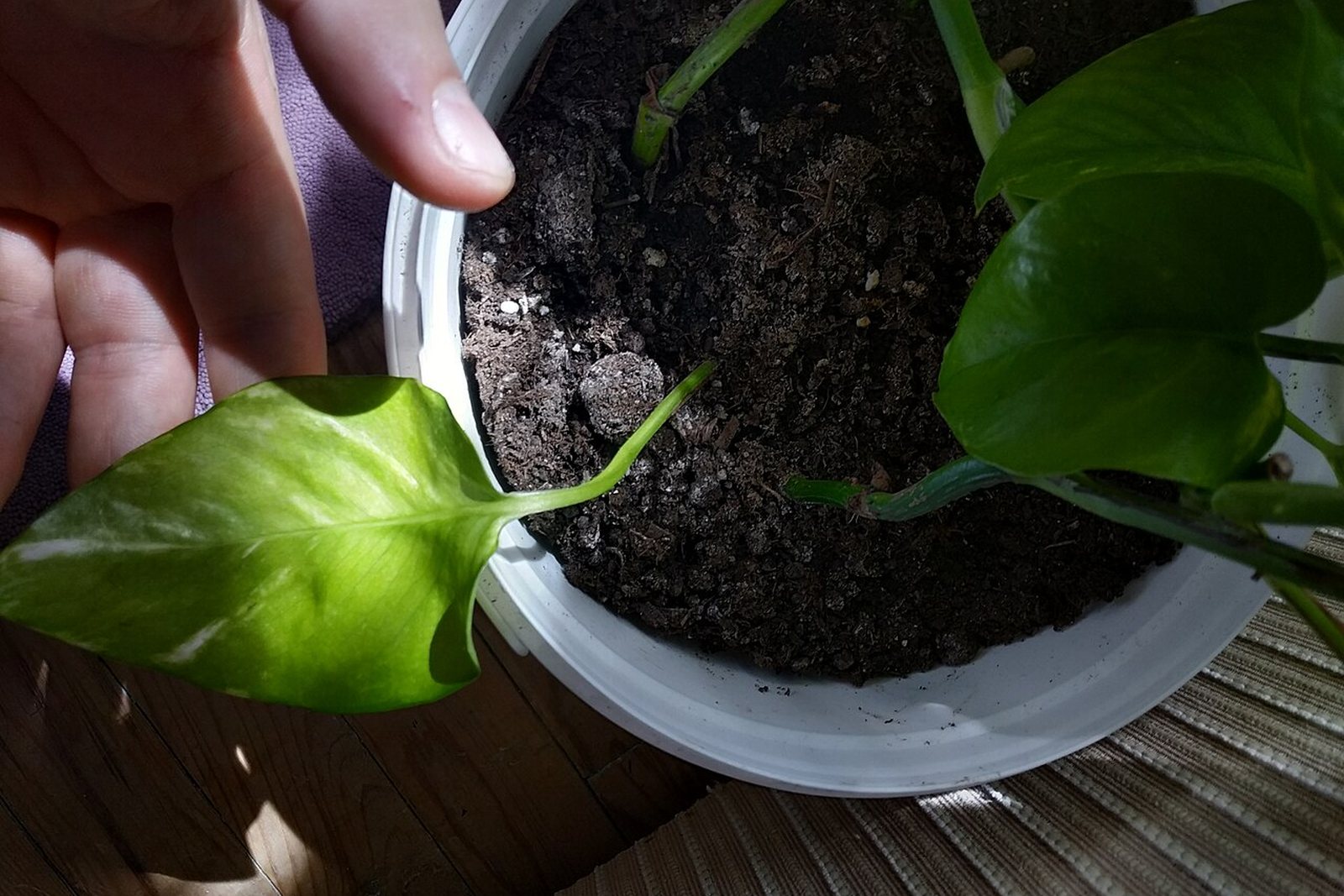
- Push a finger a few centimetres (about 1 in or more) into the soil. If it is still damp, do not water. Clemson says to let the soil dry before watering, then water thoroughly so moisture reaches all the roots.
- Check the pot has drainage holes and empty any water standing in the saucer or decorative pot.
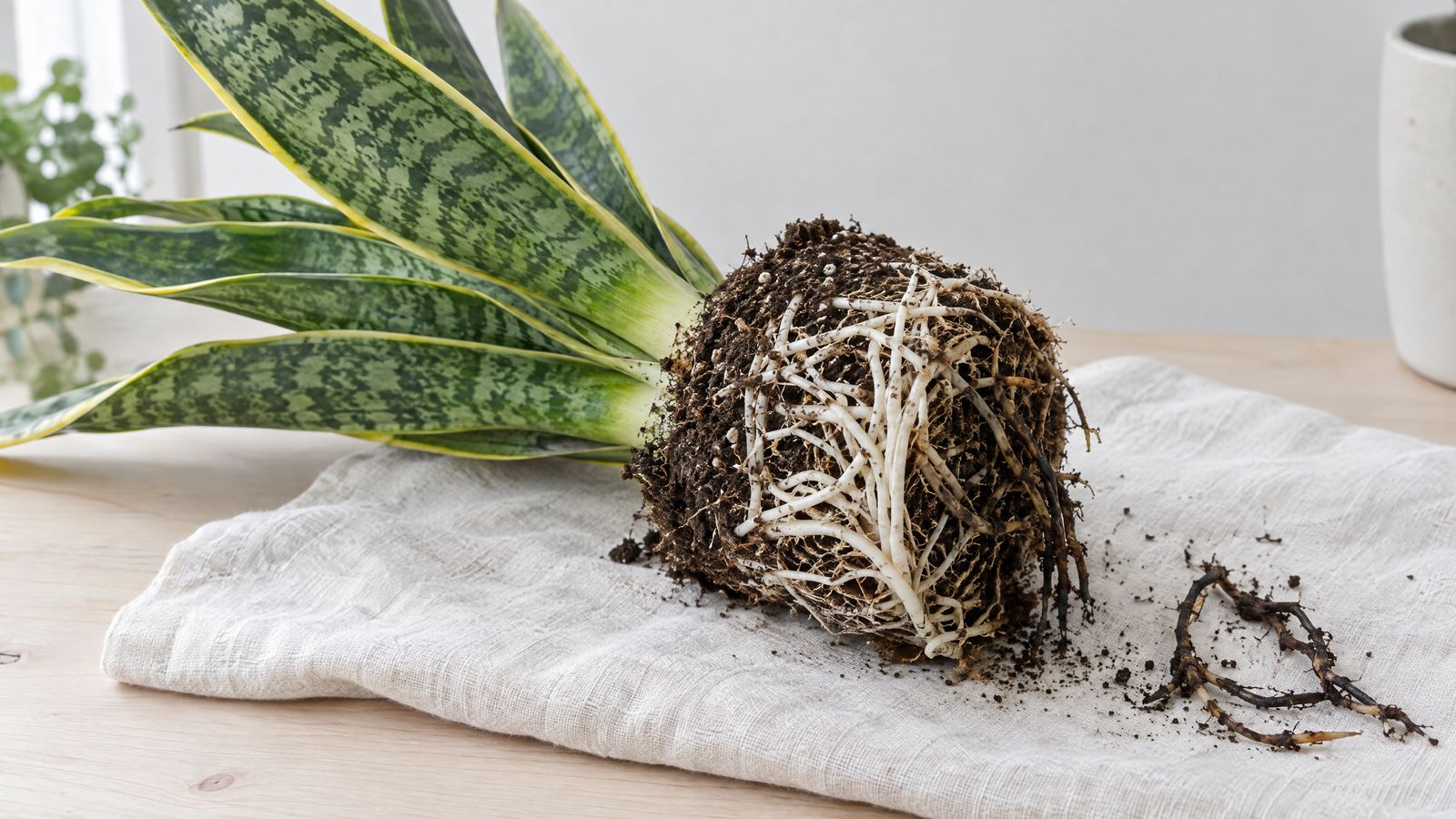
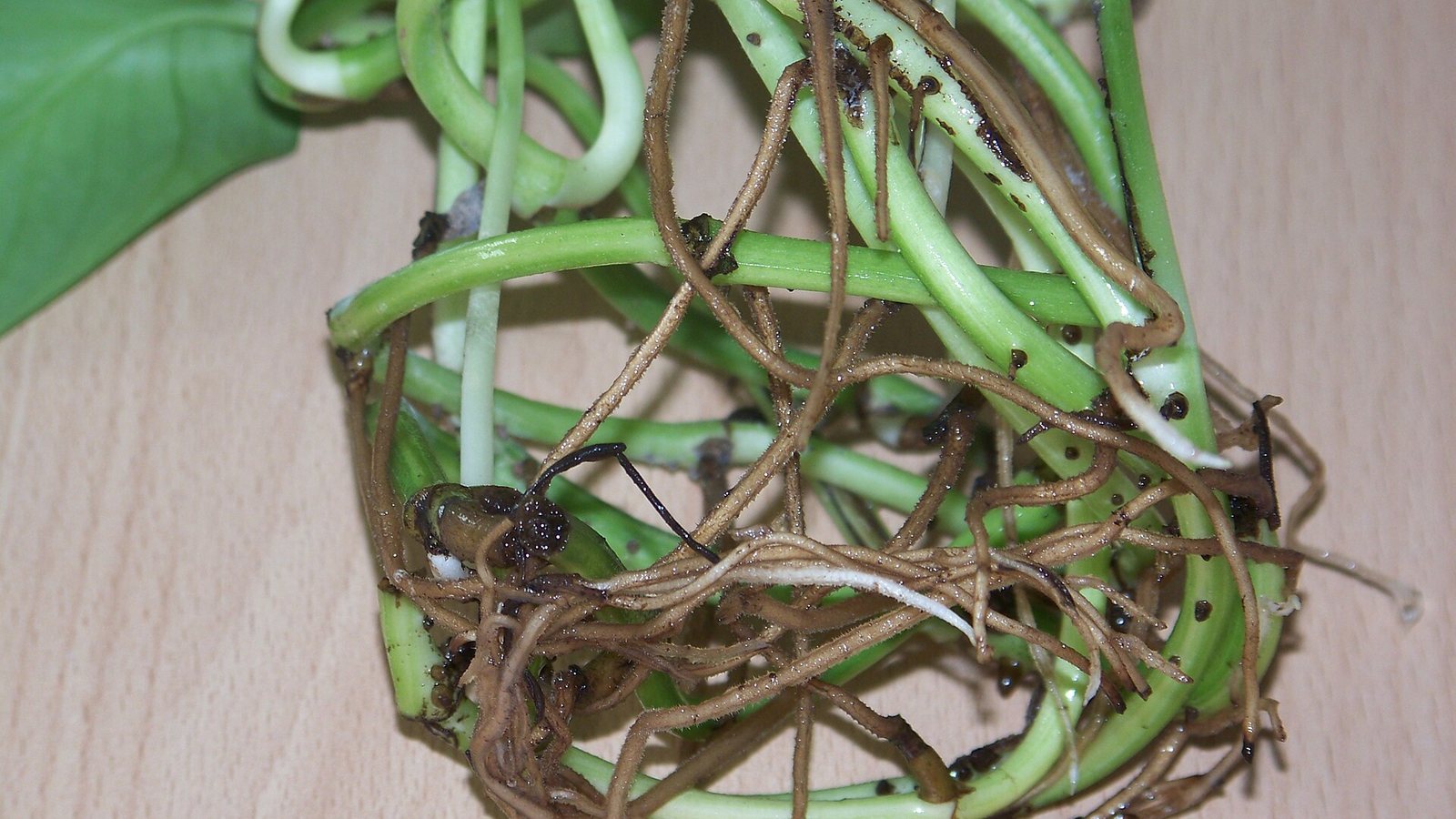
- Lift the plant to feel its weight, and slide it out if you are unsure. The RHS lists dark, mushy roots as a sign of overwatering; healthy roots are firm and pale.
- If the roots are rotting, follow our root rot rescue plan. A rotting pothos can often be saved by taking cuttings from healthy stems with a node, as in our guide to propagating pothos in water.
Myth check: yellow does not mean thirsty. Dry pothos droop (Penn State says underwatering may cause leaves to droop temporarily), but the classic yellowing is more often too much water or poor drainage. Read overwatering vs underwatering for the full comparison, and how to water houseplants for the technique.
Could it be too much sun or too little light?
Both happen. Penn State states plainly that direct sun will lead to yellowing of the leaves, and recommends moderate to bright light. Clemson describes bright, indirect light and warns that too much intense light, together with low humidity, can scorch leaves. NC State lists dappled sun and partial shade (2 to 6 hours of direct sun) as tolerated conditions, but that is a tolerance, not a target for a houseplant on a hot window.
In the other direction, pothos tolerates low light, but not forever. Penn State notes that long-term low light degrades foliage, and Clemson and NC State say variegated types lose colour in dim spots. A pale, sparse plant with long gaps between leaves needs more light; see the signs your plant needs more light. Rotate the pot weekly, as Penn State suggests, so all sides get light.
Does pothos need feeding?
Possibly. Clemson links yellow leaves to low fertility and suggests a houseplant fertiliser every other month in spring and summer. NC State also says every other month, except in winter dormancy. Penn State gives a more generous schedule: monthly in winter and every two weeks the rest of the year. Sources differ, so start light, follow the label and never feed a plant whose roots are rotting. Our guide to fertilising houseplants explains how. If the plant has sat in the same pot for years, repotting may help more: Clemson suggests repotting when roots show at the drainage holes or the plant is crowded, and Penn State suggests a slightly larger container each spring in a well-draining soilless mix.
What about temperature, humidity and pests?
Clemson gives comfortable ranges of 16 to 21 °C (60 to 70 °F) at night and 21 to 29 °C (70 to 85 °F) in the day, and Penn State says average room temperatures between 16 and 27 °C (60 and 80 °F). Keep plants away from air-conditioning vents in summer and from cold windowsills and heating vents in winter, because hot or cold air can dry out leaves and damage plant cells. The RHS adds that draughts can cause yellowing and dry edges, and that windowsill plants suffer when cold air is trapped behind curtains on winter nights.
Clemson says pothos is generally pest-free indoors, but spider mites and mealybugs can appear; NC State also names scale insects. Check leaf undersides and stem joints. The RHS says small numbers are usually easy to pick or wipe off. If you use a product, choose the least toxic option and follow the label.
What should I do with the yellow leaves?
A leaf that has turned fully yellow will not turn green again. Once you have found the cause, snip it off at the stem with clean scissors. Change one thing at a time and judge recovery by new growth, not by old leaves. If you are torn between two causes, Dr. Flori in the Flori app can ask follow-up questions from a description or photo, say how urgent it is and give a recovery plan, and care reminders can help you keep watering steady.
Is pothos toxic to pets?
Yes. The ASPCA lists golden pothos as toxic to dogs and cats because of insoluble calcium oxalates, which can cause intense burning and irritation of the mouth, tongue and lips, drooling, vomiting and difficulty swallowing. Pick up fallen yellow leaves and keep trimmings out of reach. See our list of houseplants toxic to cats. If a pet has chewed a leaf, call your vet or ASPCA Animal Poison Control straight away.
Frequently asked questions
Should I cut off yellow pothos leaves?
Yes. A fully yellow leaf will not turn green again, so snip it off at the stem with clean scissors once you have fixed the cause.
Why are the leaves on my pothos turning yellow and dropping?
Most often overwatering, especially if old and new leaves go yellow together and the soil stays wet. Check drainage and the roots, and let the soil dry before the next watering.
Can a pothos recover from yellow leaves?
The plant can, the yellow leaves cannot. If the roots are still firm and pale, correct the cause and new leaves should come in green.
Is one yellow leaf at the bottom normal?
Yes. NC State notes that pothos leaves yellow and fall over time, leaving the foliage at the stem ends. Worry when several leaves or new growth turn yellow.
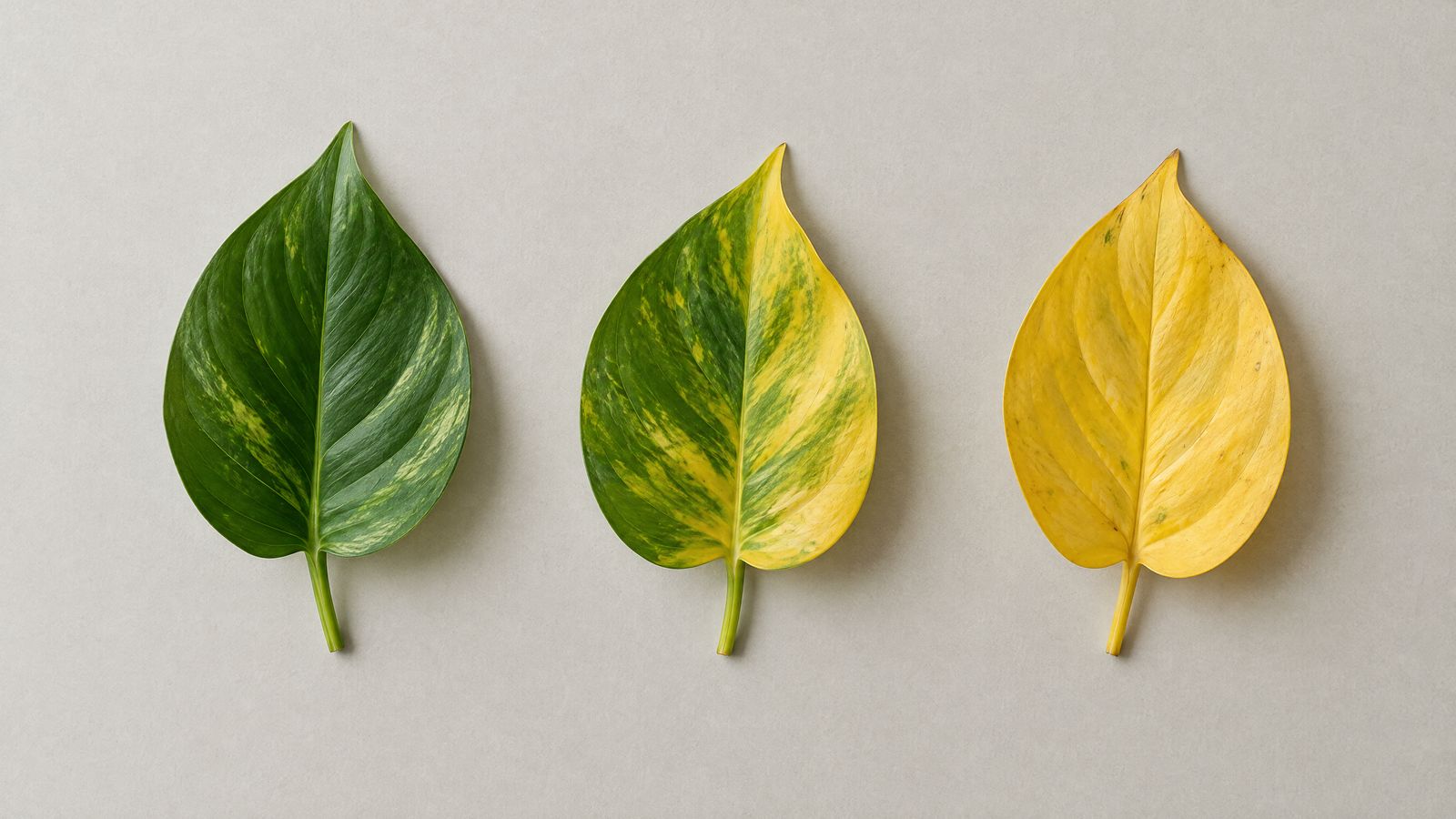
Why are your plant's leaves turning yellow? Read which leaves yellow first, check soil and roots, and match the pattern to its cause and first fix.
Sources
Written and fact-checked by the Flori team. Every guide cites horticultural sources such as the RHS, university extension services and the ASPCA, and is updated when the advice changes. How we write our guides
General plant care information. Plants vary; when a plant is valuable or a problem spreads quickly, consult a local nursery or plant specialist.